You don’t need to speak fluent Japanese when visiting Japan, but knowing a few basic phrases can come in very handy (plus, it’s always much appreciated to put a bit of effort into learning someone’s language before visiting).
The issue with Japanese is that it can be a bit intimidating. The different writing systems, the grammar, the pronunciation… It’s difficult! I’ve been learning Japanese for three years now, and I try to practice as much as possible when I’m in Japan.
There are a few phrases that I use all the time, though, which are also the ones I teach friends and family who visit Japan. I’ve added them below so you can use them for your trip!
To make sure the Japanese sentences below are 100% correct, I paid a professional Japanese translator to double-check them and correct any mistakes.

I’ve been taking private online Japanese classes since the start of 2026 on Preply, and it’s been game-changing! In these classes, I can really focus on getting better at speaking and listening, learning vocabulary and phrases that are actually used in Japan (not just in a textbook).
Quick Notes on Japanese Phrases & Pronunciation
Before I dive into sharing these common Japanese phrases, there are a few things I’d like to mention. If you’re only going to learn four phrases, I think they should be:
- Sorry/Excuse me: Sumimasen (すみません)
- I’m okay/It’s okay/No, thanks: Daijōbu des (だいじょうぶです)
- Please: Onegaishimas/Kudasai (おねがいします/ください)
- Thank you: Arigatō gozaimas (ありがとうございます).
I’ve broken this guide down into a few different sections for different situations, including some everyday phrases, convenience store phrases, and restaurant phrases. Some of the sentences are repeated in the various sections as they are very useful in different scenarios, but that way, you won’t have to read the whole guide for one situation.
It’s also important to note that I’ve included some of the sentences in this guide purely for understanding purposes. If you ask open questions and you don’t understand the response, it’s not very helpful. However, in restaurants or convenience stores, employees may ask you some questions, which I’ve included below, including how to reply.
My biggest tip is to just give them a go and try your best. There are a lot of opportunities to try speaking Japanese when you’re travelling, and it can be very scary to try it for the first time. But even if it’s not 100% correct, most locals will be very supportive and happy that you’re even attempting to speak some Japanese. You got this!
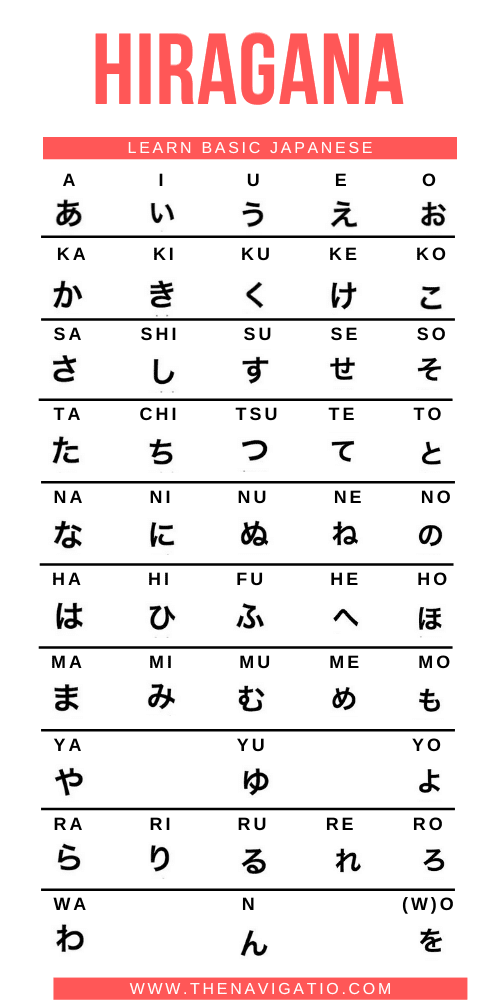
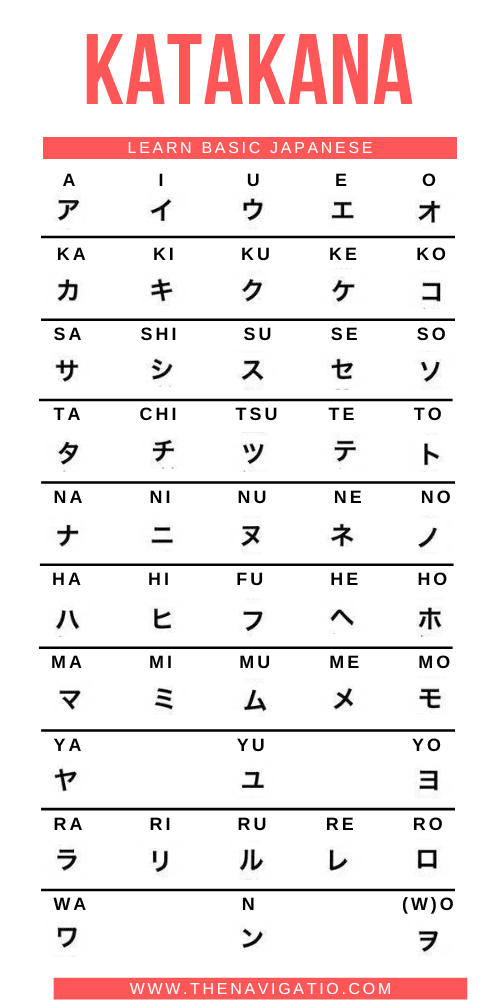
As for pronunciation, I’ve written out the English version of the Hiragana/Katakana how to pronounce it. For example, the “u” in “desu” is silent, so I’ve written “des”. Hopefully, that will help you say the Japanese phrases below properly.
Useful Basic Japanese Phrases For Tourists
Now we’ve got the basic info out of the way, here are some of the most common Japanese phrases for tourists:
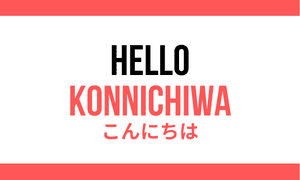


- Hello: Konnichiwa (こんにちは)
- Good morning: Ohayō (おはよう) or ohayō gozaimas (おはようございます)
- Good evening: Konbanwa (こんばんは)


- Bye/See you later (casual): Matane (またね) / Djaa-ne (じゃあね )
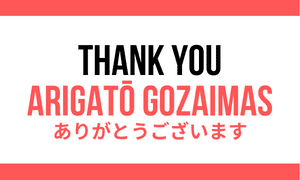
- Thank you: Arigatō gozaimas (ありがとうございます)
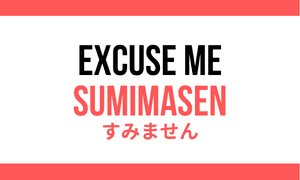
- Excuse me: Sumimasen (すみません)
- Sorry: Gomennasai (ごめんなさい)
You may have seen sayōnara (さようなら) as a translation for goodbye. While this is technically correct, it’s not often used in everyday Japanese. You’d only say sayōnara as a final goodbye when you won’t see the person again. Matane (またね) or djaa-ne (じゃあね) would be more fitting in most situations.
Sumimasen (すみません) is a very important one to know, as you’ll be using it a lot in Japan. It can be used to politely get someone’s attention (in a restaurant, for example), as a way to apologise for a minor mistake (like bumping into someone by accident) or as part of a request.


- I don’t understand: Wakarimasen (わかりません)
- I don’t speak Japanese: Nihongo ga hanasemasen (にほんごがはなせません)
- My Japanese isn’t very good: Watashi no nihongo wa heta des (わたしのにほんごはへたです)
- Do you speak English?: Eigo ga hanasemas ka? (えいごがはなせますか?)
- Can you translate this?: Yakushte kudasai? (やくしてください?)
It may seem counterintuitive to learn how to say you don’t speak a language in said language. However, I’ve always found it very handy to explain in case the person I’m speaking to doesn’t understand English. Plus, knowing how to ask if they do speak English can help you open up the conversation if you don’t speak more Japanese.


- Please (when asking for something): Onegaishimas (おねがいします)
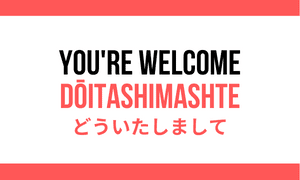
- You’re welcome: Dōitashimashte (どういたしまして)
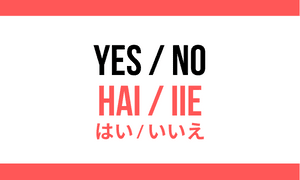
- Yes / No: Hai/Iie (はい/いいえ)
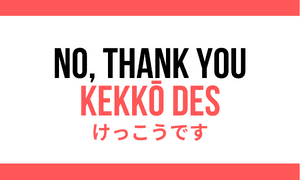
- No, thank you (more polite): Kekkō des (けっこうです)
- I’m okay / It’s fine: Daijōbu des (だいじょうぶです)
I’ve added iie (いいえ) to this list, but it’s not used very much in everyday conversation as it sounds a bit too direct. If you’re declining something, it’s better to use kekkō des (けっこうです) or daijōbu des (だいじょうぶ です). It’s more polite. I’ve added some examples of this in the convenience store and restaurant sections below.
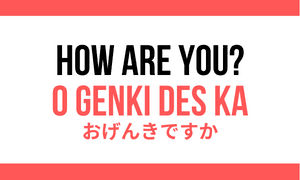


- How are you?: O genki des ka? (おげんきですか?)
- I’m fine: Genki des (げんきです)
- Nice to meet you: Hajimemashte (はじめまして)
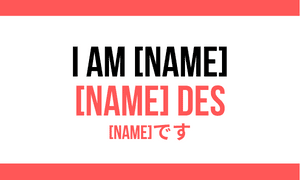
- I am [name]: [name] des ([name]です)


- Help: Taskete (たすけて)
- What is this?: Kore wa nan des ka? (これはなんですか?)
- I like [item]: [item] ga ski des ([item] がすきです)
- That’s amazing: Sugoi des (すごいです)
- That’s beautiful: Kirei des (きれいです)
- Is it okay to take a photo?: Shashin tottemo ii des ka? (しゃしんとってもいいですか?)
When expressing that something is amazing or beautiful, you can add ne (ね) after des (です) to connect with the listener a bit more. It’s almost like adding “right?” to the English version of the sentence. During cherry blossom season, I said a few “kirei des ne” (きれいですね) to some people taking pictures of them, to which they all replied.

- Where is the Shinjuku train station?: Shinjuku-eki wa doko des ka? (しんじゅくえきはどこですか?)
- Where is the exit?: Deguchi wa doko des ka? (でぐちはどこですか?)
Depending on what station you’re looking for, you can change Shinjuku for the name of another station. Eki means station, so please keep that the same.
Japanese Phrases for the Convenience Store
When you’re visiting Japan, the conbini (convenience store) will undoubtedly become part of your daily routine. Here are some of the most common Japanese phrases you can use or will hear in the convenience store:


- Welcome: Irasshaimase (いらっしゃいませ)
- Next in line please: Otsugi no kata dōzo (おつぎのかたどうぞ)
- Please / Here you go: Dōzo (どうぞ)
You’ll hear the conbini employees shout irasshaimase (いらっしゃいませ) to pretty much everybody who enters the store. It kind of means something like “welcome to the store”. You don’t have to respond to this.
Dōzo (どうぞ) is a phrase that, like sumimasen (すみません), can be used in a lot of different scenarios. It can mean please, thank you, excuse me, here you go, etc. In the convenience store, it’s often used when the cashier hands you something, or you can say it when you hand over the money.


- I would like [item]: [item] o kudasai ([item] をください) / [item] onegaishimas ([item] おねがいします)
- I would like [item 1] and [item 2]: [item 1] to [item 2] o kudasai ([item 1] と [item 2]をください)
- I would like this one: Kore kudasai (これください)
When asking for an item, kudasai (ください) and onegaishimas (おねがいします) can both be used as part of a polite request. They are both roughly translated to “please” in English. Often, they can be used interchangeably (not in every sentence, though!).


- One [item] please: [item] o hitotsu onegaishimas ([item]をひとつおねがいします)
- Two [items] please: [item] o futatsu onegaishimas ([item]をふたつおねがいします)
- Three [items] please: [item] o mittsu onegaishimas ([item]をみっつおねがいします)
- Small / Medium / Large size: Esu-saizu (エスサイズ) / emu-saizu (エムサイズ) / eru-saizu (エルサイズ)
- Hot / Iced: Hotto (ホット) / Aisu (アイス)
The counting system in Japanese is a bit difficult to understand. On top of having a word for regular numbers, the words change depending on what is being counted. There are over one hundred different counter categories in Japanese, making it very tricky!
However, when you’re ordering something in a restaurant or conbini, it’s best to stick to the hitotsu (ひとつ), futatsu (ふたつ), mittsu (みっつ) system. You simply name the product you want, followed by o + counter + onegaishimas. For example: koohii o hitotsu onegaishimas (one coffee, please).
Speaking of ordering coffee, you may also want to add the size of your coffee when ordering. Interestingly, you can often just use the Englishified version of it. For example: koohii o emu-saizu hitotsu onegaishimas (can I have one medium coffee please).
Lastly, you can order both hot or iced coffees at most conbinis. You can specify whether you’d like them hot or cold, again by using the Englishified version. For example: Hotto onegaishimas (hot, please).


- Would you like to warm it up?: Atatamemas ka? (あたためますか?)
- Do you need a bag?: Fukuro wa irimas ka? (ふくろはいりますか?)
- Would you like chopsticks?: O hashi otsuke shimas ka? (おはしおつけしますか?)
- Yes, please: Hai, onegaishimas (はい, おねがいします)
- No, thank you (I’m okay/it’s okay): Daijōbu des (だいじょうぶです)
The three questions above are things the conbini employee will often ask if you go to the register to pay. All three can be answered very easily. If you would like to say yes, you can say onegaishimas (おねがいします) or hai, onegaishimas (はい, おねがいします).
If you don’t want it, you can say daijōbu des (だいじょうぶです). This literally translates to “I’m okay”, which is a polite way to decline the offer.


- How would you like to pay?: O shiharai hōhō wa ikaganasaimas ka? (おしはらいほうほうはいかがなさいますか?)
- I’d like to pay with cash: Genkin de onegaishimas (げんきんでおねがいします)
- I’d like to pay with (credit) card: (Kurejitto) Kādo de onegaishimas ((クレジット)カードでおねがいします)
Most conbinis allow for card payments, so if you’d like to pay by card, you can simply say “kādo de onegaishimas”.


- Do you have a toilet?: Toire wa arimas ka? (トイレはありますか?)
- Can you heat this up, please?: Atatamete kudasai (あたためてください)
- How much does this cost?: Kore wa ikura des ka? (これはいくらですか?)
Konbinis often have toilets, but if you can’t find it, you can use the phrase above to ask. Obviously, it may be tricky to understand the reply if you don’t speak Japanese, but the staff may also point towards the bathroom.
Japanese Phrases for a Restaurant
Here are some handy Japanese phrases for eating out at a restaurant:


- Excuse me: Sumimasen (すみません)
- Do you have an English menu?: Eigo no menyuu wa arimas ka? (えいごのメニューはありますか?)
- What would you recommend?: O susume wa nan des ka? (おすすめは なんです か?)
As you’ve already learned in this guide, sumimasen means “sorry” or “excuse me”. When you’re in a restaurant or izakaya, you can also use sumimasen to get the waiter’s attention. Some restaurants will have a server button or iPad to order on, but if this isn’t the case, you can call out “sumimasen!”. You’ll have to call it out quite loudly! It can be a bit uncomfortable at first, but it’s the proper way to do it.


- I want this one: Kore kudasai (これください)
- Just a moment please: Chotto matte kudasai (ちょっとまってください)
- Here you go: Dōzo (どうぞ)
When ordering, you can use the same phrases as in the conbini section of this guide (I would like this one, I would like one of this, etc). Many menus in Japan have pictures of the food on them, so you can point at it and say “kore kudasai”.


- Water / Beer / Wine: Mizu (みず) / Biiru (ビール) / Wain (ワイン)
- Not spicy, please: Karakunai de onegaishimas (からくないでおねがいします)
- I am allergic to [item]: [item] arerugii ga arimas ([item] アレルギーがあります)
If you have an allergy and want to let the waiter know, Food Allergy Card Japan offers a free allergy card in Japanese that you can print and fill out to show the waiter.


- Enjoy your meal (before eating): Itadakimas (いただきます)
- Cheers!: Kanpai! (かんぱい!)
- Where is the toilet?: Toire wa doko des ka? (トイレはどこですか?)
Before starting your meal, it’s customary to say itadakimas, which roughly translates to “I humbly receive”. It’s a way to show appreciation for the food and the person who prepared it.


- Can I have the bill, please?: O kaikei onegaishimas? (お かいけい おねがいします?)
- Do you accept credit card?: Kurejitto kādo wa tsukaemas ka? (クレジットカードはつかえますか?)
- This was delicious: Oishii katta des (おいしいかったです)
- Thank you for the meal: Gochisōsamadeshta (ごちそうさまでした)
When leaving the restaurant after paying, it’s polite to say gochisōsamadeshta. It roughly translates to “thank you for the meal”. It’s a great way to show appreciation at the end of your restaurant visit and is often much appreciated by the staff.
Handy Basic Kanji for Tourists
As briefly explained at the top of this article, Japanese has three alphabets which are all used in the same sentence. While it’s not necessary to learn any kanji if you’re travelling to Japan on holiday, here are a few handy ones that you may recognise in the wild:
- 出口: Exit
- 入口: Entrance
- 女: Female
- 男: Male
- 円: Yen
- 駅: Station
- 水: Water
- 止まれ: Stop
- 押: Push
- 引: Pull

I’d also like to add “トイレ” here, which is the katakana writing of “toilet”. This is the way it’s written in Japanese, so when you’re looking for a public restroom, look for this!
If you want to learn some more kanji, I recommend signing up for WaniKani. This study tool gives you the first three levels for free, allowing you to learn around 100 kanji. I’ve been using it alongside my Japanese classes, and I love it. The learning style gamifies the process, keeping me very motivated to keep studying.
Japanese Writing System Explained
One thing that intimidates most people when they start learning Japanese is the different writing systems. Compared to English, which has one writing system, Japanese has three: Hiragana, Katakana and Kanji. When you are starting to learn the language, it’s best to start with Hiragana. Here are the differences:
- Hiragana: The “round” one. Hiragana is a phonetic alphabet and is mainly used for function words and other native Japanese words that aren’t covered by Kanji. Because Kanji is tricky to learn, Hiragana is also used in children’s books and is perfect for those new to the language.
- Katakana: The “pointy” one. Like Hiragana, Katakana is a phonetic alphabet. The difference is that Katakana is mainly used for loan words from other languages (like han-ba-ga for hamburger).
- Kanji: Kanji are originally Chinese characters. They are used for nouns, concepts, stems of adjectives and stems of verbs. There are about 2,000 “essential” kanji characters, so it takes a long time to master them all. The hiragana pronunciation is sometimes written above difficult kanji, making it a bit easier to learn/read.
Conclusion – Do You Need to Know Japanese to Visit Japan?
It’s absolutely possible to visit Japan without knowing any Japanese. Especially if you’re staying in the more touristy areas (the Golden Route, for example) or bigger cities, there will be English signs, and most people who work in hotels or tourist areas will know some English.
During my first few trips to Japan, I spoke no Japanese, and I got by just fine. However, now that I’m actively learning Japanese, I notice how much more fun travelling around Japan is. You get a much better understanding of the culture, you can have some short conversations with people, and it is always very much appreciated that I know a bit of Japanese.
If you’re heading to places a bit further from the main tourist routes (Shikoku, for example), English will be a bit harder to find, so knowing a few Japanese phrases can come in handy. Either way, as long as you have Google Maps and Google Translate installed on your phone, you can come a very long way without speaking any Japanese.
However, I do think it’s fun to try and speak some Japanese on your trip. Hopefully, the Japanese phrases above will give you more than enough to practice with!







Hello! Do you think you could make study sheets for basic/everyday Kanji characters? I know there are millions of them so I was thinking just ones that are used or seen the most. Thank you for reading my comment!
That’s such a great idea! I’ll make sure to add some in the future, learning Kanji can be tough but adding some basic ones to this guide is a great idea 😀
This is super helpful for brushing up on phrases when visiting Japan.
Really useful, thank you!
Thank you!
Very useful but I’m sure I would be saying it the wrong way. Could it be broken up & written the way we would say it in English.
Thanks