Spending two days in Kyoto is a great way to see some of the city’s main highlights. This itinerary will show you an efficient way to see the best of Kyoto in a short time.
Kyoto is one of the most popular cities to visit in Japan. It’s known for its traditional geisha districts, beautiful shrines, temples and stunning bamboo forests.
Visiting Kyoto was a dream come true. The vermilion torii gates of Fushimi Inari Taisha had been my laptop screensaver since I was a teenager. And the traditional teahouses of Higashiyama seemed too beautiful to be true. And even with such high expectations, Kyoto lived up to them.
So can you visit Kyoto in only two days? It’s definitely a challenge, but not one we shy away from. If you plan it properly, you can easily see some of Kyoto’s best highlights and get a great first impression of the city. Don’t be surprised if it leaves you wanting more, though!
This 2 day Kyoto itinerary shows you my recommendations, along with some handy travel tips to make travelling to and in the city a breeze. Let’s take a look.
Two days in Kyoto overview & map
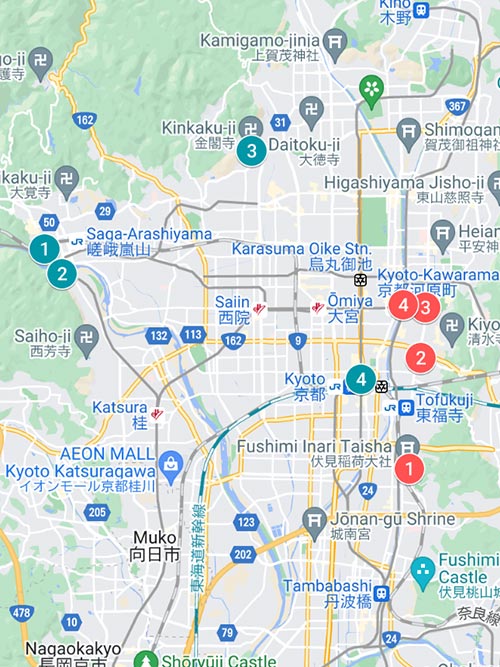
Not got time to read the entire post? Here is a quick overview of this Kyoto itinerary with a map:
Day 1
- Visit Fushimi Inari Taisha early in the morning. Since it’s one of the most popular tourist attractions in the city, try to get there before 8AM to avoid huge crowds.
- Take a self-guided walking tour through Higashiyama and Gion, Kyoto’s traditional districts.
- End your day with dinner and a walk through Pochonto Alley.
Day 2
- Start early in the morning to visit Arashiyama bamboo grove.
- Walk over to Arashiyama Iwatayama Monkey Park.
- Make your way to Kinkaku-ji, the Golden Pavillion. This is one of Kyoto’s 17 UNESCO World Heritage Sites.
- End your day in Central Kyoto to see Kyoto Tower. There are also lots of restaurants and bars here.
🏨 Stay: Booking.com
📱 Connectivity: Journey Japan eSIM | Wireless Japan Pocket WiFi
🚅 Transport: Individual Shinkansen Tickets | JR Passes | Airport Transfer
🍣 Experiences: Klook | GetYourGuide
📷 My Camera Gear: Fuji Film XT-5 | Sigma 18-50mm f2.8 | DJI Mini 4 Pro
🗾 Take me to a random hidden spot in Japan
☕ Support our free Japan guides by buying us a coffee! Thank you!
2 day Kyoto itinerary
Two days in Kyoto is not a lot of time, so you’ll have to pick and choose. But you can definitely see some of the most worthwhile highlights if you plan accordingly. This two day itinerary shows you how to see the best of Kyoto:
Day 1 in Kyoto
On our first day in Kyoto, we visit one of Kyoto’s most famous temples and its geisha districts.
Fushimi Inari Taisha
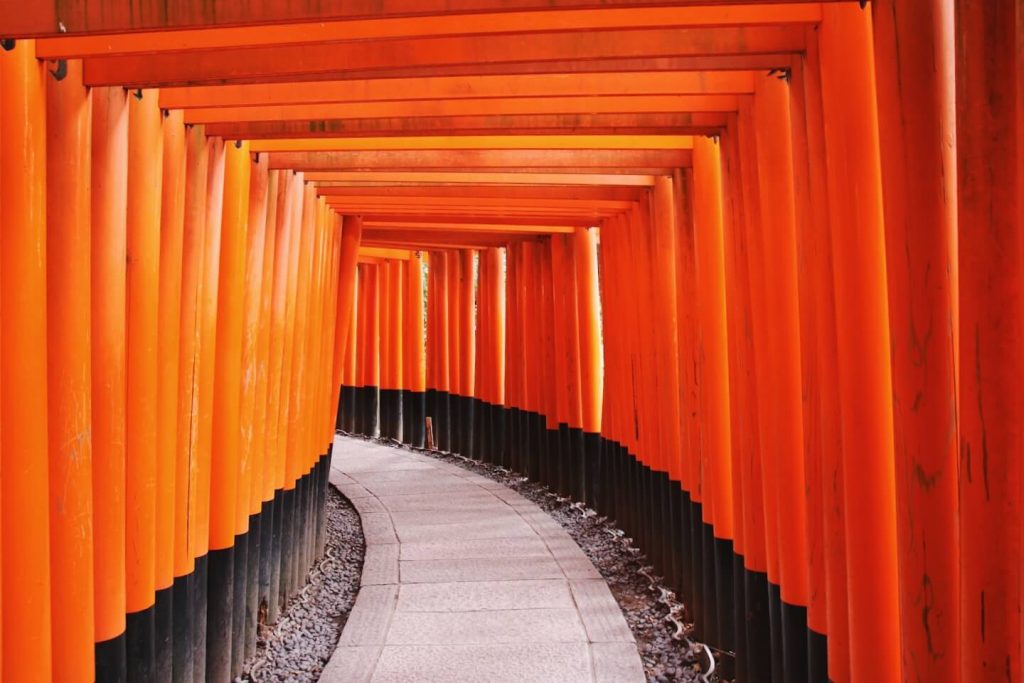
In the south of Kyoto, Fushimi Inari Taisha is located. This shrine is known for its thousands of vermilion torii gates that lead you through the magical forest of Mount Inari. Fushimi Inari’s history dates back to 711 and is dedicated to the Shinto god of rice, named Inari.
Due to the shrine’s popularity, it can get very crowded. To avoid this, I’d recommend going either early in the morning or later at night. And when I say early in the morning, I mean before 8AM. This gives you the chance to take some photos without being photobombed and hike up the mountain without having to queue.
The full four kilometre hike up Mount Inari takes about 2–3 hours. You can enjoy a beautiful view over Kyoto from Yotsutsuji Intersection, which you will reach 30–40 minutes into the climb. If you are visiting during the summer months, make sure to bring enough water! There are shops and vending machines along the way, but these get more expensive the higher you climb.
After returning from your hike, you can grab a snack or some lunch at the local market that’s located right outside the entrance of Fushimi Inari. Local food vendors set up market stalls selling anything from freshly made mochi to yakitori sticks.
After visiting Fushimi Inari Taisha, you can take the train from Inari Station to Kiyomizu-Gojo Station. This will take approximately 15 minutes.

Walk through Higashiyama and Gion
In the afternoon, it’s time to explore Kyoto’s best-preserved historic districts: Higashiyama and Gion. This was one of the things to do in Japan I was looking forward to most. Apart from being able to wear a kimono, it is also the setting of one of my favourite novels about Japan, Geisha of Gion.
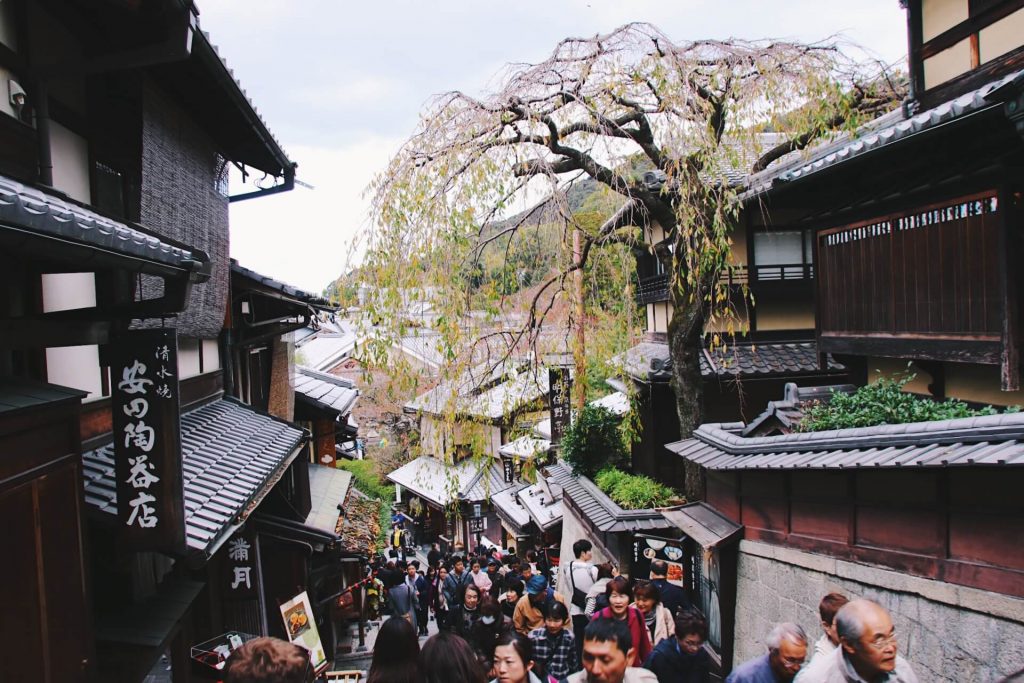
Walking through Higashiyama feels like you’ve been transported back in time. This is exactly what I expected the entirety of Kyoto to be like. Small wooden shops are lining the narrow streets, selling traditional sweets and souvenirs. Higashiyama also has many beautiful shrines and temples to visit.
Gion is located next to Higashiyama and is mainly known for its geishas. In Gion, you can find shops, restaurants and traditional ochayas (teahouses) where geishas and maiko still entertain guests.

The walking tour on the map above takes you to the highlights in these two beautiful districts. Feel free to adjust the route to your wishes, or wander away from it when you come across something that catches your attention. Here are some of the highlights of the walking route through Higashiyama and Gion:
- Kiyomizu-Dera: The most famous part of this temple is its wooden stage, which stands 13 meters above the hillside. You can find many other temples and shrines on the temple grounds of Kiyomizu-Dera. These include Koyasu Pagoda and Jishu Shrine.
- Kodaiji Temple: Kodaiji Temple was built in 1606 in memory of Toyotomi Hideyoshi. Visitors can enjoy the zen gardens, temple halls and a bamboo grove that are part of the temple.
- Yasaka Pagoda (Hokanji Temple): If you have seen photos of Higashiyama, you have most likely seen the Yasaka Pagoda. This iconic pagoda looks out over the district and adds so much character to the historic streets.
- Shirakawa: This scenic part of Gion is much quieter compared to the main Hanami-koji street. If you’re lucky, you might get a glimpse of one of Gion’s Geishas and Maikos.


Pontocho alley
Near the end of the Higashiyama and Gion walking route, you can find Pontocho Alley. Crowned the most beautiful street in Kyoto, this street is filled with elite restaurants and clubs.
Unfortunately, it’s pretty hard to get in without the right Japanese connections, but it’s a perfect place to spot maiko and geisha at night. I’d recommend grabbing some dinner near Pontocho Alley and then wandering down the street yourself.
Day 2 in Kyoto
On our second day in Kyoto, we visit the famous bamboo grove and one of the city’s famous temples.
Arashiyama Bamboo Grove
Head over to Arashiyama first thing in the morning. This district is pretty touristy but it’s home to the famous bamboo grove. This bamboo grove is the first highlight we will visit in Arashiyama. Alongside Fushimi Inarai Taisha and Kinkaku-ji (which is on our list today as well), this is the most photographed place in Kyoto.
Similar to Fushimi Inari Taisha, this is another popular tourist attraction in Kyoto. It gets pretty busy if you go later in the day. Even in the morning, it can be crowded, so make sure to get here as soon as possible.
From Arashiyama Station, it’s a 15-minute walk before you stand amidst the tall bamboo shoots. Even though it might get a little busy, it still feels peaceful. The wind sways the large bamboo trees and it really feels like you’re in a different world for a second.


Arashiyama Iwatayama Monkey Park
From the Bamboo Grove, you can walk through the main street of Arashiyama to get to Iwatayama Monkey Park. From the Bamboo Grove, it takes about 15 minutes to walk to the Monkey Park. Along the way, you will cross the famous Togetsukyo Bridge.
Iwatayama Monkey Park is located on the top of a hill, so prepare for a 20-minute climb. The path isn’t too steep and it gives you some of the most beautiful views over the area. It’s especially beautiful during sptring (cherry blossom season) or autumn.
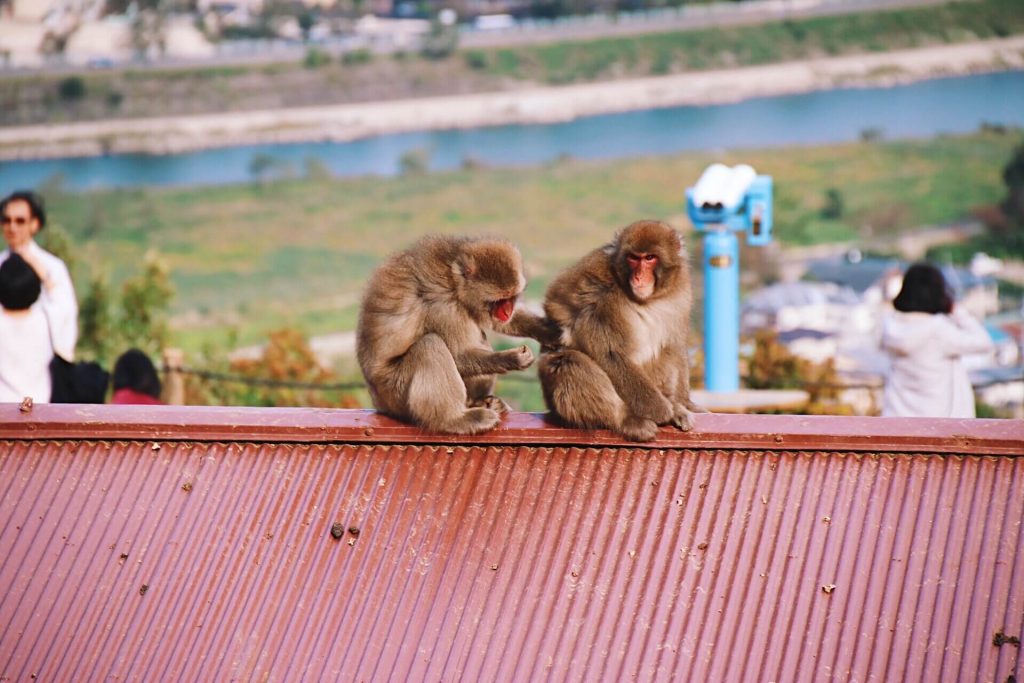
Once you’ve reached the top, you can find the monkeys. Around 120 monkeys roam around the top of the hill, posing for people’s holiday photos and being well looked after. Yes, they are indeed the same breed of monkeys that you can find in the iconic photos, where the monkeys are bathing in hot springs during the winter.
Signs warn you to not look them in the eye, as they can get a bit aggressive. You can, however, feed the monkeys. And it’s completely safe! Simply walk into the building, buy yourself a bag of apples, bananas or peanuts (¥100 per bag) and feed the monkeys through the fence.
This park is completely animal-friendly, unlike some animal cafes in Japan. Even though the monkeys are fed by humans, they are wild and are free to go wherever they please. The workers at the park make sure the monkeys are safe and well looked after.

Arashiyama
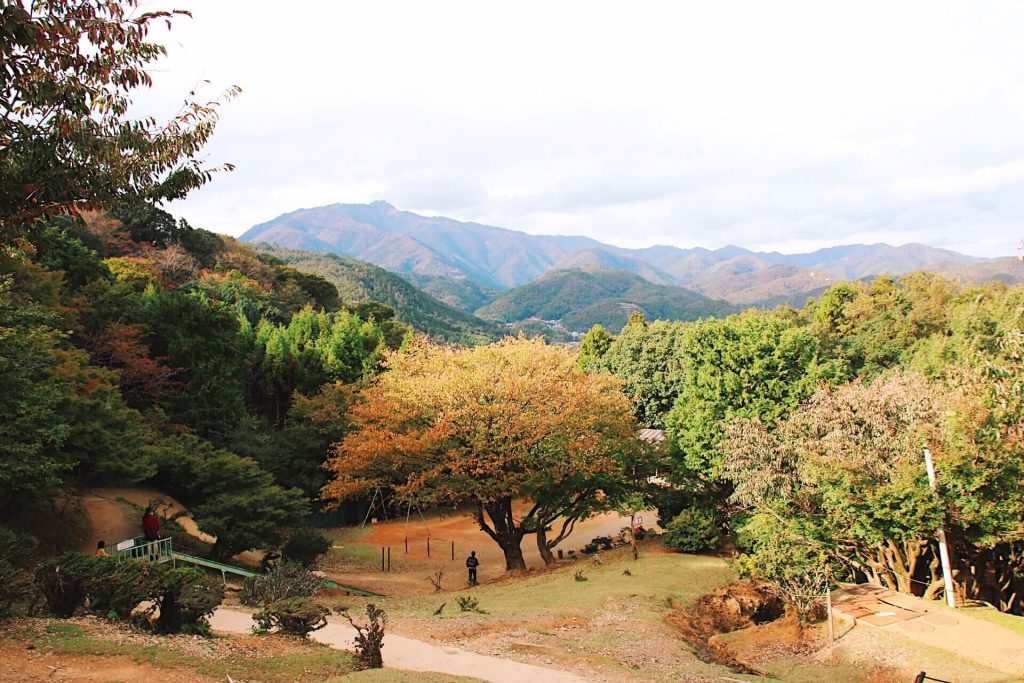
Arashiyama is known to be a tourist magnet. You can definitely feel the crazy contrast between the peaceful bamboo grove and the main shopping street in Arashiyama. It’s busy, very touristy and can get a little chaotic. Despite all that, it’s fun to explore. The main shopping street has many food stands and places to look at souvenirs.
Arashiyama is also home to many shrines and temples that are worth exploring. Temples such as Tenryuji Temple, Daikakuji Temple and Nisonin Temple are found in this district.
Kinkaku-ji Temple
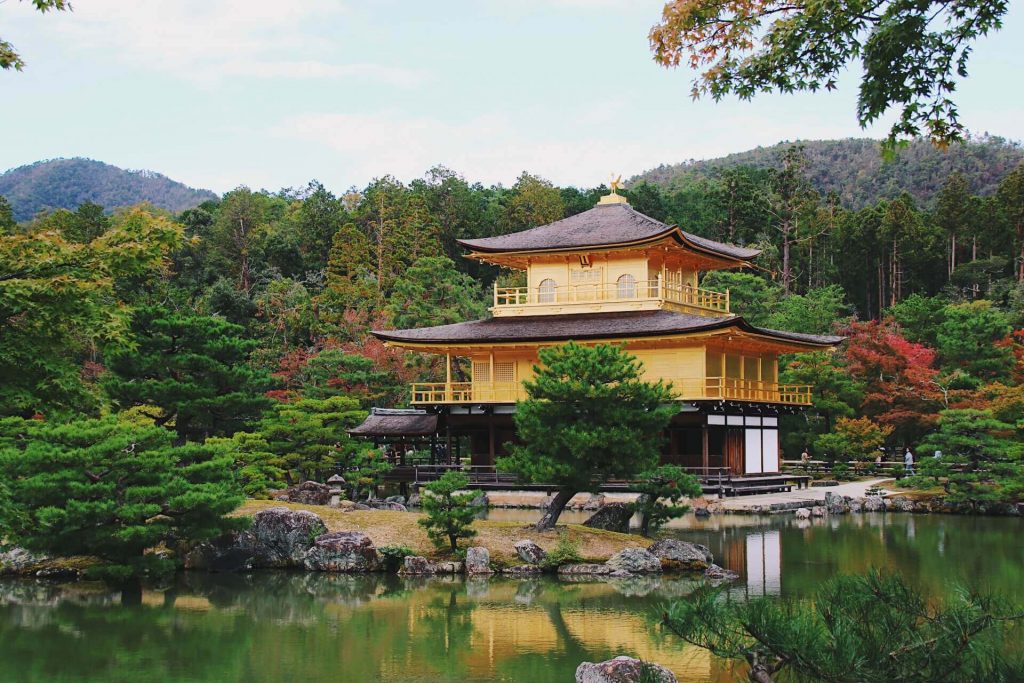
Kinkaku-ji, also known as the Golden Pavilion, is one of the 17 UNESCO World Heritage Sights you can find in Kyoto. Famous for having its two top floors covered in real gold, this beautiful zen temple is one of Kyoto’s must-sees.
After entering the temple grounds of Kinkaku-ji, you will find the golden temple looking out over the lake. Even if it’s busy, you still get the opportunity to take the iconic shot of the temple if you move closer to the fence. The path then guides you around the pavilion, into the Japanese zen gardens that surround Kinkaku-ji. The entire visit takes around 1–2 hours.

Central Kyoto and Kyoto Tower
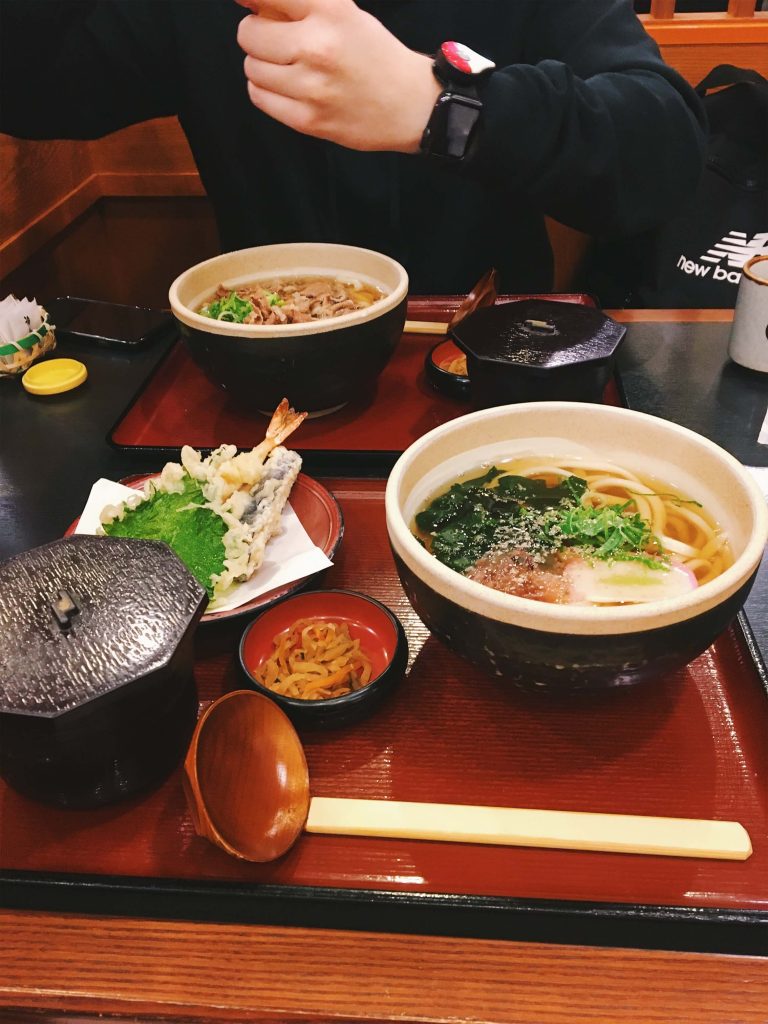
In the evening, we take the train back to Central Kyoto for dinner. Kyoto is filled with the most amazing restaurants and eateries. We chose a little ramen restaurant located near the train station.
After dinner, you can check out Kyoto Tower. Even though this tower isn’t as famous as Tokyo Tower, it still offers a beautiful view of the city – especially at night. A viewing platform is located at 100 meters and gives you a 360 view of Kyoto. On clear days, you can see as far as Osaka.

Kyoto travel tips
To make your two day trip to Kyoto a little easier, here are some extra travel tips:
Where to stay in Kyoto for two days
Finding the perfect hotel in a city as large as Kyoto can get a little overwhelming. That’s why I’ve put together a full guide on where to stay in Kyoto. In the guide, I break down the four best areas in Kyoto, along with the best hotels for different types of travellers and budgets.
If you don’t have time to read the whole post, here is a quick overview:
| Area | Best For | Hotel/Ryokan | Book Now |
| Downtown Kyoto | First time visitors | Hotel Resol Kyoto Kawaramachi Sanjo | Check availability |
| Higashiyama | Traditional atmosphere | Hotel – Kyoto Granbell Hotel | Check availability |
| “ | “ | Ryokan – Miyagawacho Yoshii | Check availability |
| Kyoto Station Area | Travelling around | Hotel Granvia Kyoto | Check availability |
| Arashiyama | Hiking and nature | Nagi Kyoto Arashiyama | Check availability |
Ryokans vs. Hotels
When travelling through Japan, you might want to stay in a more Japanese-styled hotel. These are also known as ryokans. The main difference between a ryokan and a hotel is that you sleep on a Japanese futon in a tatami room rather than in a more western-style bed and hotel room.
Due to its traditional atmosphere, Kyoto is one of the best places to stay in a ryokan. Ryokans are a bit more expensive compared to hotels, but the experience itself adds a lot of value to your holiday.
Note: If you book through booking.com, you can select a “ryokan” option in your search preferences.
Is 2 days in Kyoto enough?
Spending two days in Kyoto is enough time to see some of the main highlights. However, two days isn’t a lot of time in a city as big as Kyoto. There is a lot to see and do!
If you don’t want to rush, I recommend staying for at least four days. However, I understand that’s not possible for everybody. So, if you don’t have enough time in your Japan itinerary, two days in Kyoto gives you a perfect first impession.
Best time to spend 2 days in Kyoto
You can visit Kyoto any month and have a wonderful time, but some parts of the year that are better fitted for a city trip. Both spring (March – May) and autumn (October – November) are the best times to visit Kyoto.
During these months, the weather is mild and temperatures are perfect for walking around. Summer in Kyoto is usually hot and humid, while Kyoto winters are very cold.
If you visit in spring, you are able to catch the famous Sakura cherry blossoms. Please note that Kyoto is usually very crowded during cherry blossom season, as many tourists and locals visit Kyoto to see them.
That’s why I recommend visiting Kyoto in the autumn. The temperatures are perfect in autumn and the coloured leaves make up for missing the cherry blossoms.

How to get to Kyoto
Being one of the biggest and most popular cities in Japan, Kyoto is easy to reach by using public transport. Don’t worry if you don’t speak Japanese, trains are very easy to navigate in Japan. When visiting Japan, you usually fly to either Tokyo or Osaka. From there, you can make your way to Kyoto:
How to get to Kyoto from Tokyo
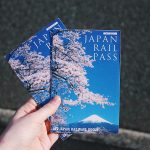
If you start your Japan journey in Tokyo and want to visit Kyoto, you need to travel on the Shinkansen (bullet train). From Tokyo, it costs over £100 for a single ticket to Kyoto. The bullet train will get you to Kyoto in 2 hours and 20 minutes. One way to save money on train costs is to get a Japan Rail Pass.
How to get to Kyoto fom Osaka
Kyoto is located close to Osaka, which makes travelling there nice and easy. Use the JR Kyoto Line to get from Osaka to Kyoto in 23 minutes. Alternatively, you can use the bullet train from Shin-Osaka Station to reach Kyoto in as little as 13 minutes.
How to get around Kyoto
Kyoto’s transport system is, like most of Japan, very easy to use. There are buses, trains and metros available. All of which can take you to the most popular places in the city.
The metro is by far the easiest one to use and there are English signs at most stops. It’s also a good idea to get a prepaid travel card in Japan. They go by different names (Suica, Pasmo, Icoco, etc.), but no matter the name, you can use them across the whole of Japan.
The way they work is simple. You buy one at any train station and top them up with cash. When you want to travel by metro or train, you simply tap your card at the gates when entering the station, and tap your card at the gates again when you leave your destination station. The card will then automatically take the correct change.
This way, you don’t have to worry about buying individual tickets for your trips. It’ll save you time and money!
Day trip options from Kyoto
When staying in Kyoto, you may take to add some additional day trips to your Japan itinerary. Here are some nearby cities that are worth a trip:
- Osaka: Famous for its fresh fish, amazing street food and great nightlife, Osaka is another Japanese city that is high on many people’s travel wish lists. Osaka Castle, Dotonbori, Osaka Aquarium and Universal Studios are some of the highlights that could make up for a perfect day out in Osaka. From Kyoto, you can get to Osaka in as little as 13 minutes with the Shinkansen.
- Nara: Nara is probably one of Japan’s most popular day trips because it’s located close to both Kyoto and Osaka. Famous for its deer park where 1200+ deer roam around freely and its many shrines, spending one day in Nara is a great idea when staying in Kyoto. From Kyoto, it takes around 35–45 minutes to get to Nara by train.

Keep in mind that you can use the JR Pass for many of these day trip. Not sure one is worth it for your trip? Check out our guide to the Japan Rail Pass.
Two days in Kyoto – Conclusion
While there is so much more to see in Kyoto than the things included in this itinerary, two days in the city will give you a great first impression. It will, without a doubt, make you excited for a second trip!
Many tourists rent kimonos when they’re in Japan. But can foreigners wear kimono? We’ve got the answers!







This was so informative and well written! I love the culture their and looks like you had an amazing time x
FAATIMAH • ROSEYGOLDBOX
http://www.roseygoldbox.blogspot.co.uk
Thank you Fatimah, glad you enjoyed it! It was such a wonderful trip, wish I could go back soon!
You look so lovely in your kimono! I’d love to rent one for a day. This is such an informative post – as always. I’ve always heard of this particular place in Japan but never really known what was there. If I ever visit Japan, which hopefully one day I will, this will definitely be on my to-visit list!
Thank you so much Jenny! I felt so pretty in it, it was such a lovely colour kimono ^_^ If you ever go to Japan, let me know and I could help plan it with you 🙂
Kyoto is definitely on my bucket list! Great tips for Fishimi – I’m not a fan of getting stuck with the crowds trying to take a few nice photos, so love knowing that if you go earlier probably won’t be as busy. Wow I’ve never heard of Pocket WiFi but it’s sounds perfect!! Just what you need for exploring
If you ever go to Fushimi Inari, definitely make sure to visit early or late! I think I would’ve hated it if I came a bit later. It makes such a big difference 🙂 AND OMG the Pocket Wifi is such a lifesaves, so glad I found it before we went!
Your kimono is absolutely gorgeous! I didn’t realise you could rent them while you’re there – how cool! Great post x
https://www.femaleoriginal.com
Thank you so much Faye! <3 That's super sweet! It was such a cool experience, I'd highly recommend it!
Your Kimono is absolutely gorgeous! Really suits you.
And an amazing post as well Nele, this was super informative and well written! Love it xx Manon
Thank you so much Manon, that’s super sweet! Really glad you enjoyed the post 🙂
I loved Kyoto. It is such a beautiful place. The highlight of my visit was definitely the Fushimi Inari. It’s actually exactly a year since I visited Japan, so this is perfect for the memories.
I couldn’t agree more, Fushimi Inari was my favourite spot! It’s almost a year ago that we went too, miss it so much! Hope to return in 2020 though!
Fushimi Inari Taisha is very popular in Instagram, and I would love to go there. I am also intrigued by the route between Higashiyama and Gion, Kodaii and Hokanji Temples, and also the Arashiyama Bamboo Grove. I liked how you have described the places along with the time of visiting. I am going to visit Kyoto soon and surely going to rent a Kimono.
You can definitely get some good shots for IG in Kyoto, so many beautiful places to photograph ^_^ Really glad the post was helpful, if you ever need any more help with it, please let me know!
I loved Kyoto and Nara for sure!! this itinerary is amazing, if i have the chance to visit japan i will definitely follow your itinerary x
such a lovely place to visit and the food look so good x
Jess
Thank you Jess, so glad you enjoyed this post! Hope you get the chance to visit Japan in the future 🙂
Japan hasn’t been on my travel list, chiefly because I know exactly nothing about the country. But Kyoto looks incredible. It reminds me of Memoirs of a Geisha (perhaps it is set there?) and definitely peaks my interest. Everything looks amazing and I think it’s going on our list!!
Do many tourists bring their child(ren)?
Memoirs of a Geisha is indeed set (or based on) Kyoto! One of my favourite books is “Geisha of Gion” and it felt so crazy to finally walk the same streets as her – honestly a dream come true!
I think you could easily do a trip to Kyoto with kids 🙂 I’ve seen some families exploring the city when we were there 🙂
Thank you so much for this guide! We’re actually trying to go to Japan at some point and this is such a great starting point! We’re hoping to have more than 2 days but you just never know how things will work.
So glad to hear you enjoyed this itinerary! If you have more than 2 days, I’d definitely take them – there’s so much to do and see in Kyoto ^_^ You can always use these two days and add some more stuff for additional days 🙂
Perfect! We plan to climb Mt. Fuji in Japan, and included Kyoto in our side trip. Our interest in including Kyoto was triggered by a YouTube video showing street food in Nishiki Market. However, we might spend more than 2 days there as we usually stay longer in any one place to really experience the culture.
Yeah that makes sense! We were on a bit of a time schedule due to our JR passes and we wanted to see Osaka and Nara too – which is why we only stayed in Kyoto for a short time. I wish we had more time – maybe next trip!
I’m super jealous of this trip you took. Japan has always been way at the top of my travel wish list, but just haven’t made it here yet. I think both Tokyo and Kyoto would be so exciting to visit. Your itinerary looks perfect for a couple days in Kyoto, hopefully I get to tackle this one myself soon too!
Thank you lovely! I really hope you get to experience it in the future, Japan is honestly such an amazing country to visit 🙂
Oh well. I have always thought these main sights of Kyoto are horribly crowded, but you prove otherwise. To take good shots, I think I have to wake up early. Hope to be there with my camera
I was worried about the same thing. So many tourists visit Kyoto and it’s hard to see everything without it being very crowded. But I think going in the autumn really helps with that. It didn’t feel too busy when we were there 🙂
Kyoto is truly a magical place for me. It’s exuding beauty is hard to decipher, and you have to feel and experience it in order to understand.
The more I read your posts Nele the more I’m absolutely desperate to visit Japan, you make it look beautiful! Thankyou for such an in-depth informative post too x
Kayleigh Zara 🌿 http://www.kayleighzaraa.com
Japan is such a dream destination and looks like so many things are there to explore in Kyoto. The view from the Kiyomizu-Dera temple is absolutely breathtaking!
Hi, thanks for the guide and overall, it was a good idea to summarize the 2-day visit. You do have a typo: “Pochonto Alley” should read “Pontocho Alley”.
Thanks for the heads-up! I’ll get that changed right away 🙂
This place looks so beautiful! I would love to go to Kyoto one day! Thank you for sharing!
I wanted to find your blog when i started my route to Japan. Thank you for sharing your experience is looks like wondreful . I took some tips ! thank you very much