Travelling in Japan is a lot easier with a stable internet connection for navigating the train system, translating menus and using your pre-planned Google Maps. Pocket WiFi or eSIM are the best ways to get internet in Japan, but how do they work, and which should you choose?
Having used a variety of both Pocket WiFi and eSIMs across multiple trips in Japan, I’ve put together this guide to show the differences, how to use them, and which one is better for your travel style (and some discount codes!).

Pocket WiFi vs eSIM Overview
If you don’t have time to read the full guide, here is a quick overview:
| Pocket WiFi | eSIM | |
|---|---|---|
| Best for | Groups, families, travellers with multiple devices and heavy data users. | Solo travellers, groups that want to do separate things, and travellers looking for a cheap and quick solution. |
| Pros | Works with multiple devices, easy to set up and use, shareable within groups, good for heavy internet users, option if your phone is locked/not eSIM compatible. | Great for solo travellers or groups that want to do separate things, no extra device, not possible to lose or damage, easy to set up (no waiting in lines at the airport for a physical SIM card), more convenient. |
| Cons | Need to be near the device for connection (harder if your group wants to split up), have to carry and charge an extra device, and additional fees for losing/damaging the device. | Requires unlocked and eSIM-compatible phone, every device needs its own eSIM (unless hotspotting is allowed). |
| Best option | ||
| Discount code | Use code NAVIGATIO for 25% off | Use code THENAVIGATIO for 5% off the unlimited plan |

Both Pocket WiFi and eSIMs often offer “unlimited data” plans. While this may sound appealing, not all unlimited plans are actually unlimited. Some of these offer you a certain amount of data before reaching the “fair usage limit” and will then cap your internet speeds dramatically, making it very hard to use the internet properly. Before opting for these, always check the T&Cs.
Do I Really Need an Internet Connection in Japan?
Yes, you need a reliable internet connection while travelling in Japan. Navigating the train system, translating menus, and using Google Maps for directions are essential in Japan. It’s very easy to travel around Japan, but only when you can use your phone.
Public WiFi is becoming more available in Japan, but it’s not good enough to rely on it for your whole trip. Not to mention, it can be unstable and not available everywhere, especially in more rural areas.
On top of that, as public WiFi doesn’t give you a private connection, it can be unsafe to use it without a VPN.
Relying on your hotel’s WiFi also won’t give you enough access to travel around comfortably. Getting a Pocket WiFi box or a reliable eSIM is a must.

Google Maps and Google Translate are essential for travelling to Japan, but we’ve listed some other handy travel apps in a separate guide.
Can I Use My Home Provider in Japan?
You can often use your home provider when abroad. However, this option is almost always way more expensive than getting a Pocket WiFi or an eSIM. Regular roaming charges are already very expensive, but there are sometimes hidden costs that could skyrocket your phone bill.
Before going with your home provider for ease of use, it’s best to compare the prices to the ones for an eSIM or Pocket WiFi below. Also, check for any additional hidden fees for calls or texts.
What is an eSIM?
Best for: Solo travellers, groups that want to do separate things, and travellers looking for a cheap and quick solution.
An eSIM is a digital SIM card. It’s similar to a physical SIM card, but instead, you can download and activate it on your phone without having to swap the actual SIM card. There is no need for an additional device, as you’ll have everything you need on your phone.
Here are the pros of using an eSIM in Japan:
- Perfect if you’re travelling solo
- A good option if you’re travelling with a group, but plan to do separate things during parts of your trip
- No need to carry or charge an extra device
- No additional fees for insurance
- You can’t lose or forget to bring it.
You can only use an eSIM if your phone is eSIM compatible. Most modern phones support eSIMs, but it’s worth double-checking before you make your purchase. Your phone also needs to be unlocked, which means it’s not tied to a certain provider.
Setting up the eSIM can take a few steps, but it’s often explained step-by-step by the provider.
Every device will need its own eSIM, so it can be more costly when travelling with a family or larger group. Some eSIMs allow for hotspots, so you can let others connect to your eSIM with a few additional steps.
Keep in mind that most eSIMs are data only. You won’t get a Japanese phone number, and you won’t be able to make phone calls or send SMS messages. With data, you will be able to use services like WhatsApp, LINE, iMessage, FaceTime and Facebook Messenger.
Most eSIMs give you a set amount of data you can use across several days. For example, 10GB across 14 days. There are unlimited plans too, but beware of fair use policies that cap your data speed after reaching a certain limit.
Best eSIM in Japan
In recent years, countless eSIM companies have popped up that offer internet connections in a wide number of different countries. I’ve tried a few, but I’ve not had the best experiences with them, so I’ve struggled to recommend any in the past.
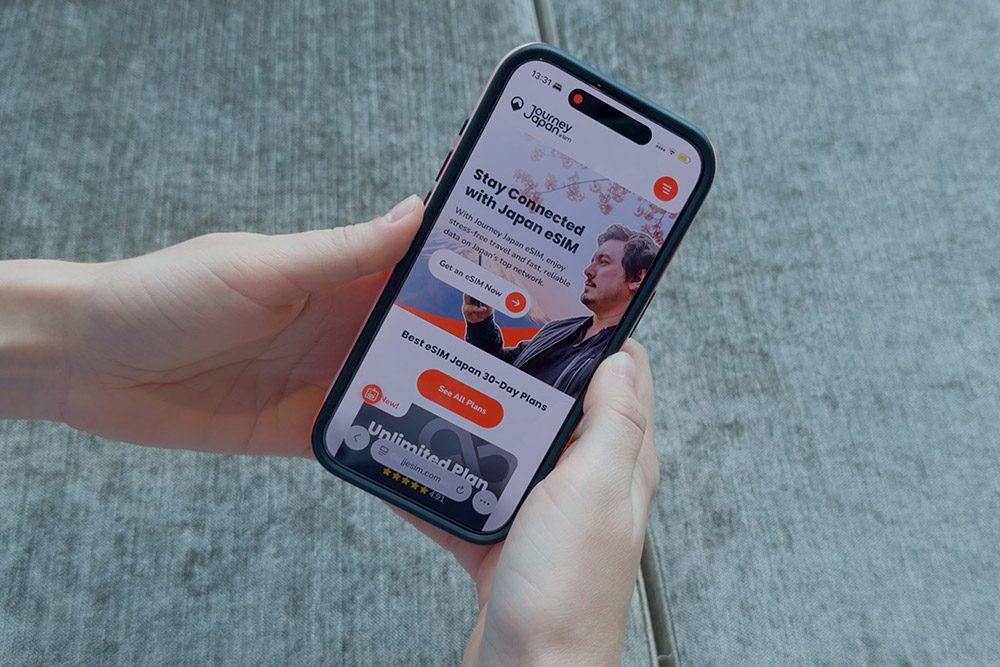
Luckily, I’ve now come across Journey Japan eSIM. Not only is this a Japan-based company that offers eSIMs in Japan only, but Journey Japan eSIM was created by Chris Broad from Abroad in Japan. Knowing the problems with other eSIMs and the issues travellers have when visiting Japan (especially the importance of having reliable data!), Chris set out to create an eSIM specifically for people travelling to Japan.
Specialising in Japan makes Journey Japan eSIM one of the best options, as they know Japan’s local networks much better than companies offering eSIMs worldwide. You’ll also get better and faster support as they are in the same time zone as you (and in English!).
Journey Japan uses NTT Docomo’s network, the largest and most reliable phone network in Japan. This guarantees great coverage, pretty much anywhere you go (covering 99% of Japan). Another pro is that Journey Japan allows you to use unlimited tethering and hotspotting.
They take the stress out of travelling by offering tailored Japan travel data plans, offering set amounts of data that you can use over 30 days (10GB, 20GB or 50GB). They have now also launched an unlimited plan, giving you unlimited GBs across 7, 14 or 30 days.
Unlike some other “unlimited” eSIMs, Journey Japan eSIM actually gives you unlimited data, without any daily caps, fair usage policy or reduced speeds.
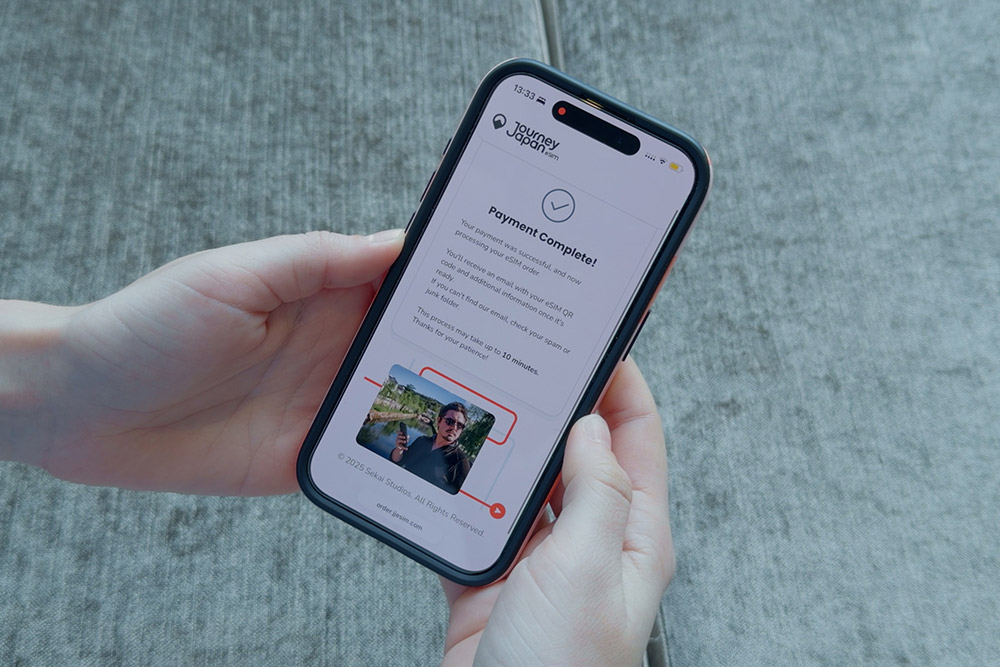
You can now use code THENAVIGATIO for 5% off the Journey Japan eSIM Unlimited Plan!
What is Pocket WiFi?
Best for: Groups, families, travellers with multiple devices and heavy data users.
Pocket WiFi is a small device that acts as a bridge between a network in Japan and your devices. You carry it with you, and it lets you connect multiple devices at the same time.
It’s similar to connecting to your WiFi at home, but you just carry the WiFi box with you. That way, you’ll always have a connection.
Here are the pros of using Pocket WiFi:
- Perfect if you’re planning on using multiple devices
- Ideal if you’re travelling with a group or family and are planning to stay together while travelling
- Super easy to set up; you just turn it on and connect with the provided password
- Great option for heavy internet users, like streaming videos or gaming
- Often comes with larger data allowances and faster download/upload speeds compared to eSIMs
- A good option if you don’t have an eSIM-compatible phone (locked to your home provider or an older model).
You can order them online and pick them up from most airports. Some even deliver them to your hotel, but we recommend ordering it from the airport so you can use the internet to find your way to your hotel.
Dropping it off is also very easy, as you’ll receive a return envelope with your Pocket WiFi. At the end of your trip, you pop it in the envelope and drop it off at a postbox, which can be found at all airports.
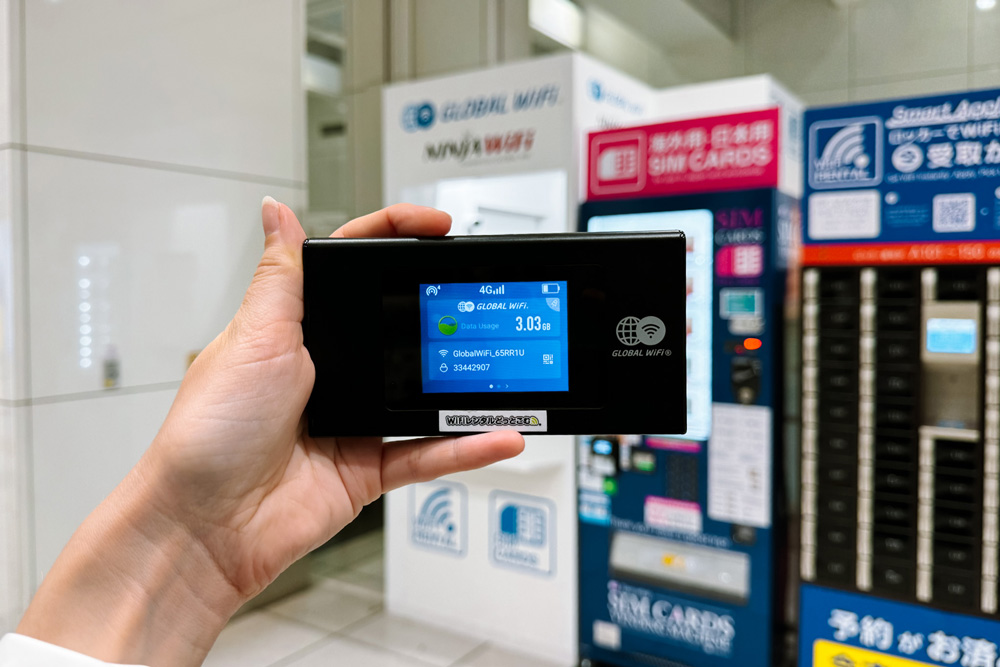
You do have to carry an additional device with you (even though it’s small), and it does require charging every night. However, we normally charge them alongside our phones and cameras, so it’s not a lot of extra work. It’s also a good idea to carry a power bank with you in case the Pocket WiFi runs out of charge during a long day of exploring.
Another downside is that if you’re travelling with a group, you need to stay together to stay connected to the internet. If your group wants to split up and do different things, you won’t all be able to stay connected to the same Pocket WiFi. A similar issue can occur if you accidentally forget your Pocket WiFi at your hotel. You need to be near it to use it.
There are additional insurance fees when renting a Pocket WiFi, and further fees apply if the device is lost or damaged (which can’t happen with an eSIM).
Best Pocket WiFi in Japan
There are several Pocket WiFi companies in Japan, but we recommend Wireless Japan or Ninja WiFi as we’ve had great experiences using both.
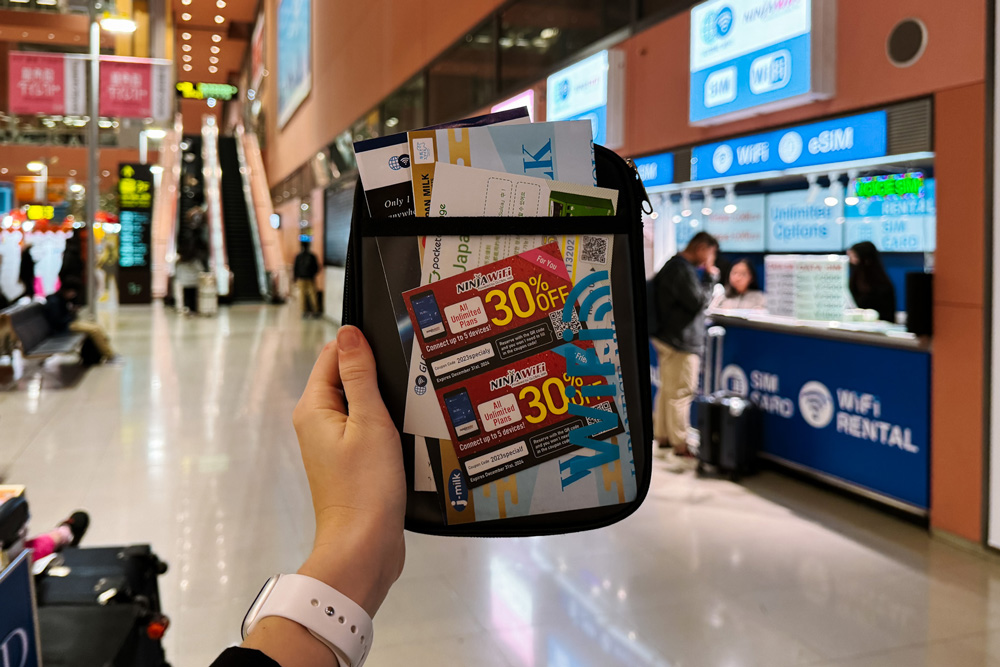
Both services have counters at the big airports, making it very easy to pick up after arriving. Wireless Japan and Ninja WiFi work similarly, and the battery life seemed okay on both. It’s still smart to carry an additional power bank with you just in case. With both services, we had to top up the charge a few times, especially on long days.
Even in rural parts of Shikoku or during our hike along the Nakasendo, Wireless Japan gave us a good connection without ever hitting a limit.
Ninja WiFi has also worked great on previous trips, but we did notice it slowing down after hitting a certain usage on several days. These were very heavy internet usage days, so I don’t think you’d easily hit this if you’re travelling around Japan, but it’s still worth mentioning.
Prices seem to vary as both Wireless Japan and Ninja WiFi have discounts and promotions running on different occasions, so it’s best to compare the prices to find what works best for your trip. For Wireless Japan, you can use code NAVIGATIO for 25% off.
Final Recommendation: eSIM or Pocket WiFi?
Both Pocket WiFi and eSIMs are great ways to get an internet connection when travelling in Japan.
Pocket WiFi is a good option for groups that travel together or people who are planning to use multiple devices. They’re easily picked up upon arrival and set up within seconds. The downsides are having to carry an additional device around and having to be near the device to connect, which can be tricky if your group wants to split up for an activity.
eSIMs, on the other hand, are an easy and cost-effective option for solo travellers or groups that are planning to split up on certain days. Your phone does need to be eSIM compatible, and every user usually needs their own eSIM (unless you can use a hotspot).
You can get a combination. Getting a Pocket WiFi device as your main source of internet, topped up with individual eSIMs when your group splits up, can be a great alternative. That way, you’ll all always be connected to the internet.