Shikoku had been on my list of places to visit in Japan for a while, so I already had an idea of what I wanted to see and do. But I wasn’t quite prepared for how much I was going to love this part of Japan.
During my time in Shikoku, I drove through deep green cedar forests, saw the most beautiful groves and mountains, stayed overnight in a 100-year-old farm, forged a Japanese knife, saw the world’s largest natural whirlpools and soaked in one of Japan’s oldest onsen towns.
Shikoku feels like it has everything Japan is known for, and somehow, still without the crowds. Even though I visited Shikoku during the peak autumn season, it seemed like I was one of the few foreign visitors in most places.
If you’re also planning on falling in love with Shikoku, I’ve put together this 10-day Shikoku itinerary. It’ll take you through all four Prefectures on Shikoku, and includes some of the best experiences I’ve had in the whole of Japan.
- Shikoku Itinerary Overview & Map
- Full Shikoku Itinerary For First Time Visitors
- What to See Before and After Shikoku
- Shikoku FAQ
- Final Thoughts on Visiting Shikoku
Key Takeaways
– Shikoku is one of the least visited areas in Japan, but one of the most beautiful. Experience a slice of Japan without the crowds while still seeing everything Japan is famous for.
– This is a 10-day self-drive itinerary starting in Matsuyama and ending in Takamatsu (or reverse). It covers all four Shikoku prefectures: Ehime, Kochi, Tokushima and Kagawa.
– Renting a car is recommended over public transport on Shikoku
– The knife-making workshop and farm stay should be booked in advance, as they fill up quickly. It’s possible to readjust the itinerary to fit it in on other days if necessary.

Shikoku Itinerary Overview & Map
Shikoku is the smallest of Japan’s four main islands and home to four Prefectures (Ehime, Kochi, Tokushima and Kagawa). If you’ve done the main Golden Route in Japan and/or are looking for another area to visit, Shikoku could be a fantastic choice.
This self-drive itinerary will take you through all four Prefectures, and follow the route below:

You can do this itinerary back-to-front as well if you’d rather start in Takamatsu and end in Matsuyama. It’s also possible to swap some days around if that works better for you. But this is the route I followed when visiting Shikoku, and the one I would recommend!
Shikoku is also famous for the 88-temple pilgrimage. This is a 1,200 km route that takes you past 88 temples on Shikoku and is walked by around 150,000 people every year. I won’t be focusing on this part of Shikoku as much (only one of the 88-temple pilgrimage temples is included), but if it’s something of interest, I recommend checking out this website.

Stay connected to the internet during your trip to Japan (essential for using apps like Google Maps & Translate!) with an eSIM. Journey Japan eSIM specialises in eSIMs in Japan, making them the best option for your next trip. (Read our full review here)
Where to Stay in Shikoku
As this Shikoku itinerary is a self-driving guide, all the accommodation below has parking included (either for free or a small fee that can be paid at the hotel on the day of your stay).
Shikoku doesn’t have a lot of accommodation options outside the bigger cities, so you may have to do a bit of extra research to find a hotel in case any of the recommended ones below have been booked already. However, with the booking.com map tool, it should be relatively easy.
| Day | Location | Recommendation |
| 1 | Matsuyama (ideally Dogo Onsen area) | Dogo-no-Yado Katsuragi |
| 2 | Between Ozu & Kurogane Workshop | ゲストハウス西村サイクル 24C |
| 3 | Between Kurogane Workshop & Yusuhara | KERAYA |
| 4 | Kōchi | OMO7 Kōchi by Hoshino Resorts |
| 5 | Kōchi | OMO7 Kōchi by Hoshino Resorts |
| 6 | Iya Valley | Kouya Farm |
| 7 | Tokushima | JR Hotel Clement Tokushima |
| 8 | Takamatsu | Takamatsu Airbnb |
| 9 | Takamatsu | Takamatsu Airbnb |
| 10 | Okayama (optional, depending on the rest of your trip) | Okayama Karaku Hotel |
Renting a Car in Shikoku vs Public Transport
During our time in Shikoku, I relied on a rental car. Public transport in Shikoku is quite infrequent, so it can be tricky. Some of the locations on this itinerary are hard to reach without a car, so a rental car is essential for this specific Shikoku itinerary.
I rented my car with Toyota Rent a Car, which I’ve used multiple times across Japan over the years, and they’ve always been great. It was really nice to have my own car for the whole Shikoku trip, and it gave me so much freedom to stop at certain places or go out of the way a little.
As this isn’t a circular itinerary, I picked it up in Imabari and dropped it off again in Okayama without any issues. When renting it on Toyota Rent a Car’s website, you can select where you want to pick it up and drop it off, and you pay a small additional fee for the drop-off to be elsewhere.

If you don’t drive, public transport could still be an option, but you will have to readjust this itinerary. You’ll have to either add some extra time to use trains and buses, or skip places that are difficult to reach without a car. You can opt for one of the regional JR Passes, the JR Shikoku Pass, for example.
The JR Shikoku Pass has different options, including 3, 4, 5 or 7 consecutive days. As this itinerary covers 10 days, the JR Shikoku Pass also wouldn’t cover the whole trip. However, it is always possible to adjust this itinerary and make it fit in 7 days, including spots that are on the JR lines.
I will be writing a dedicated Shikoku itinerary for public transport that you can use instead in the near future.
Full Shikoku Itinerary For First Time Visitors
I’ve planned this 10-day Shikoku itinerary to start in Matsuyama. Originally, Richard and I planned to arrive on Shikoku by bike after cycling the Shimanami Kaido, pick up the car from Imabari and drive towards Matsuyama.
However, bad weather caused us to cancel the cycling trip (again! This is the second time bad weather ruined my plans to cycle it. Hopefully, I can edit this in a few months when I try again). Instead of cycling, we took the bus from Fukuyama to Imabari, where we picked up our rental car.
You can also take a flight to Matsuyama Airport from Tokyo (1 hour 35 minutes) or Kansai (45 minutes). But as with all my itineraries, you can always adjust or flip it around depending on the rest of your travel plans. For example, you can start in Takamatsu and end in Matsuyama and follow this itinerary in reverse.
If you need help with your Shikoku itinerary, you can also book a Japan travel consultation with me, where I can help personalise your itinerary for Shikoku to make it work for you.
Either way, here is the 10-day Shikoku itinerary I’d recommend to friends and family:
Day 1. Matsuyama & Dogo Onsen
We start our Shikoku itinerary in Matsuyama, the capital of Ehime Prefecture and the largest city on Shikoku. Matsuyama is known for being the setting of the famous Japanese novel Botchan, its beautiful castle and Dogo Onsen, which is believed to be one of Japan’s oldest hot spring towns.
When staying overnight in Matsuyama, it’s best to stay in the Dogo Onsen area, as it has a lovely, authentic atmosphere. In the evening, Dogo Onsen Honkan lights up, and the streets fill with people wearing yukata, ready to enjoy the hot springs.
During our night in Matsuyama, we stayed in Dogo-no-Yado Katsuragi, which has lovely Japanese-style rooms and a great on-site onsen. It’s also located pretty much next to Dogo Onsen Honkan, so you can walk over in the evening to also try the baths there!


Things to do in Matsuyama
When spending the day in Matsuyama, you can check out the following things:
- Breakfast at Shirasagi Coffee: Located in the Dogo Onsen area of Matsuyama, Shirasagi Coffee has some seats at the window, giving you a lovely view of Botchan Train and the retro Dogo Onsen Station. They serve great coffee and have some tasty breakfast sets. I had a thick piece of buttered toast with an egg, and my husband went for the toast with red bean paste. Both were amazing and quite affordable for a full breakfast set.
- See the Botchan Train: Originally, this was a steam train dating back to 1888. It’s now been remodelled and runs on diesel, but the retro look remains the same. The drivers even dress up in the original outfits from over a hundred years ago. You can ride the train yourself or simply watch it drive by the station.
- Visit Matsuyama Castle: Matsuyama Castle stands atop a hill overlooking the city. To get here, you can use the ropeway/chairlift for a small fee. As with many castles in Japan, you can find a museum inside. I’ve been disappointed by many Japanese castles and their museums, but this one is actually worth going into.
- Try Ehime Orange Juice: One of the specialities of Ehime Prefecture is its citrus fruits, oranges in particular (as you can see from their mascot, Michan). There are lots of spots to try the juice of these famous oranges in Matsuyama, straight from the tap. You can try a variety of different juices here. In the Dogo Onsen area, 10 FACTORY 道後店 is a great spot to try it.
- Soak in Dogo Onsen Honkan: Along with a couple of other places in Japan (including Sekizenkan in Shima Onsen), Dogo Onsen Honkan is often referred to as one of the main inspirations for the popular Ghibli Movie Spirited Away. Even though I’m really glad I went inside Dogo Onsen Honkan for its historical and cultural importance, the baths were incredibly busy. I’ve been to many onsen, but I’ve never felt this uncomfortable in one before… I much preferred the baths at the ryokan we stayed at.
- Enjoy the free Dogo Onsen footbath: On the hill next to Dogo Onsen Honkan, you can find a free footbath with a view of the building. Especially at night, when Dogo Onsen Honkan is lit up, it’s worth stopping by.
- Try the popular Nabeyaki udon: Nabeyaki udon is also known as Matsuyama’s soul food. It’s a type of hot pot with udon noodles and different types of vegetables, meats and sometimes an egg. We had it at 名代 つるちゃん 道後店, which was delicious.
Matsuyama is also the spot where you can find both Pokémon manhole covers in Ehime Prefecture. One of them is close to Matsuyama Castle, so if you’re hunting them down, it’s worth stopping by.


Day 2. Ozu
From Matsuyama, drive towards Ozu, which only takes about an hour. There are a few short stops along the way that I enjoyed, so it may be worth adding them onto your drive too (this will make the one hour drive slightly longer, but it’s worth it!):
- JR Shimonada Station: If you like Studio Ghibli, this station will probably remind you of Spirited Away (it sure did for me!). It’s also used for lots of other movies and films. This station is also the closest to the sea in the whole country. It’s a beautiful sight, especially if you happen to catch a train here, including the Iyonada Monogatari (special sightseeing train). You can find the timetable here.
- Cafe カトラッチャ珈琲培煎所: There is only one long road between Shimonada Station and Tsunakakeiwa Rock Mishima. On the way, we found this lovely cafe overlooking the Seto Inland Sea. They have a big selection of different coffees and cakes, so it makes for a perfect stop before heading onwards to Ozu.
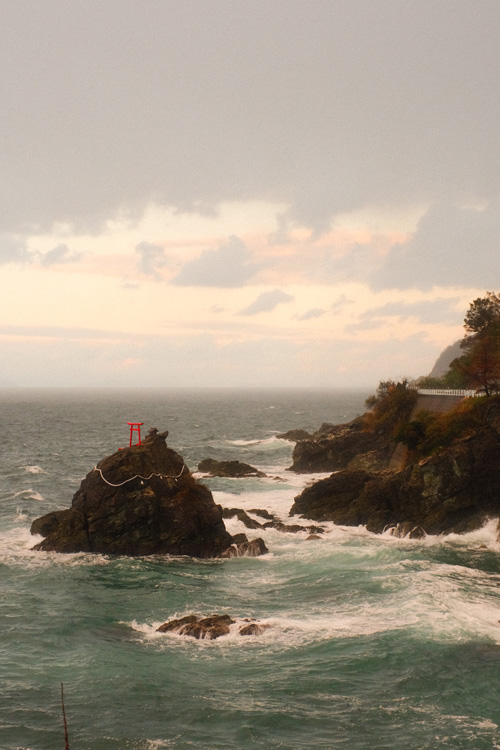
- Tsunakake-iwa: This large rock in the Seto Inland Sea is home to a small red torii gate. Legend says that a rope was suspended from the rock over 1,200 years ago to build the torii gate. It’s a great photo spot, especially if the sea is calm. As it’s along the highway, there aren’t many spaces to park. However, there are two large bays alongside the road right before and after the shrine.


From there, you can drive towards Ozu. With the stops along the way, you should try to get to Ozu around noon, giving you enough time to explore this lovely castle town.
Ozu is split into two halves, separated by the Hijikawa River. On the one side, you can find a more modern city, with your regular chain restaurants and shops. The old town sits on the other side, which is the area I recommend visiting.
There are several free parking lots in the old town, so you shouldn’t have an issue finding a place to leave your car for a couple of hours. I normally use Google Maps to find parking nearby, which works well in Japan.
Things to do in Ozu
Here are some of the best things to check out in Ozu:
- Visit Ozu Castle: Ozu Castle stands on a small hill next to the Hijikawa River, overlooking the old town of Ozu. The hill is surrounded by trees that are even more beautiful in spring and autumn. The castle was rebuilt in the early 2000s. It’s also one of the only castles in Japan that lets people stay overnight (unsurprisingly, it’s a bit pricey! But what’s more unique than staying inside a real Japanese castle?).
- Shop at Pokopen Yokocho: This small antique market is only open on Sundays, but sells a lot of gems. Even if you’re not visiting on a Sunday, it’s still worth walking by, as you can see many of the retro signs still up. The retro museum is also in this area.
- Visit Omoide Warehouse: This retro museum has a large collection of items from the Showa era (1926–89), with a main focus on the 50s and 60s. It is filled with amazing items, including lots of old signs, toys and household items. There’s even a room filled with old Coca-Cola merch, and one area that’s decorated like a Japanese house from this era.
- Explore Garyu Sanso: This villa sits on the edge of the old town, overlooking the Hijikawa River. The craftsmanship that has gone into making this villa is incredible. The villa resembles a traditional teahouse, and the surrounding gardens make for an even lovelier sight. We visited during autumn, and the leaves were at peak colours, but I can imagine it’ll look beautiful in all seasons. There is a small entrance fee, but it’s definitely worth going inside. It was also incredibly quiet, which was such a breath of fresh air after having seen the crowds in Nara and Kyoto earlier that trip.


Tomorrow, we will be driving south to join the Kurogane knife-making workshop, so it’s best to book a hotel closer to the workshop. You can also stay overnight in Ozu, but that means you’ll have to wake up early in the morning as it’s a 1.5-hour drive to Kurogane from Ozu.
We stayed in a small town called Izume, which is only 45 minutes from the workshop. Our accommodation is called ゲストハウス西村サイクル 24C and was perfect for the night. This beautifully renovated apartment came with tatami floors and a thick, fluffy futon.
It even included free parking, and there is a Lawson nearby to grab some breakfast before setting off. I’d highly recommend it if you’re following this travel route in Shikoku.
Depending on availability, you may have to book a different hotel as there aren’t many places to stay in the area. I recommend checking the Booking.com map and seeing what’s available between Ozu and the Kurogane workshop. Kurogane also has accommodation options nearby. You can find out more about them on their website or contact them.

Day 3. Knife Making Workshop Kurogane
The Kurogane Knife Making Workshop is by far one of the coolest, most unique experiences I’ve ever had in Japan. I already appreciate the quality of Japanese knives, especially after having spent way too much time and money buying some for my uncle and dad in Kappabashi, but getting to forge my own Japanese knife in the mountains of Kōchi was on another level.
This full-day workshop got us forging, grinding and heat-treating our very own Japanese knife with the help of blacksmith master Nobuya Hayashi and his Canadian apprentice Jesse.
Nobuya-sensei speaks perfect English, as he lived in New Zealand for a while, so the workshop is perfectly doable if you don’t speak Japanese. The one-day workshop costs ¥44.000 per person, which also includes the knife itself, which I think is more than reasonable.
The drive to the workshop was probably the most remote road we’ve driven on in Shikoku. Through forests and small roads, I even had to get out of the car once to push some fallen bamboo off the road. It sure felt like an adventure.

We were welcomed by Nobuya-sensei and Jesse and were asked what type of knife we wanted to make. The options were endless. As we were going to forge the knife from scratch, we were able to choose the style, length, shape and weight. It was even possible to ask for any specific adjustments.
As I’m still new to the world of Japanese knives, I chose a Santoku knife. This is a standard multi-purpose Japanese knife, which is the most versatile option. My husband wanted a slightly different shape and chose the Hakata knife. Both turned out super well!
I was surprised at how hands-on the workshop was. We really got to do EVERYTHING! From heating the steel and forging the shape to shaping and tempering it, I did it all myself.
The knives are also perfectly usable once they’re finished, as any mistakes are corrected by the professionals. They also finalised the knives, so they’re ready for use afterwards. It’s now one of my most prized possessions in my kitchen at home, one I love showing off to friends and family who are coming over for dinner.


Make sure you wear comfortable clothes and shoes that can get dirty. Layers are also a good choice in autumn and winter as it’s cold in the mountains, but it gets very warm near the forge.
You’ll also have to bring your own lunch. We picked up some goodies from Lawson before driving over in the morning, as there are no supermarkets or shops nearby.
Travel Tip
The workshop is only held on certain days, so you may have to swap a few days around depending on when you can join. It is quite far out of the way, but I think it’s worth adding to your itinerary. It was one of my highlights of Shikoku, and I think back fondly of my time there every time I use my knife at home. It’s also very important to pre-book this ASAP as they book up quickly!


Because the workshop is a little bit out of the way, picking where to stay the night can be a bit tricky. You can choose to stay at the accommodation provided by the workshop (you have to enquire about it here) or book something between the workshop and Yusuhara, as that’s our first stop in the morning.
Day 4. Yusuhara Community Library & Nakatsu Gorge
Shikoku is filled with natural beauty, which is one of the main reasons people travel here. And today, we’re going to see some of it up close at Nakatsu Gorge.
As it’s quite a bit of driving to get there, we’ll also stop at Yusuhara Community Library. The drive itself is very enjoyable too, as you’ll drive through valleys, mountains and forests. It’s a completely different side of Japan compared to the Golden Route that most people visit on their first trips.
Designed by Kengo Kuma, who also designed the New National Stadium, Yusuhara Library is an architectural piece of art. Large beams of local wood seem to intertwine and create beautiful shapes while the natural light pours in.
It was so lovely to see this place has truly become a community place. Children were reading books, parents were picking out other books to bring home and high school students were doing their homework. The place seemed like the beating heart of this town, and it felt wonderful to see inside.
Make sure to have a wander around the library. The design is spectacular, and you can find some smaller pieces of art throughout the building too.
There is free parking at the library, and you can also find a cafe inside if you need a little break during the long drive. Be sure to take your shoes off when entering the library though (slippers are provided).


After visiting Yusuhara, we continue the drive towards Nakatsu Gorge. Again, the drive is beautiful. Despite being in the car for most of the day, the scenery was so beautiful, I didn’t mind it at all.
Shikoku is famous for its stunning scenery and nature. There are a lot of hikes you can do, but an easy one to add to this Shikoku itinerary is the 2.3km walking route through Nakatsu Gorge.
The walking route will lead you through the forest, alongside the crystal blue water of the Niyodo River (also known as Niyodo Blue), large boulders and waterfalls. When we visited, we only came across a handful of other visitors. And because it was in November, the red leaves were a striking contrast with the blue water. It was incredibly beautiful!
The route leads you to Uryu no Taki waterfall at the end, from where you’ll have to walk back. It takes about an hour to get there, and half an hour to get back to the car. It’s an easy walk, where you’ll have to cross a couple of bridges and rocks.
Along the way, you can spot seven stone statues of the Shichifukujin, or Seven Gods of Fortune. It adds a fun extra trying to spot them all during your walk. I managed to see them all!
Parking at Nakatsu Gorge is a bit limited, but there are two small car parks near the start of the hike. There is a small shop and restroom at the start of the hike too.


From Nakatsu Gorge, we drove onwards to Kōchi. We’ll be staying in Kōchi for two nights.
We stayed in OMO7 Kōchi by Hoshino Resorts, which sits in the middle of the city and has spacious rooms with comfortable beds. As with all the accommodations in this itinerary, parking is available at the hotel. The hotel has a public bath too, which was very welcome after the short hike earlier that day.
On the road from Nakatsu Gorge towards Kōchi, we also stopped at a small restaurant on the side of the road called Menya Kurahashi. Depending on what time you’re driving back, you may want to stop here too; the ramen and gyoza were amazing!


Travel Tip
It’s also possible to drive through the Shikoku Karst on this day. While this was our original plan, we had to skip it as we couldn’t drive through it without winter tyres. The snow was much heavier than we expected, especially since the rest of the road had no snow at all. I’d love to try visiting it again in the future though!
Day 5. Kōchi
Kōchi is the name of the capital of Kōchi Prefecture, the second of Shikoku’s Prefectures we’re exploring. On our route through Shikoku, it’s a great stop between Nakatsu Gorge and Iya Valley. But there are quite a few things to do in Kōchi city, so we’re spending a full day here before we move onwards to Iya Valley.
If you happen to visit Kōchi between August 9th and 12th, you can witness the Yosakoi Festival. This festival celebrates dance, and over 200 teams (20,000 dancers) from all over the world come together to perform.
Things to do in Kōchi
When spending the day in Kōchi, here are some of the best things to check out:
- Stop by Harimayabashi: This small red bridge is apparently known as the most disappointing bridge in Japan (that’s a thing apparently). Legend had it that it’s connected with a forbidden love story between a monk and a woman from Kochi. The bridge is located in a small park, and on the way from our hotel to Kochi Castle, so we stopped by.
- Visit Kochidai Shrine Kosaiden: We stumbled upon this shrine while walking towards Kochi Castle, and it makes for a lovely little stop. This shrine is tucked in between some buildings on a busy road but has free-roaming chickens and roosters! They also sell a ton of different omamori (Japanese amulets).
- Stop by Kōchi Castle: Kōchi Castle is one of the 12 original castles in Japan, dating back to the 17th century. Even though there are quite a few castles across the country, most of them have been destroyed and rebuilt over the years (think war, fire, etc.). The castle itself is impressive, but the gardens around it will reward you with some beautiful views. Definitely worth visiting when in Kochi.
- Explore Hirome Market: This market hall, not far from Kochi Castle, has over 65 different stalls selling fresh fish, vegetables, meat and more. There are lots of small restaurant-style stalls too, where you can pick up something to eat and enjoy it at one of the many tables scattered across the market. It’s essentially a food hall/marketplace, the perfect place to try some of the local delicacies.
- Visit Chikurin-ji Temple: One of the things Shikoku is most known for is the Shikoku 88 Temple Pilgrimage. The 1,400 km long route takes pilgrims all across the island, stopping by 88 of the most important temples. Chikurin-ji in Kochi is number 31. Hidden in the forest, this temple is incredibly beautiful. The grounds are home to a handful of buildings, along with a beautiful pagoda.
- Explore the Kochi Prefectural Makino Botanical Garden: The Prefecture’s botanical gardens are close to Chikurin-ji Temple, so you could combine these when visiting. There are over 3,000 plant species in the gardens, with the greenhouse being the biggest highlight.
There are a lot of izakayas in Kōchi that can be perfect for the rest of your evening. You can also head back to Hirome Market as it’s open until 11 pm. Don’t stay up too late though, because we’ll go and explore Iya Valley tomorrow.


Day 6. Iya Valley & Farm Stay
Iya Valley is a large valley with some of the most incredible scenery in Shikoku. Part of Tokushima Prefecture, Iya Valley has crystal blue rivers, gorges, dense forests, thatched roof farmhouses and barely any tourists. It’s one of the most beautiful places I’ve ever visited, and, like with the majority of Shikoku, it seemed like we were the only people there.
Having a car in Iya Valley makes travelling around much, much easier, which is why I would recommend getting a rental car for this Shikoku itinerary. There is some public transport in Iya Valley, but it’ll be hard to get to all the spots I recommend.
On the drive from Kōchi to Iya Valley, make a quick stop at Sugi no Osugi, or Giant Cedar Tree.
This massive cedar tree is one of the tallest in the country and is estimated to be over 3,000 years old. The forest has a mystical atmosphere, and there is a small shrine near the tree where you can pray. The tree is said to grant wishes, so it’s worth giving it a go. There is a small entrance fee, but the area is beautifully maintained, and parking is free.


The next stop on our Shikoku itinerary is Ōboke Gorge. It’s en route towards the vine bridges, so it’s worth making a quick stop at the car park and looking out across this beautiful gorge.
The water has the most amazing colour, and there are boats taking tourists across the rapids.

Afterwards, we drove towards one of the main highlights of Iya Valley: the vine bridges.
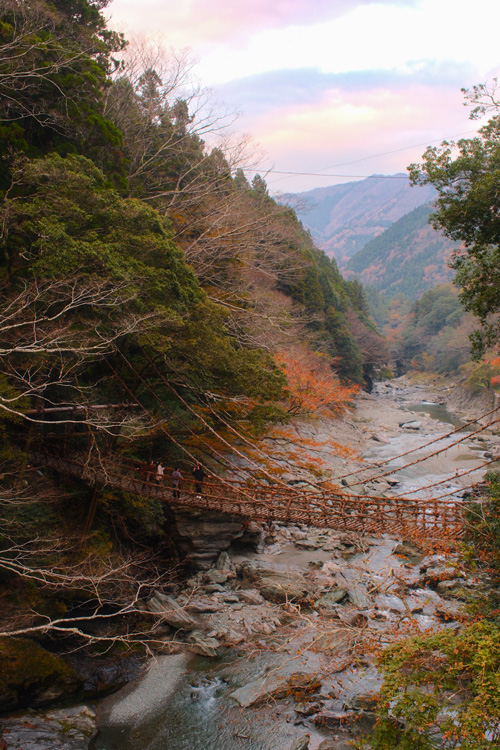
The wild-growing vines in the dense forests of Iya Valley were in the past used to create suspension bridges to help the locals cross the rivers. Only a few of the bridges have survived to this day, and you can even walk across them.
The easiest one to access is the Iya Kazura Bridge.
There are a couple of parking spots available nearby, most of them charging a few hundred yen. To walk across the bridge, you’ll also have to pay a small fee, which helps properly maintain the vine bridge.
Don’t worry, they’ve been properly secured with steel cables, so it’s perfectly safe to walk across them. Despite knowing it was safe, walking across it was a bit scary. Especially with the large gaps between the wooden planks. Still an amazing experience, especially with the clear blue water underneath me and the red autumn leaves surrounding the area.


After walking across, you can go down to the river to see the bridge from another angle. The scenery around is stunning, so it’s worth spending a little bit of extra time here to enjoy it. Once you’re ready to go, we’ll head onwards to our accommodation for the night.
There aren’t many places to stay the night in Iya Valley, but when I came across the farm stays in my research, I knew I had to try it.
Iya Valley is known for the thatched roof farmhouses, and some of them offer overnight stays. There aren’t many of them, so if you also want to experience a farmhouse stay, I suggest booking it as early as possible. This website lists the available options.
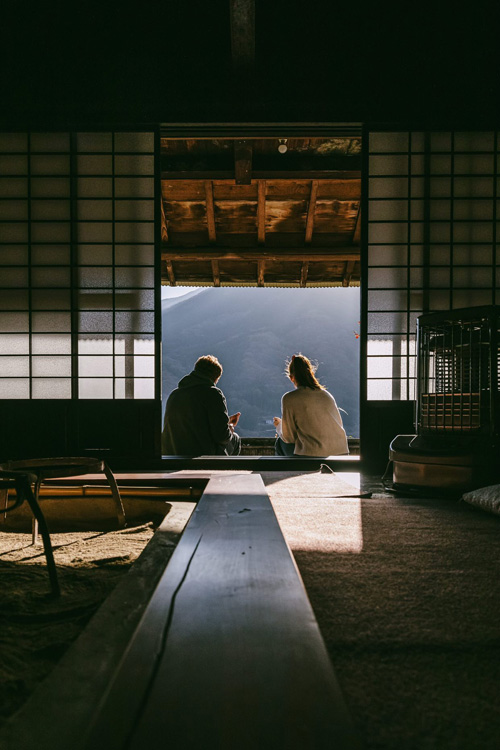
We stayed at Kouya, a beautifully renovated farmhouse over 100 years old. Staying here costs ¥13,000 per night per person, paid in cash at the end of your stay. This includes dinner and breakfast.
The farmhouse is located in Oku-Iya (deep Iya), and you will have to drive up and down some narrow roads. I have to say I’m glad that my husband was the one driving here, especially in the dark. I think I would have struggled by myself!
Once you arrive at the farm, you’ll be surrounded by nature. During our stay, some wildlife (like wild deer) showed up. It’s one of the most remote places I’ve stayed in Japan. I’ve never experienced such silence before.


Shin and Mari, the owners of the farmhouse, made for an unforgettable overnight stay. When we walked into the house, fresh river fish was already being roasted over a small fire in the irori (Japanese traditional sunken floor hearth).
We were shown our room, which had thick futons laid out for us. The home-cooked dinner included tons of local and fresh ingredients, and Shin chatted with us during dinner, explaining more about the food and the house.
I won’t spoil all the surprises of staying here, but just know that Shin and Mari make sure the stay is filled with unique experiences and deliciously home-cooked meals. I never got to see stars as clearly as during this stay. We got to have a look and participate in what life in the Japanese countryside is really like, and it was beautiful.


Day 7. Iya Valley & Nagoro “Scarecrow” Village
After a cosy night in Kouya Farm, we got to enjoy a homemade breakfast, followed by a cup of fresh coffee on the farm’s porch. The sun warmed up the air, and we got to feed some birds while we chatted with Shin and Mari.
Around 10 am, we packed up the car to continue our trip through Shikoku. I was sad to leave the beautiful farm, and wished we could’ve stayed for an extra night or two. I’ll definitely be back here in the future.
From Kouya Farm, we drove to Tokushima. On the way, I recommend stopping at a small town called Nagoro, also known as the Scarecrow Village. As with many small villages in rural Japan, Nagoro has been slowly dying out. Young people don’t have as many opportunities here and move to the bigger cities nearby. As a result, these smaller villages become smaller and smaller.
In Nagoro, however, one local took it upon herself to fill the town with kakashi (scarecrows) to stop the town from dying out. Tsukimi Ayano, the mother of scarecrows, started replacing people who left or passed away with a replica scarecrow. As a result, the town has over 350 scarecrows scattered around the streets and buildings. Comparing this to the 25 people who still live here, that’s over 10 scarecrows per villager!


There is a free car park near the old school (which is now closed down but is filled with scarecrows, including one of UK TV presenter James May). The town itself is very small, but it’s worth having a little stroll around to see the scarecrows and read more about them.
During our visit, we even ran into Ayano-san and had a small talk. My Japanese definitely needs some work still, but it was amazing meeting her and having a chat! She seemed very pleased that we’d come all the way from England to see her scarecrows.


After Nagoro, we drove to Tokushima, where we will stay for the night. As we’re only staying in Tokushima for one night, mainly to see the Naruto Whirlpools in the morning, we decided to stay somewhere in the centre for easy access.
We stayed in the JR Hotel Clement Tokushima, which has free parking. And as it’s in the city centre, it was easy to go for dinner somewhere nearby too.
Day 8. Tokushima & Naruto Whirlpools
In the morning, we took the car from Tokushima and drove towards Naruto to see some of the biggest natural whirlpools in the world. The sea between Shikoku and Awaji Island has the perfect conditions for natural whirlpools to appear. They can get as big as 20 meters in diameter!
From Tokushima, it only takes about 30 minutes to get to Naruto on the toll road. There is parking available too.
As the times when the biggest whirlpools appear differ every day as they’re in line with the changing tides, it’s worth checking what time is best for the day you’re visiting. You can check the official website, which displays up-to-date information on the best times to visit.


When visiting, a sightseeing boat will take you up close and sail between the whirlpools. I didn’t really know what to expect beforehand, but you actually get really close to them. It was incredibly impressive to see them appear in the wild!
On the day we visited the whirlpools, the best time to see them was at 9 am, so we showed up at around 8:30 am. A couple of tour buses arrived too, but it wasn’t busy at all on the boat. Everybody was able to stand near the railing and have a good view.
Even though we stood at the other side of the boat at the beginning, a member of staff came to get us when they noticed the whirlpools appear on the other side. We were still all able to fit near the railing to see them, and the number of pools was also much higher than I expected! We saw loads!
The tour takes about 30–40 minutes, and the boat will circle the perfect spot for whirlpools a few times, so you’ll definitely get a chance to see a few.

There are also three Pokémon manhole covers in Naruto. They’re a little bit spread apart, but if you’re coming by car, it’s easy to visit them all. One of them was near the beach, giving me a chance to sit down and enjoy the fresh air for a second.


After your visit to Naruto, it’s time to head towards our final stop in Shikoku: Takamatsu in Kagawa Prefecture. We’ll stay here for two nights. While I normally don’t stay in Airbnbs in Japan, we ended up staying in a lovely apartment in Takamatsu. It was in a great location, came with free parking and had two large beds.
Day 9. Takamatsu
Takamatsu is the capital of Kagawa Prefecture, completing our trip around all four Prefectures in Shikoku. The Prefecture is the smallest of all Prefectures in Japan and particularly known for its udon noodles. There’s quite a bit to do in and around Takamatsu, so we’ll spend the full day here.
Things to do in Takamatsu
As you’ve got a whole day in Takamatsu, here are some of the things you could check out:
- Visit Ritsurin Garden: The top spot to visit in Takamatsu is Ritsurin Garden. It was built in 1745 and is home to six ponds and 13 small hills. Even though it’s not part of the three best gardens in Japan (Kenrokuen in Kanazawa, Kairakuen in Mito and Korakuen in Okayama), it is one of the nicest gardens I’ve visited, and so quiet! You can even buy some food for the koi in the ponds and feed them! There is a beautiful teahouse called Kikugetsu-tei that you can visit in the garden too.
- Eat Kagawa’s famous Sanuki udon: Kagawa Prefecture is known for its udon, which have a particularly firm texture and are delicious! We visited Sanuki Udon Ueharaya, which is close to the park, for an amazing lunch. You can put your own meal together and enjoy.
- Spot the Slowpokes: Many Prefectures in Japan have official mascots, and Kagawa’s mascot is the Pokémon Slowpoke. The Japanese name for Slowpoke is “Yadon”, which sounds similar to “Udon”, making it the perfect candidate. You can find a lot of Slowpoke-themed things around Takamatsu, including Pokemon Manhole Covers, vending machines and a postbox (at Takamatsu Chūō Post Office). We even stumbled upon a Slowpoke event while we were here! Not far out of the city, you can also visit the Slowpoke Park (Hidamari Park Ayagawa). And if you’re near Takamatsu Port, make sure to stop by Shikoku Shop 88, which sells a lot of Slowpoke Merch.
- Visit the Takamatsu Bonsai Village Centre: Takamatsu is famous for being Japan’s top producer of pine tree bonsai. There are two districts just outside of Takamatsu city, Kinashi and Kokubunji, that are responsible for around 80% of all pine bonsais in the country. Driving through the area, you’ll spot countless bonsai farms with the most incredible bonsai trees. You can also visit the Takamatsu Bonsai Village Centre, which sells bonsai, bonsai pots, bonsai scissors and more. It’s a bit out of the way but really fun to see if you’re interested in the art of bonsai.
- Takamatsu’s Shopping Arcade: The covered shopping arcade in Takamatsu City is said to be the longest one in Japan. There are tons of shops, restaurants and bars scattered across the 2.7 km of shopping arcade, making it a great spot to spend the evening.


Day 10. Takaya Shrine & Okayama
On our last day in Shikoku, we pack up the car for a final drive. Before we leave Shikoku, we’ll drive to Takaya Shrine. This shrine is also known as “Torii in the Sky” as the large stone torii gate has a beautiful backdrop of the Seto Inland Sea and the sky.
The shrine sits at the summit of Mount Inazumi, at around 400 meters elevation. The views are impeccable. The walk to the shrine from the car park does take about an hour, and there are some steep parts. The view is worth it, but be prepared to sweat a little!
There is also a shuttle bus that operates from Kotohiki Park. At the shrine, there are a couple of places to sit and rest while enjoying the lovely view. There is a vending machine with some drinks and ema plaques for the shrine too.

After visiting Takaya Shrine, we drove to Okayama, crossing the Seto Ohashi Bridge by car. As the sun was setting, we were treated to some beautiful views of the Seto Inland Sea as we left Shikoku.
It felt bittersweet leaving the island. Shikoku had surprised me immensely. I hadn’t heard too much about this part of Japan and didn’t expect to find so many incredible places to love. How is it possible we were some of the few tourists here, when there is so much to see and do? I’m very excited to return to Shikoku, hopefully in spring, to see more of this island in a different season.
Depending on what else you want to do during your time in Japan, you could also add a couple of extra days here to visit Naoshima Island. You can drop your car off in Takamatsu and get a ferry to Naoshima Island from Takamatsu Port. Afterwards, you can get a ferry back to Honshu. You can check the routes and prices here.
I’ve added some other suggestions for what to do before and after Shikoku below.

What to See Before and After Shikoku
Depending on how much time you have during your trip to Japan, you can easily add extra stops before and after this Shikoku itinerary. It’s possible to fly in and out of Shikoku, but there is so much to see right next to Shikoku, including:
- Naoshima Island: This island in the Seto Inland Sea also goes by the name Art Island, as it’s home to contemporary art museums and sculptures. Yayoi Kusama’s large pumpkin is probably one of the most famous pieces of art on the island.
- Okayama: While on the Golden Route line (between Kyoto/Osaka and Hiroshima), a lot of people skip Okayama, but it’s definitely worth a stopover. Okayama is home to Okayama Castle, which has a black exterior, and Korakuen Garden, one of the top three gardens in Japan.
- Kurashiki: Kurashiki can be reached by train in about 15 minutes from Okayama, making it a great (half-)day trip. The old town quarter used to be an important market town and still has a lot of old townhouses along the canal.
- Tomonoura: Not far from Fukuyama City lies a small traditional fishing town called Tomonoura. If you like Studio Ghibli, you may see the resemblance of the town in Ponyo on the Cliff, as it was one of the main inspirations. It’s a beautiful little town that can make for a lovely day trip.
- Shiminami Kaido: This 70km cycling route connects Honshu (Japan’s main island) with Shikoku. You’ll be crossing multiple bridges across the Seto Inland Sea and hop from island to island. You can cycle it in one day, or decide to split it into two and stay overnight in one of the many guesthouses on the islands.
- Onomichi: Onomichi is where most people start the Shiminami Kaido, but this lovely little seaside town is worth seeing too before you hop on your bike. You can walk the temple walk, which takes you past 25 different temples and enjoy the views of the Seto Inland Sea from on top of the hills.
- Hiroshima: A little bit further West lies Hiroshima, mainly known for the devastating atomic bomb that was dropped here during WWII. The city has rebuilt itself into a vibrant centre of peace. You can learn all about Hiroshima’s history in the city, and enjoy the famous Hiroshima-style okonomiyaki.
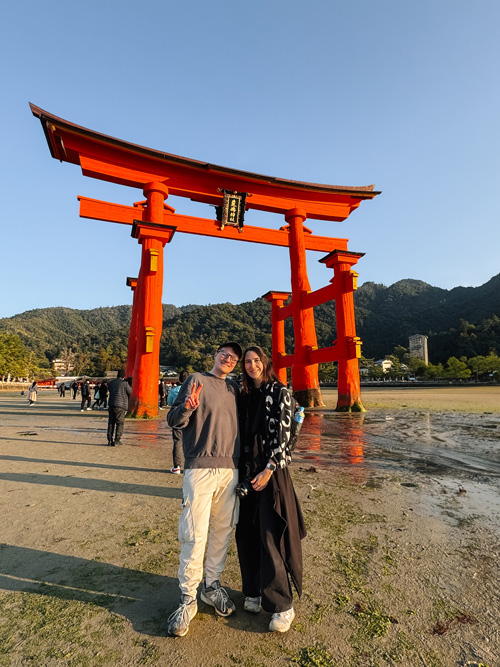
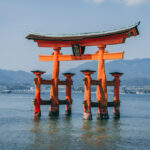
- Miyajima: Miyajima sits just off the shore of Hiroshima and is famous for its giant red torii gate that gives the illusion of being afloat on the water. The island makes for a perfect day trip, where you can feed the wild deer, visit Itsukushima Shrine and hike down Mount Misen.


Shikoku FAQ
Is Shikoku Worth Visiting?
Shikoku is 100% worth visiting if you want fewer crowds and untouched nature. Despite being one of the least visited areas in Japan, Shikoku has everything Japan is known for: traditional towns, incredible food, hot springs, temples, history and culture, but without the crowds.
How long should I spend in Shikoku?
To see all four prefectures in Shikoku, you’ll need 7-10 days. If you only want to see part of Shikoku, you can manage within 3-5 days depending on where you want to go.
Do you need a car to visit Shikoku?
The best way to explore Shikoku is by car as public transport is limited and doesn’t go as frequently as in other parts of Japan. Roads are well-kept and driving along the expressways makes it very easy to drive in Shikoku.
Should I visit Shikoku or Kyushu?
Both islands are beautiful in their own way and worth visiting. However, Shikoku is smaller, making it a better choice for a shorter trip with a bigger focus on nature. Kyushu has bigger cities, but also has a big focus on its active volcanoes and hot springs. As Kyushu is a lot bigger than Shikoku, it’s better for a 2-week trip.
Final Thoughts on Visiting Shikoku
Shikoku has easily turned into my favourite area in Japan. It has everything: beautiful nature with stunning views, traditional towns, incredible food, hot springs, history, temples, culture, bigger cities and more. And best of all, it’s mostly without the crowds.
I’ve fallen in love with this part of Japan, and I cannot wait to go back to explore more of what Shikoku has to offer (hopefully in Spring!). There are a lot of extra dots on my map that I still want to tick off…
Especially with large flocks of tourists overcrowding areas like Tokyo and Kyoto, there has never been a better time to look at visiting some lesser-known places in Japan. If you’re looking for other places to visit outside of the Golden Route, check out my 7-day Northern Kyushu itinerary.







This is an amazing informative blog, thank you. After visiting Japan 4 times and for around 8 months, me and my husband have somehow never visited Shikoku. After reading this, we will follow your footsteps and follow the path you took. Thank you for the information 🙂
So happy to hear this Leanne! You’ll LOVE Shikoku <3 I already cannot wait to go back, such an underrated part of Japan!
I cycled the Shikoku Pilgrimage in 2023 and highly recommend doing a section of it if you have the time. It’s a great way to explore more of the island. Shikoku is now my favorite place in Japan to visit by far and I cannot wait to go back!
will be looking at this for my next japan trip – approximately how much distance did you average on your driving days ? thank you.
It varied a lot, some days we didn’t use the car at all (for the days in Matsuyama and Kochi, for example), while other days we had to bridge quite a bit of distance and were in the car for a few hours. It definitely didn’t feel like too much driving though, it was a good balance 🙂
What an amazing guide thank you so much!
We are planning our third trip to Japan and Shikoku is the highlight of our trip. Can I just ask, and apologies if this is mentioned somewhere, which month did you visit? We’re going mid November and I m wondering how different will it look then and if we will be able to do most of these things.
Thanks so much! We were there at the end of November, start of December so it should be very similar to this 🙂 Hope you have an amazing time, I miss Shikoku! <3
Greetings from Italy!In mid-November, we will be leaving for our fifth trip to Japan, our first with our almost four-year-old daughter. We chose Shikoku this time, which we’ve never visited before… and we just stumbled upon this travel blog right now.We will probably travel by public transport, so we’ll be following a slightly different itinerary.But thank you for the insights and ideas!