If you’re looking for a traditional Japanese townscape without the crowds, Kurashiki Bikan Historical Quarter in Okayama may be the perfect spot for your itinerary.
Travellers along the Golden Route often skip Okayama, but I think it makes for a great stopover between Osaka/Kyoto and Hiroshima. Okayama city has some great sights, including Korakuen Garden and Okayama Castle, and if you take a short train ride south, you can add Kurashiki to your itinerary too.
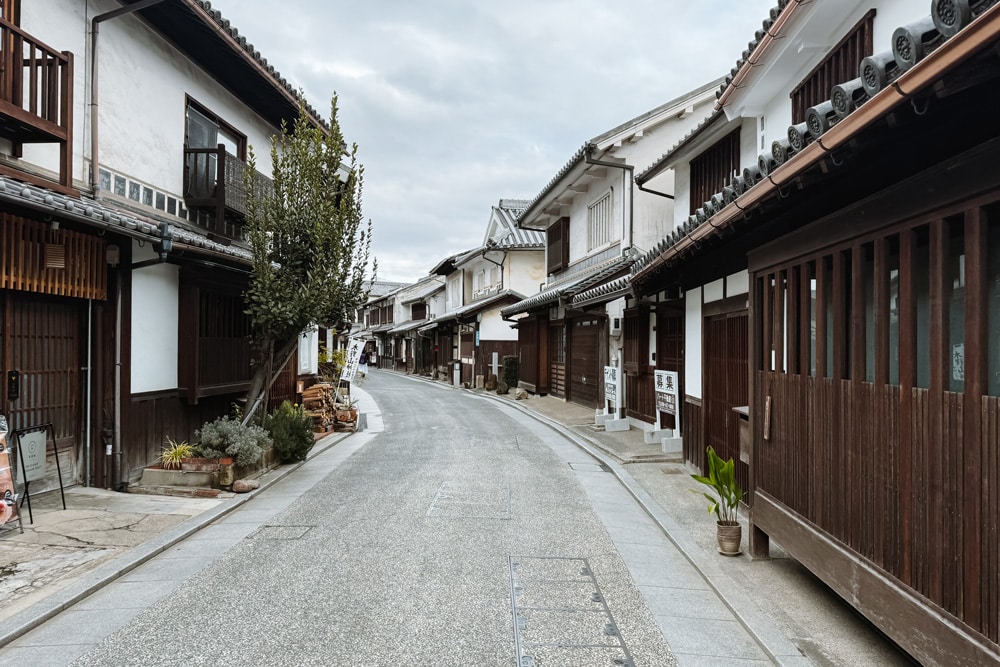
Part of Kurashiki, the Bikan Historical Quarter, is a well-preserved merchant town with cobblestoned streets, traditional wooden houses, a small canal lined with willow trees and old black-and-white warehouses that show a more European influence.
This part of Kurashiki gives you that traditional atmosphere many people try and find in Kyoto, but without the large crowds. And since it’s so easy to access from Okayama, it makes for a day (half)-day trip. Here is my one day Kurashiki itinerary.
- Kurashiki Itinerary Overview & Map
- Kurashiki Bikan Historical Quarter Itinerary
- 1. Take a Punting Boat Ride Along the Canal
- 2. Take a Free Walking Tour Through Kurashiki
- 3. Explore Kurashiki Denim Street
- 4. Try Kibi Dango
- 5. Visit Achi Shrine
- 6. See Inside Ohashi House
- 7. Visit Ivy Square
- 8. Visit One of the Many Museums in Kurashiki
- 9. Shop For Washi Tape on Honmachi-dori
- 10. Spot the Pokémon Manhole Covers
- Conclusion – Is Kurashiki Worth Visiting?

Kurashiki Itinerary Overview & Map
Kurashiki is quite a large town, with nearly 500,000 people calling it home. However, when referring to Kurashiki in terms of tourism, I’ll mainly focus on the Kurashiki Bikan Historical Quarter. It’s only around 15 minutes from the train station on foot.
This part of Kurashiki is a well-preserved merchant town, filled with nearly 500 traditional houses alongside a canal lined with willow trees. This is the type of traditional atmosphere many people visit Kyoto for, but you can find it without the large crowds in Kurashiki.
During the Edo Period (1603–1868), the Kurashiki River that flows through the historical quarter was the area’s main access point for ships from the Seto Inland Sea. Kurashiki thrived as a wealthy merchant town with some Western influence, as can be seen in some of its architecture.
The land on which Kurashiki stands is mainly reclaimed land from the Seto Inland Sea, which caused the soil to be too salty for rice to grow properly. Instead, the people here grew cotton as the plant could stand the salty soil, turning Kurashiki into a hub for cotton.
As Kurashiki’s river was a gateway to the Seto Inland Sea, neighbouring cities where rice could grow would ship it to Kurashiki to be stored. The many warehouses that stored the rice and cotton gave the city its name – Kurashiki translates to “town of warehouses”.
As Kurashiki is quick and easy to visit from Okayama, taking a (half)day trip here is a great idea. If you are planning a day trip to Kurashiki, you can use the following map to locate some of the main sights:

Kurashiki is great to visit all year round, but is especially beautiful from cherry blossom season to late autumn. The trees that line the canal in Kurashiki are one of the main things that make this town so charming.
We were here in early March, which was a little bit too early to see the trees with leaves. I’m planning to return in the future to see the town in its full glory (and will update this guide with any new info/photos when I do!).
Kurashiki Bikan Historical Quarter Itinerary
Here is what I suggest checking out on a day trip to Kurashiki:
1. Take a Punting Boat Ride Along the Canal
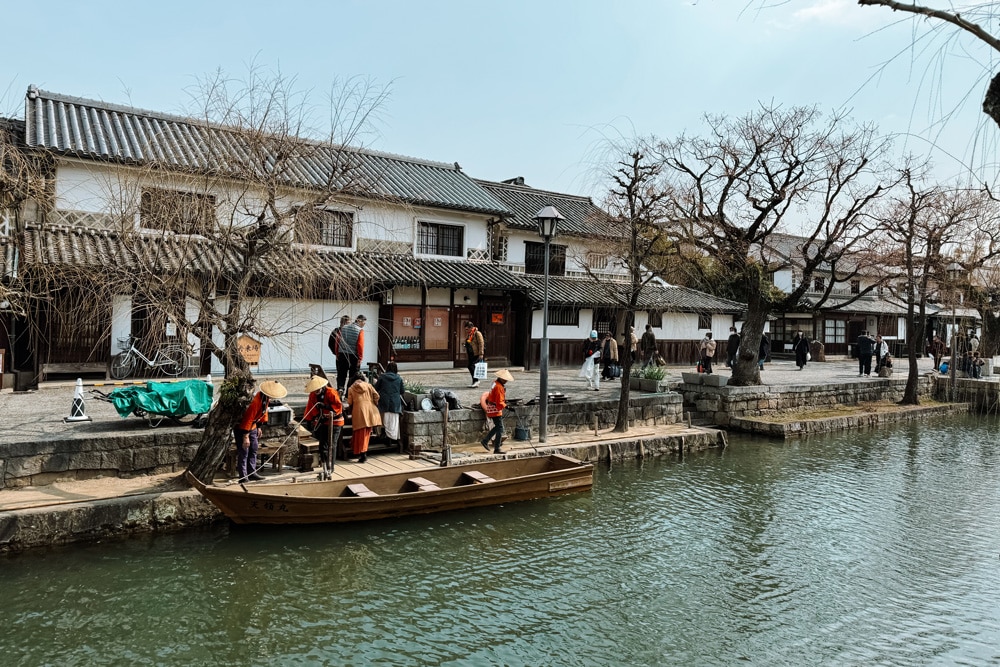
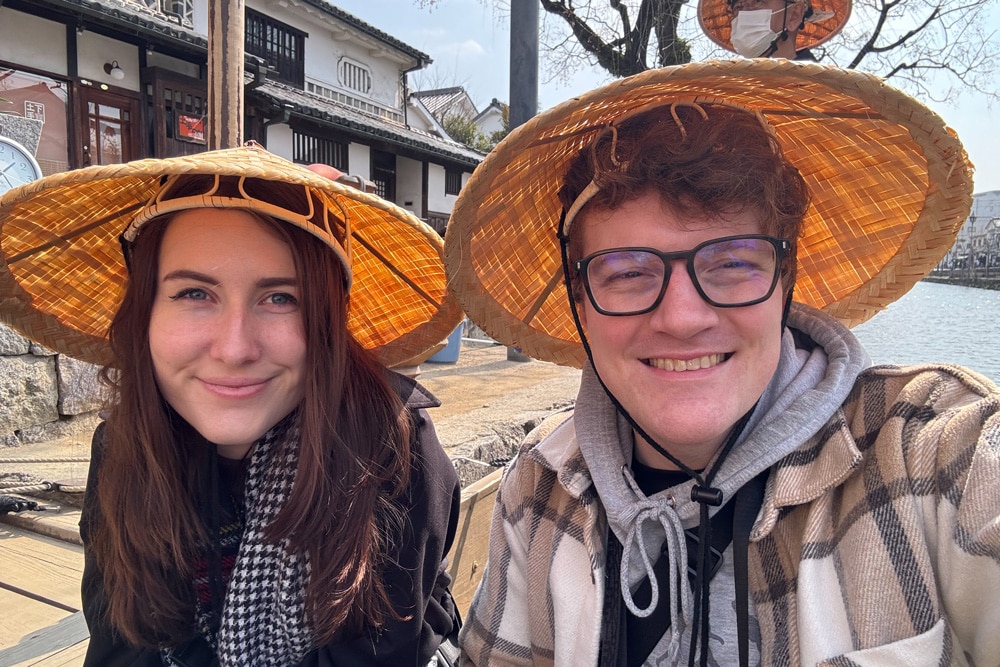
One of the best things to do in Kurashiki is to explore the Bikan Historical Quarter and take a boat ride along the canal. Kurashiki also goes by the nickname “Venice of Japan” (not to be confused with Yanagawa, the Venice of Kyushu) as the boats on the canal are being pushed with a large pole, similar to the gondolas in Venice.
Tickets for the boat rides can be bought at the Tourist Information Centre. This Western-style building sits on the corner of the two main streets along the canal – it’s hard to miss!
At the time of writing, tickets cost ¥700 for adults and ¥350 for children. The first ride starts at 9:30 am and runs every 30 minutes until 5 pm. You can pre-book slots on the day at the Tourist Information Centre, so it’s best to do this as soon as you arrive in Kurashiki. The slots book up pretty quickly.
The guide on the boat will give some information and details about Kurashiki on the boat, but it’s only in Japanese. But even if you don’t speak Japanese, the ride is very relaxing and it’s great to see the town from this perspective.
2. Take a Free Walking Tour Through Kurashiki
There is a group of around 40 locals in Kurashiki who offer free guided tours in English through the Bikan Historical Quarter. They’ve been doing this since 1990! The walking tours start at 1:30 pm on weekdays outside the Tourism Information Centre.
We took one of the tours during our visit and it was fantastic! Not only did we learn so much about the area, it was also great to connect with one of the locals. Our guide lived in Kurashiki most of his life and had so much to share about how the town has changed, along with many interesting facts about the buildings.
I won’t spoil too much by sharing everything we learned, but I couldn’t recommend it more. It’s such a great initiative! You can find some more information about the tours on their website.

There are some rickshaw tours in Kurashiki Bikan Historical Quarter. They usually stand around the canal area, so you can speak with them and arrange a tour on the day. If this is on your Japan bucket list, Kurashiki is a great spot to try it.
3. Explore Kurashiki Denim Street
The city of Kurashiki sits on mostly reclaimed land, making the soil quite salty. Not all plants grow well on salty soil, but luckily, cotton does! As the people of Kurashiki started farming cotton, they also started dyeing it, becoming the hub for Japanese denim.
The Kojima district in Kurashiki (which is located further South) is known as the birthplace of Japanese denim. But you can find these famous jeans and other denim products on Kurashiki Denim Street.
Apart from fashion items, you can also get a few “denim” themed snacks. These pork steamed buns, soft serve ice cream and pudding are all coloured blue as a little nod to the denim sold on the street.

4. Try Kibi Dango
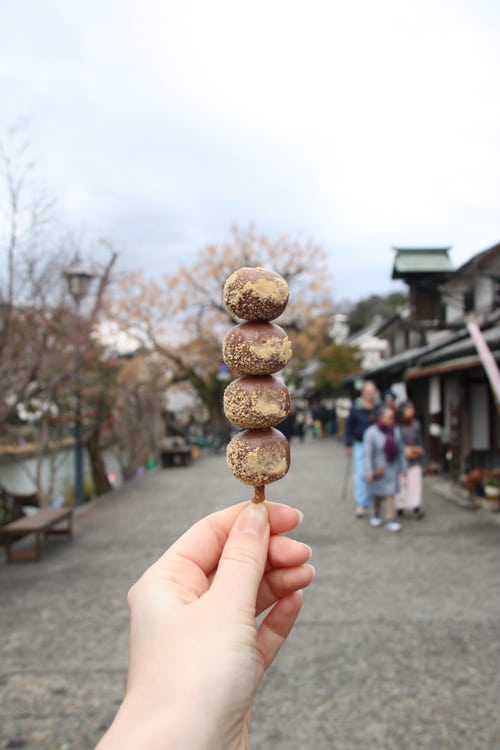
Most Japanese Prefectures have a few dishes or snacks that they’re known for. Okayama is no exception, with Kibi Dango being one of their specialities.
Kibi Dango plays a big role in the local folklore or Momotaro (Peach Boy), the hero of Okayama Prefecture. Long story short, but Momotaro was born in a giant peach and was found by a woman who adopted him. Part of the story includes him recruiting a dog, monkey and pheasant by offering them part of this Kibi Dango.
The soft Mochi is covered in syrup and sugar. As they are one of the snacks Okayama is famous for, they are easy to find in Kurashiki. They’re even better fresh!

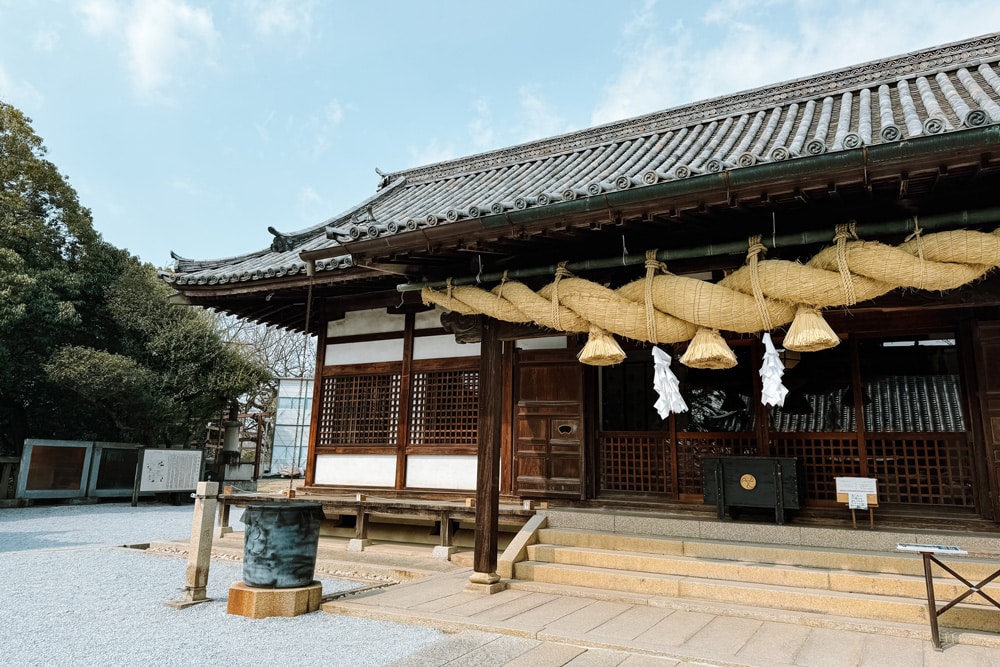
5. Visit Achi Shrine
On top of Mount Tsurugata, you can find Kurashiki’s main shrine, Achi Shrine. You can follow the steps towards the shrine from Bikan Historical Quarter, and you’ll be treated with a lovely view of the traditional roofs of Kurashiki.
In the past, the shrine was an important stop for merchants who were travelling across the Seto Inland Sea from Kurashiki to pray for safety.
If you’re visiting in April or May, make sure to stop by Achi no Wisteria. This wisteria is said to be somewhere between 300 and 500 years old. Sadly, we were visiting a bit too early for it to be blooming, but that’s just another reason to come back.
6. See Inside Ohashi House
Kurashiki thrived as a rich merchant town during the Edo Period, and the Ohashi family was one of the richest. The Ohashi residence in Kurashiki still stands today and is even open to the public.
Inside this traditional machida, you can find beautiful tatami rooms and sliding doors. Outside, you can also enjoy views of a traditional garden. The house is classed as an Important Cultural Property in Japan.
7. Visit Ivy Square
You can probably immediately see that Kurashiki Ivy Square is heavily influenced by British factories. With its red brick facade, Kurashiki Ivy Square used to be the home of the Kurashiki Spinning Mill – the first modern cotton mill in Japan.
Nowadays, it’s home to a museum, a hotel, restaurants and some shops. There are some koi in the pond on the square.

8. Visit One of the Many Museums in Kurashiki
One thing that surprised me about Kurashiki is that it has so many museums! Depending on how much time you have in Kurashiki, it could be worth adding one or two to your itinerary.
Some of the most notable museums include the Kurashiki Archaeological Museum, Momotaro Karakuri Museum, the Piggy Bank Museum and the Ohara Museum of Art (which is filled with both Japanese and Western art, including Monet and Picasso).
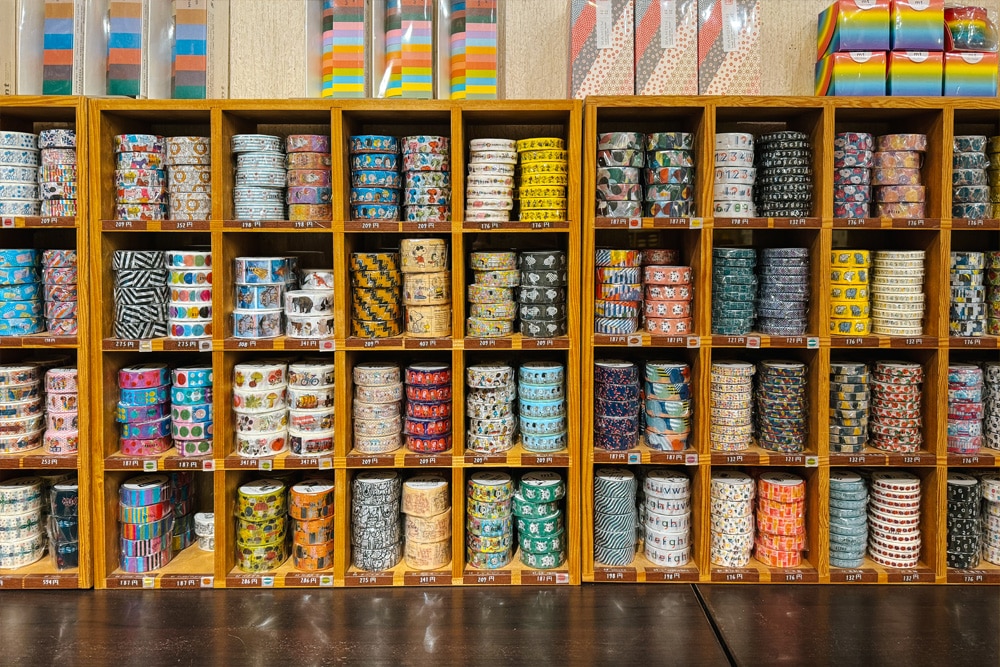
9. Shop For Washi Tape on Honmachi-dori
One of the fun facts I learned during our walking tour through Kurashiki is that the town is the birthplace of washi tape. The colorful decorative tape with fun patterns and designs has gotten quite popular all across the world, but washi tape’s original can be traced back to Kurashiki.
Bikan Historical Quarter has some great shops to check out selling stationery, including washi tape. Our guide took us to one specific shop called Nyochiku-do on Honmachi-dori. They have hundreds of different washi tape patterns, along with a large selection of other stationery items. There really is no better spot to buy washi tape than the place of origin!
Honmachi-dori is a great street to explore, even if you’re not after stationery. You can find shops selling all sorts, from traditional crafts and sweets to small local cafes and restaurants. If you manage to visit Kurashiki early in the morning, the streets should still be nice and quiet.
10. Spot the Pokémon Manhole Covers
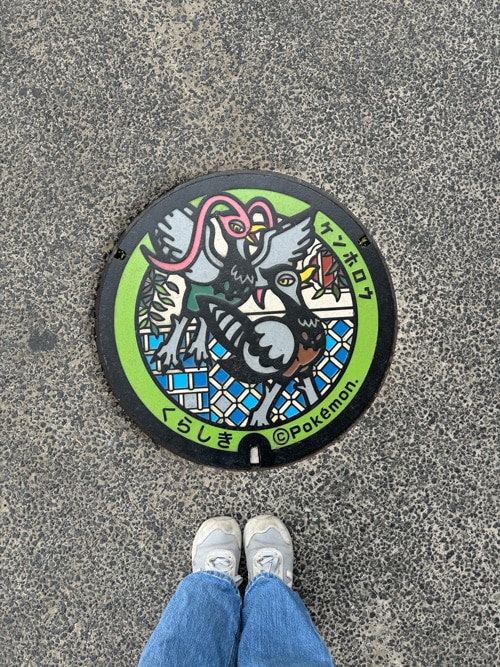
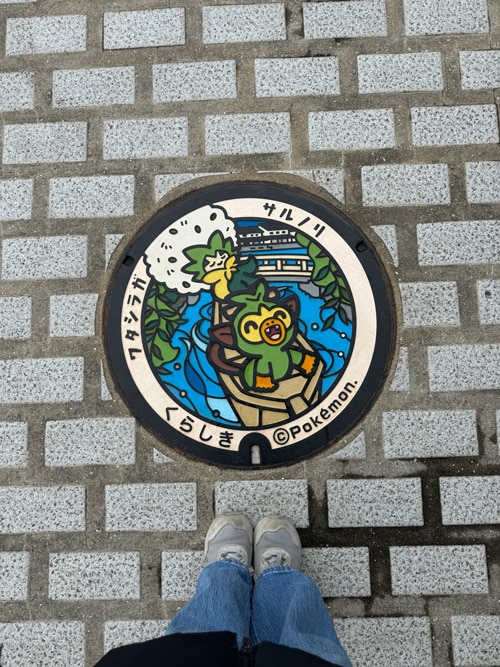
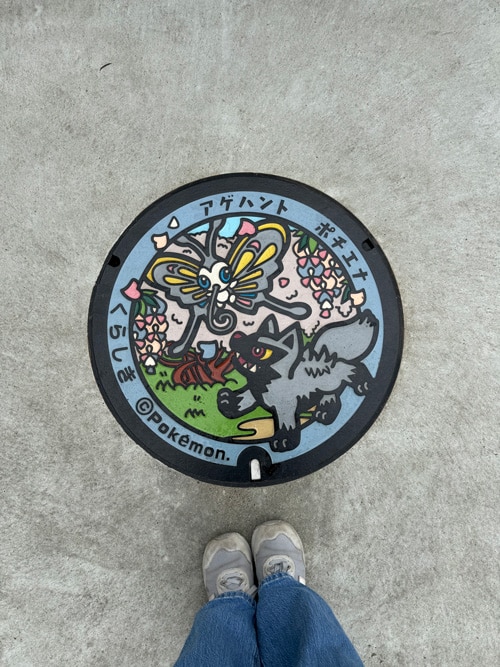
There are countless artsy manhole covers scattered across Japan. We like them so much that we have a whole Facebook group dedicated to them. But out of all the manhole covers, my favourites have to be the Pokémon ones.
Kurashiki is home to all four of Okayama Prefecture’s Pokémon manhole covers, three of which can be found around the Bikan Historical Quarter. Number four is located in Kojima, which is on the South end of Kurashiki.
The Pokémon manhole covers are a fun little treasure to hunt down. The ones in Kurashiki are actually the very first ones I ever found, and it definitely got me looking for them in other places in Japan too!
Conclusion – Is Kurashiki Worth Visiting?
Kurashiki can be worth visiting if you have enough time and are planning to visit nearby places already. I probably wouldn’t go out of your way just to visit Kurashiki, as it’s only a small area and can be a bit of a trek if Okayama isn’t on your itinerary already.
However, Kurashiki can definitely be worth visiting if Okayama is on your radar. Okayama City is home to one of Japan’s three most beautiful gardens, Korakuen Garden, and Okayama Castle. As the city sits between Osaka and Hiroshima, adding a day or two could be worth it when travelling the Golden Route.
Okayama is also closely connected with Shikoku Island. The Seto Ohashi Bridge connects Okayama Prefecture in Honshu with Kagawa Prefecture on Shikoku. If you’re planning to make a stopover in Shikoku (which I highly recommend on a second or third trip to Japan), Okayama could be a great addition for a couple of days.







Thank you this has helped me a lot!
So glad to hear, thank you!
Do you have any suggestions on where to stay the night in Kurashiki
I haven’t stayed overnight in Kurashiki myself, but I’d very much like to on our next visit. I’d definitely stay as close to the historical quarter as possible for the best atmosphere 🙂