Having an authentic onsen experience is high on most people’s Japan’s bucket lists. But with so many onsen towns to choose from, which one do you visit? Let me introduce you to one of my favourite onsen towns: Kinosaki Onsen.
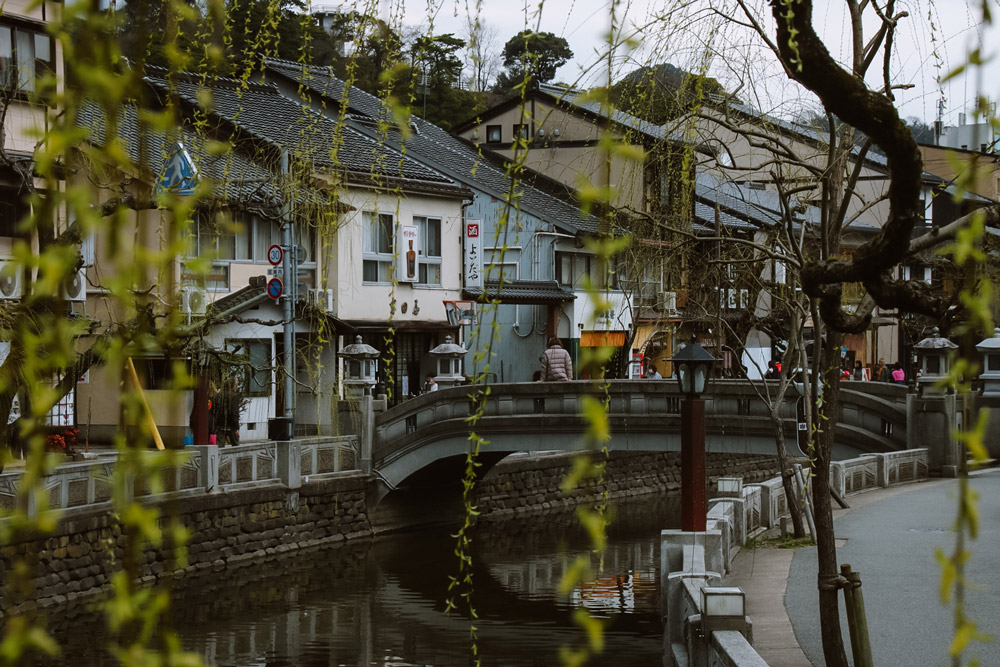
Acting as “one big Ryokan”, the town of Kinosaki Onsen has turned into one of my favourite places in Japan. In this quaint town in Hyogo Prefecture, you can wear your yukata on the streets and hop from one public bathhouse to the next. The sound of the wooden geta fills the town as the evening falls – it’s magical.
If you’re looking for an overnight stay near Kyoto or Osaka, Kinosaki Onsen should be on your radar. In the Kinosaki Onsen itinerary below, I’ll share a great way to spend two days in this beautiful town, plus extra information on how to get there and what bathhouses to try.
* My visit to Kinosaki Onsen was part of a press visit in collaboration with Visit Kinosaki. All views and opinions are my own.


Kinosaki Onsen Itinerary Overview & Map
Having visited multiple onsen towns, Kinosaki Onsen easily turned into my favourite. After the town had to rebuild itself due to a devastating earthquake around 100 years ago, it started acting as “one big Ryokan”. Instead of competing with each other, the businesses work together.
And this isn’t just a clever marketing slogan either. It actually feels like you’re entering one big Ryokan as soon as you get off the train. In the evening, the streets are filled with people wearing yukata, and being able to go from one onsen does feel like you’re just walking from one part of the traditional inn to the next.
As nearly 90% of all businesses in Kinosaki Onsen are owned and run by locals who were born and raised here, you are truly supporting local businesses pretty much wherever you go.
Below, you can find the map with an easy walking route I put together. Keep scrolling for more detailed information on this Kinosaki Onsen itinerary.

Kinosaki Onsen Itinerary
I’ve put together this two-day Kinosaki Onsen itinerary for the perfect one-night getaway:
1. Arrive in Kinosaki Onsen
You can reach Kinosaki Onsen by public transport from the major cities neighbouring it within 2–3 hours. Later in this guide, I go over the best routes to take from Osaka and Kyoto.
Since it takes a few hours to get to Kinosaki Onsen, I’ll assume you’ll arrive in Kinosaki Onsen around midday.
After getting off the train, you’re welcomed by a piece of art representing the “one big Ryokan” mindset the town is going for. Over 70 geta sandals (traditional wooden Japanese sandals) are lined up – each of them has the name of one of the Ryokans in Kinosaki Onsen written on them.
Normally, you can find a storage unit filled with geta sandals near the entrance of a Ryokan for guests to wear. Placing this piece of art near the station shows you that you’re essentially entering the Kinosaki Onsen Ryokan.

2. Try the Tajima Beef Burger at Kinosaki Burger
Since I’ll assume you get to Kinosaki Onsen around midday, it’s time for some lunch. And before you keep scrolling because I’m recommending a burger instead of a traditional Japanese dish, bear with me!
Kinosaki Burger sits in front of the train station, making it the perfect first stop in this Kinosaki Onsen itinerary. On top of that, these burgers aren’t just your regular burger – they are made with Tajima beef, the local speciality.
You may have heard of Kobe beef before, known to be one of the most delicious meat in the world. Well, only pure Tajima cows bred and slaughtered in Hyogo can be classed as Kobe beef. Not all Tajima beef is Kobe beef, but you can expect excellent quality. These burgers are super local and super fresh.
And I have to say, it is one of the best, juiciest burgers I’ve ever had. Plus, after eating only Japanese food for weeks before heading to Kinosaki Onsen, it was nice to have a burger too ;).


3. Soak Your Feet in the Public Onsen Footbaths
Since hot spring water is a renewable resource, Kinosaki Onsen does its best to encourage sustainability in the town. The town won the Green Destination Award a few years back, showing that it puts effort into its sustainability and eco-friendliness.
The town encourages locals to use the public baths instead of bathing at home, letting them enter for only 100 yen each. Locals over 70 used to be able to enter the bathhouses for free, but since April 2024, they’ll be charged a 60 yen fee.
You can also see this back in the multiple free footbaths across town. You can sit down, dip your feet in the fresh onsen water and relax. All without having to pay an entrance fee to the bathhouses. Many footbaths are even available after the bathhouses have closed for the day.
If you’re following the walking route on the map above, you’ll come across multiple footbaths. It’s great fun to try them, but make sure you bring a small towel to dry your feet afterwards. You won’t want wet socks for the rest of the day!

4. Drink from the Public Onsen Drinking Fountain
Continuing our walk through Kinosaki Onsen, you’ll come across the Public Onsen Drinking Fountain. You can find it in front of one of the seven public bathhouses, Ichino-yu.
Having a drinking fountain in an onsen town is quite common – it’s perfectly safe to drink. Since onsen water is believed to have healing properties, why not give it a taste yourself? I thought it was quite salty!
5. Eat an Onsen Egg (Onsen Tamago) at Cafe Chaya
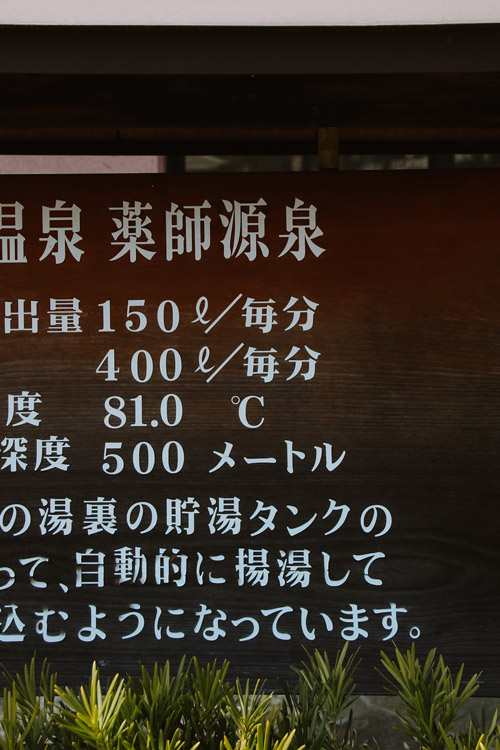
In front of the entrance of Kinosaki Ropeway, you can see fresh hot spring water come out of the Earth. This place is called Moto-yu, which means original hot water. You can see (and feel) how hot the water is when it first comes out of the ground. Be careful though, it’s super hot (81°C).
Next to it, you can enjoy one of the free footbaths too. And Cafe Chaya, which sits next to Moto-ya, offers an onsen classic: the Onsen Egg, or Onsen Tamago. Since the hot water continuously comes out of the ground here, they use it to soft-boil eggs.
Cafe Chaya sells raw eggs you can pop in the onsen water yourself. After around 10 minutes, it’ll be ready to eat.

6. Hike up Kinosaki Onsen Temple (or Take the Ropeway)
In the past, many people who were sick or in pain would visit Kinosaki Onsen as the waters were believed to have healing abilities. People who wanted to use these healing hot springs had to visit Onsenji Temple first. The onsen water was believed to be a gift from the gods, and if you wanted to be healed by it, you’d have to pray to them first.
Onsenji Temple lies halfway up Mount Daishi, so a short pilgrimage was required to reach the temple. Obviously, if you’re already in pain or sick, this could be quite a lot!
After reaching the temple, visitors were given a special onsen ladle, a yu-shaku. This would be their entry ticket to the bathhouses in town. Without it, they’d be denied entry.
Nowadays, it’s no longer required to do this to enjoy the waters of Kinosaki Onsen, but the small hike up the hill is pretty beautiful. Plus, taking part in the tradition adds just that little extra to your onsen visit later in the day.
If the walk is too much, you can also choose to take the gondola up – it stops halfway at the temple and continues onwards to the top of the hill. During my visit, I walked up to Onsenji Temple and used the ropeway to reach the top.


Onsenji Temple dates back to 738 and was the only building that miraculously survived the devastating Earthquake that destroyed the rest of Kinosaki Onsen around 100 years ago.
There is a beautifully decorated room at the start of the temple, holding the Senju Kannon (Thousand Armed Bodhisattva of Mercy). While most Senju Kannon have 42 arms, this one actually used to have 1,000. Over the years, some were damaged or broken, leaving it with 834 arms today.
Another highlight in this temple is the Juichimen Kanzeon Bosatsu (Eleven-Faced goddess of compassion and mercy). This large statue is hidden away and only displayed every 33 years. Once it’s displayed, it will remain visible for three years.
The same tree that provided the wood for this statue was used for the Kannon Bodhisattva in Nara. Funnily enough, this statue is also where the name Kinosaki comes from. The top part of the tree was used to create this statue. Ki no saki translates to “the top of the tree”.

7. Have a Coffee at Miharashi Terrace Cafe
After visiting Onsenji Temple, you can continue the hike up the mountain or the ropeway. The full hike from the bottom to the top will take around 45 minutes. Once you reach the top, you’ll be rewarded with a Michelin-rated view across Kinosaki Onsen and the ocean. The free viewing platform is the best place to enjoy it.
The ropeway station also houses a lovely cafe, the perfect stop for a quick coffee with a view. Before you head back down, don’t forget to go for a little walk around too.

There are a couple of smaller shrines worth checking out here. One is the famous “Crab Shrine”, dedicated to one of Kinosaki’s most popular delicacies, the snow crab. People from all over the place travel to Kinosaki Onsen just for these crabs, which can be caught between November and March.
Next to it, you can also find a shrine dedicated to the women who were killed or harmed during the earthquake 100 years ago. Since the earthquake happened around 11 AM, most women were already preparing food at home. When the earthquake hit and the fires started, they were the ones that got hurt the most.
The last ride down on the ropeway leaves at 4:50 PM.


8. Check in to Your Ryokan
After all that exploring, you may be ready for a rest. It’ll probably be late enough to check into your Ryokan now! As mentioned earlier, Kinosaki Onsen is home to over 70 Ryokans, most of which are owned by people born and raised here.
During my stay in Kinosaki Onsen, I stayed at Nishimuraya Hotel Shogetsutei.
This place offers 98 Japanese- and Western-style rooms, but we opted for the Japanese style. It was stunning! The futons were put down for us while we went into town to try the public onsen. Plus, on top of the public onsen for hotel guests, there are three private onsens that you can reserve.


9. Have a Kaiseki Dinner (Try Tajima Beef or Snow Crab)
Staying in a Ryokan is more than just a place to sleep. It’s a full experience. And the ones in Kinosaki Onsen are no exception.
When staying in a Ryokan, you normally get dinner and breakfast as part of your stay. The best local ingredients are used. And in a place like Kinosaki, high-quality local ingredients are plentiful.
As the town is located in the Hyogo Prefecture, it has access to some of the best beef in Japan: Tajima Beef. On top of that, if you’re visiting during snow crab season, you can also expect this as part of your dinner. Kinosaki Onsen sits near the ocean, so these crabs are as fresh as can be.


A traditional Kaiseki dinner consists of multiple smaller dishes, including soup, sashimi, grilled fish, tempura, rice, pickled vegetables and more. The dishes match the seasons perfectly, as they only use what’s fresh and readily available in the area.
The dinner we had at Nishimuraya Hotel Shogetsutei was incredible. I got to enjoy both the famous snow crab and Tajima beef, along with the most beautifully put-together side dishes.

If your Ryokan doesn’t offer snow crab, or if you’re not staying overnight, you can still try it when visiting during the right months. There are special restaurants in Kinosaki Onsen where you can buy freshly caught snow crab, which they will prepare for you to eat in their restaurant. Be aware that snow crabs are not exactly cheap though!

10. Go Onsen Hopping
After a delicious meal, it’s time to relax. And what better place to do that than a hot spring? Going to the seven public bathhouses in Kinosaki Onsen was my favourite part of my stay here.
You’ll really get that “one Ryokan” feel in the town at night, as you wear your yukata and hear the sound of wooden geta sandals fill the streets. It’s a magical atmosphere, almost like you’ve entered a Studio Ghibli movie.
As the Ryokans in Kinosaki Onsen all work together, they give guests an Onsen Pass. This pass gives you unlimited access to all seven public bathhouses. It’s kinda like a bar crawl, but with onsen – I honestly can’t think of anything better!

I tried three of the seven onsen during my evening in Kinosaki and then headed to the public hot spring at my Ryokan which was only for guests. If you scroll a bit further, I’ve listed the opening times of all seven public baths, including what’s special about them.
The latest some of the public onsen close is 11 PM, so you can stay out quite late and soak away. And after such a great meal and hot springs, I bet you’ll have one of the best sleeps of your life!

The bathhouses in Kinosaki Onsen also have a Stamp Rally. All seven baths have a unique stamp that you can collect. If you’re into collecting stamps in Japan, make sure to check out our Facebook stamp community!
11. Join a Zen Meditation at Gokurakuji Temple (Optional)
If you’re after a few more fun activities, the Kinosaki Onsen Tourism Board provides some amazing options. I got to try a zen meditation at Gokurakuji Temple and a traditional straw craft-making workshop (more on this in the next point!).
Gokurakuji Temple may not be as popular as Onsenji Temple, however, I think it’s definitely worth visiting too. Located close to Mandarayu Onsen, this temple has a serene rock garden out front and beautifully painted paper doors inside.
The temple’s head monk has been running it for decades and now also offers special zen meditation sessions for visitors. If this is something you’d be interested in, you can pre-book it through the Tourism Board’s website. It was one of my favourite things in Kinosaki Onsen, and I would highly recommend it!

I did another meditation session during my temple stay in Koyasan. And doing it again here in Kinosaki Onsen was a treat.
“Don’t think of anything,” we were told before starting our session, yet my mind kept wandering off. To the head monk, who at 81 years old gave us the warmest welcome into his temple. How he told us how happy he was foreign tourists were visiting Kinosaki Onsen and enjoying the healing waters. How he will have to start paying 60 yen to enter his favourite onsen soon, instead of being able to go for free. And how I really need to step up my Japanese language skills in order to have more of these wonderful conversations with the locals here.
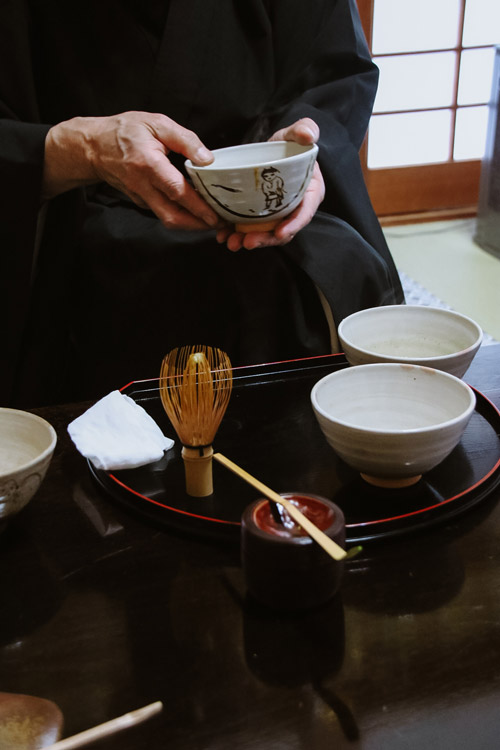
However, the session went by pretty quickly! And before I knew it, I was enjoying a cup of tea and traditional Japanese sweets with the head monk. We chatted more about his childhood and how much the town had changed since. It was a very special visit – one that I will remember for years to come.
There are two slots available per day, one in the morning and one in the afternoon. Make sure to pre-book this activity at least five days before your visit here.

12. Learn the Traditional Straw Craft in Kinosaki Onsen (Optional)
Another fun activity to join in Kinosaki Onsen is the traditional straw craft workshop. Mugiwara zaiku, or straw craft, is a traditional craft unique to Kinosaki Onsen. It was invented in Kinosaki Onsen in the mid-Edo period (around 1720), and it remains the only place in Japan where this special technique is used.
The straw is dried and dyed, then cut into small strings – these are then used to put together intricate designs with vibrant colours. It’s very impressive! And it’s great to see that the town is preserving this unique traditional skill as much as possible.
We joined one of the workshops, where we got to decorate our own keepsake box with the mugiwara zaiku straw craft. We were taught about how they make the different shapes with the colourful straws, and got to watch the masters at work. It’s very detailed work, as you can imagine!
Decorating the boxes was a super fun workshop, and it’s lovely to bring something home from our time in Kinosaki Onsen.
There are multiple slots available every day but make sure to pre-book this through the Tourism Board’s website at least seven days before your arrival.
In the alley next to the straw craft workshop, you can find a display of old photos of Kinosaki Onsen before the earthquake and fires that destroyed the entire town. It’s worth having a quick look if you have enough time.


13. Enjoy Some More Onsen Before Heading Back
Since the free onsen passes are valid until 3:30 PM on the day you check out, you can spend your morning and early afternoon trying out a few more of the seven public onsen. Since the baths for men and women often swap around on different days, you could try the other bath at your favourite bathhouse too.
Below, you can find more information about each public onsen, so you can choose which ones to try. Not every onsen is open every day, and some don’t open until 3 PM, so it’s best to plan ahead to make the most of your time here.
Kinosaki’s Seven Public Onsen
One of the big reasons to visit Kinosaki Onsen is its seven public onsen and the fact that you can go onsen-hopping between them during your stay. If you’re staying overnight in a Ryokan, you will get a free onsen pass, allowing you to enter all seven onsen for free until 3:30 PM on the day of your check-out.
If you’re visiting Kinosaki Onsen for the day and still want to try some of the onsen, that’s still possible! You can pay for a single visit at every onsen or you can purchase a one-day pass (¥1,500 for adults, ¥750 for children) which gives you access to all public baths.
As onsen are divided into two sides, male and female, the baths you get to enjoy may differ from what you’ve seen in the photos online. But since the onsen switch which side is for men and which side is for women every (other) day, you may be able to enjoy both sides depending on how long you’re staying in Kinosaki.
As you probably won’t be able to visit all seven onsens during your stay, here is some essential info about them:
Goshono-yu
Open 7:00 AM – 11:00 PM / Closed on Thursdays / Outdoor only
The most popular onsen in Kinosaki Onsen is Goshono-yu. Modelled after the Kyoto Imperial Palace, it stands out in the middle of town. The onsen is supposed to give people luck in love and protection against fires.
Both baths are outside and the stunning waterfall makes it the most beautiful onsen I got to enjoy during my stay in Kinosaki Onsen. No wonder it’s such a popular spot!

Ichino-yu
Open 7:00 AM – 11:00 PM / Closed on Wednesdays / Indoor & Outdoor
The outside of Ichino-yu is modelled after a Kabuki theatre, and you can enjoy both indoor and outdoor baths here. The outdoor baths are partly inside a cave, making for a very unique onsen experience. I tried this one during my stay and really enjoyed it, especially the outdoor onsen.
The name, Ichino-yu, means “number one bath”. In the 1800s, a doctor who visited Kinosaki Onsen bathed in this onsen and said it to be the “number one hot spring”. The owner of the bath was so touched that a real doctor had praised his onsen, that he changed the name.
Yanagi-yu
Open 3:00 PM – 11:00 PM / Closed on Thursdays / Indoor only
Yanagi is translated to “weeping willow” in English, named after Willow Street on which the onsen can be found. Outside the onsen, another willow stands tall. This bath specially is said to help with fertility and safe childbirth for women.
As it’s the smallest of all seven onsen in Kinosaki (and it’s indoors), it also feels the hottest.
Mandara-yu
Open 3:00 PM – 11:00 PM / Closed on Wednesdays / Indoor & Outdoor
This onsen is the oldest one in Kinosaki Onsen, according to the town’s legend. A Buddhist monk, named Dochi, visited this area and had a vision that if he prayed here for 1,000 days something good would happen for the people who lived there. So he stayed and prayed, and on the 1,000th day, the hot spring water appeared from the ground.
The onsen has indoor baths and some smaller outdoor baths too (more like tubs). I found the indoor baths a bit too hot though!

Kono-yu
Open 7:00 AM – 11:00 PM / Closed on Tuesdays / Outdoor only
Kono-yu, located the furthest from the train station of all seven onsen, is named after the Oriental White Stork, or Konoutori in Japanese. Legend says that the water of this onsen was discovered when these birds were healing their wounds in it.
Satono-yu
Open 1:00 PM – 9:00 PM / Closed on Mondays / Indoor & Outdoor (Closed for renovations from April 1st 2024)
This is the first of the seven onsen you’ll find when you arrive in Kinosaki Onsen by train. It’s located right next to the train station.
The outdoor bath comes with a beautiful view on the third floor! What’s even more special about this onsen is that it has two different sides: a Turkish-style bath and a Japanese-style bath. They switch which side is for men and women frequently, so if you’re staying overnight in Kinosaki Onsen, you may be able to experience both.
It also has a free footbath outside that you can enjoy even without the onsen pass. I sat here for a bit before catching my train back to Kyoto at the end of my stay.
Jizo-yu
Open 7:00 AM – 11:00 PM / Closed on Fridays / Indoor only
Jizo statues can be found all across Japan and are the projector of children, which is what this onsen is named after. The outside is modelled after a Japanese lantern.
As it lacks an outdoor bath, it’s not as popular with tourists. However, it’s used a lot by locals as it has a smaller bath with colder water for children. As people who live in Kinosaki Onsen can enter all the seven onsens for only 100 yen, this one’s a great choice for local families .
If you want to check how busy the onsen are, you can check Kinosaki Onsen’s official website’s handy tracker.
Are Tattoos Allowed in Kinosaki Onsen?
One of the biggest pros of Kinosaki Onsen is that all public baths allow you to enter if you have tattoos. Since this isn’t the case for the majority of hot springs in Japan, this is perfect if you have tattoos and want to enjoy an authentic onsen experience. On top of that, there are many English signs, making this town very foreigner-friendly.
Keep in mind that this is only for the seven public baths in Kinosaki Onsen, not the onsen baths at the Ryokans. Some Ryokans may ask you to cover your tattoos or use private baths instead (if they are available).
What About Private Onsen in Kinosaki?
You may prefer a private onsen if you want to enjoy it with your partner (of the other sex) or with your family. Or, you may want to try the private onsen before you go to a public one, surrounded by strangers.
Luckily, tattoos shouldn’t be the only reason to opt for a private onsen here. While it’s normally not allowed to visit public onsen if you have tattoos, the seven public onsen in Kinosaki Onsen do allow it! It’s one of the big reasons to visit this place as a foreigner.
Either way, multiple ryokans in Kinosaki Onsen also offer private onsen for those who prefer it. I stayed in Nishimuraya Hotel Shogetsutei, and on top of their beautiful public onsen for hotel guests, they have three private onsen that you can reserve.
They have Japanese, Chinese, and Balinese-style private baths. I got to try the Japanese one, which was one of my favourite moments in Kinosaki – it even came with a small bottle of champagne and a hot-stone sauna.
The Visit Kinosaki Onsen website has the full list of ryokans that offer private onsen, so I recommend checking their page before booking your accommodation if this is a must for you.


How to Get to Kinosaki Onsen from Kyoto or Osaka
The easiest way to get to Kinosaki Onsen is from either Kyoto or Osaka. From both cities, you can get to Kinosaki Onsen in under three hours. You can use the JR Limited Express trains to get to Kinosaki Onsen – bare in mind that all of these require a seat reservation.
The JR Pass can be used to get to Kinosaki Onsen from Kyoto or Osaka. This also counts for certain regional JR Passes, including the Kansai Area Pass (I used this one when visiting!).
Kinosaki Onsen itself is not very large, so you can easily walk from one sight to the next.
How to get to Kinosaki Onsen from Kyoto
From JR Kyoto Station, you can get the Limited Express Kinosaki which will take you there without any changes. Alternativley, you can get the Limited Express Hashidate to JR Fukuchiyama Station, where you’ll change to the Limited Express Kounotori that will take you to Kinosaki Onsen.
This last route is the route I used when visiting Kinosaki Onsen. Despite it taken a couple of hours, I really enjoyed the journey. The views of more rural Japan are always a treat, and because we left on time, we had the whole afternoon and evening to enjoy Kinosaki Onsen.
For accurate train times, check JR West’s website.
How to get to Kinosaki Onsen from Osaka
From JR Osaka Station, you can get the Limited Express Kounotori line straight to Kinosaki Onsen Station.
Again, for accurate train times, check JR West’s website.
How Many Days Should You Stay in Kinosaki Onsen?
When visiting Kinosaki Onsen, it’s best to stay for at least one night, ideally two. The town is beautiful during the day, but it’s the evening when it truly comes alive. The clacking of the wooden geta, the people dressed in yukata hopping from one onsen to the other – the evening is when the magic kicks in.
Also, since it takes between 2.5–3 hours to get here from Kyoto or Osaka, it would be a long return trip just to visit for the day. I don’t think it’s worth going for just a few hours.
There are over 70 Ryokans in Kinosaki Onsen, most of which have been owned by the same family for multiple generations. Especially since so many big corporations are buying up Ryokans all across Japan, it’s incredible to see that most of the ones in Kinosaki are still owned by locals – you’re funding the local economy by staying in one of them.

Staying overnight in Kinosaki Onsen also gives you a chance to try the traditional Kaiseki dinner. If you’re visiting between November and March, you’ll be able to try snow crab, which is one of Kinosaki’s specialities.
Every ryokan in Kinosaki Onsen also gives its guests an onsen pass, allowing you to enter all seven public onsen for free. You can use it until 3:30 PM on the day you check out. It was one of my favourite things to do in the town, it felt so special being able to hop from one onsen to the next.
During our trip to Kinosaki Onsen, we stayed in Nishimuraya Hotel Shogetsutei, one of the town’s best places to spend the night. They offer Japanese and Western-style rooms, but to get that “Ryokan” experience, we opted for the Japanese-style room. It was stunning!
As well as the free onsen pass for all seven public onsen, Nishimuraya Shotetsutei also has a public onsen for hotel guests and three private baths you can reserve. We tried the Japanese-style private bath, which we got to enjoy for 50 minutes. I’d highly recommend booking one of them if you decide to stay there.
Best Time to Visit Kinosaki Onsen
Kinosaki Onsen is a great place to visit in any season, but winter is the most popular. Not only are the onsens a real treat to enjoy during the colder months (November – March), but it’s also the season when snow crab (Matsuba Crab) is readily available. People travel to Kinosaki just for the Matsuba Crab, and after having tried it myself, I understand why!
In spring, you can enjoy the cherry blossoms (late March to early April). Summer brings a lot of outdoor activities and summer festivals and the red leaves in autumn make Kinosaki Onsen a real treat to visit too. You really can’t go wrong.
Conclusion – Is Kinosaki Onsen Worth Visiting?
Kinosaki Onsen has without a doubt turned into one of my favourite places in Japan. It is 100% worth visiting on your next Japan trip, as it’s the perfect place to have an authentic onsen experience.
My only regret is not staying for an extra night, but I am already looking forward to returning to Kinosaki Onsen on one of my next Japan trips. If you’re looking for a fantastic onsen experience, you can’t go wrong with this beautiful town – I can’t recommend it more!