Studying a new language is such a great way to train your brain and immerse yourself in a new culture. Being bilingual (Dutch and English), I’ve had my fair share of learning a foreign language. But Japan, its culture and language have always been incredibly exciting to me. So when the opportunity to take Japanese classes on top of my normal university classes arose, I knew I had to take it.
It’s been a few years since I took those Japanese classes in university and despite missing the classroom setting, I’ve continued studying this beautiful (but sometimes very difficult and confusing) language. Changing from a classroom setting to teaching it to yourself at home is a big difference, but it’s definitely doable! If you’re in the same position and want to start learning Japanese, here are my tips to get you started!
1. Pick One Resource
There are so. many. resources to choose from when you want to learn Japanese. So many that it can get a bit overwhelming. But picking one (good) resource and sticking to it is super important. These books/courses are designed to teach you vocabulary and grammar in a specific way and pace, so it’s important to stick with them.
Best Japanese Textbooks
During my classes at university, we used a book series called Japanese For Busy People, and I continued using it after I finished my degree. It’s important to get the Kana Version of this book, which teaches you the writing system on top of vocabulary and grammar. I’ve really enjoyed using it and the exercises in it have really helped me understand the grammar much better. I would highly recommend it!
Another great resources that I’ve used are the Genki textbooks. After I took a little break from studying, I used these to get back into it. I’ve already filled in most of the Japanese For Busy People book, so I decided to try Genki to refresh my knowledge and I really liked it too!

Apps to learn Japanese
Apps can also be very helpful while studying Japanese. I would recommend using these apps on the side, not as your main source of learning the language. Even though they’re good for practising vocabulary and sentence structures, you need a bit more context and information. Apps I would recommend include Duolingo, Memrise or HelloTalk.
Online Resources
Then there are some great online resources you can use to add to your Japanese education. Similarly to apps, I would recommend using these as additions to your main textbooks.
1. Tea Kim’s Guide To Learning Japanese: Tea Kim’s guide is the place to go for me when I struggle to understand something, usually grammar-related. There’s a clear explanation for a lot of grammar rules on the website that have helped me massively with my Japanese assignments over the year. They also have a great Facebook group where people post questions and help each other. It’s such a nice little community that I’m very happy to be a part of!
2. Japanese Pod 101: Even though I never tried the paid subscription, the free trial gave me great insights into some grammar issues that I struggled to understand. What I liked most about the podcasts is that I could listen to it on the go.
3. Tofugu: I follow both the website and the Facebook page of this amazing blog! What’s nice about this website is that they have a great library filled with resources to learn the language, but also have a lot of information about the country and the Japanese culture. Learning a language is not only about vocabulary and grammar, but it’s also about understanding a whole new culture and experiencing that through the language!
2. Get More Than One Notebook
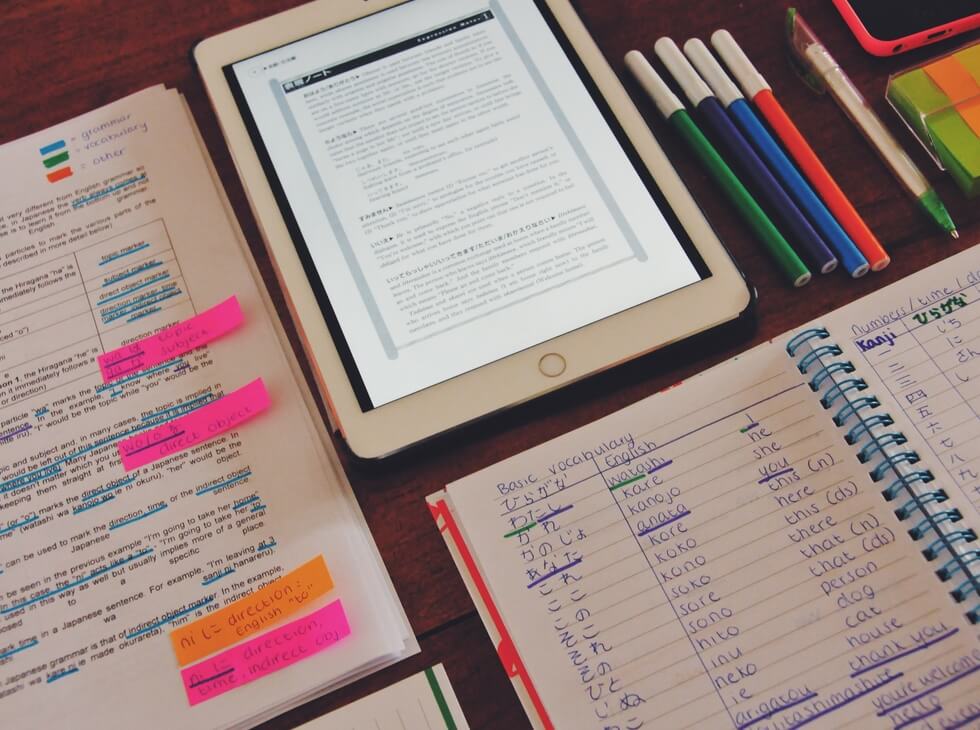
For my language studies, I always have more than one notebook. Usually, I use three, which is how many I use for Japanese too. One to create a vocabulary journal. Every single new word I learn I write down. It’s a way of practising the new vocabulary but also a way of tracking your improvement. It’s like making your own little personal dictionary.
The second notebook I use for grammar rules and examples. Languages like Japanese can be especially tricky because the grammar and sentence structure differs so much from English (and Dutch), which is why I like to have one place where I can find all the basic grammar rules for when I’m stuck.
The third and last notebook is the notebook I used to take to class. It’s where I write down messy notes and quick language exercises. The last one is definitely the messiest one, whereas I try to keep the vocabulary and grammar notebooks tidy.
3. Write in Hiragana/Katakana/Kanji
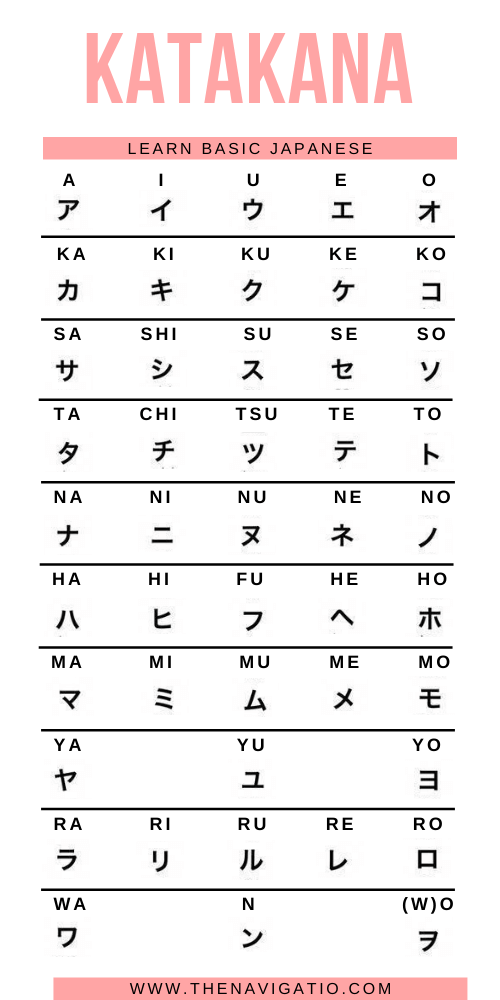
Just as you would recommend a Japanese person to write in the English alphabet while studying English, you should write in Japanese while studying Japanese. Kanji can be very tricky, especially for beginners, but Hiragana and Katakana are very easy to learn. They are super useful to know when you learn Japanese and an absolute must if you want to get better.

4. Consistency is Key
As with everything in life, practice makes perfect. You don’t have to study for hours on hours every day, but make sure to set some time for Japanese apart a couple of times each week. Even if you only spend 15 minutes every day revising some vocabulary, it’s better than studying for two hours once a week. I’ve noticed how easily the knowledge slips away after learning it for the first time, you have to keep using it and keep repeating it in order to remember it!
You could simply make vocabulary cards and practice them before going to bed. Duolingo is also great for keeping up with vocabulary because keeping up a streak on the app is slightly addicting 😉 (Plus getting that daily reminder on your phone is almost threatening). You can plan in an hour to intensively study every week but make sure to keep up with consistently practising it.
5. Find Out What Work Best For You
My high school teachers always tried to promote the use of flashcards while studying vocabulary but it always seems way too much effort to me. For Japanese, I decided to give it a go and fell in love!
It takes a little bit of time to make them but once they’re done you can use them forever. I love using flashcards when my boyfriend helps me study. Finding the way of studying that works best for you is essential. Some people learn best by writing down new words over and over, some need to use them in sentences and some use flashcards. With Japanese, you could also learn the language by listening to Japanese songs, watching anime with English subtitles so you can listen to the way words are pronounced, reading manga and playing games in Japanese. Whatever you feel works best for you is the method you should stick to.
Mixing things up every now and then also keeps things fresh and exciting! You want to make sure you stay motivated and don’t get bored.
6. Find Your Motivation
Learning a new language takes time and effort. I started studying English in 2005 and I still make mistakes. You need motivation, dedication, and patience. That’s why it is so important to find the right tools to keep you motivated.
Why do you want to start studying Japanese? For me, it’s because I’d love live in Japan for a few months-years in the future and I’ve always been very interested in the culture. I watch videos and read blog posts of people who live in Japan now to motivate me. I read up about the culture and watch anime in Japanese. I read novels by Japanese authors and watch documentaries about the country. Another thing that gets me excited is by following study Instagram accounts. Seeing the pretty notebooks and study tips help me massively. Whatever your reason is to study a language, make sure to find motivation from it.
I’ve also listed some basic Japanese languages which are a great starting point!









I’m learning Japanese too! But I’m not learning it in a classroom with others, but at home on my own via textfugu.com. The way the author explains everything (in English) and in which order is very easy to follow and it’s very clear. In about a year and a half I’m planning on taking an internship in Japan, and that’s what keeps me motivating 🙂
That’s awesome! I started learning it by myself but I found it very difficult! Especially the grammar haha! Never heard of that website but I’ll definitly check it out. That’s so exciting, I hope you get your internship! Good luck ^_^
I love learning languages as well (I speak Chinese!) and I couldn’t agree with you more about the “consistency is key” part. It is so important to immerse yourself in the language and incorporate it into our daily routine.
Love your blog!
Thank you so much! Chinese is very impressive 🙂 I try to immerse myself as much as possible when learning a new language, because if you don’t you’ll never be able to grow ^_^
Thank you for the post! I’m starting this year I’ll leave it free to keep learning as I’m having fun learning! <3
I live in Italy and here there aren’t japanese courses at school (at least in my zone) so if I want to know japanese I have to study it by myself, i’m doing my best but I can say that this site helped me a lot since i’m not good at organizing-
That’s so good to hear, thanks for your comment! It may be worth looking for some online courses if you’re interested in learning Japanese but struggle to do it by yourself 🙂 There are quite a few good ones out there!
Wonderful,I’ve also had great interest in studying Japanese