Filled with culture, history and some of the best tea in Japan, Uji offers an absorbing day trip from Kyoto. In this article, we’ll share the best way to spend your day in Japan’s green tea capital.
In 1191 a Buddhist priest named Eisai brought back tea seeds to Japan from a pilgrimage in China. Upon his return, he gifted some of them to a high-ranking monk called Myoe Shonin.
Enthused by the health benefits of the tea, Myoe shared part of his harvest with the local communities of Uji, which became one of the first centres for tea cultivation in Japan.
Today, Uji is known throughout Japan for its high-quality green tea. Uji tea masters played a key role in refining the uniquely Japanese flavors of matcha and sencha, two of Japan’s most popular and most famous teas. The city still produces some of the highest grade tea in all of Japan, making it a top-tier culinary destination for Japanese travellers.
But Uji has lots to offer beyond its famous green tea. It’s also the setting for one of the greatest works of Japanese literature, The Tale of Genji, and a spiritual stronghold of Zen Buddhism.
With historic charm and rich culture packed into a compact city centre, it’s easy to fall in love with Uji on a day trip from Kyoto. Below, we’ve compiled an itinerary that will help you make the most of your day in the heartland of Japanese tea.
Uji Day Trip Itinerary
Here’s the best way to spend a day out in Uji.
1. Take the Train from Kyoto to Uji
Getting to Uji from Kyoto is easy. From Kyoto Station, just hop on any train on the JR Nara Line. All rapid and local trains stop at Uji, with a one-way trip taking between 15 to 30 minutes. Kyoto is the terminus for the JR Nara Line, so you don’t even need to worry about heading in the wrong direction.
A JR Pass will cover your fare for this journey, but if you don’t have one you can expect to pay around ¥240. We recommend avoiding the unnecessary hassle of the Miyakoji Rapid trains: these cost ¥770 in total, require a reserved seat ticket and only get you there ten minutes earlier.
The JR Nara Line will drop you at Uji Station, a ten-minute walk from Byodo-in and Uji’s main sightseeing area. Since there are two Uji Stations on Google Maps, remember that this line arrives on the west side of the river, a little further away from Uji Bridge.

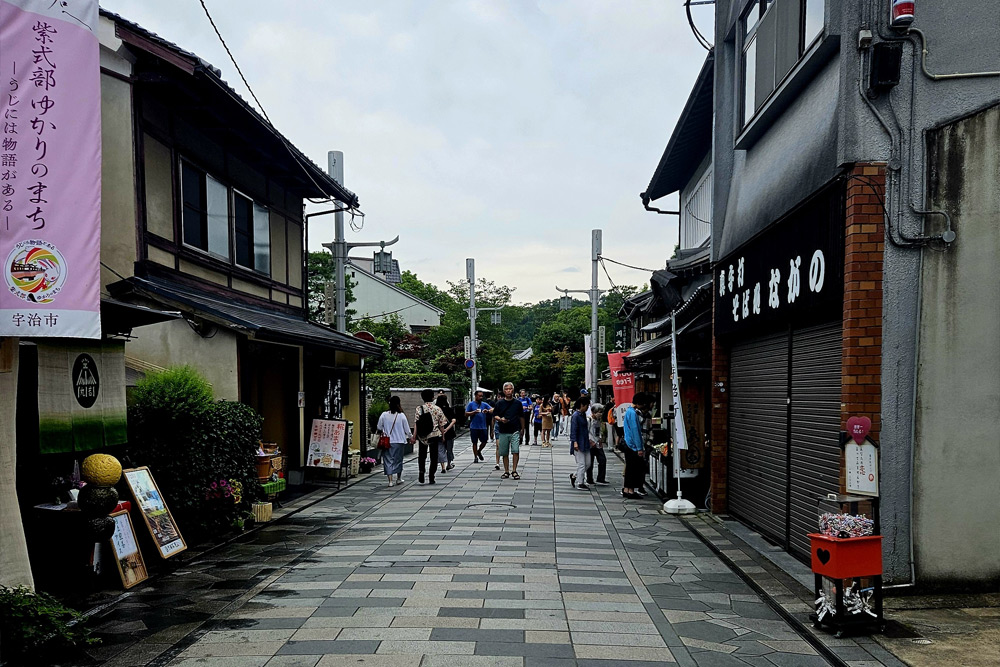
2. Explore Byōdō-in Omotesandō Street
Byōdō-in Omotesandō Street is the main road leading from Uji Station to Byōdō-in. It’s also Uji’s main shopping district, a bustling street lined with traditional shops and restaurants.
While Omotesandō Street is usually busy with tourists, it’s a great place to wander, browse a few shops and savour the approach to Byōdō-in Temple.
This is probably where you’ll have your first encounter with Uji’s famous tea. Many shops offer tasters to potential customers, allowing you to explore some of the city’s more famous varieties and get a sense for which tea you like best.
This is also a great place to buy a broad selection of Japanese teas and tea-related souvenirs. The shops here are filled with different tea leaves, bags and powders, all with distinct aromas and grades. These range from world-famous teas like matcha to other Japanese flavours like hojicha, a roasted green tea.
There’s also a wide selection of tea-adjacent souvenirs that you can pick up from these shops, ranging from ceramic mugs to specialised bamboo whisks for matcha. Make sure to explore beyond the main road for some of the more hidden stores, which carry unique items.
Once you’ve had your fill of tea and shopping, you’ll be ready to head to the end of the road and experience Uji’s main attraction: the elegant temple of Byōdō-in.
3. View the Phoenix Hall at Byōdō-in
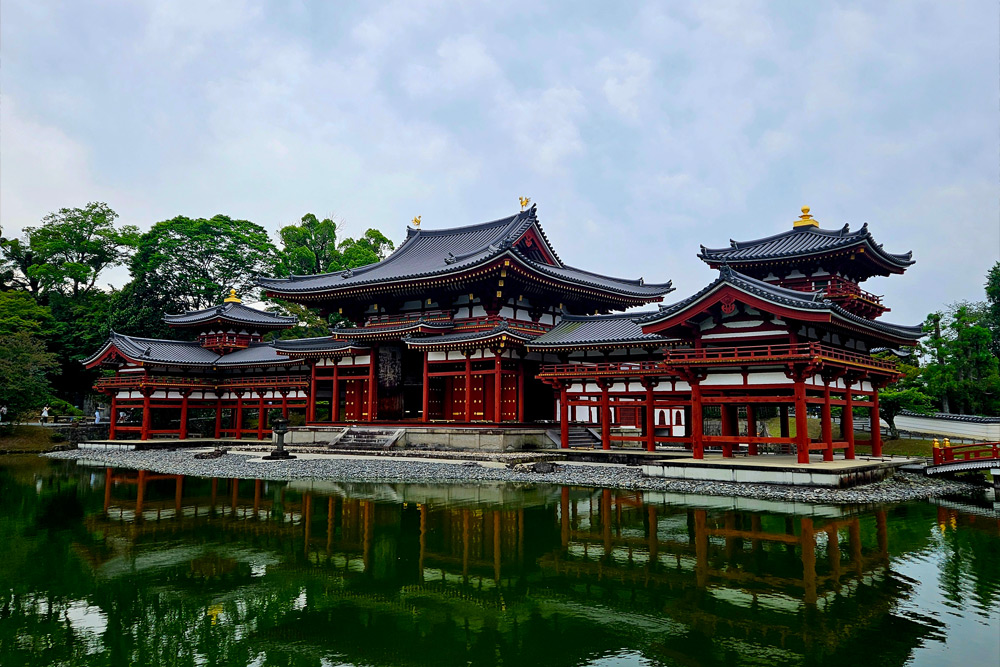
Founded in 1052, the UNESCO World Heritage Site of Byōdō-in has a history stretching back almost 1,000 years. Originally owned by the ancient Fujiwara clan, the grounds have grown and new temples have been established over the centuries with the aim of recreating the Pure Land of Mahayana Buddhism in this lifetime.
The main attraction is the serene Phoenix Hall, one of the few remaining buildings from the tenth century when the Fujiwara regents ruled Japan. Named for the two phoenixes on the roof and its shape like the rising wings of a bird, the palace seems to float on a pool like the palaces in nirvana.
If the Phoenix Hall looks familiar, it’s because you’ve been carrying it around in your pocket! The palace is famously the design on the back of the ¥10 coin.
While the view of the Phoenix Hall is breathtaking, make sure you take some time to explore the rest of the temple grounds. They’re home to a selection of different temples, beautiful seasonal flowers, and purportedly the site of the first seppuku, or ritual suicide, by a Japanese samurai.
The entrance fee for Byōdō-in is ¥700 for adults, which also includes access to the Hōshōkan Museum, where you can see several national treasures of Japan.
For an extra fee of ¥300, a limited number of visitors are also allowed to enter the Phoenix Hall. Tickets for the Phoenix Hall are available at a separate counter inside the temple garden, with a maximum of 50 visitors every 20 minutes.
During autumn, Byōdō-in hosts special night illuminations, where you can see the gorgeous foliage of the temple’s maple trees reflected in the Phoenix Hall’s mirror pond. It’s an extremely popular event with a limited number of entry tickets, so keep an eye on Byōdō-in’s official website if you’d like to see the illuminations during your trip.

4. Visit a Traditional Teahouse
After wandering the beautiful grounds of Byōdō-in, you’ll probably be feeling a bit thirsty. Luckily, you’re spending the day in the Japanese capital of green tea, which is stuffed with traditional teahouses selling green tea and sweets.
Picking one teahouse from Uji’s endless options can be tricky. There’s simply too much choice! On our last visit, we plumped for Tsujirihei, a teahouse tucked away in a side street six minutes from JR Uji Station.
Choosing a place slightly off the main road is often a great choice. The teahouses and cafes on Byōdō-in Omotesandō Street often have big queues, but places off the beaten path don’t come with a long wait. At Tsujirihei, we simply walked in, took a seat and enjoyed our matcha with a beautiful garden view.
If you have your heart set on a traditional Japanese teahouse, consider heading to Tsuen Tea across the Uji Bridge. Founded in 1160, this is purported to be the oldest tea house in Japan and is one of the oldest businesses in the world.
Grabbing a cup of green tea here will put you in esteemed company, as many shoguns and famous historical figures are known to have stopped in at Tsuen for refreshments.


5. Try Cha-soba and Cha-dango
If you’re looking for something a little more substantial, Uji is also scattered with restaurants and cafés that serve all kinds of foods refined with local green tea.
Cha-soba, green tea-flavoured buckwheat noodles, is a unique dish that’s closely associated with Uji. There are a wide selection of variations, but we recommend the classic zaru-soba, a cold noodle dish that’s great for a light meal on summer days.
Make sure to try the noodles without any dipping sauce first, so that you can enjoy the fragrance of the green tea that infuses the noodles.
Another popular delicacy sold in many tea houses and sweet shops along the Uji River is cha-dango, rice dumplings made with green tea. These traditional snacks are a great accompaniment to a cup of matcha.

6. Walk Across Uji Bridge
Once you’ve had your fill of tea-flavored delicacies, it’s time to check out some of the sights on the other side of the Uji River. On your way there, make sure you cross the famous Uji Bridge.
One of the three oldest bridges in all of Japan, the original Uji Bridge is said to have been built in 646. It’s old enough to have been mentioned in the Tale of Genji, the world’s first novel and one of Japan’s foundational texts. And while it has been destroyed and rebuilt multiple times, it’s still a special feeling to tread in the footsteps of those ancient stories.
Before you cross the bridge, make sure to snap a picture of the statue of Murasaki Shikibu, author of The Tale of Genji. With its flowing stone kimono, the statue celebrates her cultural significance and connection to Uji. You can find it on the right side of the road if you’re walking from Byōdō-in Omotesandō Street.


7. Enter the World of The Tale of Genji
The first stop on the other side of the Uji River is the Tale of Genji Museum, located a six-minute walk from Uji Bridge. The museum is entirely dedicated to just one text: The Tale of Genji, a foundational work of Japanese literature widely acknowledged as the first novel in world history.
Written by court lady Murasaki Shikibu in the 11th century, the story tells of the life and loves of Hikaru Genji, the son of the Emperor. While it’s not the easiest read, it’s a wonderful way to immerse yourself in the intricacies of the Heian period’s complex aristocratic culture.
The museum interprets the story of Hikaru Genji in a variety of ways, from touchscreen displays and interactive games to anime, all designed to help you dive into the courtly world of the prince. It has a particular focus on the last 10 chapters of the book, which take place in Uji and are reproduced in detail in the museum. There are also a range of exhibits that introduce you to life in Heian period Kyoto.
The museum is open from 9:00 AM to 5:00 PM (last entry at 4.30 PM), with closures on Mondays and over the New Year period.
8. Experience the Ancient Architecture of Ujigami Shrine
After learning about the Heian period at The Tale of Genji Museum, a short hop around the corner will take you to a temple from the very same era.
Built around 1060, Ujigami-jinja is believed to be the oldest extant Shinto shrine in Japan. This UNESCO World Heritage Site was built shortly after Murasaki Shikibu penned the adventures of Genji.
This quiet shrine in a leafy corner of Uji is also one of the oldest and best surviving examples of Heian period architecture.The main hall brings together three shrines in a flowing style called nagare-zukuri, with the icons partially obscured from the world by wooden cages.
You can also check out a small hut that houses a fresh spring for ancient purification rituals, or browse some of the many rabbit charms that nod to local Uji legends.
Alternatively, you can also visit the shrine earlier in the day as part of your visit to Byōdō-in. It’s a scenic 15-minute walk from Byōdō-in across the Asagiri Bridge, past several small shrines by the riverside and up the rustic Sawarabi-no-michi to the shrine proper.
9. Join a Tea Making Class
Now it’s time to get up close and personal with the city’s famous tea. Uji has a wide selection of workshops where you can make your own matcha. These are perfect for rounding off your day in the city and learning a little more about the art of Japanese tea.
There are five different tea workshops across the city that are recommended by the Kyoto Tourism Federation, including ones at Chazuna and Fukujuen Uji Kobo.
Tea classes usually include grinding your own tea leaves and tasting the freshly prepared matcha. Prices and duration vary depending on where you go, but you can expect to pay at least ¥2,200 to ¥3,600 for a 30- to 50-minute workshop. It’s best to make a reservation in advance, as the workshops get pretty popular and there may not be any spots available on the day.
If making tea is not your thing, there are plenty of other activities to while away a pleasant hour or two in Uji. Elsewhere in the city, you can also make matcha incense, create pottery and experience the tea ceremony.
Bonus: Enjoy Nature at Mimuroto-ji Temple
If you have a bit of time to spare, consider taking a stroll to Mimuroto-ji after exploring the north side of the Uji River. From Uji Bridge, it’s a 25-minute walk through a residential area to reach the temple.
Mimuroto-ji is a quaint temple with a 1,200-year history hidden in the northern hills of Uji. Its lavish gardens have earned it the moniker of “flower temple,” and it’s worth paying the ¥1,000 entrance fee to find out why. Cherry blossoms and azaleas transform the gardens in spring, before hydrangeas and lotus flowers emerge in summer and red leaves captivate autumn visitors.


10. Take the Train Back to Kyoto
Uji shuts up shop fairly early, with many of the cafes and tourist attractions closing between 5:00 – 5:30 PM. It’s best to get any souvenir shopping done early to give yourself the most variety, but once that’s done you’ll be ready to head back to Kyoto.
If you want to draw out your Uji day trip, grab an early dinner in one of the restaurants along the road between Uji Bridge and Uji Station, or take a stroll through the streets as the sun goes down and calm descends. You’ll have plenty of time to linger, as the last train back to Kyoto Station usually leaves at around 11:45 PM.
Conclusion – Is Uji Worth Visiting?
Uji makes an excellent day trip from Kyoto. Despite its compact size, it offers a variety of experiences that can easily fill a day out away from the crowds of Kansai’s big cities. If you’re into historic cities with beautiful temples, tea culture, literature and poetry, you’ll have a great time in Uji.
It’s well worth spending a few days exploring Kyoto, but try to resist the temptation to simply pass through this region on your way to the next major destination. Visiting smaller attractions off the Golden Route is a great way to help combat over-tourism and get to know Japan outside of the big tourist spots. An Uji day trip is a great way to experience this other side of Japan.
If you’re staying in Kyoto for a while, it’s worth looking into a few day trip options to make sure you experience the Kansai region to the fullest. Check out our Nara itinerary for another interesting day trip option from Japan’s ancient capital. Or you can use our 2 week Japan itinerary to plan your first Japan trip.