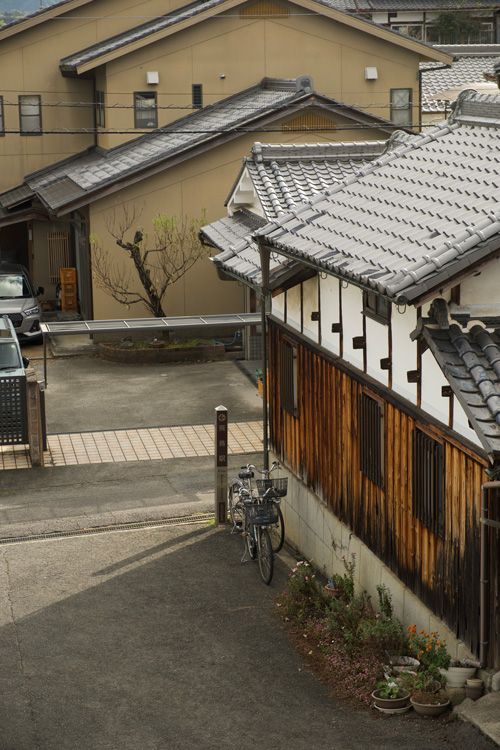
At first glance, Asuka seems like a beautiful, quiet, rural Japanese town: the vibrant rice paddies, the traditional buildings and the narrow, windy roads. But Asuka holds countless hidden stories and secrets.
Asuka is often referred to as the birthplace of ancient Japan, as the country was unified during the Asuka Period. Although this rural town is home to only around 5,000 people, Asuka is overflowing with history, some of it known, but most of it unknown.
Monoliths, carved stones, and large ancient tombs can be found across the town. Japan would look very different today without some of the archaeological findings here. As a result, it was recognised as a UNESCO World Heritage Site on July 26, 2026.
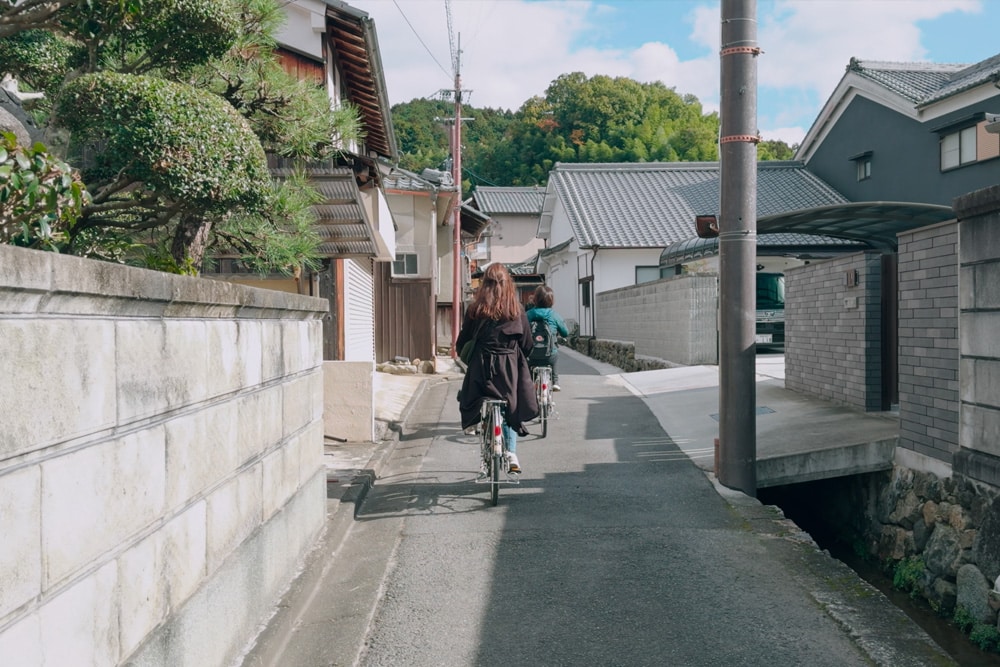
Cycling around Asuka is a great way to experience rural Japan, plus learn more about Japan’s history. In this guide, I’ll share a route you can follow when visiting Asuka on your next Japan trip.
* When we decided to visit Asuka, we contacted the Nara Tourism Board to get some help, as there is limited info about the town online. The tourism board got us in contact with our guide Noriko, who showed us around Asuka. All views are my own.

Reasons to Visit Asuka, Nara
Many people know Nara as the first capital of Japan, as this was the first permanent capital. But before the Nara Period (710–794), Japan went through the Asuka Period (538–710). During this period, Japan was unified as a country and politically shifted towards a centralised imperial court. However, Asuka’s history goes back as far as the Kofun Period (250–552), as large, key-shaped burial grounds have also been found here.
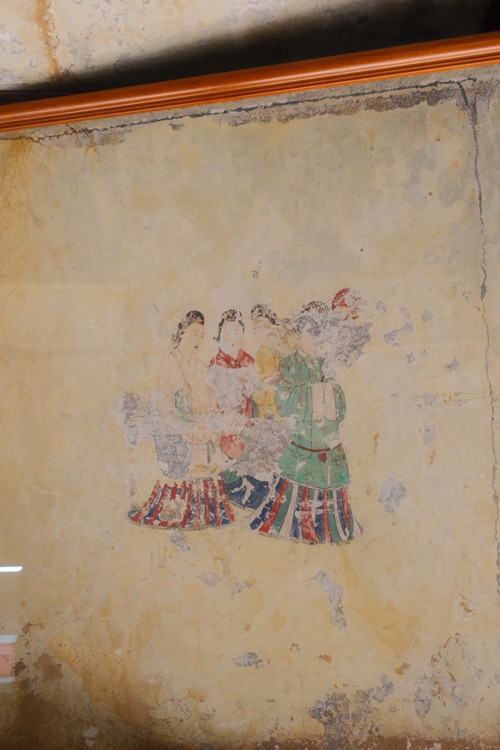
The discovery of the Takamatsuzuka Tumulus’ colourful mural in the 1970s is sometimes even referred to as “the great discovery of the century”, as it sparked a conversation about Japan’s cultural heritage protection policies. Especially during a time of modernisation and westernisation, the discovery of this mural triggered cultural preservation all across the country.
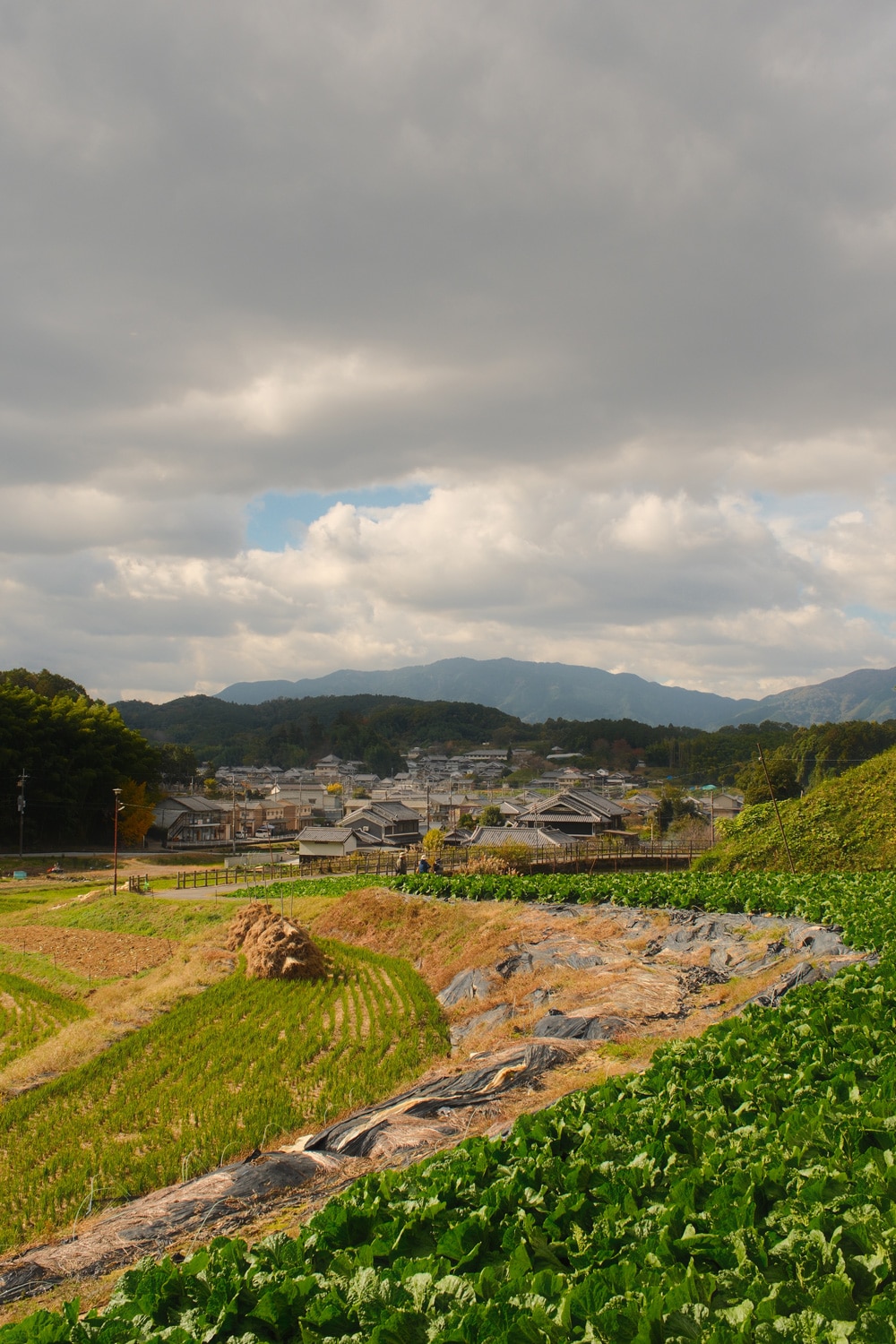
Because of this, Asuka is very well preserved. The Ancient Capital Conservation Act introduced restrictions on the design and colour of buildings in historically important towns like Asuka. The ruins, tombs and other objects of historical importance are beautifully integrated with the town’s surroundings.
Cycling around this beautiful town doesn’t only give you a chance to experience the countryside of Japan, but also to connect with Japan’s deep history. If you’re interested in the history of Japan, Asuka is a great place to visit.
As certain areas in Japan are experiencing some struggles with over-tourism, like Nara Deer Park and its surroundings, it’s a great idea to add spots like Asuka to your Japan itinerary. Staying overnight in Nara lets you explore more of the prefecture and see parts of rural Japan without the massive crowds.

One Day in Asuka Itinerary
If you’re planning to visit Asuka in Nara for the day, you can follow this itinerary to see some of the highlights. Alternatively, you can hire one of the amazing private guides on this website. Nara Tourism Board connected us with one of their guides and we learned so much about the area while cycling around with her, I loved it!
1. Rent a Bike in Asuka
The best way to get around Asuka is by bicycle, as most sights are pretty spaced out. There is a local bus available too, but using a bike is a much easier way to make your way around. This way, you can explore at your own pace without having to wait for a rural bus that doesn’t run very often.
You can find a bike rental next to Asuka Station, making it very easy to grab your bike after arriving. The Asuka Tourism Association sits between the station and the bike rental, so you can also stop by to get some extra information if needed.
The rental fee is ¥900/day for weekdays and ¥1,000/day for weekend days, which includes bicycle insurance. The fee also includes a back rack, front basket and a lock. They have different-sized bikes available, including children’s bikes. At the time of writing, there is a ¥200 discount code on their website that you can use too.
Apart from the Asuka Station rental, they have three other rental spots (in Kameishi, Ishibutai and Kashihara). For an additional ¥200, you can drop off your bike at a different rental spot. However, if you’re following this Asuka itinerary, it’s easier to pick up your bike and drop it back off at the Asuka Station office.

2. Stop by the Takamatsuzuka Tumulus & Mural Museum
Our first stop in Asuka is the Takamatsuzuka Tumulus and the Mural Museum located right next to it. This burial ground is one of the most significant in Asuka, maybe even in the whole of Japan.
Back in the 1960s, a farmer accidentally discovered this particular tomb when digging into his field. It wasn’t until 1972 that the tomb was properly excavated. At first sight, it didn’t seem like anything special as it wasn’t as big as some of the other tombs found in the area. But when they opened the burial chamber, they discovered vivid wall paintings that date back to the end of the 7th century. At the time, it made headline news as the biggest discovery in the history of Japanese archaeology. The murals have also been named National Treasures.
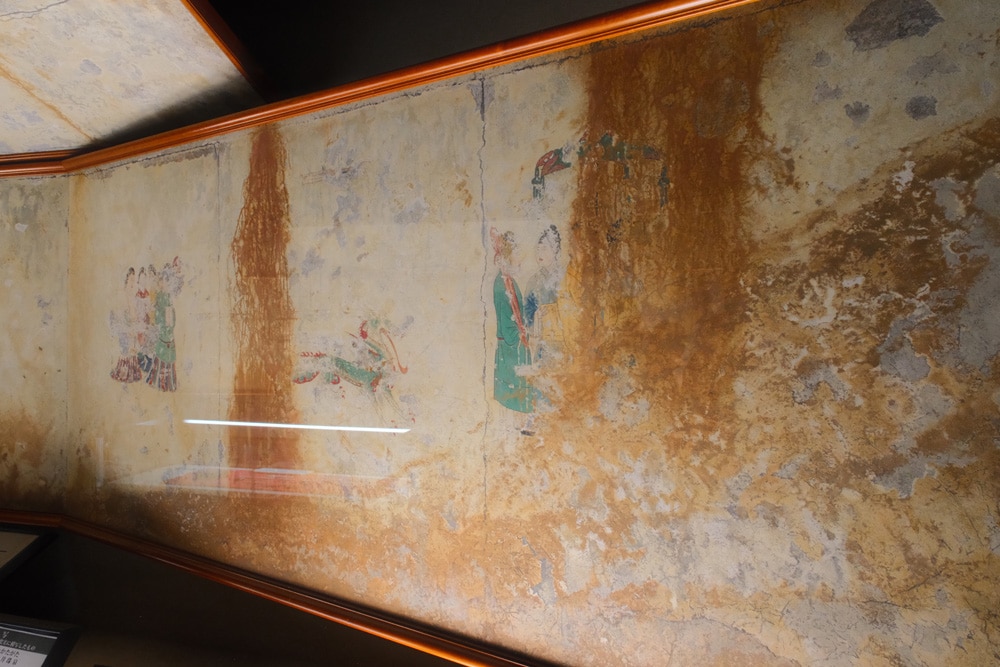
On the West wall, a painting depicts a group of women who seem to wear clothing that resembles that of the Goguryeo Kingdom (now Korea and China). On the four walls of the tomb, four guardian spirits are depicted — a vermillion phoenix, a black turtle, a white tiger and a blue dragon. These are all creatures from Goguryeo culture – showing again that the painter probably didn’t come from Japan.
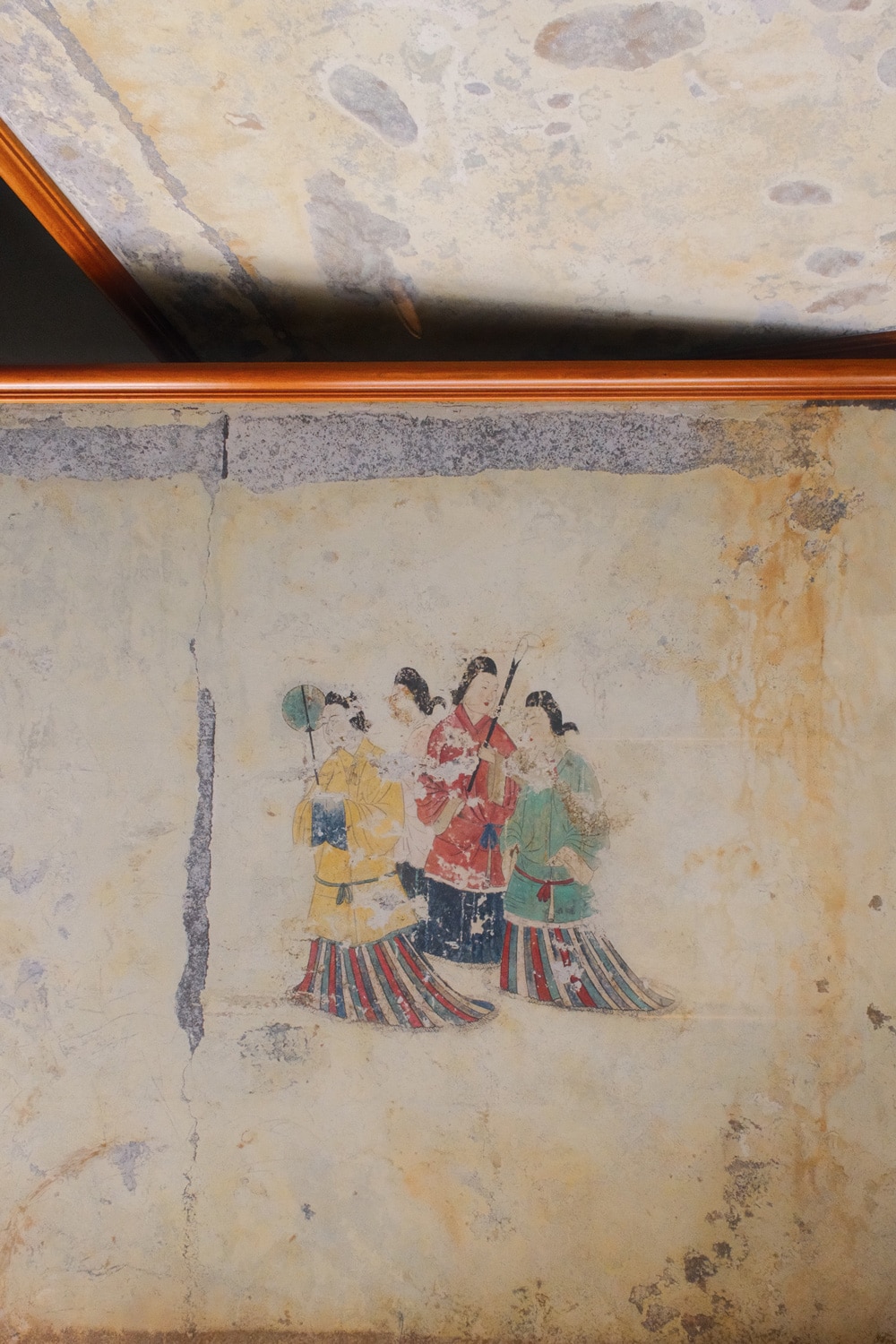
A few years after the murals were discovered, mould started to grow on the walls and the paintings. Trying to clean it off didn’t work, but made some of the painting peel off further. You have to remember that this tomb was sealed for centuries – the new exposure to bacteria was causing lots of issues.
As this was the first time something like this had been discovered in Japan, even experts weren’t quite sure how to preserve the murals. To fund the preservation process, along with building a museum, a special set of memorial postal stamps was created. They depicted the beautiful murals and the profits were to fund the preservation process. Over 120 million yen was raised during this campaign!
To properly preserve the paintings, the walls of the tomb were removed and properly stored. Replicas of the murals were created for the museum, including a fully restored version to show what the paintings would’ve looked like brand new. When doing some more research about this after my visit, I managed to hunt one of the sets down on eBay — they should arrive soon and I’ll be sure to add some pictures of them below.
The tomb seemed to have been looted centuries ago, so it’s been hard to figure out who was buried here and the exact dates. Research showed that some of the stones came from at least 50km away, showing that whoever was buried here must have been quite important.
Our guide also told us that during the time this tomb and its murals were discovered, Japan was going through a big wave of modernisation and westernisation. And the discovery here helped spark a conversation throughout the country to start preserving more of traditional Japan. Without this discovery, Japan could probably look very different today!
In the museum, you can see a replica of the mural, along with a fully restored version. You can park your bike outside and enter the museum for ¥250. Even though you cannot see the original painting, I still think it was amazing to see the replicas and learn more about this important discovery – highly recommend stopping by the museum!
3. Stop by the Mausoleum of Emperor Kinmei
Asuka has countless tombs, a lot of them still undiscovered. But Asuka’s history goes back even further than the Asuka Period. Before the round tumuli, the Kofun Period saw a different type of tombs. The keyhole-shaped tumuli are only found in a few places in Japan, Sakai in Osaka being one of the most famous spots.
But Asuka also has one keyhole-shaped tumulu, which is the mausoleum of Emperor Kinmei. You won’t be able to tell the shape from just visiting it, the large moat appears to be shaped like a keyhole from an aerial view.
This mausoleum is protected by the royal family and has never been opened. While it’s never been confirmed that this is truly the final resting place of Emperor Kinmei, our guide told us that they don’t feel the need to check. Believing is enough.
There are other mausoleums in Asuka that you can stop by, including that of Emperor Tenmu & Empress Jito and Emperor Monmu.

4. Enjoy the View from Amakashi Hill
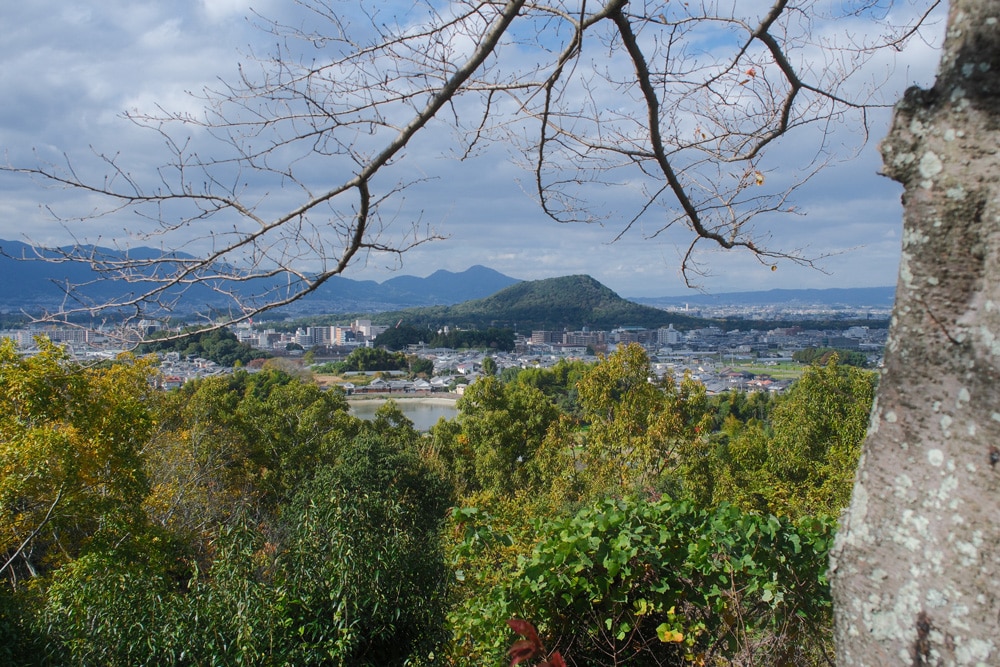
Not only is the view from Amakashi Hill very lovely, but the hill itself is also of historical importance. During the Asuka Period, the Soga Clan held most of the power in this area. Soga no Emishi and his son Soga no Iruka built a house on this hill, looking down on Asuka, establishing further power over it.
In 645, Soga Iruka was killed, which changed the political landscape in Japan. Instead of local tribes running parts of Japan, the emperor system was properly put in place and Japan was unified as a country.
Nowadays, you can find a lovely view from the top with some benches to sit and enjoy the view. On one side, you can see the traditional roofs of Asuka town, while the other side shows you a more modernised Kashihara. The difference is quite striking, and it shows again how important it has been to preserve these parts of Japan.
There is a place to park your bike at the foot of the hill and walk up. The hill is around 150 meters high, but the walk itself is very easy. It takes less than 10 minutes to get to the top.

5. Visit Asukadera, Japan’s Oldest Buddhist Temple
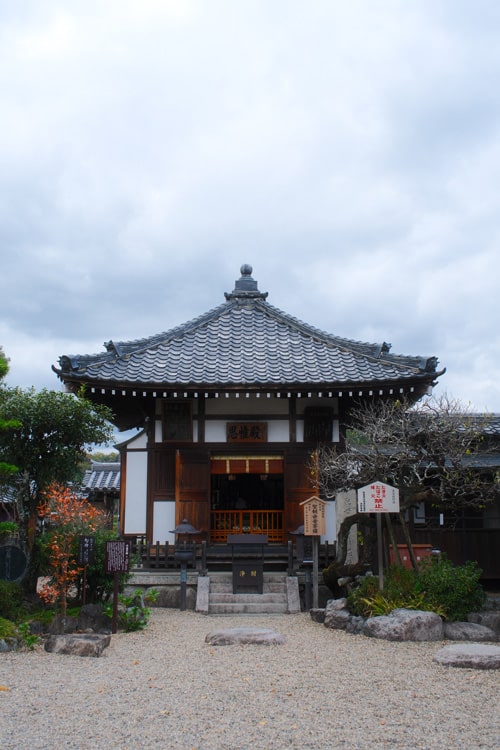
Continue by bike and head towards Asukadera. This temple dates back to 596, making it one of the (if not THE oldest) Buddhist temples in Japan. Akusadera was founded by the Soga Clan not long after Buddhism was introduced in Japan.
As Buddhism originally came over from Korea and China, you can immediately tell that the style of this temple has taken a lot of influence from Korean architecture. Originally, it was nearly 20 times bigger but parts of it were moved to Nara when Nara became the new capital.
The Buddha statue inside was created in 609, making it the oldest Buddha statue in Japan. The buildings of Akusadera were rebuilt in the 17th and 18th centuries after a fire destroyed large parts of the original setting. However, according to our guide, the Buddha statue has never been moved.

6. Visit Ishibutai Kofun
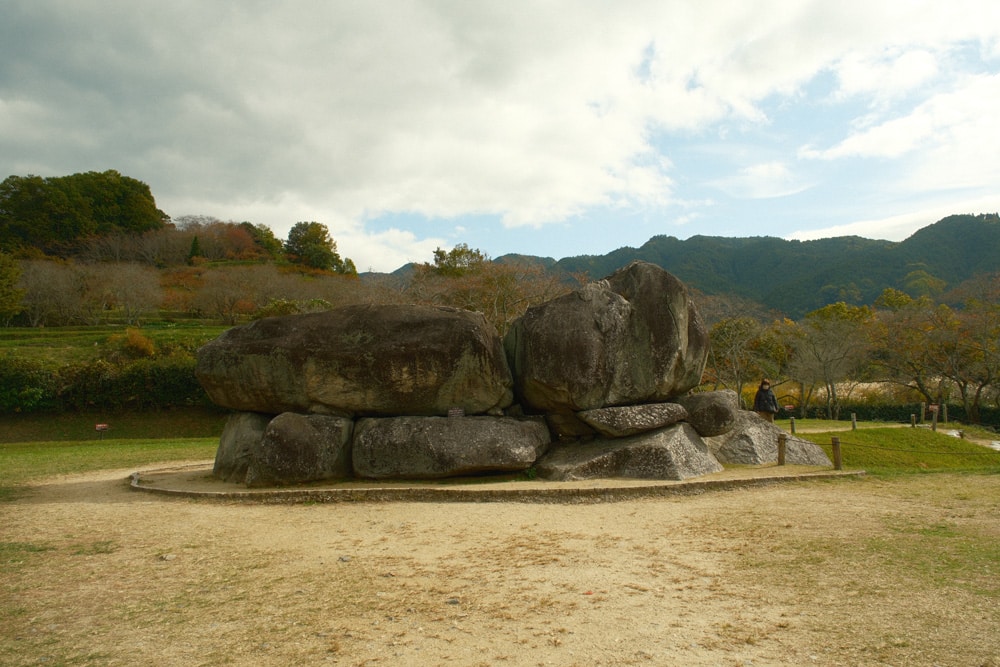
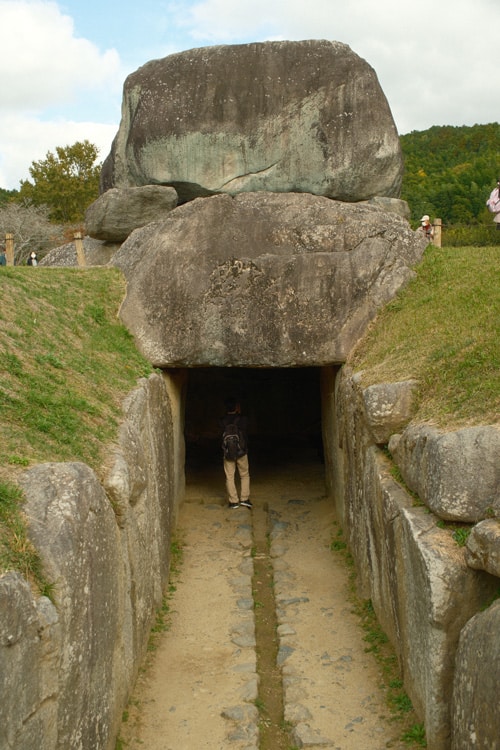
When you’re spending a day in Asuka, there is a lot to see, but you cannot skip Ishibutai Kofun. This burial ground is the largest monolithic structure in the country — one of the big highlights of Asuka.
While they aren’t 100% sure on who is buried here, it’s believed to be Soga no Umako from the Soga Clan. In total, there are 30 stones stacked on each other, weighing around 2,300 tons.
The stone burial chamber has been cleared, so you can even step inside and marvel at its size. There is a small charge to enter the area, but the couple hundred yen is very much worth it. There is a free parking space for your bike nearby too.
7. Stop by Iwayama Kofun Tumulus
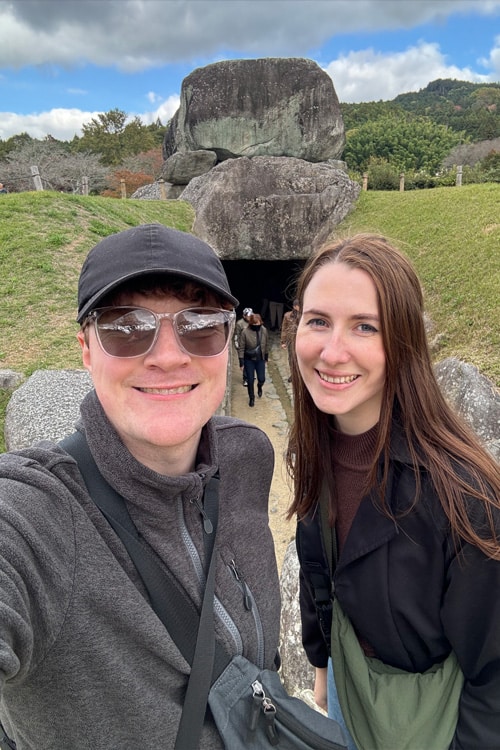
Before heading back to the station, it’s worth stopping by Iwayama Kofun Tumulus. It’s only a short walk or bike ride from the station and it’s free to visit. You can find the stairway leading you to the entrance between a few private houses, so it’s easy to miss, but it’s very well maintained.
Even though it’s not as big as Ishibutai Kofun, you can also go inside Iwayama Kofun and it’s quite special to see it not fully excavated. Inside, you can see ancient markings on the walls – it’s a mysterious place.

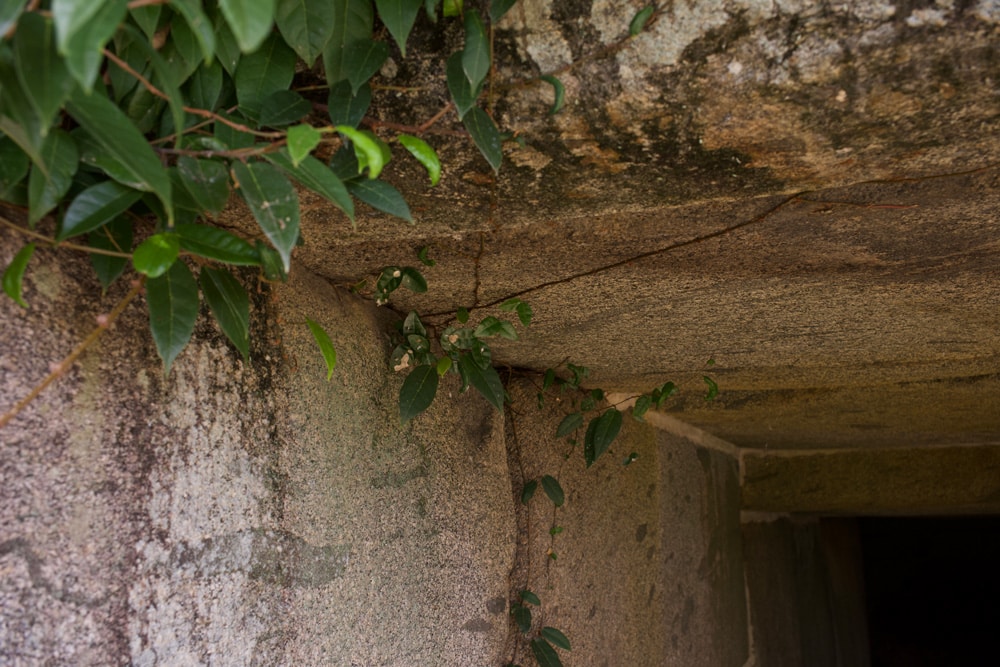


If you like Pokemon games, like myself, an interesting fun fact is that Asuka was the inspiration of the Ruins of Alph in Pokemon Silver/Gold. The view from the inside of Iwayama Kofun Tumulus looks exactly like the loading screen of the Ruins of Alph. There is a lot to uncover here, and this video by BlueBoyPhin does an incredible job explaining more about it! This is the video that put Asuka on my map, and I’m so glad I got to visit it!
How to Get to Asuka
It’s pretty easy to get to Asuka on public transport, even if you’re only visiting for a day. Below, I’ll share how to get to Asuka from two popular nearby cities, Nara and Kyoto:
How to Get to Asuka From Nara
If you’re staying overnight in Nara (something I’d highly recommend!), you can get from Asuka within an hour. You will have to transfer a couple of times, as there is no direct train to Asuka, but it should be easy enough.
From Nara Kintetsu Station, take the Kintetsu-Nara Line to Yamato-Saidaiji Station. Transfer here to the Kintetsu-Kashihara Line and make your way to Kashiharajingu-Mae Station. From this station, you’ll only have to transfer one more time for a short five-minute ride on the Kintetsu-Yoshino Line to Asuka Station.
How to Get to Asuka From Kyoto
Despite being a bit further away, it’s very easy to get to Asuka if you’re staying in Kyoto – and with fewer transfers than when travelling from Nara. The journey takes about an hour and a half.
From Kyoto Station, get on the Kintetsu Kyoto Line which will take you straight to Kashiharajingu-Mae Station. From there, transfer to the Kintetsu-Yoshino Line to Asuka Station.

Conclusion – Is Visiting Asuka Worth It?
If you’re interested in Japan’s history and archaeology, Asuka is one of the best spots to visit. Especially since it’s pretty easy to get to from popular nearby spots like Nara and Kyoto, visiting Asuka is a great way to experience the Japanese countryside.
During our visit, we barely saw any other tourists. Not many people know about Asuka yet, and it’s such a shame! Cycling through the vibrant rice fields and walking among the mysterious tombs is something I’ll never forget – it was one of the big highlights of our latest Japan trip.
I’m already planning to return to Asuka to hopefully spend the night and see even more of what this lovely area has to offer. When I do, I’ll be sure to update this guide with any additional spots/information.
Sources:
https://www.asukakyo.jp
https://www.ijkaa.org/assets/pdf/135/jkaa-9-64.pdf