Osaka is a perfect base for travellers passing through the Kansai region of Japan. It’s a lively, bustling destination full of amazing things to do and see, as well as a transport hub located in the centre of the region. It’s the perfect jumping-off point for your explorations of central Japan.
In this article, we’ll explore some of the many and varied day trips you can take from Japan’s second city. All of these destinations are places that you can cover in a day, although many of them will also reward longer stays if you have space in your itinerary.
It’s worth noting that we haven’t included Kyoto in this article. While it is easily accessible from Osaka, Japan’s ancient capital is simply too packed with incredible sights and experiences to do it justice in a day. We recommend spending a few days in Kyoto and Osaka, then exploring another side of Japan on a day trip or two.
With that in mind, let’s explore some of the best day trips you can take during your stay in Osaka.
Best Osaka Day Trips
From history and nature to food and culture, the Kansai region has something for everyone. Here are some of the best day trips you can take from Osaka.
1. Nara
Nara was the first permanent capital of Japan and the centre of power throughout much of the 8th century. Filled to bursting with magnificent temples and connections to the age of antiquity, Nara is one of the most popular day trips from Osaka.
This ancient capital is easily accessible from Osaka through various train lines. The Kintetsu Nara Line takes around 40 minutes from Osaka-Namba Station. If you’re using a JR Pass, the JR Yamatoji Line express lines can get you from Osaka Station to Nara within 50 minutes.
Many of the city’s most famous sights are located around Nara Park, which is a 5-minute walk from Kintetsu-Nara Station or 20 minutes from Nara Station. Several of the most famous shrines and temples are part of Nara’s UNESCO World Heritage site, and you can easily stroll between them during your day out.
Todai-ji is literally and figuratively the biggest attraction in the city. First constructed in 752 CE, an estimated 2.6 million people were involved in constructing the first iteration of this Buddhist temple. After two reconstructions, the current temple is two-thirds the size of the original, but it’s still one of the largest wooden buildings in the world.
The temple building houses a colossal 15-meter-high Buddha statue, as well as two 8.5m guardian statues. One of the pillars in the main hall has a hole in the base, which is said to be the same size as one of the Buddha statue’s nostrils. Local legend says that anyone who can fit through the hole will be blessed with good fortune; just be aware that it’s an extremely tight squeeze for most adults.
Kofuku-ji is another part of the UNESCO World Heritage site, and is renowned for its octagonal halls and five-storied pagoda, which is the second-tallest pagoda in all of Japan.
Elsewhere in the park, you can also find the Nara National Museum with its many national treasures, the 3,000 stone lanterns of Kasuga Taisha Shrine and the serene Kagami-ike Pond.
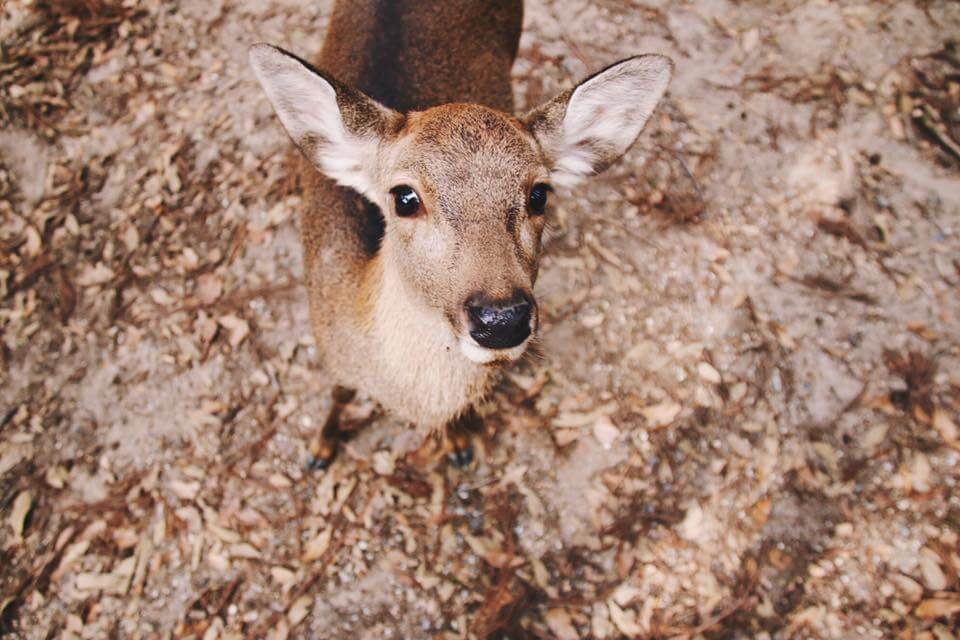
As you dip in and out of the temples, you’ll also meet Nara’s most famous residents: the herds of deer which are synonymous with the city. These tame deer live throughout the city but are mostly found around Nara Park, where you can feed them with special snacks called ‘deer senbei’.
Many of the deer have learned to imitate Japanese bows as a request for a snack, and it’s fun to feed a few of them on your way to and from the sights. Just keep an eye on your senbei, as the deer can get a bit aggressive if they see an opportunity to grab some unguarded food.
To make the most of your trip, check out our full Nara day trip itinerary for a walking route and more details of what to expect in the old city.

2. Kobe
Kobe is the spiritual home of Japan’s famous wagyu beef, but this city’s attractions stretch far beyond a plate of steak. Located in Hyogo Prefecture, Kobe is just 30 minutes from Osaka on a variety of different train lines.
Kobe is a port city and was one of the first cities to open to foreign ships, which have left a long-lasting influence on the city’s culture, food and architecture. One of the most famous examples of this is Nankinmachi, one of the three biggest Chinatowns in Japan.
Nankinmachi is one of the best places in Kansai to try Chinese cuisine and is also filled with shops and restaurants. It’s particularly fun to visit during Lunar New Year celebrations, when the area plays host to a Lunar New Year Festival that features lion dances and traditional Chinese performing arts.
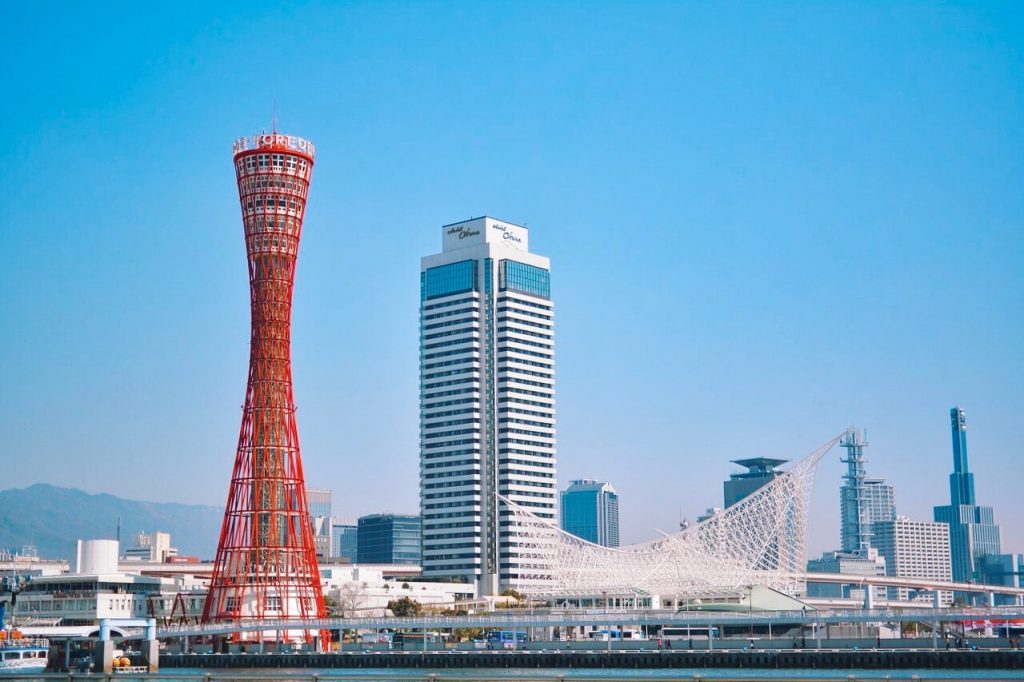
Along the waterfront, you can explore Kobe Harborland for shopping and entertainment, as well as Meriken Park, which offers splendid views of the Kobe skyline. This area is also home to Kobe Port Tower, a 108m-tall observation tower with panoramic views of both Kobe port and the city.
After exploring Chinatown, make sure to leave room for Kobe’s famous wagyu beef. This special wagyu is required to pass strict standards around meat quality, marbling and breeding, with meat from only 3-5,000 Hyogo Prefecture cattle meeting these regulations in a calendar year.
Kobe beef courses are available at a range of restaurants in the city, meaning there are plenty of opportunities to try this world-famous dish for yourself.
For a full walking route and more information on the city, check out our one-day Kobe itinerary.
3. Himeji
Himeji is home to one of the most famous castles in Japan. Located west of Kobe, Himeji is just over an hour from Osaka Station on the Tokaido-Sanyo Special Rapid or 30 minutes from Shin-Osaka Station on the Shinkansen.
The undisputed star of this day trip is Himeji Castle. Nicknamed the White Heron Castle, this UNESCO World Heritage Site is one of the oldest castles in Japan. It’s also one of the most beautiful, with its white-grey paintwork and elegant design.
The castle is located inside an expansive park that’s filled with cherry blossoms in the spring, making it a hugely popular site for photographers. But it’s also worth a visit outside the sakura season. Head to the top of the castle for a panoramic view, explore the West Bailey or look into the Okiku Well, which inspired The Ring series of horror films.
It’s also worth dropping by Kōko-en, a collection of nine Japanese stroll gardens next to the castle park. The park is home to a serene Japanese tea house called Soju-an, which is a great place to relax with some tea and Japanese sweets.
Make sure to check out our Himeji day trip itinerary to find out how to spend your day in this famous castle town.

4. Arima Onsen
Overnight or weekend trips to onsen towns are a great addition to any Japan itinerary, but they can be hard to squeeze into a trip if you have limited time. A day trip to an onsen town is a great compromise, allowing you to experience these unique destinations without committing yourself to lots of extra travel.
Arima is an ideal hot spring day trip if you’re based in Osaka. One of the oldest hot springs in Japan, this quaint onsen town is tucked away on the far side of the Rokko mountains in Hyogo Prefecture. From Osaka Umeda Station or Shin-Osaka Station, there are direct buses which will take you to Arima Onsen in about one hour.
Arima is filled with traditional buildings, ryokans and restaurants, but its the famous gold and silver waters which really draw travellers. The gold water, or kinsen, gets its brown color from a high concentration of iron. The silver water, or ginsen, has high levels of radium and carbon, and is purported to have numerous health benefits.
You can experience these hot spring waters at two public bathhouses: Kin no Yu for the gold water and Gin no Yu for the silver. Many ryokan in the town also offer day passes, which are a great way to get access to some of the private hot spring baths.
Once you’ve experienced both bathhouses, there’s also a shrine, waterfall park and a selection of small museums to explore. Read our full guide to Arima Onsen for more information.
5. Wakayama
Wakayama Prefecture is best known for its beautiful seaside towns, especially the white sand beaches of Shirahama. While many of these towns are just a little too far away for a day trip, the city of Wakayama offers a slice of Japanese-style small town life, just a 1.5-hour hop from Osaka Station.
In the centre of the city is Wakayama Castle, a beautiful historic castle which still has its original stone walls. The city is also home to the Museum of Modern Art, Wakayama which houses a wide selection of Japanese and European art.
45 minutes south of the castle by bus, Kuroshio Market is a gourmand’s paradise filled with fresh seafood. The market hosts a tuna filleting show three times a day, where you can learn a little more about the differing cuts of tuna and purchase fresh fillets cut straight from the fish.
SponsoredCheap Flights to Europe & USA
Book your tickets now and save up to 40% on top destinations.
For a change of pace, the nearby Porto Europa is a theme park built to resemble Mediterranean harbour towns. The park has full-scale reproductions of European streets, performances and fairground rides for children and adults.
For something a bit different, head 45 minutes south of Wakayama City on the train to the town of Yuasa, also known as the home of soy sauce. This beautiful historic town is the birthplace of Japan’s favourite condiment and offers tours of the soy sauce manufacturers in the city. It’s also a great place to pick up a unique souvenir from your time in Japan.

6. Mount Koya
If you’re looking to leave the world behind for a day, one of Japan’s holiest mountains is located just south of Osaka. Mount Koya is the headquarters for Shingon Buddhism and is clustered with more than a hundred temples, each of which is home to monks studying, praying and meditating in the crisp mountain air.
The mountain is most closely associated with Kobo Daishi, a hugely important religious figure who established Shingon Buddhism in Japan more than 1,200 years ago. Mount Koya is also his final resting place, as Kobo Daishi is believed to be in eternal meditation at the temple of Okunoin. If you’re lucky, you may see the temple’s monks bringing him food during your visit.
The approach to Okunoin is also one of Japan’s largest graveyards. Over the centuries, hundreds of people have chosen to be buried close to Kobo Daishi to receive salvation in death. This vast audience of tombstones amongst the trees creates a unique atmosphere for anyone who chooses to make the pilgrimage.
Elsewhere in town, the serene Kongobuji, Shingon Buddhism’s head temple, has deep connections to historical figures like Toyotomi Hideyoshi, and is also home to the largest rock garden in Japan.
If you have a little more time, the temples, pagodas and natural setting of Mount Koya also reward extended visits. Many of the temples in the area offer overnight stays, which immerse you in the daily lives of the monks here. This can include everything from early morning meditations to trying Japan’s vegetarian temple food. We stayed overnight in a Buddhist temple on Mount Koya and highly recommend leaving the material world behind for an evening.
Mount Koya can be reached from Namba Station via the Nankai line, a cable car and a bus. We recommend taking the Nankai Limited Express Koya to cut the journey time down from 2.5 hours to about 1 hour 45 minutes.
For more advice on how to spend your day on Mount Koya, check out our list of things to do during your trip to the holy mountain.

7. Mount Ikoma
On the border between Nara and Osaka Prefectures, Mount Ikoma offers a varied day trip with a splash of culture, nature and good old-fashioned fun. It’s one of the Kansai area’s more accessible mountain destinations, as you can reach the summit in about an hour from Osaka-Namba Station via the Kintetsu Nara line and the Kintetsu Ikoma cable car.
Mt. Ikoma is home to Hozan-ji, an ancient temple first built in 665 AD. It gained popularity during the Edo period after Japan’s first cable car was built here.
Traditional shopping streets connect the temple with a nearby village in a throwback to Edo-period Japan. If you’re looking to stretch your legs, there are also many beautiful mountain paths around the temple to smaller, more remote shrines.
For something a little different, Mt. Ikoma is also home to Ikoma Sanjo Amusement Park, with a selection of rides and attractions for all the family. This can be a great finish to a long day out or a fun way to entertain the children after you’ve explored the mountaintop.
8. Hasedera Temple
Nicknamed the “temple of flowers”, Hasedera is one of the most beautiful temples in the Kansai area. It’s located south of Nara City and can be reached in about an hour from Osaka-Namba Station via the Kintetsu lines.
Located on a mountainside, the roads leading up to the temple have a historic atmosphere, with many shops selling traditional sweets, foods and souvenirs. The stairs are lined with traditional stone lanterns and flowers.
The temple has a beautiful main hall, a storied pagoda and a wooden stage, similar to Kyoto’s Kiyomizu-dera but without the tourists. It enshrines an eleven-faced Buddha statue, as well as a statue of Binzuru which is said to have healing properties; just rub the corresponding part of his body to receive a little bit of divine attention for your aches and pains.
However, the true attraction of the temple lies in its stunning natural location. The temple is breathtaking in all seasons, forming a beautiful backdrop for bright red foliage in autumn, as well as blooming peonies and cherry blossoms in spring. It’s a great location for photographers and nature lovers to experience Japan’s changing seasons.

9. Okayama and Kurashiki
JR Pass holders enjoy unlimited trips on the Shinkansen from Shin-Osaka, which opens up an even wider variety of day trip options. Head west on the bullet train for about 50 minutes and you’ll reach Okayama Prefecture, the home of a few interesting sites where you can experience life in small-town Japan.
The city of Okayama is the transport hub for the region and the disputed setting for one of Japan’s most famous folk tales, the peach boy Momotaro. Stop by to visit its black castle, known as the Crow Castle, and Korakuen, one of the three famous gardens of Japan.
Korakuen has been a site of natural beauty in Okayama for more than 400 years, functioning as a place for entertaining the guests of a succession of daimyo, Japan’s feudal lords. Built around a bright, open lawn and the Sawa-no-ike Pond, the garden’s paths take you through hills, over bridges and past tea houses while the elegant curves of Okayama Castle perch above the treeline.
Okayama Castle is also worth a brief visit, with its striking black exterior and gilded roof tiles. While it was heavily bombed during the Second World War, the castle has been reconstructed and now sits inside a picturesque park, just across the bridge from Korakuen.
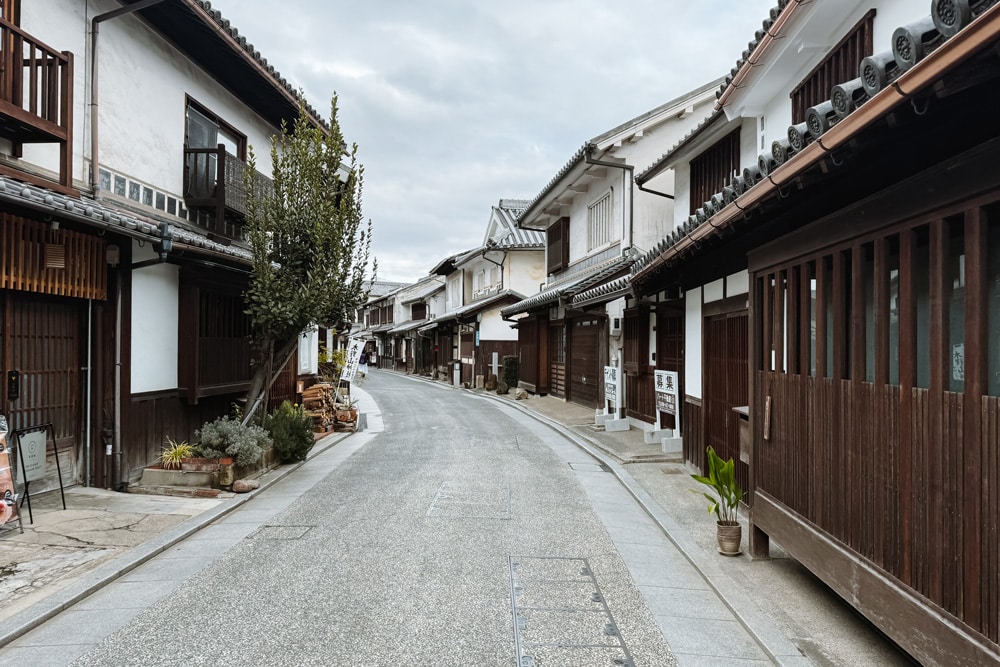
Another popular day trip spot along this part of the coast is Kurashiki, a former merchant town with a beautifully preserved warehouse district. While it used to be one of the principal trading hubs along the inland sea, the storehouses have now been reimagined as charming cafes and a selection of famous denim shops.
Kurashiki is particularly beautiful during the cherry blossom season, when the trees scatter sakura petals across the cobblestones and canal bridges. It’s a great time to take a punt along the willow-lined canals through the heart of the historical quarter.
At any time of year, Kurashiki is a great place to shop, eat and explore an often overlooked part of Japanese history. For a full itinerary, make sure to check out our article from our visit to the city’s historical quarter.
10. Ise Grand Shrine
A day trip to Ise Grand Shrine is not for the faint-hearted, but it has a big payoff. One of the oldest and holiest sites in Shinto, this huge shrine complex in Mie Prefecture can be visited from either Osaka or Nagoya.
You’ll need an early start if you’re planning to head to Ise and back in a day. The journey involves two and a half hours on Kintetsu Limited Express trains to either Iseshi or Isuzugawa Stations, with a short bus ride up to the shrine gates once you arrive in the city.
But all that travelling is worth it: the bus will drop you in the heart of one of the most important and influential sites in not just Japanese religion, but Japanese culture as a whole. Ise Grand Shrine is one of the two most important sites in Shinto, and is bound up in the stories of the sun goddess Amaterasu and the other gods of ancient Japan.
The shrine has been an important place of pilgrimage for Japanese people down the centuries, and still exerts a powerful hold on travellers of all kinds. It consists of two shrines, the outer Geku and inner Naiku, but most travelers focus on crossing into the inner Naiku over the famous Uji Bridge.
Naiku’s unique atmosphere is weighted with history and myth. The shrine and the Uji Bridge are reconstructed every 20 years to a design that has been passed down the centuries in a continuous cycle of renewal. The centre of the shrine is closed to the public and is said to be the home of the Sacred Mirror, forged by the gods as one of the key treasures of the Japanese Imperial Household.
All those pilgrims down the centuries have needed places to eat, drink and sleep, and a wide variety of shops and restaurants have sprung up along the arcade to the shrine entrance. After browsing through the charming wooden buildings, you can also visit Okage Yokocho, with its selection of stalls offering a range of Japanese street food and places to rest your legs.
While it’s not an easy day trip, Ise Grand Shrine is definitely worth considering if you have an interest in Japanese history, Shinto or ancient Japanese culture.
Conclusion – The Best Day Trips from Osaka
Day trips are a great way to experience the full variety of destinations that Japan has to offer. With its central location and extensive transport links, Osaka offers the perfect base for the kind of flexible, lightweight travel around Japan. Venture off the Golden Route for the day and you might just discover something unexpected, from ancient temples and historical sites to theme parks and onsen resorts.
But before you slip on your day pack and head for the station, make sure you’ve experienced everything Osaka has to offer! Take a look at our one day Osaka itinerary to ensure you visit all of the city’s most famous sights, or browse our guide to the best hotels in Osaka to find a great home away from home for all budgets and travel styles.

US & Schengen Visa Guide
Get step-by-step assistance for your tourist visa approval.