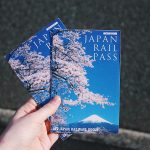
I had passed Nagoya Station on the way to Kansai from Tokyo many times before I finally got off on my 4th trip to Japan. And this was only because I had to travel down from Matsumoto to exchange my regional JR Pass. I spent just over an hour outside the station before travelling onwards, and didn’t properly get to see the city until my next trip. I was planning on hiking the Nakasendo, and Nagoya is the perfect overnight stay before visiting Central Japan.
So I decided to give myself a few days to actually see this “boring” city, and give myself some rest before the big hike. However, I ended up being very surprised at how much I enjoyed Nagoya! Beforehand, I only really knew about Nagoya Castle, but I didn’t realise there was a beautifully preserved townscape nearby, tons of great museums and fantastic food (it is the birthplace of two of my favourite Japanese chain restaurants after all).
Nagoya is catching more travellers’ attention since the opening of the Ghibli Park nearby, but I still think adding a day or two to see Nagoya itself can’t hurt. Here is my one-day Nagoya itinerary so you can also see more of this underrated city!
- Nagoya Itinerary Overview & Map
- The Perfect One Day Nagoya Itinerary
- 1. Try the Nagoya Morning Service for Breakfast
- 2. Explore Nagoya's Shikemichi Townscape District
- 3. Take a Free Walking Tour of Nagoya Castle
- 4. Have Lunch at Kinshachi Yokocho
- 5. Stop by Osu-Kannon Temple
- 6. Shop in Osu Shōtengai Shopping Street
- 7. Have the Famous Misokatsu at Misokatsu Yabaton
- 8. See Oasis 21 & Chubu Electric Power Mirai Tower Light Up
- Where to Stay in Nagoya
- Nagoya FAQ
- Final Thoughts on This Nagoya Itinerary
What’s New in 2026?
Nagoya Castle’s main tower keep is still under construction. You’re still unable to go inside, and no end date has been announced yet. However, you can go inside the rebuilt Hommaru Palace and explore the castle grounds.
Key Takeaways
– Nagoya sits on the Tokaido Shinkansen line between Tokyo and Kyoto, but most people skip it as it has a reputation for being a bit “boring”
– It is quite an underrated city, but not the best choice for first-time visitors. You can add it to your itinerary if you’re visiting nearby Ghibli Park or want to walk the Nakasendo, though.
– You can see a lot in one day in Nagoya, including visiting Nagoya Castle, the Shikemichi Townscape District, Osu-Kannon Temple and the Chubu Electric Power Mirai Tower.


Nagoya Itinerary Overview & Map
If you don’t have enough time to read the full guide, you can use this overview instead. The map below shows you the self-guided route you can use when spending a day in Nagoya:

During my trip to Nagoya, I stayed in the Mitsui Garden Hotel Nagoya Premier, which was fantastic! Great location, within walking distance of Nagoya Station, a good bed, and an on-site sento.
Visiting Nagoya for Sumo?
If you’re visiting Nagoya in July, you may be able to catch one of Japan’s six Grand Sumo tournaments here. I got to see one of them in Osaka, and it was incredible! Tickets do sell out very fast, so make sure you book them in advance. Book your tickets here.
The Perfect One Day Nagoya Itinerary
When spending one day in Nagoya, you can follow this itinerary:
1. Try the Nagoya Morning Service for Breakfast
Nagoya is famous for its breakfast sets, which differ quite a bit from a traditional Japanese breakfast. As the city has a strong coffee culture, the Nagoya Morning Service gets you a free breakfast set when buying a coffee.
You can get these in most kissaten (retro-style Japanese coffee shops) and cafes in Nagoya. What’s part of the free breakfast can vary, but it often includes some toast, butter or red bean paste and a boiled egg.
If this isn’t your first visit to Japan, you may think it sounds familiar to what Komeda’s Coffee, a large coffee/restaurant chain in Japan, offers nationwide. Interestingly, Komeda’s Coffee actually comes from Nagoya, where it opened its first shop in 1968.
As Komeda’s Coffee is a bit of a comfort spot for me when travelling across Japan, I had to try it in the chain’s hometown. If you order a coffee before 11 am, you’ll also receive the free breakfast set. I normally add an extra slice of toast for a small fee.


2. Explore Nagoya’s Shikemichi Townscape District
On the way to Nagoya Castle, one of the main tourist sights in the city, you can walk through a beautifully preserved townscape of Shikemichi. Nagoya Castle was completed in the early 1600s, and around the same time, many merchants set up shop nearby.
History here goes back to the 17th century, when merchants started setting up shop near the castle. The wooden, traditional exterior of the warehouses is very well preserved, and walking through it gives you a lovely slice of Nagoya’s history. There isn’t a lot to do in this area, and it’s very quiet, but I loved walking through it. It’s such a beautiful area!


I also stopped by a small shrine on this street called Fuji Sengen-jinja. A small plaque on the side said the shrine dates back to 1495, and honours the spirit of Sengen Shrine in Suruga (Shizuoka Prefecture). It’s a lovely shrine with seven large trees that are said to be over 300 years old.
Continuing my walk towards Nagoya Castle, I also walked through Endoji Shopping Street (which was way quieter than the more popular Osu Shotengai Shopping Street that’s mentioned later on in this itinerary).
I happened to visit on the day the Festival de Paris was on, which is usually held in early or mid-November. The streets were filled with stalls selling French-themed food, wine, antiques and souvenirs. There was even some live accordion music.
Funnily enough, it’s not just French items, as I saw a few Dutch books at a book stall. I had a quick conversation with the seller, and she showed me some more of her Dutch children’s book collection. I recognised quite a few from my own childhood!
Travel Tip
If you walk towards the end of Endoji Shopping Street (on the crossing with Egawa-sen Street), you’ll find four statues of important historic figures: Oda Nobunaga, Toyotomi Hideyoshi, Ieyasu Tokugawa and Mitsukuni Tokugawa.
3. Take a Free Walking Tour of Nagoya Castle
The most famous sight in Nagoya is Nagoya Castle. Before visiting the city myself, it was the city’s only landmark I had heard about. Even though it’s not the original castle, as it was rebuilt after it was destroyed in WWII, it is a very impressive building. It’s so large, I even got to see it from my hotel room a couple of kilometres away.
Due to construction work, you’re not able to go inside Nagoya Castle at the moment, but you can explore the castle grounds and go inside Hommaru Palace, which was recently rebuilt. I have to admit that Nagoya Castle wasn’t my favourite castle I’ve visited in Japan (that probably has to be Matsuyama Castle in Shikoku), but it still added a lot to my day in the city.
When visiting the castle, I decided to join one of the free walking tours. They are held every day in English at 12:30 pm (starting at the east gate and the main gate). There is no need to pre-book; you can just show up and join. I always love taking walking tours when I’m in a new city, as you can learn so much about the history and area from tour guides. Way more than you can find online or in guidebooks.


Our tour guide showed us around the castle gardens and took us inside the newly rebuilt Hommaru Palace. On the tour, I learned that the original castle was built in the 1600s, but was burned down during an air raid in WWII. The current castle was rebuilt in 1959, and current construction works are being done to make the building more earthquake-proof.
The mascots of Nagaya Castle are the two Kinshachi, the large golden tiger-headed carp that sit on the roof of the castle. These mythical creatures have the ability to summon water and are used as protection against fire. The female (on the south side) is slightly smaller than the male (north side), but still weighs over 1,200kg!
While walking through the gardens past the first few buildings of the castle grounds, our guide explained where the trap doors of the watch towers were located. I learned that the many pine trees planted around the castle are a symbol of longevity, too.

Our small group went into the Hommaru Palace. It was originally built in 1615, but was also burned down in an air raid. A massive restoration project has rebuilt this palace, and it was opened to the public in 2018. Being able to visit and walk around (after taking off your shoes!) was very special. The same materials and building techniques that were originally used to build it were also used in the rebuilding.
The wood still looked so fresh and new, which almost felt a little weird. Most castles and palaces I’ve visited in Japan are very old, and the wood has lost its warm colour. This was different. The deeper you went into the palace, the fancier and more important the rooms became.
My tour guide was amazing, it was hard to believe it was a free guide. He had so much information about small details in the palace. For example, how the nail heads were placed on top of nails to make it prettier. And how the room of the first Lord of Nagoya Castle’s wife had painted pictures of her hometown in Wakayama, to help her not feel homesick. She was only 14 when she was married.
I really recommend going on one of these walking tours if you have time. It only lasted about an hour, and I learned so much! I don’t think I would’ve enjoyed the palace and castle grounds as much as I did without the tour and extra information.

4. Have Lunch at Kinshachi Yokocho
Two streets called Kinshachi Yokocho sit near the main gate and the east gate of Nagoya Castle. Kinshachi is the mystical creature atop Nagoya Castle, a tiger-headed fish that protects the castle from fires. And Yokocho translates to “alleyway”, and usually refers to the atmospheric side streets filled with izakayas.
The ones outside of Nagoya Castle have two zones, the Yoshinao Zone and the Muneharu Zone. The Yoshinao Zone focuses mainly on the traditional Nagoya cuisine, whereas the Muneharu Zone reflects a more modern taste.
RecommendedBest Travel Insurance Plans
Travel safely with comprehensive medical coverage abroad.
Both are great spots to sit down for a local lunch before moving on with your day in Nagoya. I visited the Yoshinao Zone and had some fantastic miso udon. Delicious!
Travel Tip
Because it’s quite a distance between Nagoya Castle and Sakae Area, I took a taxi (it was also starting to rain!). I normally use Go Taxi in Japan; it works similarly to Uber. Because you can add the destination address, you also don’t have to worry about the language barrier.

Optional Itinerary Addition
Once you get to the Sakea Area, you could also visit the Nagoya City Science Museum. There are over 270 different exhibits, including one of the world’s largest planetariums. The museum offers foreign language guides, including English, but the planetarium show is in Japanese only. I still really enjoyed our visit, though! But if you’re short on time, it may be better to skip it.
5. Stop by Osu-Kannon Temple
Osu Kannon Temple is one of the most important temples in Nagoya. This Buddhist temple is located in the city centre and has a long history. It started its journey around 1333, when it was built in Gifu Prefecture.
It was later (in 1612) relocated to Nagoya due to flooding. Even though the current temple was only built in 1970 (as it was destroyed in the war), it is a beautiful and peaceful place to visit.
The large red paper lantern is iconic and reminded me of Senso-ji Temple in Tokyo. As did the large red exterior of the place and the smell of incense that welcomed me as I walked up the stairs. It was surprisingly quiet when I visited, apart from the hundreds of pigeons at the bottom of the stairs!
Travel Tip
If you happen to visit on the 18th or 28th of the month, you’ll find a popular flea/antique market with over 80 stalls at the shrine.

6. Shop in Osu Shōtengai Shopping Street
From Osu Kannon Temple, you can head directly into the Osu Shotengai Shopping District. This large shopping area has over 1,200 shops and restaurants, selling pretty much anything you can think of. It’s a great spot for thrifting and secondhand shopping, as well as street food (but don’t eat too much, I have a special dinner spot planned for afterwards!).
Another big highlight of the Osu Shopping District is Akamondori, Nagoya’s version of Tokyo’s Akihabara. If you’re after any video game, anime or manga merch, this is the place to be. It’s also a fantastic place to shop for retro video games or consoles. I’m always on the lookout for retro video games, and prices here were very reasonable (especially compared to those in Tokyo or Osaka. My favourite stores were:
- K-House: This store was filled with gems at low prices. The place smelled of cigarette smoke, and it wasn’t organised at all, but that added to the charm. I had a great time browsing, and managed to pick up a Nintendo DS Lite for only ¥400! The prices here were very old-school, almost like what Akihabara used to be years ago, before it got too popular.
- Meikoya: A huge selection of different consoles and games, but on the pricey side. It’s nice to browse, but I would probably buy elsewhere.
- Book Off Super Bazaar Nagoya: I always have to check Book Off when I see one, and this didn’t disappoint. As it was a Super Bazaar, it had more than just video games and manga, but it also had a large selection of clothes, shoes, watches, accessories and more. I could’ve spent hours in here if I had more time!
- Surugaya Speciality Store: Another chain that I love in Japan, and there are a couple in Nagoya. The one I went into mainly sold trading cards, and I bought some very cheap retro Pokémon cards for my collection.
- Super Potato: I’m not the biggest fan of Super Potato because the prices are usually very high, catering to tourists (well, making a lot of profit from tourists). However, I do like having a browse just to see what they have in stock, as their Nintendo stock is usually pretty good! Just know that you’ll be paying a premium for them.


7. Have the Famous Misokatsu at Misokatsu Yabaton
One of Nagoya’s specialities is miso katsu. And the best place to eat it is at Misokatsu Yabaton. The chain now has multiple restaurants across Nagoya and surrounding areas, but this is where it all began.
Tonkatsu is a breaded pork cutlet that is deep-fried and can be found pretty much all across Japan. What’s special about this place is that the cutlet is topped (well, drenched) with a special red miso sauce.
I’m not one to queue for food in Japan. I’ve only done it a handful of times over the last 8 years of travelling across the country. But this was one of them. I got there pretty early, around 5:30 PM, and had to wait around 30 minutes to be seated. Once seated, food was served very quickly!
And I have to say, it was worth the wait. I ordered the teppan tonkatsu set, which came with rice and miso soup. The tonkatsu was perfectly crispy, and the rich miso sauce complemented the flavours so well. My mouth is watering just thinking about it now.


8. See Oasis 21 & Chubu Electric Power Mirai Tower Light Up
After enjoying the misokatsu, it’s worth walking over to Sakae to see the Oasis 21 and the Chubu Electric Power Mirai Tower lit up.
Oasis 21 is a large building that looks a little bit like a spaceship. The oval glass rooftop is also known as “Spaceship-Aqua”, holding water 14 meters above the ground. In the evening, it’s lit up in different patterns depending on the season.
Right next to it stands the Chubu Electric Power Mirai Tower. It was originally built in 1954 as the first consolidated broadcasting tower in Japan. In 2020, it was renovated and reopened with a light show.
You can go up the tower for a 360-degree view of the city. The Sky Deck sits 90 meters above the city.

Travel Tip
You can even stay inside the Chubu Electric Power Mirai Tower! The Tower Hotel Nagoya sits on the 5th floor of the tower and has multiple rooms available.
Where to Stay in Nagoya
You can see quite a bit in Nagoya on a day trip, but because the city acts as a perfect base for visiting nearby spots (like visiting Ghibli Park, LEGOLAND® Japan, walking the Magome–Tsumago trail, Shirakawago, Inuyama Castle, etc), staying overnight can be a great idea. Accommodation in Nagoya is also cheaper than in more popular cities like Kyoto or Tokyo.
When I spent three days in Nagoya, I stayed in the Mitsui Garden Hotel Nagoya Premier. As the hotel is located just a few minutes from the main train station, it was very easy to drop off our luggage and explore Nagoya.
We chose the double room (18.5m²). The bed itself was incredibly comfortable. From our room, we were even able to see Nagoya Castle. The room itself was typical of a modern business hotel, with everything you could need for a short stay.
Another big plus of the Mitsui Garden Hotel in Nagoya is its on-site spa that can be used by guests for free. I went down to try it for a bit on our first night, and it was very quiet! The hotel also provides luggage storage after checkout and hosts a sky restaurant and bar, giving you stunning views over the city.
As it’s located near JR Nagoya Station, there are lots of restaurants and shops nearby too. If you’re only staying in Nagoya for one or two days, staying near the station will be your best option. This way, you won’t have to drag your suitcase in and out of the city for the short period you’re staying here.


Nagoya FAQ
Is Nagoya Worth Visiting?
Nagoya is very underrated and is definitely worth a visit. However, I think it’s okay to skip it on your first trip to Japan. It’s a lovely city, but there are definitely more exciting places in Japan to see first.
Is One Day Enough in Nagoya
Having a full day in Nagoya gives you enough time to check off the main sights. I would recommend staying overnight so you can try the Nagoya Morning Set at one of the kissaten.
What to See Near Nagoya
If you have more time in Nagoya, consider taking a half-day trip to Inuyama to see one of Japan’s original castles. Or visit Kiyosu Castle, which has a beautiful red bridge, resembling the bathhouse in Spirited Away.
Final Thoughts on This Nagoya Itinerary
It’s taken me years to finally visit Nagoya, and I had a blast. This is not the boring city everybody makes it out to be! I wouldn’t say Nagoya is a must-visit, especially not on a first trip to Japan, but it definitely won’t disappoint.
As Nagoya is also the gateway to Central Japan, it can be a great idea to add a night or two here before heading upwards to Gifu and Nagano Prefecture. When I stayed in Nagoya, I headed towards Nakatsugawa afterwards, to walk part of the old samurai route. My 3 day hike on the Nakasendo is still one of my favourite things I’ve ever done in Japan.
You could also head towards Kyoto, as it’s only 30–45 minutes on the Shinkansen. Or take a guided tour up to Kamakochi to see some of Japan’s most beautiful nature.

Cheap Hostels & Airbnbs
Find the best affordable accommodation options across Europe and the USA.