Hakone makes for the perfect little getaway from the big city. With beautiful views of Mount Fuji, countless onsen and a volcanic valley, this hot spring village in the mountains has a lot to offer. Find out how to take the perfect day trip to Hakone from Tokyo below.
The beautiful mountain town of Hakone is located less than 100 km from Tokyo (1.5–2 hours). With its stunning scenery, Mount Fuji views and hot springs, Hakone is a great day trip from Japan’s capital city.
While I would recommend staying overnight in Hakone, it’s not always possible to find two free days in your itinerary. If you have only one day to visit Hakone, you can still see all the main sights on an unforgettable day trip. Below, I’ve put together a one-day Hakone itinerary, including a route to follow, information about the main sights and how to get there from Tokyo. Let’s take a look.
One Day in Hakone Map & Overview
As I quickly mentioned in the introduction, staying overnight in Hakone is something I’d highly recommend. There are some great ryokans and hotels in the area, and it’s a great place to try your very first Japanese onsen. However, if you only have one day to visit Hakone on a day trip from Tokyo, that’s very doable too!
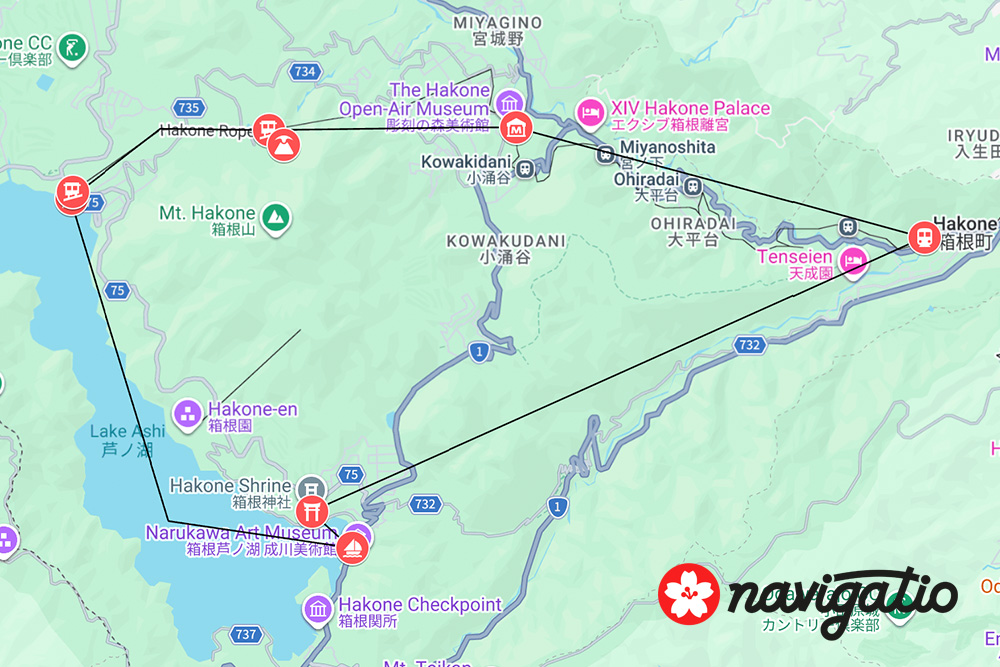
As you can see from the map below, our one-day Hakone itinerary follows a rough circle around the area. This is often called the Hakone Loop, as it’s a popular circuit that takes in the majority of the main sights in Hakone. Following this itinerary will take around 6–7 hours, including a break for lunch.
While it’s not signposted, following the Hakone Loop will make your day trip a lot easier. There are quite a few steps to the Loop, but there will almost certainly be other people on the same itinerary that you can follow. This makes it a good choice if you haven’t found your feet in Japan yet or if you have a talent for getting lost. If you’re feeling a bit more confident, you could even try the route in reverse!

If you’d rather not worry about the logistics of taking a DIY day trip, you can also choose to book a fully guided day trip to Hakone from Tokyo with a tour guide. They will take you to all the highlighted spots and can even pick you up from your hotel in Tokyo. This could be a great option if you’re travelling with children or if it’s your first time in Japan. You can book a guided day trip here.
Hakone Day Trip Itinerary
Here is our one-day Hakone itinerary from Tokyo:
1. Take the Train From Tokyo to Hakone-Yumoto Station
As you’re trying to see Hakone in one day, you want to try to get the train from Tokyo as early as possible. There are different ways to get to Hakone, depending on which train pass you have (more information about the different options near the end of the article), but the easiest way is by using the Hakone Free Pass.
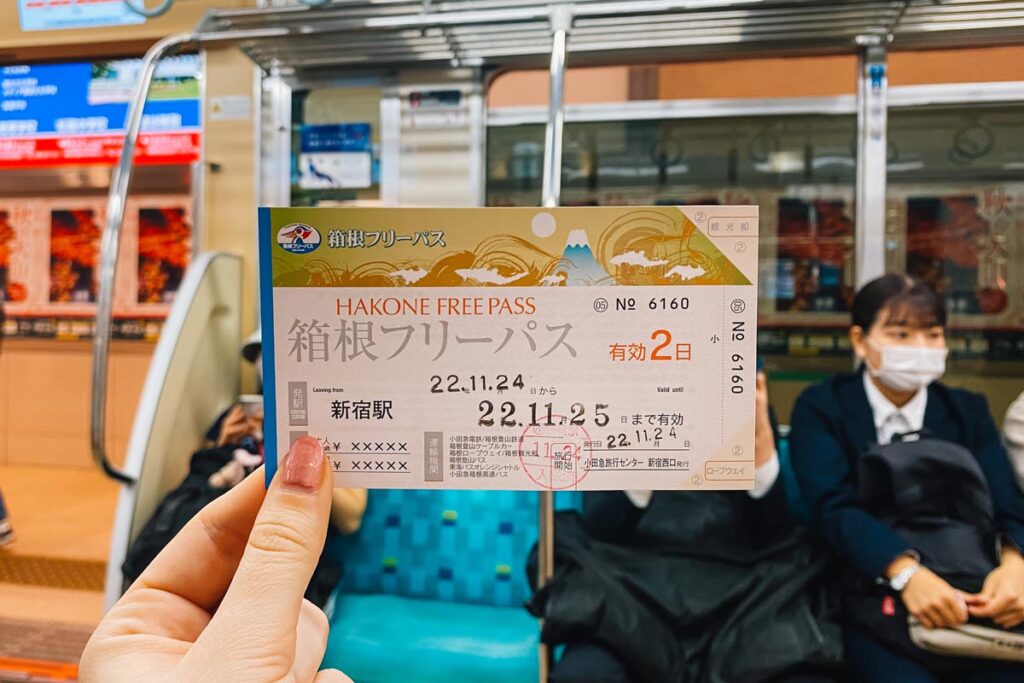
The Hakone Free Pass is a discount train pass that can help you save money (and time) while exploring Hakone. Offering unlimited access to public transport in the Hakone area and countless discounts on museums, restaurants and onsen, the pass also includes a return ticket from Shinjuku Station to Hakone.
You can book the Hakone Free Pass online and redeem it at Shinjuku Station on the morning of your day trip, or buy the digital version of the pass on Odakyu Railway’s website or Klook. We have a full guide on the Hakone Free Pass explaining what is included and how much you could save.
Once you’ve got the Hakone Free Pass, you can also buy tickets for the Romancecar limited express. For a surcharge of ¥1,200 each way, this faster train service will cut about 30 minutes off your journey and save you the hassle of changing trains.
Without the upgraded express ticket, the journey from Shinjuku to Hakone takes around two hours. With an upgraded express ticket, it takes around 80 minutes.
2. Take the Bus to Lake Ashi
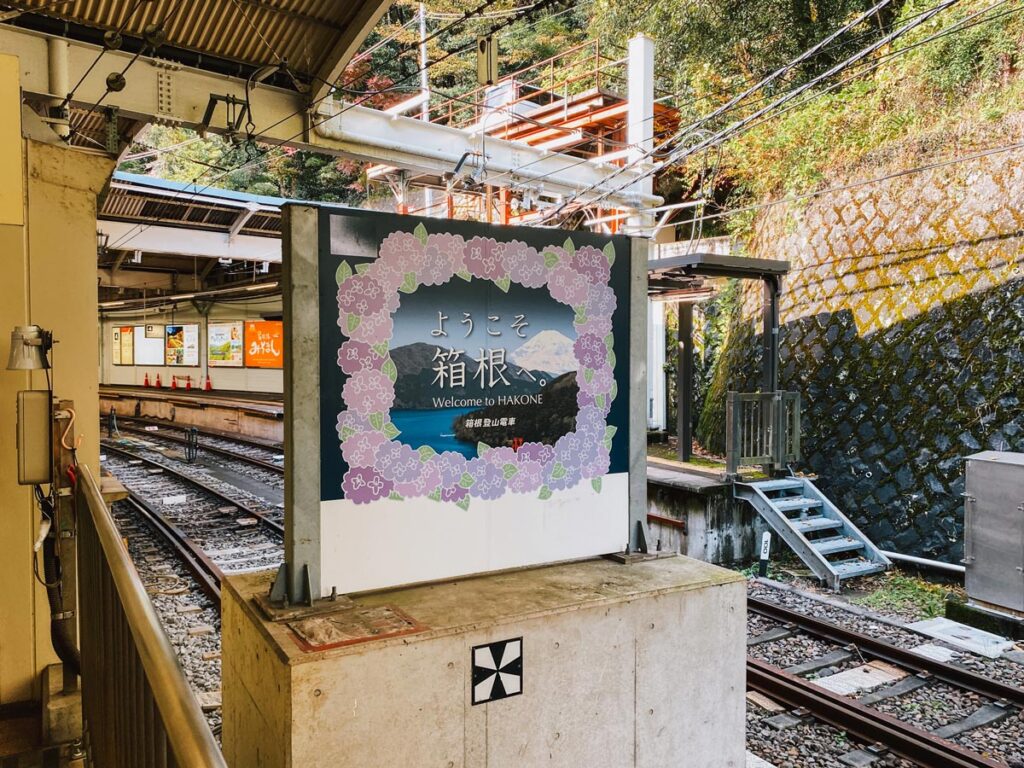
After arriving at Hakone-Yumoto Station, jump on the bus towards Lake Ashi. Multiple bus routes will take you there, and you can use the Hakone Free Pass to ride them for free.
The bus takes half an hour to an hour, depending on the route you pick. Buses to Motohakone-ko will drop you at a convenient spot on the lakeshore for sightseeing cruises and exploring the lake.
At Lake Ashi, you can stretch your legs on lakeside walks and small nature hikes. But if you’re on a tight schedule, it’s best to head straight to Hakone Shrine.
3. Visit Hakone Shrine
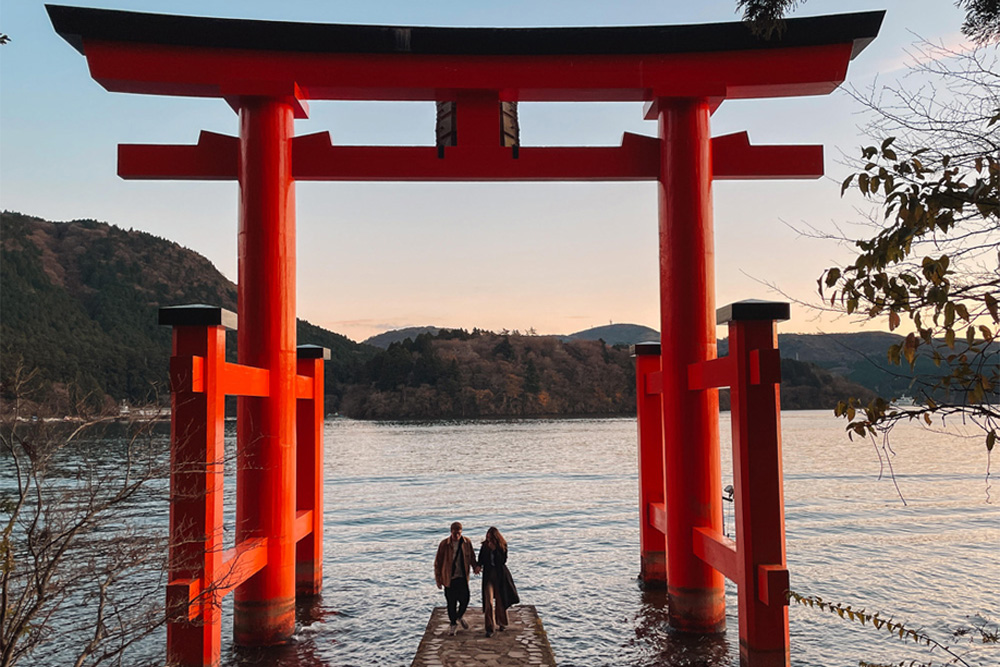
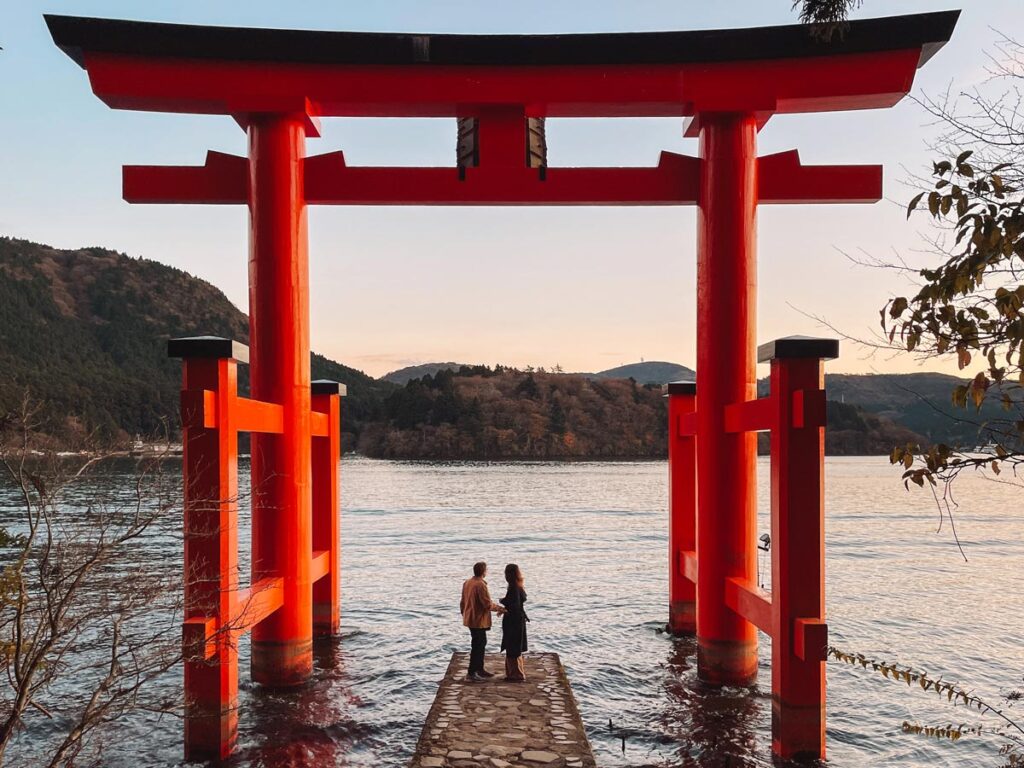
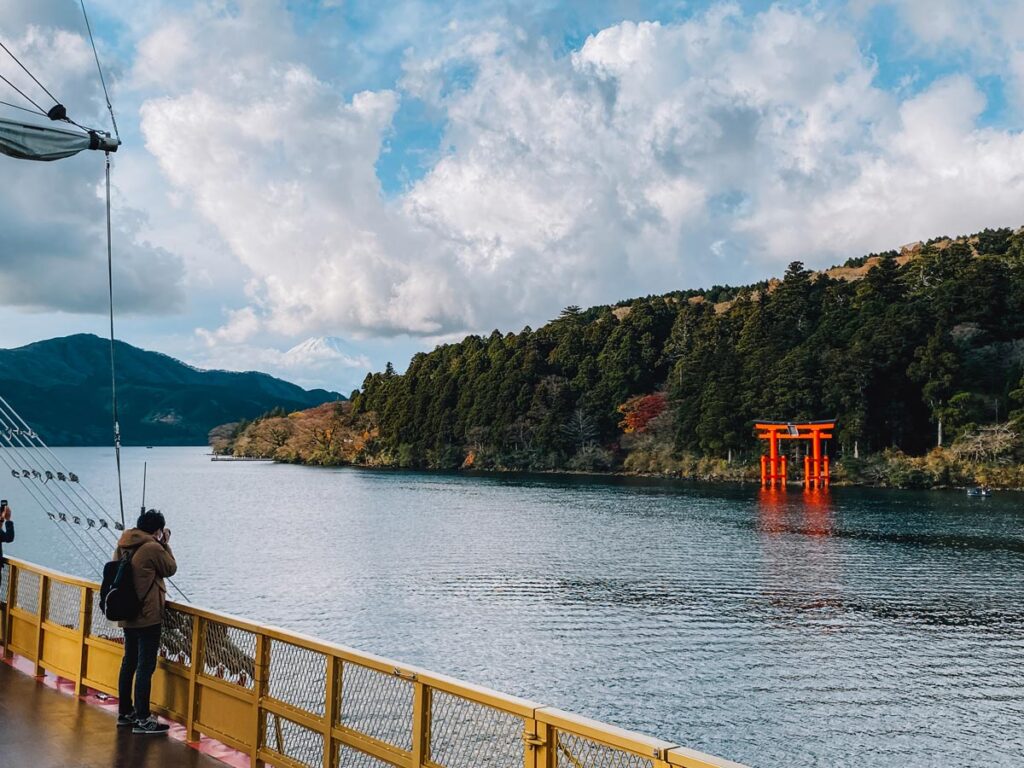
The floating torii gate on Lake Ashi is probably the most iconic sight in Hakone. Hakone Shrine is a must-visit, but prepare for queues near the torii gate. You won’t be the only one wanting to take a picture. We waited around 30 minutes.
Behind the famous torii gate, you can walk up the steps towards the main entrance of the shrine. The original shrine was built in 757 but was later relocated to where it stands today.
Located on the Hakone branch of the ancient Tokaido highway, the shrine has been a popular place to pray for safe travels since the Heian period. It’s a great place to pick up an omamori charm for good luck on the rest of your travels in Japan.
As you explore the shrine, try to spot the dragon motifs on the buildings. Local legends say that the shrine was built to pacify a dragon that lived in Lake Ashi.
4. Spot Mount Fuji
Hakone is a great place to spot the famous Mount Fuji. This beautiful mountain (and active volcano) has been inspiring Japan and its people for centuries, and once you’ve seen it yourself, it’s very clear as to why.
People often compare Hakone and Kawaguchiko for Mount Fuji views. Kawaguchiko has an unobstructed view of the mountain. However, you can still see Mount Fuji clearly from Hakone. Plus, it’s easier to get here from Tokyo, and there are more things to do in the area. Hakone is the place where I first saw Mount Fuji properly, and it’s a memory I’ll never forget.
After visiting Hakone Shrine, make your way over to Moto-Hakone Port or Hakone-machi-ko.

Weather note: The weather in Hakone can be a little temperamental. Clouds often cover Mount Fuji, particularly during the summer, making it almost impossible to see. If you have a few days in Tokyo, try to be flexible with the date of your Hakone day trip. You can also check the visibility before you go to the SeeMtFuji website. Hakone is south-east of Mount Fuji.
5. Sail Lake Ashi on a Pirate Ship
Lake Ashi looks stunning from Hakone Shrine, but it’s even more beautiful when you’re sailing across it. It’s a great place to spot Mount Fuji, especially when you’re doing it in style…
There are three different pirate ships (yes, pirate ships, you read that correctly) sailing across Lake Ashi, each with a unique design. The trip itself takes 25–40 minutes, depending on where you board (Hakone-machi-ko or Moto-Hakone-ko).
The trip on these pirate ships is included in the Hakone Free Pass, so you can board without having to pay for an individual ticket. You can also upgrade to a special room and access to the front of the ship, but in my opinion, this isn’t worth the extra money. The ticket that’s included with your Hakone Free Pass is more than good enough.
On a clear day, you can see Mount Fuji peeking through the mountains. On my first visit to Hakone, the clouds slowly parted, and I got to see Mount Fuji properly for the very first time. It was magical, I teared up a little. You can also see the floating torii gate from Hakone Shrine from the ship, along with Kuzuryu-Jinja Shrine and the dense forest surrounding the lake.
Taking the boat also gets you to the entrance of the Ropeway Station, which fits perfectly with the next stop on our Hakone itinerary.
6. Visit Owakudani, the Great Boiling Valley
After getting off the pirate ship at Tōgendai Port, walk over to the Ropeway Station. The ropeway is also included in the Hakone Free Pass, another reason why this pass will save you so much time and money.
Stay on the ropeway until you reach Owakudani Station. This should take around 30 minutes. On a clear day, you’ll be able to see Mount Fuji and Lake Ashi from the ropeway. There is one stop in between, Ubako Station, which is a five-minute walk from Hotel Green Plaza Hakone. We stayed here during our trip to Hakone, but it also has a public onsen with stunning Mount Fuji views.
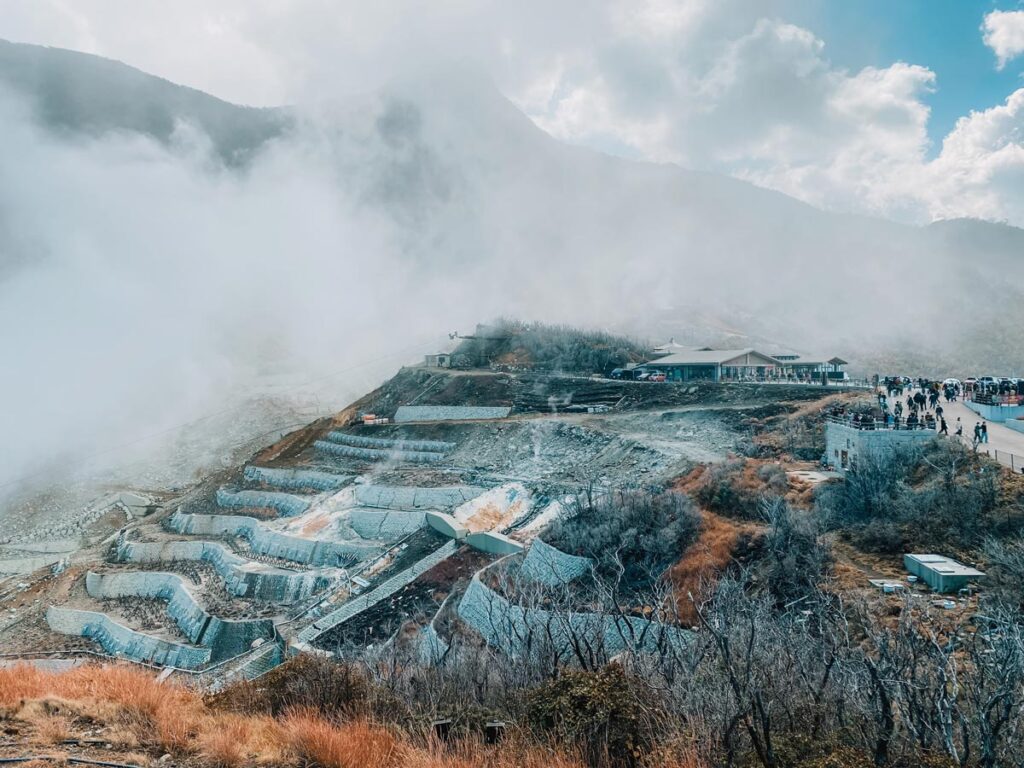
Owakudani (大涌谷) literally translates to Great Boiling Valley, and once you arrive at Owakudani Station, you’ll immediately see why. After an eruption around 3,000 years ago, this volcanic wasteland was left behind.
The sulphurous fumes and steaming pools make for a pretty unique experience (it smells so bad!). There are even signs warning you of the toxic volcanic fumes. All that steam and sulphur is the reason why the locals call this place the Valley of Hell.

Stay connected to the internet during your trip to Japan (essential for using apps like Google Maps & Translate!) with an eSIM. Journey Japan eSIM specialises in eSIMs in Japan, making them the best option for your next trip. (Read our full review here)
7. Eat a Hakone Black Egg
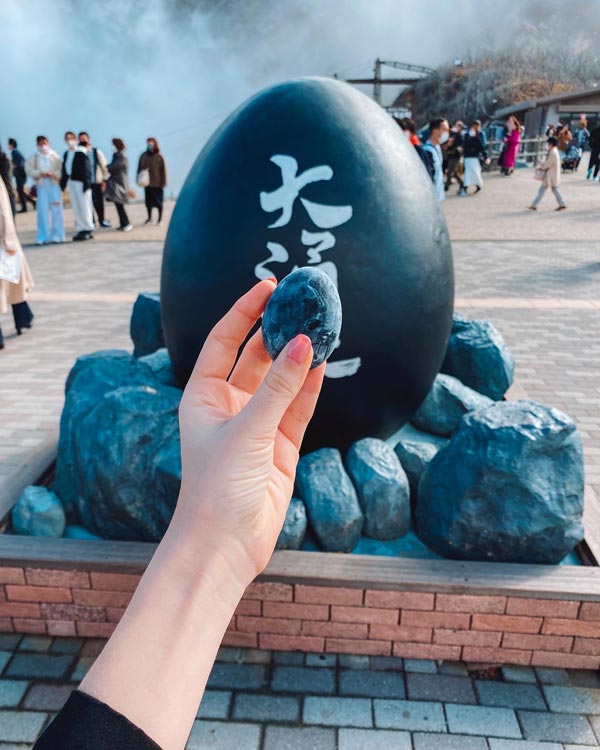
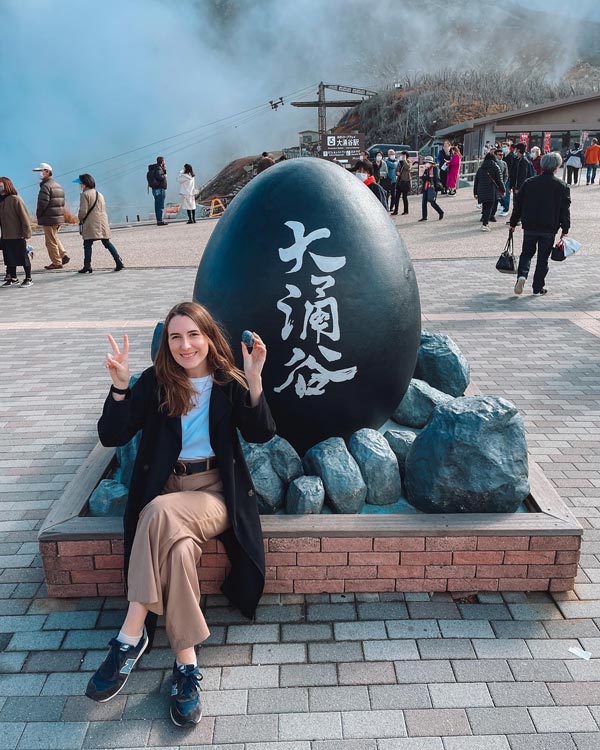
You cannot leave Owakudani without trying one of the iconic black eggs (kuro tamago). These famous eggs are regular chicken eggs, but they’re boiled in water from the area’s natural hot springs.
The minerals in the water turn the shell black. Don’t worry, the egg inside isn’t affected, so it looks and tastes the same as an egg you’d boil at home. But according to local lore, eating one will add seven years to your lifespan.
Whether it’s true or false, it’s worth a try, right? I ate two…
8. Visit the Hakone Open Air Museum
Hakone is home to quite a few museums, but the Hakone Open Air Museum is one of the most popular. It’s on the Hakone Loop, making it easy to visit if you’re using the Hakone Free Pass to get around the area. While the entry itself isn’t covered by the Hakone Free Pass, you will get a discount with it.
From Owakudani Station, take the ropeway to Sounzan Station. From there, you can go to Gora Station and transfer to the railway towards Chokoku-no-mori Station. The Hakone Open Air Museum is only a few minutes from here.
The museum was built in this area for its stunning outdoor location, with hills, streams and ponds that make it a modern interpretation of a Japanese garden. It’s filled with beautiful sculptures by modern masters like Henry Moore and a wide range of Japanese artists.
It’s definitely worth taking a wander through the museum grounds to experience all the different artworks, which have been carefully placed to add something to their surroundings. On rainy days, you can also check out the Picasso Pavilion, which is filled exclusively with artworks by Pablo Picasso.
9. Head Back to Shinjuku Station
After a busy day in Hakone, it’s time to make your way back to Tokyo. After visiting the Open Air Museum, you can take the Hakone Tozan Railway and travel to Hakone-Yumoto Station. From there, the Hakone Free Pass allows you to take the train back to Shinjuku.
There is a lot more to see and do in the Hakone area outside of the Hakone Loop, and staying overnight is the perfect way to see more. As there are some fantastic ryokans with on-site onsen and kaiseki dinner, I would highly recommend trying to stay here for at least one night. We have a full guide on our favourite areas and hotels in Hakone.
How to Get to Hakone from Tokyo
There are different ways to get to Hakone from Tokyo, depending on which pass you hold:
1. Odakyu Rapid Express Train (Hakone Free Pass)
The cheapest way to get to Hakone from Tokyo is by taking the Odakyu rapid express train from Shinjuku. This is the route included with the Hakone Free Pass and requires a change at Odawara Station. From there, you travel onwards to Hakone-Yumoto Station.
The journey takes around two hours in total, but you can enjoy some stunning views of Mount Fuji from the train.
2. Romancecar (Hakone Free Pass Upgrade)
The fastest way to get to Hakone from Tokyo is by taking the Odakyu Romancecar. This direct service takes you from Shinjuku to Hakone in around 80 minutes.
If you have already purchased the Hakone Free Pass, you can pay an additional fee (¥1,200 one-way) to upgrade to the Romancecar. You can buy Romancecar tickets over the counter at the Odakyu Sightseeing Service Centres.
3. JR Pass
If you’re using the JR Pass to travel through Japan, you can use it to travel towards Hakone, but not all the way. From Tokyo, you can take the Tōkaidō Shinkansen or JR lines to Odawara. This part of the journey will be covered by the JR Pass.
From Odawara Station, you won’t be able to use the JR Pass. Instead, it’s best to pick up a Hakone Free Pass from Odawara Station. This version doesn’t include the return ticket from Shinjuku and is slightly cheaper. However, it still includes all public transport within the Hakone area and countless discounts on restaurants and museums.
The Japan Rail Pass increased its prices by nearly 70% in October 2023. Because of this, it’s often much cheaper to buy individual Shinkansen tickets or get passes like the Hakone Free Pass instead. It will depend on your itinerary, but check out my guide to the JR Pass on how to figure out whether or not it’s worth it, plus the best alternatives.
Is Hakone Included in the JR Pass?
No, the Hakone area is not included in the JR Pass. You can get to Odawara Station from Tokyo with the JR Pass, but from there, it’s best to use the Hakone Free Pass.
The pass normally comes with a return train ticket from Shinjuku Station to Hakone, but it’s also possible to buy it at a discounted price without the return ticket. As the JR Pass is quite expensive, it’s best to plan your Japan itinerary around using the longer Shinkansen journeys on the day the pass is active, so you don’t waste it on travelling to Hakone.
Is the Hakone Free Pass Worth It for One Day?
The Hakone Free Pass is a discount pass that can help you save money and time while exploring Hakone. It includes a return ticket from Shinjuku to Hakone, free travel inside the Hakone Area and discounts on restaurants, onsen and other activities. You can buy it for two or three days. Sadly, there’s no one-day equivalent of the pass.
If you’re visiting Hakone for one day, I still recommend getting the two-day Hakone Free Pass. You can buy a digital or physical version.
You will save a few hundred yen by getting the pass and following this itinerary, but the money saved isn’t the only reason to get this pass. This pass saves you a lot of time and hassle. Since the pass gives you access to all public transport in Hakone, you don’t have to worry about buying individual tickets or paying the correct fare. Instead, you show your Hakone Free Pass, and you’re good to go.
We have a full guide on the Hakone Free Pass for more information, but I highly recommend it!
Conclusion – Is Hakone Worth a Day Trip?
Hakone makes for a great day trip from Tokyo. It’s a favourite mountain retreat for Tokyoites with stunning Fuji views, and there’s a lot you can see in a day. If you follow the Hakone Loop with the Hakone Free Pass, you should be able to see most of the area in 6–8 hours.
However, if you have enough time to add an extra day to your itinerary, I recommend staying for longer. Two or three days in Hakone is the sweet spot. Since the town is home to many onsen, or Japanese hot springs, it’s an excellent opportunity to stay in a traditional ryokan and try soaking in Japan’s famous hot spring baths.
Check out our guide on where to stay in Hakone, which includes my top hotel and ryokan recommendations.







I normally don’t bother to leave comments but for you I have to make an exception… I was looking desperately for 1 day tour of Hakone capturing the highlights, to do on my own using public transport instead of taking expensive tours. You nailed it! Thank you so much!
Thank you so much! Super glad to hear it’s been useful 🙂 Hope you have a great time in Hakone!
I can only pick one day trip! It’s either Hakone or Nikko. Would you suggest one over the other? Your guide is super helpful!
I personally love Hakone, but it’s a personal preference! They’re both very different towns – I may write a full comparison for them soon!
Thank you for this itinerary. A group of 11 of us are going to Tokyo at the end of December, and planning a day in Hakone. With that Hakone free pass, is it possible to go in the romance car both ways (to and from Hakone)? Also, what is the latest time we can take the train back to Tokyo? Can we return To Tokyo in the evening, maybe after dinner?
Dear Nele,
I visited Tokyo last year in October and decided on a day trip to Hakone. I followed all of your suggestions and I had the most wonderful day! I was lucky with the weather, stunning view of Mt Fuji, Owakudani was just amazing and I am glad I also visited the Open Air Museum. Overall such a great experience that I cannot recommend it enough 🙂 Thank you so much!!
Jenny
Thank you so much for taking the time to let me know Jenny! Super glad you’ve had such a great time!
Thanks for sharing your itinerary. We’re planning to go to Hakone in December. What website would you recommend for checking visibility of Mount Fuji?
I’ve used this one in the past which seems to be quite accurate! https://fuji-san.info/en/index.html
Hi Nele! Thank you SO much for this. It was super informative. Heading to Hakone in July for our honeymoon and this really helped me plan out our time in Hakone. How long did you spend in Hakone completing all the activities listed?
So glad to hear this Sofia! Including stopping somewhere for coffee and lunch, I would say around around 6-7 hours!
Super helpful! Thank you! When buying the Odakyu Romancecar tickets, can you buy the Hakone pass together with the tickets? If so, where?
Hi, amazing itinerary. Do you think there are any restrictions in doing this in winter? Realise shorter days but wondered if anything ‘closes’ early?
Thanks!
Thank you Liv! I wouldn’t say there are many restrictions, as the days aren’t a LOT shorted in Japan during winter. Some of the museums may close an hour or so earlier, but that’s it. Winter is actually a great time to visit Hakone because the onsen will be extra nice 🙂
Hi Nele! Thanks for a great itinerary. I was wondering if there would also be time for a brief onsen visit and if so, are there any you recommend? I am planning a one-day trip. Thanks a lot!
Hakone’s tourism board has a good page for onsen that allow day guests to come enjoy their baths here: https://hakone-japan.com/things-to-do/onsen/onsen-for-a-day-visit/ 🙂
excellent organized itinerary. Thank you so much, you have me very excited to go to Hakone!
Thank you! Hope you have a great time, Hakone is lovely!
Thank you! A couple more tips: if you are really struggling with time, take the Shinkansen to Odawara! It got us there incredibly fast. Still, leave quite early because most attractions in Hakone will close by 4:30 or 5:00 pm at the latest, and transportation in Hakone (buses, cable car) is slow! Another tip: the weather can get bad/very windy very quickly. Be prepared for the rope way and for the cruise ship to be closed (happened to us for the cruise ship). It is possible to get a refund at the station (Google it). Also – be prepared for the cold!!! (seriously, pack a woolen hat and woolen mitts and warm clothes). It was literally freezing in the rope way station in the mountains. If you forget, there is a vending machine with limited supplies (mitts, earmuffs, hats) on the floor above the lake restaurant (above the pirate ship boarding, before the rope way entrance). The food at the restaurant is actually quite good. Hope this helps.
Hi Ana! I am just wondering what time of year you visited?
I’m wondering how transportation from Kyoto may change the itinerary? We are stopping for one day on the way to Tokyo. Thanks
The easiest way to get to Hakone from Kyoto will be to get the Shinkansen to Odawara and then take the local train to Hakone 🙂
This guide is perfection. We followed it step by step and had an amazing day (which we added an onsen to!).
The first half goes very smoothly and quickly, so I thought you had been too cautious with the timings, but actually I ended up wishing I had more time at the museum because it was the best I had ever visited! Since then we followed your Nara itinerary too. Thank you so much! You’re an icon!
That’s so lovely to hear, thank you so much for taking the time to let me know!
Hi Nele, thanks so much for your fantastic guides. We are planning to stay in Hakone for 2/3 days to explore both Hakone & Mount Fuji 5 lakes area. Also thinking of renting a car. Will it be worth our while to still get the 2 day Hakone pass or the combined Fuji Hakone Pass ?
Thanks
Hi Nele,
Your guide is the best, by far. I’m deeply regretful to have wasted more than a month with others who were either commercial, superficial, or unprofessional. With yours, I’ve been able to catch up on a lost month in just a few days. I’m grateful for that, thank you so much!
Regarding section “8. Visit the Hakone Open Air Museum”, where you write:
“From Owakudani Station, take the ropeway to Sounzan Station. From there, you can take the Hakone Tozan Cable Car to Chokoku-no-mori Station (also included in the Hakone Free Pass). The Hakone Open Air Museum is only a few minutes from here”. Does the Cable Car from Sounzan Station arrive at Chokoku-no-mori Station, or do I have to transfer at Gora Station to the Hakone Tozan Line?
Again, many thanks for everything!
Thank you so much Tom, this comment made my day, I really appreciate the kind words!
Regarding the transport, Hakone Tozan Cable Car from Sounzan Station goes to Gora Station, where you must transfer to the Hakone Tozan Line (or Ropeway) to continue to Chokoku-no-Mori Station or the Hakone Open-Air Museum. I’ll make sure to make this clearer in the guide moving forward!
Hi Nele, your guide is the first I have read where you did the pirate ship first not last. Is there a reason why you did it this way?
We are staying on Lake Ashi near where the ship leaves from, would you also recommend starting or ending with this?
Thanks, appreciate your help and love your guides.
Hi Heather! We noticed this route was a lot quieter becaues everybody else starts the route from the other side, that’s why I recommend doing it this way around 🙂