When in Japan, visiting Mount Fuji is high on people’s wishlist. If you’re visiting Tokyo, you can easily take a day trip to the Mount Fuji Area and see Japan’s most iconic landmark up close.
If you haven’t seen it yet, or only quickly while passing it on the Shinkansen between Tokyo and Kyoto, planning a day trip to Mount Fuji from Tokyo can be tricky. Mount Fuji hides in the clouds often, and there are a few different ways to get there on public transport. To help, I’ve put together this handy guide on how to take a day trip to Mount Fuji from Tokyo (plus a sample itinerary!).
Mount Fuji Day Trip Overview
When you’re visiting Mount Fuji on a day trip, you’ll be visiting the areas around Mount Fuji. Kawaguchiko and Fujiyoshida are the most popular spots in the Fuji Five Lakes area as they’re easily accessible by public transport and have some of the best views of the iconic mountain.
However, don’t let social media trick you into thinking you need to visit the exact “Instagram” spots to see Mount Fuji. Mount Fuji can be seen from almost everywhere around the Five Lake Area, and these Instagram-famous spots are causing issues for local traffic.
You can see views throughout Fujiyoshida, not just the “famous” photo spots. Just wander around the town, and you’ll be rewarded with incredible views all around. The photo below was taken on a random street while walking around Fujiyoshida. If you have a rental car, checking out some of the other lakes can be a great way to avoid big crowds.

From Tokyo, you can also take a trip to Hakone to get some decent Mount Fuji views. They’re nowhere near as good as the ones at Kawaguchiko and the Five Lake Area, but there is a lot to see and do in Hakone, making it a good alternative.
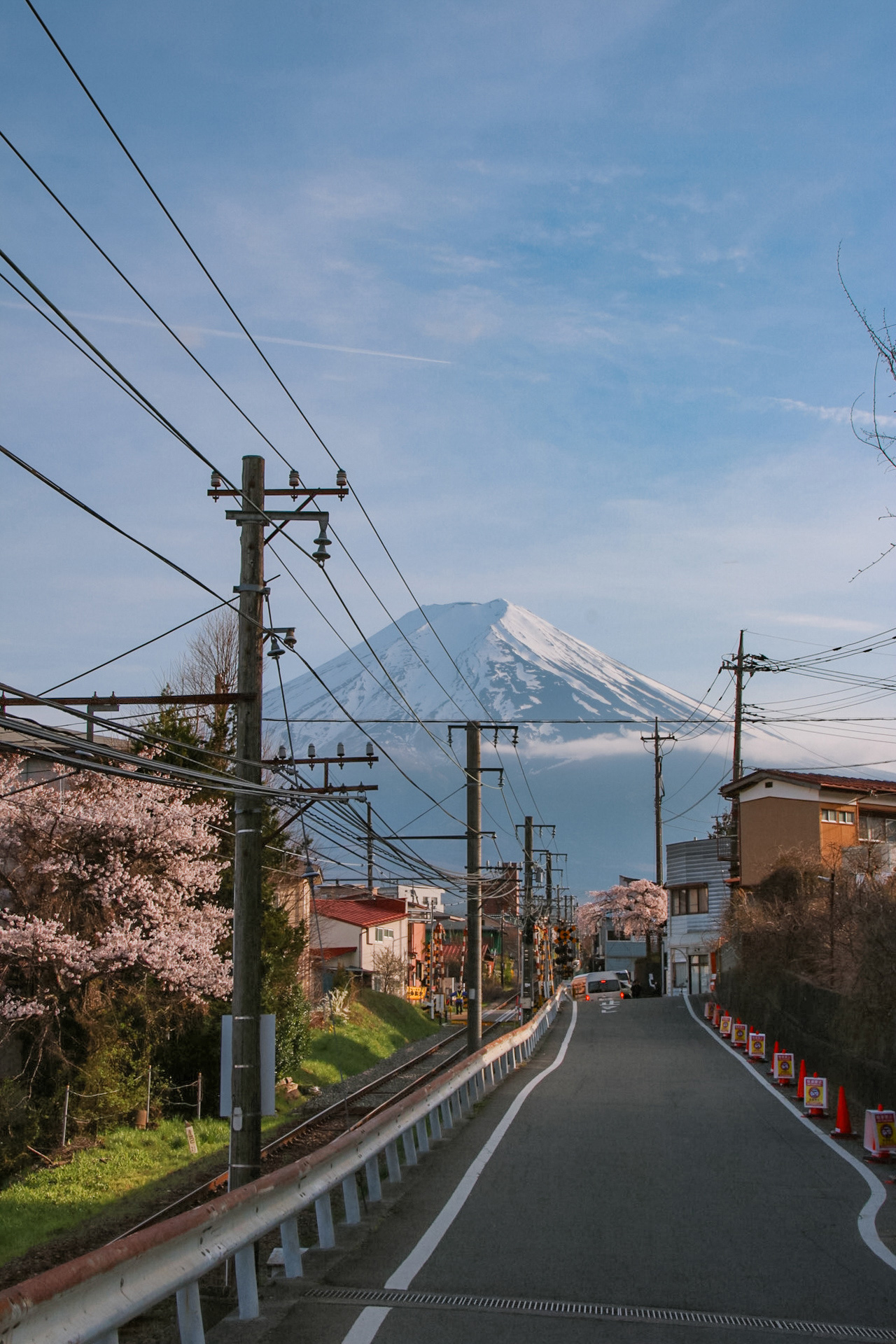
Weather plays a big role when it comes to planning your Mount Fuji day trip, as Mount Fuji is famous for hiding in the clouds. You’ve got the best chance of seeing Mount Fuji during winter (December – February) and in the morning/evening.
You can check this website, which predicts the visibility, but it only shows it for a few days. If you’re staying in Tokyo for a few days and you’re set on seeing Mount Fuji, it could be worth having a looser itinerary where you can swap days around. When you’re in Tokyo, you can get a better idea of the weather forecast and visibility, so you can decide when to see Mount Fuji.
Staying overnight will increase your chances of seeing Mount Fuji, as it adds an extra day, plus you’ll be there in the morning and evening (when the mountain is often more visible compared to the rest of the day).

If DIY-ing a day trip to Mount Fuji seems too complicated or too stressful, you could consider hiring a private driver for the day. With a private driver, you don’t have to worry about getting to the Mount Fuji Area, and you have the freedom to go to all the best spots people can’t get to on public transport. I would avoid any “planned” group tours to Mount Fuji as they all stop at the same “Instagram” spots. Instead, getting a private driver gives you all the flexibility for the best trip to Mount Fuji (also very good if you’re travelling with a family or group!). Book a private driver here.
How to Get to Mount Fuji from Tokyo
There are different ways to get to Mount Fuji from Tokyo. You’ll want to get to Kawaguchiko Station, where you can easily explore the area and see Mount Fuji in all its glory. Here are the best ways to get there:
Highway Bus
The highway buses from Tokyo are the easiest way to get to Kawaguchiko Station. This is also the route I used on my last visit to Mount Fuji. From Shinjuku, it costs ¥2,200 per person one way (¥1,100 for children) and takes you to Kawaguchiko in around 1 hour and 45 minutes. You can book tickets here.
It’s also possible to get the bus from Shibuya, which costs ¥2,100 per person one way (¥1,050 for children) but takes 2 hours and 30 minutes as it makes a few stops along the way (including Fuji-Q Highland and Gotemba Premium Outlets).
The Shinjuku option is much quicker, so the best choice when you only have one day. However, it could be an option in case the Shinjuku one is sold out for your travel dates. You can book tickets here.
It’s essential to pre-book your tickets as they sell out quickly during busy periods. Tickets open up around 30 days in advance. As there are multiple buses every day, you can pick a time that works best for you.

Train
Taking the train to Kawaguchiko is another option, but it’s more expensive than the highway bus. There are a couple of routes you can choose:
- Fuji Excursion Train: You can get this express train from Shinjuku directly to Kawaguchiko in just under two hours. However, tickets are quite expensive (¥4,130 per person one way, ¥2060 for children). As there are only a couple of trains per day, it’s best to book ahead. The JR Pass is valid for part of this line, until Otsuki, so JR Pass users will have to purchase an additional ticket from Otsuki to Kawaguchiko.
- Local Trains: Taking the local train towards Ōtsuki is also an option. It’s much cheaper compared to the express train, but it’ll take roughly 2–2.5 hours.
Rental Car
If you’re comfortable driving in Japan, hiring a car to drive to the Fuji Five Lakes area can be a great idea. It can work out more cost-effectively if you’re travelling with a group and split the cost. On top of that, you’ll have the freedom to visit areas that aren’t as accessible by public transport, making them a lot quieter.
When hiring a car in Japan, I usually go with Toyota Rent a Car, but there are lots of other rental places available in Tokyo. Before going with this option, make sure you have the correct paperwork and documents to legally drive in Japan and be comfortable driving on the left side of the road.


Private Driver
While I’m a big fan of DIYing your Japan itinerary (hence this website), booking a private driver can definitely be a great option for a Mount Fuji day trip. It will be more expensive than doing it yourself, but getting a private guide will give you all the flexibility without any of the added stress. A local guide is also able to take you to all the best spots, especially those that are hard to reach on public transport.
I would recommend getting a private driver over booking a pre-planned day tour. While the day tours can be a good option, they will take you to the same, already overcrowded spots that everybody else is going to. They’re often a bit rushed, especially if the group is quite large. If you’re travelling with a family or group, getting a private driver won’t be much more expensive compared to paying for everybody to join a group tour anyway!
Mount Fuji Day Trip Itinerary (Self-Guided)
If you’re planning on taking a DIY day trip to Mount Fuji, here is a suggested itinerary that you can use:
1. Arrive at Kawaguchiko Station
When visiting the Mount Fuji area on a day trip, make sure you leave Tokyo as early as possible. It takes around 2 hours to get to Kawaguchiko from Tokyo, and since we only have one day, we need to make the most of our limited time.
For this day trip itinerary, we’ll focus on a few of the popular spots to visit, but I will avoid any “Instagram-famous” photo spots. These spots that go viral online are causing a lot of issues for the local community.
For example, the famous Lawson convenience store that has a beautiful backdrop of Mount Fuji got so busy that there had to be traffic wardens on the street trying to guide tourists away. There were even some restrictions put in place where the store blocked the view with a large sign, which was eventually removed.
Similar to Honcho Street in Fujiyoshida, where you can see Mount Fuji through a busy street. Japan is struggling with overtourism in spots like these, so when visiting, don’t add to the problem. You can walk anywhere in Fujiyoshida and get beautiful, clear views of Mount Fuji. You do not have to go to these specific spots to get the best views (and without large lines).


In this short one-day Mount Fuji itinerary, I’m focusing on two main things: visiting Arakurayama Sengen Park & Chureito Pagoda and renting a bike to cycle around (part of) Lake Kawaguchiko. There are a lot of smaller stops and sights as part of these two big points in the itinerary, so read on for the full information.
2. Visit Arakurayama Sengen Park & Chureito Pagoda
The first big stop on our itinerary is visiting Arakurayama Sengen Park, which is also home to the famous Chureito Pagoda. If you’ve come across any photos of Mount Fuji, chances are you’ll already be familiar with this spot.
This is the only “photo spot” I recommend in this itinerary, as it’s part of the temple grounds and is one of the most iconic views of Mount Fuji in the area. Visiting this spot isn’t causing similar issues to the ones in Fujiyoshida, but naturally, remember to be respectful.
From Kawaguchiko Station, you can get the train to Shimoyoshida Station. This will only take around 10–15 minutes and cost a few hundred yen (you can use your Suica card). From this station, it’s only a short walk to get to the park and Arakura Sengen Shrine, of which Chureito Pagoda is a part.

As the shrine and pagoda are built on Mount Arakura, prepare for around 400 steps to be climbed. Luckily, you’ll pass multiple viewing points, including the gorgeous torii gate of Arakura Fuji Sengen Jinja-Shrine and the shrine itself.
During my first visit, I also picked up my first goshuin book at this shrine. Goshuin are sacred seals you can get as proof for visiting a shrine or temple. Most of them are handwritten at the temple. To receive one of these seals, you need a special goshuin book, which can be bought at most temples that offer goshuin. It’s very important to note that you shouldn’t put anything else in these books (avoid eki stamps, for example)!


Keep walking up the mountain to reach Chureito Pagoda. I have to be honest, and before I had visited this spot, I imagined the pagoda itself to be a lot bigger. It was slightly disappointing to see how small it is up close, but it didn’t take away from the incredible, iconic view with the Mount Fuji backdrop.
To get the photo, you most likely will have to queue to access the viewing spot where you can see the pagoda in front of Mount Fuji. Depending on how busy it is, you may also only get a short time on the viewing platform to get a few photos.
3. Cycle Around Lake Kawaguchiko (Stop by Oishi Park)
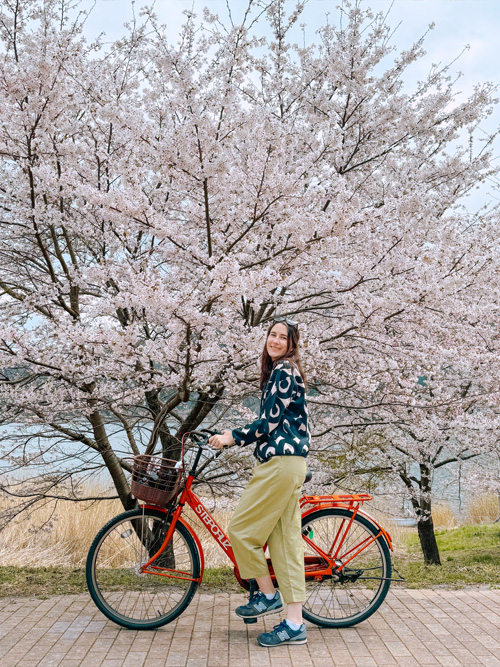
After having spent some time around Arakurayama Sengen Park, head back towards Kawaguchiko. One of the best ways to explore the surrounding areas of Lake Kawaguchiko is by bike. There are several bike rentals around the lake (including electric bikes). With a few stops along the way, cycling around the whole lake will take around 3–4 hours.

Around the lake, there are several cafes, restaurants and other spots where you can park your bike and enjoy a little break.
Oishi Park is one of the most popular spots around the lake. Many tour buses and day trippers stop here to get some incredible views of Mount Fuji. The park itself is filled with flowers and plants that bloom at different times of the year. There is a cafe and a gift shop too.
Depending on how much time (and energy) you have, you can also choose to cycle to Osihi Park and back. It’s a bit shorter than cycling all around Lake Kawaguchiko.

4. Head Back to Tokyo
At the end of your day trip to Mount Fuji, it’s time to head back to Tokyo. Depending on how you got here in the first place, make sure you know what times the last bus or train heads back to Tokyo. You don’t want to miss it!
Is a Day Trip to Mount Fuji Enough?
Visiting Mount Fuji is absolutely worth it! Even though the travel time from Tokyo is around two hours, it’s possible to cover quite a bit of ground around Kawaguchiko or the surrounding Five Lake Area.
The only thing to keep in mind is that the weather plays a big factor. Mount Fuji is notorious for hiding in the clouds, so it can be tricky to time your visit well. Some websites predict the visibility of Mount Fuji, but if you’re booking a tour or transport in advance, it can be very hit or miss.
As Mount Fuji is often more visible in the evening and morning, staying overnight in one of the villages around Mount Fuji is a good idea to give yourself a bit more chance of success.







thank you for the very detail information. those are very helpful
Thank you! So glad it’s helpful 🙂
Is it easy to rent a bike near Kawaguchiko Station or it’s better to reserve in advance?
If you’re able to reserve in advance, I’d always recommend doing so to avoid disappointment!
Thank you for the useful informations. Would you mind sharing where the two vending machines are located? 🙂
Thank you! I actually don’t exactly remember where we took the photo 🙁 It was on the bikeride around Lake Kawaguchiko!