The Nikko Pass World Heritage Area is a great option for a day trip to Nikko’s shrines. It’s one of two discount Nikko Passes provided by Tobu Railway, to help travellers enjoy a smooth and stress-free trip to the resting place of the first Tokugawa shōgun.
The Nikko Pass World Heritage Area was really helpful on my trip to Nikko, especially since it includes a return ticket from Asakusa Station and unlimited bus and train travel within certain areas.
However, it might not make sense for you if you’re already committed to other train passes in Japan. Below, I’ve got all the info you need to help you decide if the pass is good value for your trip to Nikko.
Key Takeaways
– While the Nikko Pass World Heritage Area covers multiple days of travel, it’s still worth getting for a day trip as you’ll make a saving on the train.
– The Nikko Pass All Area no longer makes financial sense for shorter trips to Nikko.
– If you have a JR Pass, don’t bother with the Nikko Pass. Instead, look at buying a bus pass either before you travel or at the bus station in Nikko.
What is the Nikko Pass?
The Nikko Pass is a discount pass created by Tobu Railway for exploring the World Heritage Sites of Nikko. The pass includes a return train ticket from Tokyo’s Asakusa Station, unlimited train and bus journeys in certain areas and discounts at some theme parks, restaurants and souvenir shops.
There are two Nikko Passes: the World Heritage Area pass and the All Area pass.
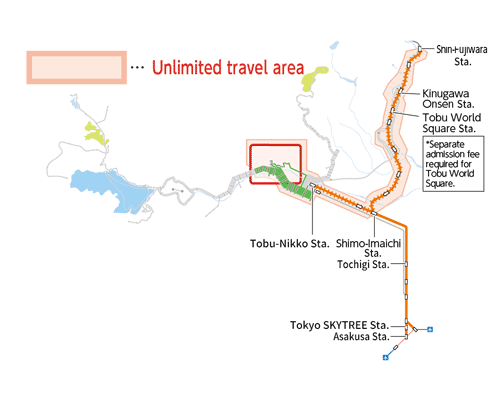
The Nikko Pass World Heritage Area is valid for two consecutive days and allows you to travel freely within the world heritage area, which is centred around the spectacular Nikko Tōshōgū shrine. It’s perfect if you’re visiting for one or two days to see the main highlights in Nikko and Kinugawa Onsen.
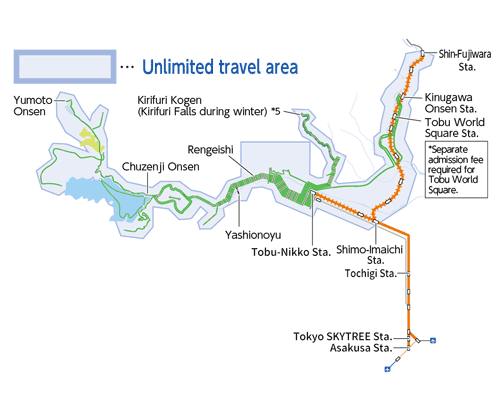
The Nikko Pass All Area is valid for four consecutive days and gives you the opportunity to explore even more of Nikko. The pass lets you travel freely within the World Heritage area, Okunikko area, Lake Chuzenji and Kinugawa Onsen. This is a better choice if you’re visiting for a few days and want to visit more of Nikko’s nature, like Kegon Falls and Lake Chuzenji.
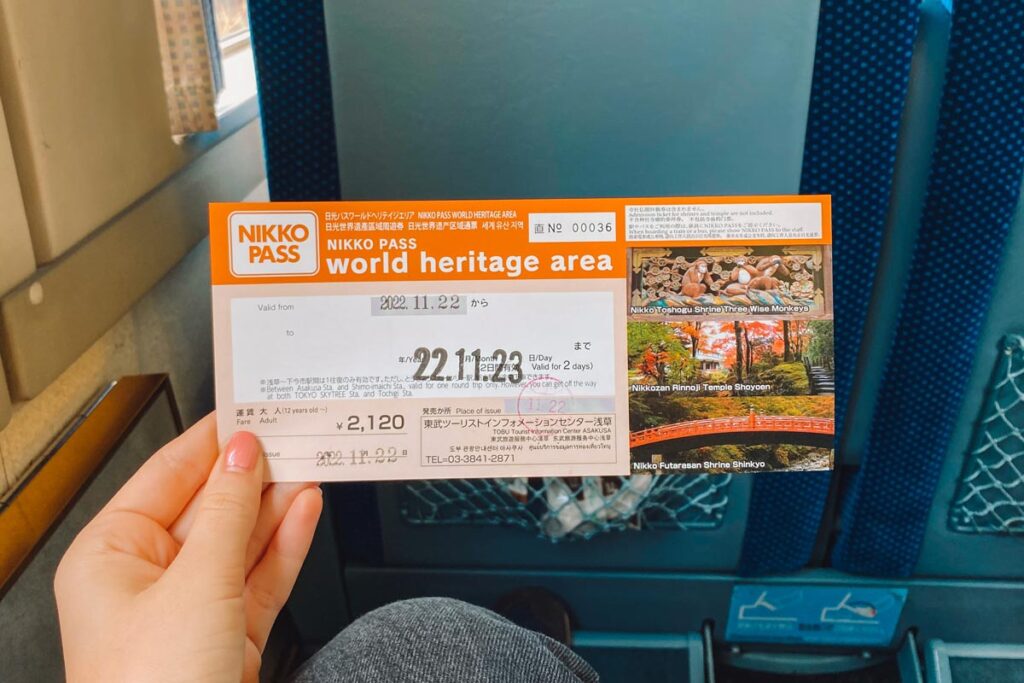
Nikko Pass World Heritage Area vs. Nikko Pass All Area
Here are the main differences between the two Nikko Passes:
| Nikko Pass World Heritage Area | Nikko Pass All Area |
|---|---|
| 2 consecutive days | 4 consecutive days |
| Round trip between Asakusa and Shimo-Imaichi | Round trip between Asakusa and Shimo-Imaichi |
Unlimited travel on:
(See maps below) | Unlimited travel on:
(See maps below) |
| Buy your Nikko Pass here | Buy your Nikko Pass here |
Nikko Pass World Heritage Area
Nikko Pass All Area
Tobu Railway Limited Express Trains
For an additional fee, you can also purchase tickets for the limited express from Tobu Asakusa Station to Tobu-Nikko Station. These direct express services are much faster than the regular trains, cutting your journey from about three hours down to one hour and 50 minutes.
There are three types of limited express that you can take to Tobu-Nikko Station. The prices listed below are in addition to a basic fare, which would be covered by a Nikko Pass.
| Train | Features | Seat Pricing |
| Spacia X | Newest limited express Premium seating, including compartments and sofas | From ¥1,740 |
| Spacia | Older limited express Services to both Nikko and Kinugawa Onsen | From ¥1,450 |
| Revaty Kegon | Standard limited express Only Kegon trains go to Nikko | From ¥1,450 |
All three trains take roughly the same time to travel from Asakusa Station to Tobu-Nikko Station. The only difference is the level of modernity. Unless you’re a train enthusiast or want to travel in utmost comfort, the older services are just fine.
You can book all three trains from Tobu Railway’s limited express ticketing platform. Alternatively, you can buy your express tickets through Klook for a slightly smoother experience. Prices do vary, so expect to pay a few hundred yen more for your chosen train at the weekend or during national holidays.
Travel Tip
I strongly recommend reserving your train tickets to Nikko in advance, particularly if you’re booking seats on the limited express. During peak seasons it’s not unusual for the train to sell out, particularly on weekends, and I know other travellers who almost missed the chance to go since tickets were sold out for several days. It’s also worth booking your return train ahead of time to ensure you get back to Tokyo at a time that suits you.
Nikko Pass Prices 2026
Here are the prices for the different Nikko Passes in 2026:
| Nikko Pass World Heritage Area | Nikko Pass All Area | |
| Adults | ¥3,000 | ¥8,000 |
| Kids | ¥1,500 | ¥4,000 |
Where to Buy the Nikko Pass
I bought my Nikko Pass online through Klook. It’s also possible to buy them directly through the Tobu Top Tours website. If you don’t want to buy them online, you can do so at the Tobu Tourist Information Centre near the main entrance of Asakusa Station.
When booking through Klook, you can choose whether you want to pick up your physical Nikko Pass, or if you want to buy the digital Nikko Pass. They’re both the same price. If you choose the physical pass or buy through Tobu Top Tours, remember that you have to pick up the pass at the Tobu Tourist Information Center at Asakusa Station.
SponsoredCheap Flights to Europe & USA
Book your tickets now and save up to 40% on top destinations.
Travel Tip
If you find yourself arriving at Nikko without a pass, it’s not too late to save a little money on buses. Scan the QR codes at the bus stop outside Tobu-Nikko Station and you can pick up 2-day digital bus passes covering the World Heritage Area, Lake Chuzenji and Yumoto Onsen. The passes come in the form of a QR code, which you can scan as you get on and off the bus.
The website has an annoying habit of signing you out and asking for email verification, particularly during long bus rides, but it’s a good way to save a few hundred yen if you plan to hop on and off Nikko’s public transport.
Is the Nikko Pass Worth It?
The Nikko Pass World Heritage Area offers good value when visiting Nikko, as it costs roughly the same as a return ticket from Tokyo. If you plan to take any public transport during your time in Nikko, you’ll make savings with this pass.
The cheaper Nikko Pass World Heritage Area costs ¥3,000, while the most basic return ticket from Asakusa Station on the Tobu-Nikko line is ¥2,800. Using the JR Lines from Tokyo Station will set you back ¥5,480 for a return (unless you have a JR Pass).
If you plan to use public transport in Nikko, such as the bus to Nikko Tōshōgū Shrine, you’ll very quickly start making savings with the World Heritage Area Pass while avoiding the hassle of buying multiple tickets.
However, keep in mind that the World Heritage Area pass doesn’t cover the broader Nikko area. Also, individual tickets for shrines and temples in Nikko aren’t included in the pass and have to be bought separately.
Since the All Area pass is much more expensive, it’s only worth considering if you’re planning to spend a few days exploring Nikko. At ¥8,000 per ticket, you’ll need to visit a lot of the Nikko area to make savings with an All Area Pass.
The Nikko Pass made my travels around Nikko very easy. Instead of having to figure out how to buy individual bus tickets, I just showed my Nikko Pass and hopped straight on the bus. The convenience of the World Heritage Area pass helped a lot with saving time and ensuring the day went smoothly.

Is the Nikko Pass Worth It for a Day Trip?
Yes, the Nikko Pass World Heritage Area is worth it for a day trip from Tokyo. A return ticket from Tokyo to Nikko costs roughly the same as the pass, so you’ll save some money if you use public transport once you arrive in Nikko.
If you only have one day to explore Nikko, I strongly recommend paying the additional fee for the limited express train, which only takes about two hours compared to roughly three on the local train. Nikko is already quite a long day trip, and the extra time made it much easier for me to relax and properly explore the World Heritage site. It’s also worth it to save the hassle of multiple transfers and figuring out your route back to the capital.
Can I Use the JR Pass from Tokyo to Nikko?
Yes, you can use the JR Pass when travelling between Tokyo and Nikko. From Tokyo Station or Ueno Station, you can take the JR Tohoku Shinkansen to Utsunomiya. From there, you can get on the JR Nikko Line to Nikko Station.
Tobu and JR also share the JR Tobu line (departing from Tobu Asakusa Station), but since it’s a shared line, the JR Pass isn’t valid on the Tobu Line part of the journey. You can still opt for this, but you’ll have to pay an additional fee. It’s easier to stick with the route above to avoid any unnecessary extra charges.
Since one of the main advantages of getting the Nikko Pass is getting the return journey from Tokyo covered, it’s not worth getting the Nikko Pass if you have the JR Pass.
If you’re thinking of getting a JR Pass, check out my JR Pass deep dive to see whether it’s worth the investment.
Should You Buy a Nikko Pass?
The Nikko Pass World Heritage Area is good value for a trip to Nikko. It’s roughly the same price as a return ticket from Tokyo and can save you money on public transport. The All Area pass is only worth considering if you’re spending a few days in Nikko.
It’s also a good idea to pay the additional fee for the limited express train and save a couple of hours of travel time, particularly if you’re only going to Nikko for the day. If you already have a JR Pass for your trip to Nikko, it’s better to use that instead of buying the Nikko Pass.
However you get to Nikko, the time on the train will be worth it. Visiting the shrines at Nikko Tōshōgū is a great experience that I would recommend to anyone on their first trip to Japan. But where else should you go on your first visit? My two-week Japan itinerary is ready to help you plan the perfect trip.

Book Your Dream Vacation
Customize your itinerary for the ultimate Euro-trip or US adventure.






Hello.
FYI a one way ticket from Asakusa 9:30 to Tobu_Nikko 11:20 will cost 1650 Y in march 2024 with the Limited Express. And you don’t need to take another train at Shimo Imaichi.
Thank you so much for the information! I’ll try and update this guide ASAP 🙂