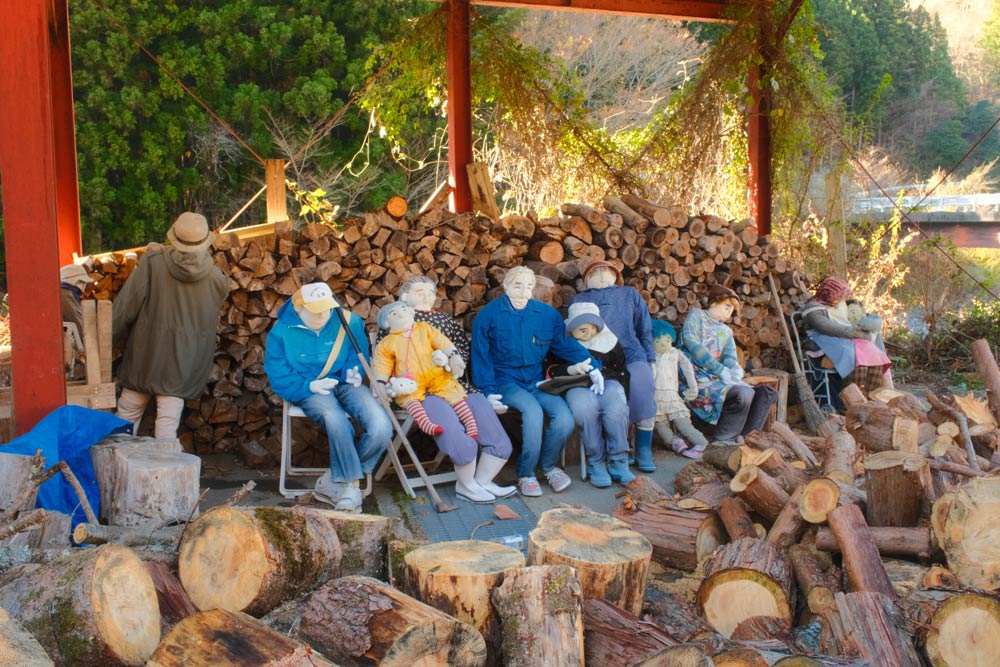
Deep in the mountains of Iya Valley on Shikoku sits a small, quiet town called Nagoro. With only 25 people living here, you wouldn’t think this is a place to add to your itinerary. But what’s special about Nagoro is that there are 350+ scarecrows (kakashi or 案山子) scattered around the abandoned buildings and streets.
I spent a few weeks driving around Shikoku, and Nagoro was high on my list of places I wanted to visit. It lined up perfectly on my drive towards Tokushima Prefecture, so I stopped here for a couple of hours. I even managed to meet the mother of scarecrows, Tsukimi Ayano, who created all the scarecrows in Nagoro.


The drive was beautiful in late autumn, but the windy roads towards the town were a little tricky! The day prior, I stopped at one of Iya Valley’s most popular sights, the vine bridges. In the evening, I stayed in a 100-year-old farmhouse that was beautifully renovated, called Kouya. Nagoro is only a few kilometres from there. You can read my full Shikoku itinerary here.
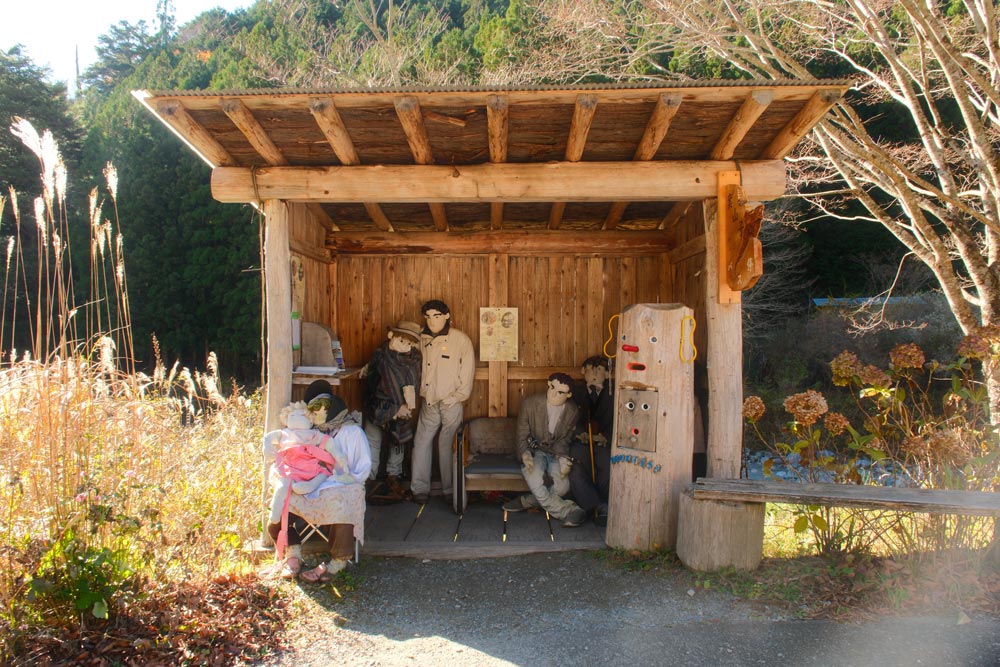
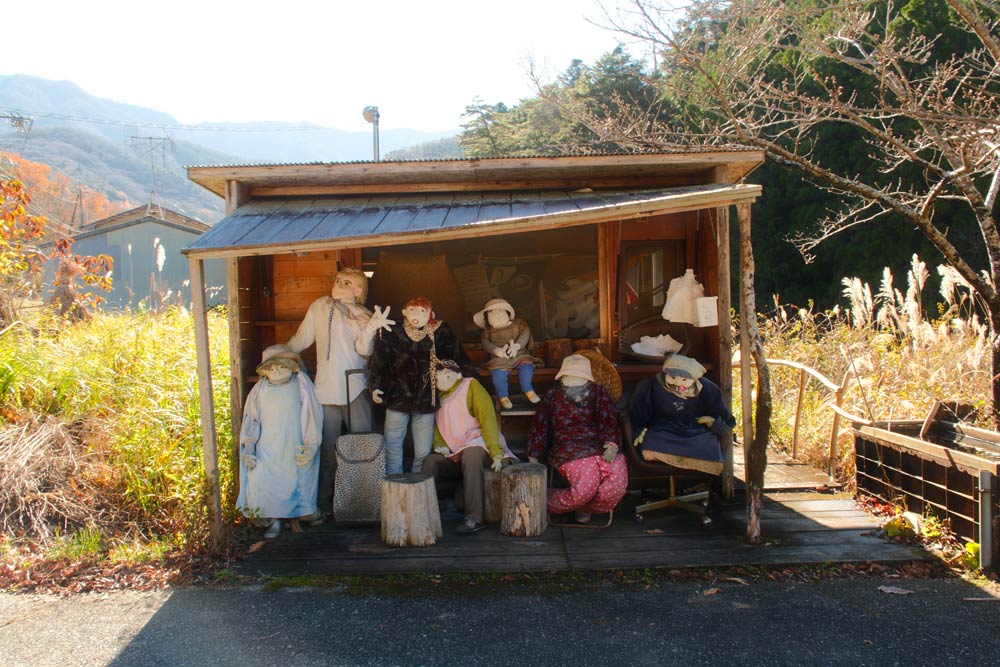
From the car, I spotted the first few scarecrows as I entered the village. An eerie feeling crept up. I couldn’t see any moving, living people, just dolls blended into the scenery. They were frozen in time. After I parked at the free car park near Nagoro Elementary School, I went for a wander around.
One of the biggest problems Japan faces is its ageing population, and with it, many rural villages are slowly disappearing. This town is one of them. The surroundings of the village are breathtaking, and driving around Iya Valley has been one of the most memorable experiences I’ve had in Japan. But without any job opportunities or easy access (the nearest hospital is 90 minutes by car), young people moved away from Nagoro to nearby cities.
My first stop was the small building located in the car park. It acts as a sort of unmanned tourism information centre. Alongside a row of scarecrows sitting on a stage, there was a free flyer with some information on the town. According to the flyer, 25 people were living in Nagoro as of October 2023, alongside 350 scarecrows.

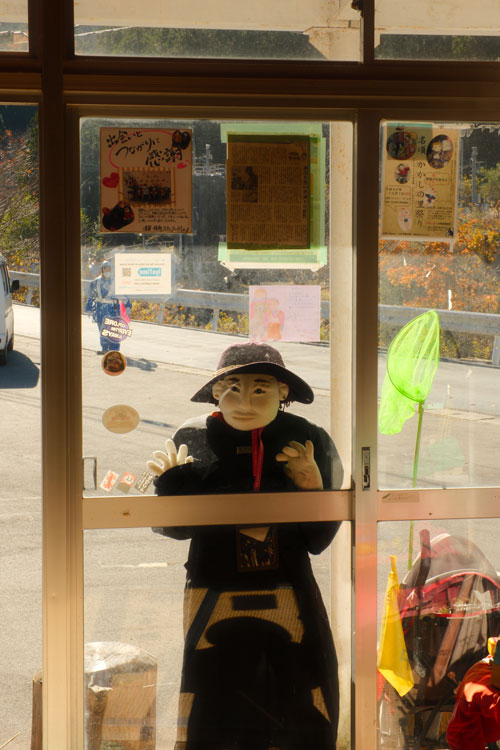
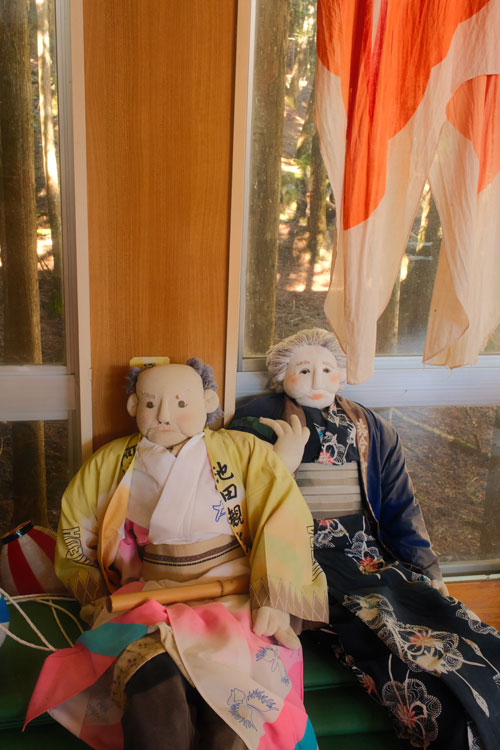
In a 2014 documentary, Ayano-san explained that the town used to be home to a few hundred people, most of whom worked at the nearby dam. But due to automation, people lost their jobs and moved away.
Ayano-san herself was born in Nagoro but lived in Osaka for the majority of her adult life. When her ageing father, who still lived in Nagoro, needed more help, she moved back in 2002. By then, the population had already declined.
After settling back into Nagoro, Ayano-san planted some seeds in her garden, but was shocked to see that barely any sprouted. Most of them were eaten by birds. To combat this, she made a scarecrow that looked a bit like her father. From there, she kept making more, slowly but surely filling the town.
As there weren’t enough people left in the town, the local school shut down a few years after Ayano-san moved back to Nagoro. She started making scarecrows of the students and teachers, filling up the school with dolls of the people who used to live here. While I like the sentiment, it’s also paired with sadness. Shikoku is one of the most beautiful parts of Japan, and it’s heartbreaking to know that this town will disappear in the near future.
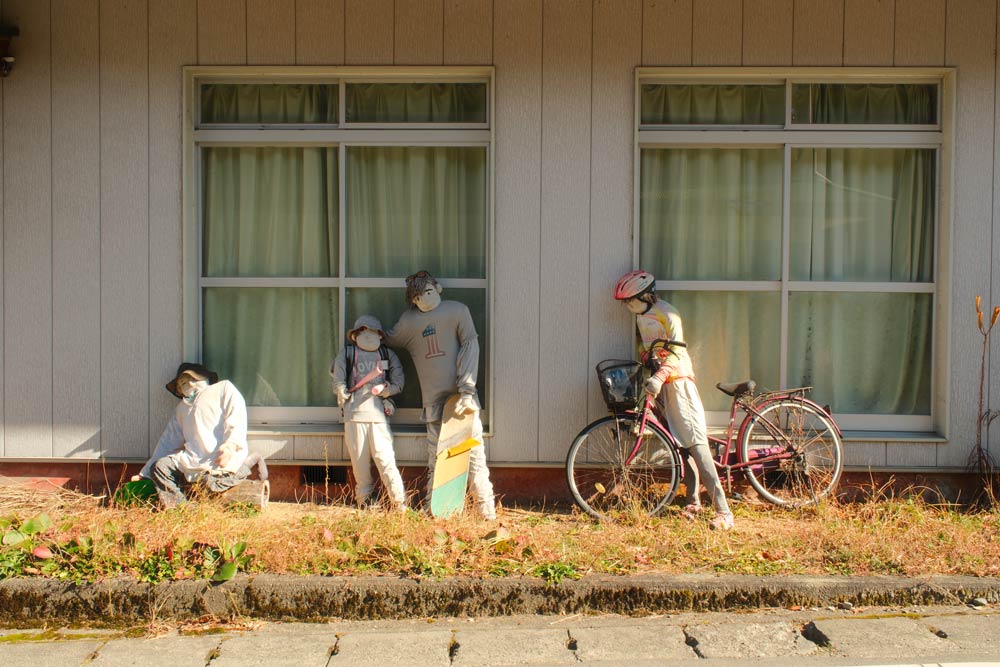
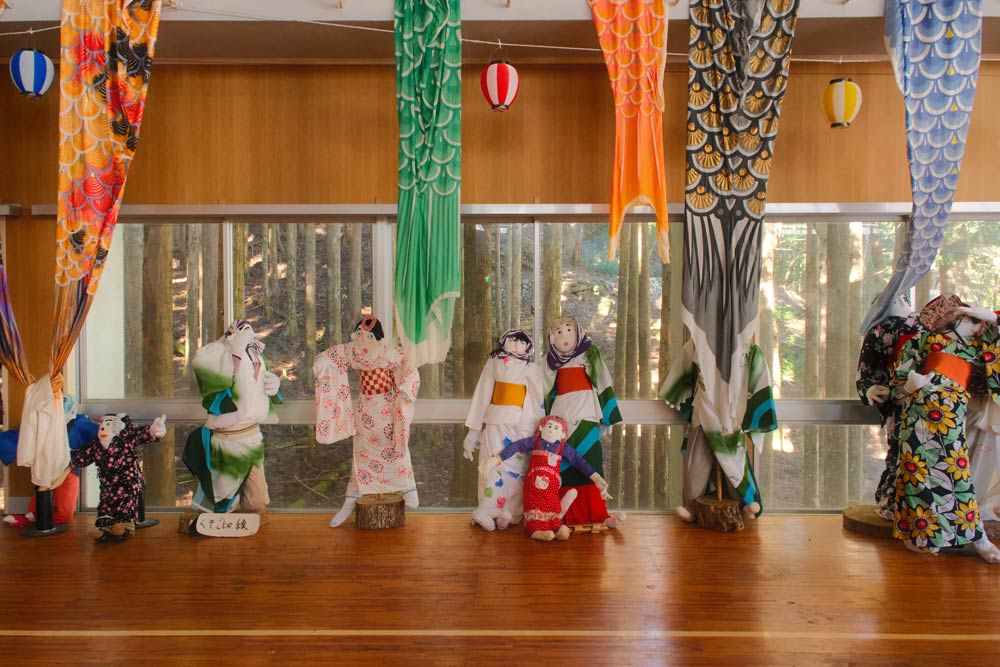
The school was my next stop after picking up the free flyer. It seemed strange to walk into an abandoned building, especially as I hadn’t seen any other visitors or locals. The doors were unlocked, and I walked right into the old sports hall.
Because I visited Nagoro in the morning, the sunlight was pouring in from the windows in the sports hall, but I couldn’t stop thinking about how creepy this place would look at night. There were probably over a hundred scarecrows in the room. Some seemed to be there for a wedding, some were sitting down, others were frozen mid-dance on the dancefloor.
Among the scarecrows of the people who used to live in Nagoro, you can find a few others. British TV presenter James May, for example, has his very own scarecrow sitting in the school. I had come across the town before I started researching my trip to Shikoku, mainly because it was featured in his Our Man in Japan series in 2020.



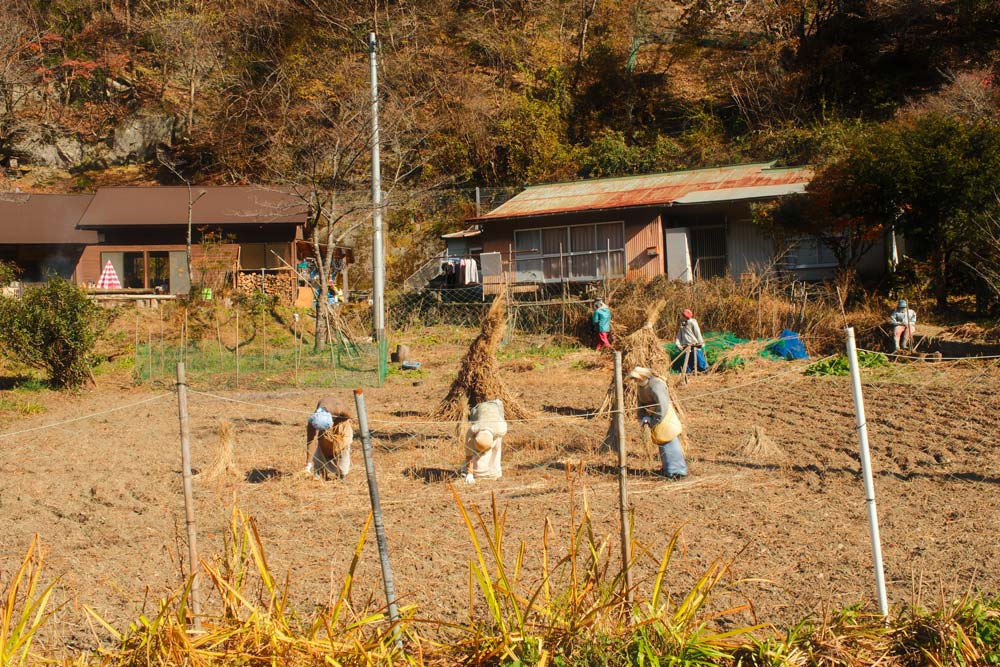
After visiting the school, I kept walking to the other side of the town. Nagoro, unsurprisingly, isn’t very big. Walking from one end to the other doesn’t take longer than 10 minutes. My entire visit took about an hour.
Near the other end of the town, I finally saw another living human working in the fields. It almost startled me a little, as I hadn’t seen any other people in the town. It turns out the person I saw was none other than Ayano-san herself.
When she spotted me, she walked over from her crops and said hello. My Japanese isn’t fantastic, but I can get by a little, so I was very happy to have a short conversation with her about her town and her work. She asked where I had visited from.
“England! Do you know about James May?”, she asked me in Japanese. I told her I learned about her work in James May’s series and just saw his scarecrow in the school. She seemed very pleased. It was very special getting to meet her in person!

On the 4th of the month between April and November, Ayano-san runs workshops where you can learn how to make a scarecrow yourself. It costs ¥3,000 and takes around three hours. You will have to reserve beforehand. The workshop is only in Japanese.
If you happen to visit on the first Sunday in October, you can also catch the annual Scarecrow Festival in Nagoro. There are multiple activities, including rice cake throwing and a photo contest.
Getting to Nagoro can be tricky. Shikoku isn’t easy to explore without a car, especially in Iya Valley, so your best option is to use a rental car. There are buses too, but they don’t run often. Because there isn’t much to see or do nearby, getting stuck in Nagoro because you miss the bus is something you probably want to avoid. The best option if you don’t drive is to get a taxi.
If Shikoku is on your list of places to visit, Nagoro (along with Iya Valley) should definitely be on it. It’s a strange, almost spooky place, but one unlike any other town in the world.