Japan is at the top of many people’s travel wish lists, and rightfully so! But what is Japan famous for? This list includes 30+ amazing things that Japan is known for, which might just inspire you to visit the country and experience them for yourself.
Japan is my favourite country to travel. From peaceful shrines and breathtaking nature to modern megacities and jaw-dropping festivals, so much of Japan is worth seeing. It’s no surprise that it’s also famous for so many amazing things!
From the 17th century onwards, Japan was closed to the world for more than two centuries. This preserved the country’s distinctive culture and many of its ancient customs and traditions, which still remain to this day.
As a result, Japan is filled with unique places, activities and cultural experiences for you to discover on a trip to the country. If you’re dreaming of visiting Japan soon, here are 32 of Japan’s most famous offerings to spark a little wanderlust for your trip.
What Is Japan Known For?
Here are 32 things Japan is famous for:
1. Cherry Blossom

Cherry blossom, or sakura, is so much more than just Japan’s national flower. It’s one of the world’s great seasonal events, bringing together some of Japan’s most beloved traditions in a unique celebration of the start of spring.
Sakura is a symbol of the fleeting nature of life, but also its beauty. It represents a time of nostalgia and transition, marking the time when Japanese people finish school, graduate university and start their first jobs.
When the blossoms arrive, many people celebrate by gathering under the cherry trees for hanami. This literally translates to “flower viewing”, and it’s pretty much exactly that, along with a picnic with friends and family. You enjoy some drinks and food under the trees while the pink sakura petals slowly drift down.
The whole country is in a festive mood during this period, and you’ll be able to find lots of exclusive sakura-themed products that are only available during this time of year.
The arrival of these little flowers is highly anticipated, and every year, you can find the sakura forecasts to see when you’ll be able to enjoy them in certain parts of Japan.
However, they only blossom for about a week, so it takes a bit of planning if you want to be in Japan in time for the celebrations. If you want to catch the cherry blossom, late March or early April is your best chance, but it very much depends on which area of Japan you’re planning to visit.
2. Japanese Food

Japan is one of the world’s great culinary destinations. Everyone is familiar with world-famous Japanese dishes like sushi and ramen, but Japanese cuisine has a stunning amount of depth and breadth that extends far beyond the highlights.
From soba noodles and mochi to yakitori and katsu curry, every town and city in this food-obsessed country has its local speciality. Even in the countryside, a famous restaurant can attract queues of customers patiently waiting for their taste of the local delicacy.
Big cities like Tokyo, Kyoto and Fukuoka all have unique culinary cultures, but it’s Osaka that’s known for being the belly of Japan. If you ever find yourself in Osaka at night, make sure to visit Dotonbori or Shinsekai for some of the best street food of your life.
Between meals, there are countless weird and wonderful Japanese snacks you can stock up on in convenience stores. Or if you can’t wait for your next fix of Japanese food, you can order a Japanese snack subscription box to your home.
3. Mount Fuji

You’ve probably already seen countless stunning photos of Mount Fuji, one of the most famous landmarks in Japan. At 3,776 meters, Japan’s tallest mountain graces the Tokyo skyline on clear days. It’s also an active volcano that last erupted in 1708.
Fuji’s peak is often hidden in the clouds through the warmer months, making spotting it even more special. It’s possible to see it on the Shinkansen between Tokyo and Kyoto. But if you want to see it up close, it’s best to visit Kawaguchiko or Hakone.
During the climbing season (July to September), you’re able to hike up Mount Fuji. Depending on the route, it takes between five and 10 hours to complete. Most people make an overnight stop in a mountain hut before climbing through the darkness to catch the sunrise at the summit.
4. Manga and Anime
Anime and manga play a huge part in Japanese pop culture. Manga refers to Japanese graphic novels and comics, while anime includes Japanese cartoons and animations. Both anime and manga have become popular around the globe, and it’s often one of the things that inspires people to visit Japan.
If you’re a fan of manga and anime, Akihabara and Nakano Broadway are essential stops on your Tokyo itinerary. You can spend hours exploring manga and anime-related merch, from figurines of your favourite characters to cosplay essentials.
5. Shinkansen

The Shinkansen, also known as the bullet train, takes Japan’s famously efficient railway system to a new level. These high-speed trains can reach up to 320 km/h and are the best way to explore the country.
In total, there are ten Shinkansen lines in the country, running through most of Japan’s major cities. You’re most likely to ride the Tokaido Shinkansen from Tokyo to Osaka, but the lines stretch all the way from Hakodate in Hokkaido to Kagoshima in the far south of Kyushu.
If you’re planning to take the Shinkansen multiple times, you could look into getting the JR Pass. These passes let you take unlimited trips on the JR lines for one, two or three weeks. Following a significant price increase in 2023 it’s not always a good deal, but it’s worth considering if you’re planning to explore the entire country. Check out our guide to the JR Pass to see if it’s worth it for your trip.
6. Samurai
The samurai loom large over Japanese history. These elite warriors shaped almost 700 years of Japanese culture with their ancient code of ethics: bushido. Their bravery, pride and complete loyalty to their lords helped to unify Japan and usher the Tokugawa shoguns into power, who would rule Japan until as recently as 1867.
When the samurai class was abolished in 1868, they left castles scattered across Japan. You can see their famous armour and swords displayed at museums across the country, where you’ll be able to hear tales of their bravery and brutality.
7. Autumn Leaves
Japan’s autumn colors may not be quite as famous as the cherry blossom, but they are no less spectacular. Throughout late autumn, the changing leaves turn the streets, mountains and temples of Japan into a riot of reds, yellows and oranges.
Momiji, or maple, has some of the prettiest autumn leaves and is often found in temples and gardens around Japan. During the peak of the season, many temples will hold night-time illuminations so that visitors can see the leaves in their full glory.
The red leaves usually reach their peak towards the end of November or early December. Similar to the cherry blossom, there are forecasts which will help you time your trip to see the best of the foliage.
8. Kimono
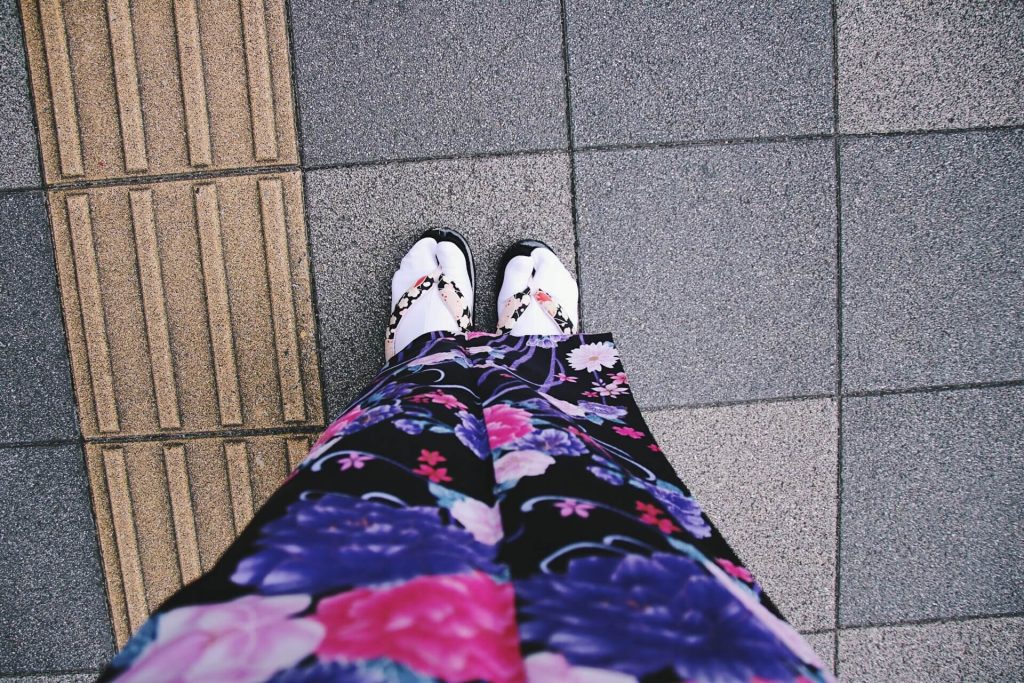
It’s impossible to imagine the lords and ladies of ancient Japan without their kimono: the colorful robes which are Japan’s traditional form of dress. While Japan started taking sartorial cues from the West during the Meiji era, the kimono is still occasionally worn for special occasions like weddings.
It’s possible to wear a yukata, a kind of summer kimono, when visiting Japan – there are tons of rental places in Tokyo and Kyoto. Visitors may worry that wearing a kimono as a foreigner Is cultural appropriation, but there are no issues as long as you wear it respectfully. In fact, some places in Kyoto offer special discounts for people in kimono as they aim to preserve this tradition for future generations.
9. Sumo Wrestling
Sumo wrestling is Japan’s unofficial national sport. Filled with tradition and fearsome displays of strength, it’s a uniquely Japanese experience to watch these giant men face off in their quest to become a yokozuna, the highest class of sumo wrestler.
The rules of sumo are deceptively simple. The wrestler who is forced out of the ring or touches the ground with anything other than the soles of his feet loses. But there are actually 82 different ways to win a sumo match, with combinations of strength, technique and cunning.
There are six major sumo tournaments each year in Japan, and with some prior planning, it’s possible to buy a ticket as a tourist. If they’re not on when you’re in Japan, you can book a ticket to watch a sumo practice session instead. They’re pretty popular with tourists and give you a fascinating insight into the sport. Just be prepared to abide by the strict rules and customs that govern the life of a sumo wrestler.
10. Festivals
Japan’s unique culture, history and traditions have led to a variety of showstopping festivals all over the country. Nearly every town, temple and shrine has an annual celebration connected to local legends, seasonal phenomena or rites of passage.
While festivals happen year-round, late summer is a particularly good time to witness these unique events. Lots of local shrines and temples hold their annual celebrations during this period, and you might just witness dancers, musicians and mikoshi, or portable shrines, as you explore Japan.
Some of Japan’s most famous festivals are Aomori’s Nebuta Festival with its mind-blowing paper floats, Tokushima’s Awa Dance Festival with its famous awa-odori dance, and Kyoto’s Gion Festival, which shuts down the city centre for a celebration that dates back to antiquity.
11. Kawaii Culture

Wherever you go in Japan, you’ll hear the locals calling things kawaii. Translating to “cute” in English, the kawaii aesthetic is everywhere in Japan, from snack wrappers and face masks to clothes and latte art! If you’re struggling to picture something kawaii, think of some of your favorite chubby-cheeked Japanese characters like Pikachu and Hello Kitty.
While this culture of cuteness may be looked at as childish in the Western world, Japanese people take the refreshing approach of appreciating adorable things at face value. Why not let it melt your heart and take home a couple of kawaii souvenirs for yourself?
12. Karaoke
Adding karaoke to your Japan bucket list is a must. Even though karaoke is now popular all over the globe, it originally came from Japan. And Japan is still one of the best places to rent a karaoke booth and sing your heart out.
If you want to sing karaoke in Japan, you usually rent out a private karaoke room with a microphone and karaoke machine. You simply pay for the number of hours you want to use it for and then get started. Most karaoke places have an extensive library of songs, with enough English songs to last you for hours!
In addition to a private booth for you and your friends, Japanese karaoke places also allow you to order drinks and snacks, which will be delivered to your door. Some places even offer all-you-can-drink plans to keep you singing until the early hours.
13. Baseball
While sumo is Japan’s unofficial national sport, baseball is its most loved. Players like Ichiro Suzuki and, more recently, Shohei Ohtani have reached legendary status in Japan.
Japanese baseball games have their own unique atmosphere filled with singing, dancing and fan displays, which build on long-standing rivalries between some of the country’s sporting institutions like the Yomiuri Giants and Hanshin Tigers.
High-school baseball is also a major annual event in Japan’s sporting life. Schools from across Japan enter spring and summer tournaments known as Koshien, which are followed obsessively by fans. The stories of these students and their quests for glory tug on the heartstrings and have inspired several manga and anime.
14. Tea Ceremony
Japanese tea ceremony takes the simple act of serving guests and transforms it into a mesmerising ritual, where every movement and action is influenced by centuries-old traditions. Every element of the tea ceremony is carefully chosen with the guest in mind, from the type of tea to the decorations in the tea house and even the utensils used to prepare the tea.
A full tea ceremony takes a few hours, but you can also experience a shorter version in places like Kyoto or Uji, which have a historical connection with the way of tea. You’ll usually receive a cup of carefully prepared matcha tea (powdered green tea) and a small Japanese snack as part of the experience.
15. Onsen

As a byproduct of its location on the Ring of Fire, Japan is full of geothermal hot spring baths, or onsen. There are many onsen towns in Japan where you can take a dip in these relaxing hot springs yourself. Many of these onsen have water filled with minerals, which are believed to have a range of health benefits and, in some cases, healing powers.
There are both indoor and outdoor onsen, and men’s and women’s baths are often separated since you usually have to enter an onsen naked. However, a small onsen towel will help you to preserve a little modesty and dry off after you get out of the baths.
Some onsen also have private baths which you can rent out for a family group. Onsen towns like Beppu are a great place to try these special Japanese hot springs.
It takes a bit of getting used to, but you’ll find that it’s a supremely relaxing experience to sit in the warm bath, listen to the sounds of the water and enjoy the cosy, clean feeling after your visit.
16. Geisha
The word geisha translates roughly to “woman of the arts”. They perform traditional tea ceremonies and entertain guests by playing traditional instruments, singing, dancing and sometimes playing drinking games.
Their unique white make-up and beautiful kimono make geisha stand out from the crowd. While geisha quarters used to be common all over Japan, Kyoto is now one of the last and most famous areas to spot these entertainers. They are quite elusive, and you may only catch a glimpse of them, but they still entertain guests in the Gion and Pontocho districts to this day.
17. Sake

Japan has a range of delicious alcoholic beverages, but sake has to be the most famous one. It’s made from fermented rice and can be drunk hot or cold. Don’t be fooled though: sake usually has an ABV of at least 15%, so it’s very easy to get drunk on it.
Sake breweries can be found throughout Japan, each adding its own regional twist to the simple list of ingredients that go into sake. Some breweries also offer tours if you want to learn more about the craftsmanship that goes into each bottle. Even if you’re not a big drinker, having a sip of sake at an izakaya is a must.
18. Izakaya
A big part of Japanese work culture is heading to a local izakaya after work with your colleagues to eat, drink and let off steam. Falling somewhere between a restaurant and a pub, izakaya can be found in the downtown area of every city in Japan. And you’ll be spoilt for choice – izakaya come in all shapes and sizes, from big chains and gourmet diners to smoky mom-and-pop shops run by owners who haven’t taken a day off in decades.
No trip to Japan is complete without a trip to an izakaya, where you’ll get to see Japanese people relax, loosen their ties and even get a little rowdy. Grab a seat, enjoy a few snacks and a cold beer, and see where the feel-good atmosphere takes you. You may end up making a few new friends!
19. Themed Cafes
Japan’s obsession with cuteness has led to an explosion in themed cafes and restaurants. From robot restaurants to maid cafes, there’s a themed cafe for pretty much any interest.
There are also a lot of animal cafes in Japan, where you can spend time with everything from dogs and cats to owls and mini pigs. But before visiting one of them, it’s worth asking whether these animal cafes are ethical. Not every cafe is run by animal lovers and it’s best to do your research in advance
20. Video Games
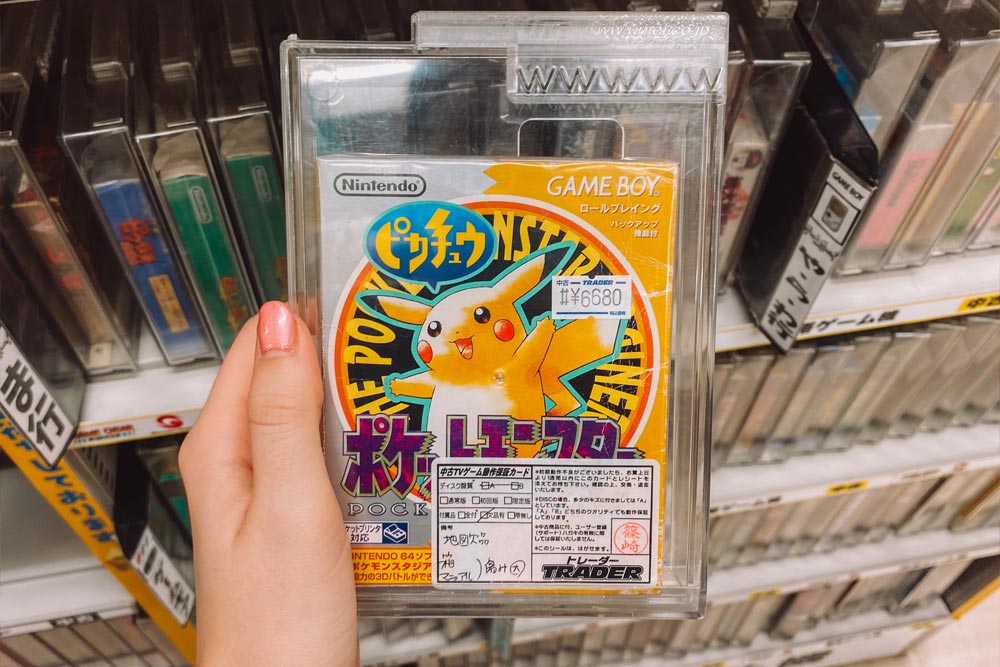
Japan knocks it out of the ballpark when it comes to video games. Classics such as Super Mario, Pokémon, The Legend of Zelda and many more were born here.
If you’re after some of the original copies from back in the day, you’ll be able to find them in Japan. Akihabara is a great place to start, but there are tons of shops all across the country that have great deals on beloved games from your childhood.
We’ve got a full guide on how to buy retro video games in Japan for more information – it includes all the best places to hunt for your favourite retro games.
21. Literature
With two Nobel Prize winners and superstar authors like Haruki Murakami, Japanese literature is taking the world by storm. Whether you prefer weighty novels that introduce Japan’s unique worldview or simply curling up on the sofa with a light novel, an increasing amount of Japanese literature is available in translation for you to explore.
Japan is also the source of unique poetry traditions like haiku, with its 5-7-5 syllable structure and its close connection with nature and the seasons. As you visit temples and palaces around Japan, you can almost imagine groups of noblemen and women gathering to compose poetry inspired by the cherry blossom, autumn leaves and harvest moon.
22. Ninja
Ninjas are often imagined as elusive assassins, but in reality, their roles were a little more complicated than that. They specialised in espionage, deception, ambushes and ninjutsu, a Japanese style of martial arts.
While the ninja faded into obscurity in the 17th century, the allure of these mysterious groups has brought them fame and popularity in the modern world. You can still learn a lot about them across Japan in places like Nikko’s Edo Wonderland.
While it’s not technically associated with ninja, you can also visit the Ninja Temple in Kanazawa to experience some of the hidden trap doors and secret rooms that form part of the ninja stereotype.
23. Shinto

Japan has two main religions: Shintoism and Buddhism. Many people in Japan practise both religions simultaneously. While Buddhism originated in India and is practised all over Asia, Shinto is unique to Japan.
Shinto is based on the worship of kami, the divine spirits that inhabit everything in the world. From rocks and plants to animals and natural forces, anything can be a home for kami.
Shinto shrines and Buddhist temples are all over Japan, but you can recognise Shinto shrines by their torii gates. These gates are often painted red and mark the entrance to a sacred place. Fushimi Inari Taisha is one of the most famous Shinto shrines in Japan, with thousands of torii leading you up Mount Inari.
To experience the essence of Shinto, visit one of the two most important Shinto shrines in Japan: Ise Grand Shrine in Mie Prefecture, home of the goddess Amaterasu, and Izumo-taisha in Shimane Prefecture, which hosts the annual gathering of the gods.
24. Capsule Hotels
If you’re looking for unique hotels in Tokyo, you can’t go wrong with a capsule hotel. Offering a solution to the limited space in Japan’s big cities, these sci-fi-like sleeping pods are an affordable alternative to an expensive hotel room.
The pods come with a bed, a light and sometimes a TV. There are communal bathrooms and lounge areas, similar to a hostel.
Capsules in these hotels are often separated by gender and usually come with a single bed, but there are some available for couples too. Either way, it’s a unique experience to have when staying in Japan.
25. Skiing
The north of Japan gets some of the heaviest snowfall in the world, and resorts like Naeba and Niseko are now world-famous for the quality of their powder. Every winter, skiers descend on the Japan Alps, Tohoku and Hokkaido to join the locals on the slopes.
While winter holidays in Japan are often built around skiing, there are plenty of other attractions to enjoy after a day on the slopes. From snow festivals to monkey onsen, you don’t need to pack the ski gear to have fun during Japan’s colder months.
26. Origami

The special paper-folding technique known as origami originated in Japan. From a single sheet of paper, people are able to create stunning sculptures – all without cutting or ripping the paper.
The word origami literally means “folding paper”. It started off as a ceremonial Shinto ritual, but it turned into a more leisurely activity in the Edo Period.
Origami experts are only limited by their imagination, but the most famous origami shape is the paper crane. There’s a popular saying that if you fold one thousand paper cranes, your wish will come true. With these wishes in mind, you’ll see long, colourful strings of paper cranes made by schoolchildren at the Hiroshima and Nagasaki peace memorials, as well as other historical and cultural monuments around Japan.
27. Calligraphy
Japanese calligraphy, or shodo, is a form of artistic writing. Using an ink-dipped brush, every character is drawn onto the page in a specific stroke order.
While it can take decades to truly master the form of Japanese calligraphy, children often learn the basics in elementary school. There are a wide variety of different calligraphy styles, from sharp and well-defined strokes to free-flowing, almost abstract creations.
You don’t need to be able to read Japanese to appreciate the beauty of calligraphy. But if you’re travelling to Japan, a few basic Japanese phrases will help you dive into everything the country has to offer.
28. Godzilla
Godzilla, or Gojira in Japanese, is a giant prehistoric monster and a Japanese cultural icon. It first emerged from the ocean on the big screen in 1954 and since then, it has starred in 33 Japanese films, five Hollywood movies and countless manga, books and video games.
Despite repeatedly destroying Tokyo with its atomic breath, the King of the Monsters is so popular that it’s now the official tourism ambassador of the capital’s Shinjuku ward. You can find Godzilla’s head poking through the tall buildings on top of Hotel Gracery Shinjuku. The hotel even has some Godzilla-themed rooms you can stay in!
29. Manhole Covers

In Japan, it pays to look down. Towns, cities and municipalities across the country have taken the humble manhole cover and turned it into a work of art, with vivid colors and pictures. Many are unique to the region and depict local landmarks, famous scenes or beloved regional characters.
There are so many arty manhole covers that finding them has become a collector’s hobby. There’s something for everyone, from reproductions of Hokusai’s The Great Wave off Kanagawa to designs created by local schoolchildren.
Themed collections of manhole covers are also taken pretty seriously by both creators and collectors. One of the most popular is by The Pokémon Company, who put a lot of thought into selecting Pokémon designs that would match the local area.
We even have a Japan manhole cover group on Facebook, where you can share the ones you find during your trip!
30. Arcades
Japan’s big cities are a dream for any video game lover, with a huge selection of arcades to play in. Just look for signs that say Bandai Namco, Sega or Taito and you’re on the right track.
The bottom floor of these arcades is usually filled with claw machines that offer the chance to win everything from Japanese snacks to cute stuffed toys from your favourite anime. If you can make your way to the floors above it, you’ll be able to find more skill-based games, including Japanese rhythm games and shooters.
They’re often pretty cheap to play, and for a few hundred yen, you can have a great evening of entertainment. Plus, your winnings will make for a great souvenir to bring home. Even if you don’t have much luck yourself, you’ll be able to marvel at some incredible performances from the local gamers, who have spent weeks, months and years honing their skills to perfection.
31. Bonsai
The ancient art of bonsai brings together patience, dedication and skill to nurture a miniature tree into something beautiful. Each bonsai tries to reproduce nature using careful pruning, watering and adjustments.
There are many different styles of bonsai inspired by the different qualities of nature, from bonsai with straight or artfully curved trunks to creations that look like they are blowing in the wind or cascading over a cliff edge. Some of the more famous and valuable bonsai are centuries old, passed down between master artisans as a thing of enduring beauty.
32. Tatami
Tatami is a special type of flooring material that’s used in traditional Japanese rooms. It’s made out of woven rushes, with a cloth or brocade edge.
While the use of tatami is slowly declining, many Japanese homes still have at least one tatami room. You most likely won’t encounter it if you’re staying in a hotel, but ryokan often provide tatami rooms with traditional futon bedding.
I highly recommend staying in a ryokan at some point during your trip to experience a traditional Japanese retreat. They are some of the best places to stay in traditional areas like Kyoto or locations away from the big cities, like Hakone or Nikko.
Conclusion – What Is Japan Famous For?
Japan is famous for a breathtaking variety of historical, natural and cultural experiences. Whether you’re fascinated by Japan’s traditions or passionate about its pop culture, you’re likely to have unforgettable encounters with a few of the things on this list during your visit.
With so many things to do and experience, Japan is a worthy addition to any traveller’s bucket list. If you’re ready to book your trip, check out our two-week itinerary for first-time visitors to help you experience one of the world’s great travel destinations.








WOW. I help around in a hotel in Cappadocia, Turkey, and we had some guests from Japan. I just wanted to know what Japan is famous for to include them in my reply, this site exceeded my expectation!! Thank you! You look gorgeous, by the way!! Cheers!;)
It was wonderful reading so much about mystic Japan and seeing it through your eyes felt as if I was there myself – ty
Reading through makes me want to be in Japan the next day. Thanks for this wonderful insight.
I wanted to go to japan ans this make much more interesting! Keep doing this.