Kamakura is a picturesque seaside town with an ocean view, ancient temples and delicious local food. It’s the perfect getaway for a dose of small town Japan, culture and history, or just a relaxed day on the beach.
Kamakura is also just a short hop from Enoshima, a charming island in the Sagami Bay which is a favorite weekend trip destination for Tokyo locals. There’s enough to see and do in both locations to fill a full day, but why choose when you can have both? This guide will show you the best way to explore both spots in one action-packed day by the ocean.
Key Takeaways
– Enoshima offers ocean views and island exploration, while Kamakura is filled with temples and seasonal activities
– An Enoshima-Kamakura Freepass will make your day trip easier, but requires you to retrace your steps on the return journey
– Kamakura is a year-round destination, but some locations become particularly crowded for the June hydrangeas or autumn leaves
– Consider heading up to some of the temples towards Kita-Kamakura if you want an extra dose of history, culture and seasonal scenery
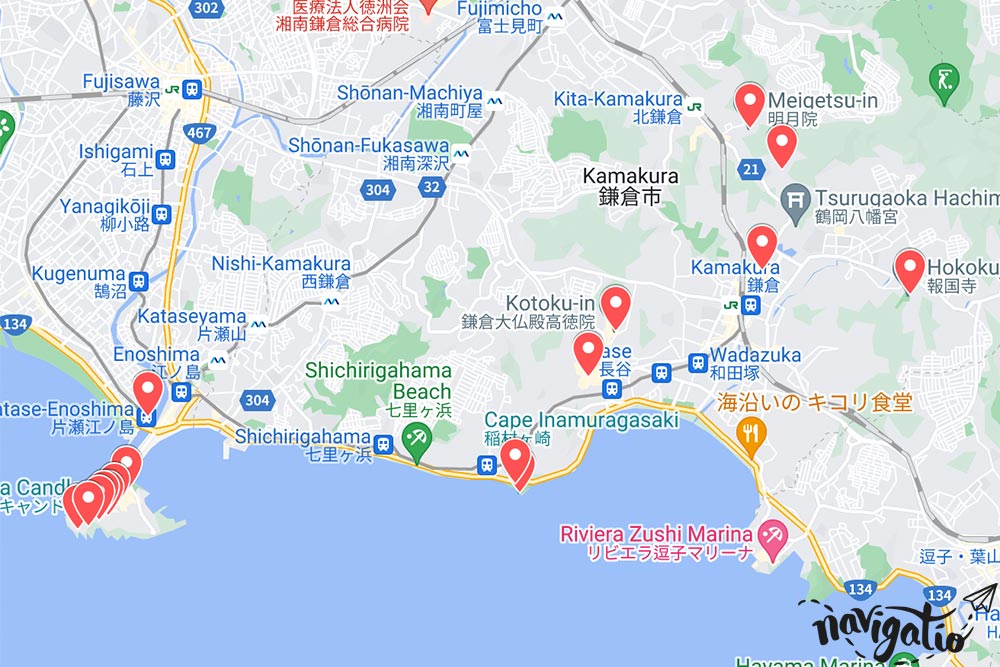
Kamakura Day Trip Overview & Map
No time to read the full guide? No problem! Here’s a quick overview of the Enoshima and Kamakura day trip itinerary:
🏨 Stay: Booking.com
📱 Connectivity: Journey Japan eSIM | Wireless Japan Pocket WiFi
🚅 Transport: Individual Shinkansen Tickets | JR Passes | Airport Transfer
🍣 Experiences: Klook | GetYourGuide
📷 My Camera Gear: Fuji Film XT-5 | Sigma 18-50mm f2.8 | DJI Mini 4 Pro
🗾 Take me to a random hidden spot in Japan
☕ Support our free Japan guides by buying us a coffee! Thank you!
One Day Kamakura Itinerary
Here’s how you can make the most out of a day trip to Kamakura and Enoshima.
1. Travel to Enoshima from Tokyo
Kamakura is easily accessible from Tokyo via the Yokosuka Line, which departs from Tokyo Station with stops in Shimbashi, Shinagawa and Yokohama. The journey takes roughly an hour and costs ¥1,040.
For this itinerary, however, I would recommend heading to Enoshima first using the Enoshima-Kamakura Freepass. This special ticket gives you unlimited train rides on the Odakyu and Enoden lines for a day, including a return trip from Shinjuku Station.
Take the Odakyu line from Shinjuku Station to Katase-Enoshima Station, the last stop on the Odakyu Enoshima line. Unless you take the Romancecar limited express for an additional fee, you’ll probably need to transfer at Fujisawa Station to the Enoshima Line.
Make sure to snap a photo of the Katase-Enoshima station building as you head out to the beach. It’s a recreation of the underwater palace of the ancient dragon deity Ryūjin, a well-known figure in traditional Japanese folklore.

If you’re planning to visit Kamakura and Enoshima in one day, make sure you’re out of bed bright and early. Kamakura’s temples and shrines, as well as most shops and restaurants, have a habit of closing early. You should plan to visit all the main sights between 8:00 AM and 5:00 PM.
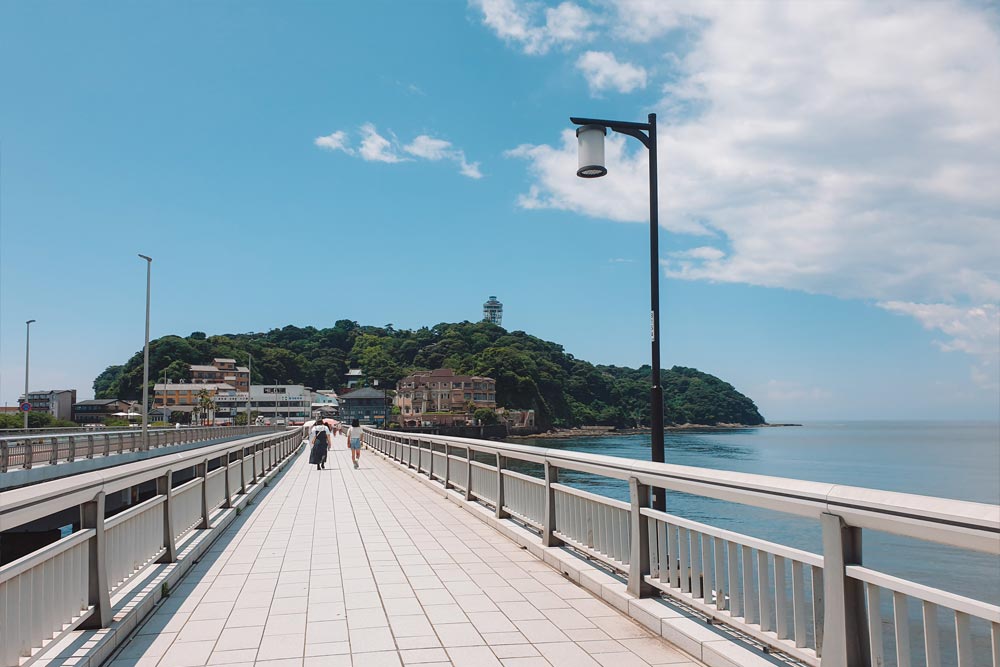
2. Explore the Island of Enoshima
Enoshima is a small island off the coast of Japan, a 25-minute train ride away from Kamakura. It has been a source of inspiration for some of the famous 19th-century woodblock prints by Katsushika Hokusai and Utagawa Hiroshige, as well as local myths.
It’s about a 10-minute walk across the bridge from the station to Enoshima to your first stop on the island: Nakamise Street. This narrow slope is packed with shops selling street food and souvenirs.
The most popular snack to try here is tako senbei, massive octopus-flavoured crackers that are pounded very thin. The one I bought was the size of my head, and you could still see the shape of the octopus tentacles in the batter. Despite the slightly intimidating appearance, they taste pretty similar to other senbei and you’ll still have room for a more substantial meal later in the day.
At the top of the alley is the entrance to Enoshima-jinja, the island’s main shrine. It’s dedicated to Benzaiten, the goddess who created the island and descended from heaven to soothe a dragon that had been tormenting the local people for thousands of years.
From the entrance to the shrine, turn left and either carry on up the staircase or buy an escalator ticket to access the higher reaches of the island. Keep in mind that the escalator will attract long queues at weekends and on hot days. If you don’t mind a little bit of physical exertion, it’s much easier to do the stairs.
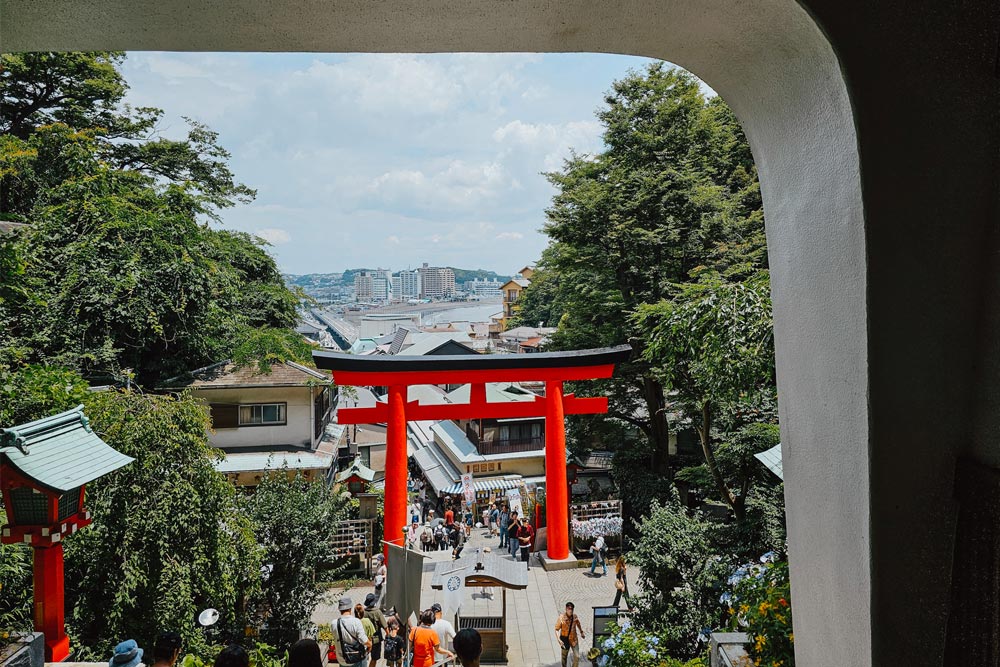
Walking around Enoshima, you’ll stumble upon observatory terraces surrounded by trees and glimpse the sea peeking through the greenery.
For a view from high above, head to Samuel Cocking Garden at the top of Enoshima. The garden already has some great views of the ocean, but you can also take advantage of the discount from the Enoshima-Kamakura Freepass and climb the Enoshima Sea Candle. This 60-metre-high observatory tower in the botanical garden has views of Mt. Fuji on the horizon on very clear days.
Before returning to Nakamise Street, explore the sharp-edged cliffs and gloomy caves in the southwestern corner of Enoshima. Among the most famous spots are Enoshima Iwaya Cave, which was naturally carved by the sea, and the Ryuren Bell of Love, which you can ring in honour of Enoshima’s dragon legend.
Enoshima can easily fill a day trip if you explore at a leisurely pace. However, it’s best to limit your time on Enoshima to 2–3 hours if you’re planning to visit Kamakura on the same day.
3. Take the Train to Hasedera
Head back across the bridge to the mainland and hop on the Enoden Line at Enoshima Station. It takes about 20 minutes on the train to Hase Station and then five minutes on foot to our next destination, Hasedera.
This 8th-century temple is home to an eleven-headed gilded statue of Kannon, the Japanese goddess of mercy, measuring approximately 9 metres tall.
With its beautiful garden, small koi carp ponds and ocean view from the wooden terrace, Hasedera is an ideal place to take a small break. It’s also a famous spot to view the hydrangeas in June, as it has a trail entirely lined by these blue-purple flowers.
A discount on the admission fee is included in the Freepass. Access to the hydrangea path requires a separate ticket, which you can buy at the temple entrance.

4. Visit the Great Buddha of Kamakura
The Great Buddha, or Kamakura Daibutsu, is Kamakura’s most famous landmark. It’s 10 minutes on foot from Hase-dera to Kōtoku-in, the home of this huge monument.
Standing 13.35 metres tall, the Great Buddha is one of the biggest bronze Buddha statues in Japan. Originally housed in a temple hall, the statue has been exposed to the elements since the 15th century after a series of natural disasters destroyed the temple grounds.
Despite its enormous size, the Buddha is still pretty well hidden from the entrance. Coming into the main temple grounds, it’s an arresting sight to see the weathered statue towering above you. When I went, a solitary cherry tree was in bloom inside the temple grounds, and it felt like one of those quintessential images of Japan that you dream of before your trip.
While it is an impressive sight designed to inspire revelation, it’s also the busiest sight in Kamakura. Some of the serenity is inevitably lost when you’re surrounded by so many people, so don’t expect to spend hours lost in meditation here. 30 minutes will probably do the trick.
If you’re curious about how these things are made, it’s worth paying the nominal 50 yen fee to go inside the Buddha and see how the plates were put together. It only takes a couple of minutes, but it’s a unique chance to get up close and personal with the Buddha.

5. Stroll Around Komachi Street
Once you’ve paid your respects to the Buddha, it’s time to return to the material world. Head back to Hase Station and take the short five-minute journey to Kamakura Station on the Enoden Line.
Adjacent to Kamakura Station lies Komachi Street, a small alley with lots of restaurants, cafés and shops that sell all sorts of local specialities and souvenirs. It’s the perfect opportunity to try some good food and get familiar with the local cuisine.
Kamakura and Enoshima are famous for namashirasu-don, a rice bowl topped with raw whitebait – tiny sardines with a mild flavour and a creamy texture. It’s not one for picky eaters, but if you’re up for something new you can find this tasty dish in restaurants across Kamakura and Enoshima.

6. Explore the Temples of Kamakura
If you linger on Enoshima, you might not have time to see the other temples around Kamakura. However, if you find yourself with time to spare, there are tons of options to choose from. My favourites include Hokoku-ji, Meigetsu-in, and Kenchō-ji.
All of the temples in the table below are located northeast of Kamakura Station. Since they are not accessible by the Odakyu or Enoden Line, you’ll need to pay an additional fee on top of the Freepass to get there on public transport.
If you don’t have time to go to some of the more far-flung temples, it’s still worth the 10-15 minute walk north of the station to Tsurugaoka Hachiman-gu. Located at the end of Kamakura’s main boulevard, this vermilion temple is dedicated to Hachiman, god of the samurai.
From the top of the temple stairs, there’s a beautiful view of the torii gates stretching down the boulevard. When I visited in sakura season, the path down the centre of the boulevard was filled with pink petals and the temple was buzzing with a festival atmosphere. It’s a great option if you want to see how a smaller Japanese city celebrates the fleeting cherry blossoms.
| Temple | Famous For | From Kamakura Station |
| Hokoku-ji | A bamboo grove and Japanese tea house | 10 minutes by bus / 30 minutes on foot |
| Meigetsu-in | Elegant garden views from its round window Hydrangeas in June | 12 minutes by train and on foot via Kita-Kamakura Station / 30 minutes on foot |
| Kenchō-ji | Zen history, temple gardens and cherry blossom | 25 minutes on foot |
| Engaku-ji | Large Zen temple complex, famous temple bell | 5 minutes by train to Kita-Kamakura Station |
In the autumn, you could also consider hopping off the train at Kita-Kamakura Station and simply wandering through all of the temples on your way to downtown Kamakura. It’s easy to spend a few hours viewing the red leaves and taking in the serene temple gardens. I’ve also done this walk during the cherry blossom season and time absolutely flies once you pull out your camera!
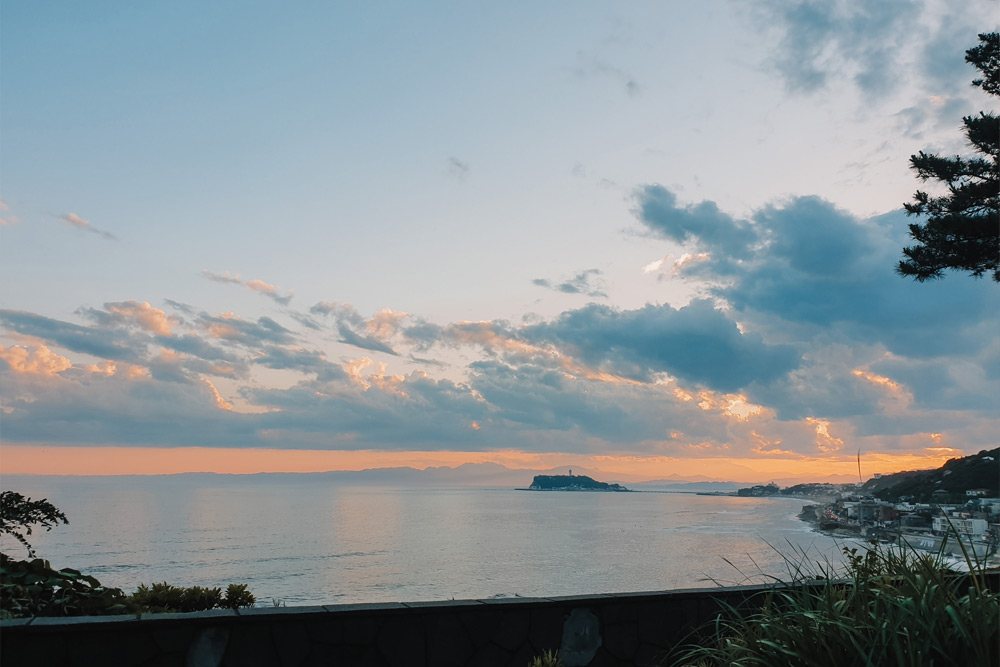
7. Watch the Sunset in Inamuragasaki
Watching the sunset by the ocean is the perfect way to end your day out in Kamakura.
My favourite spot to watch the sunset is Cape Inamuragasaki, an often overlooked destination close to Inamuragasaki Station on the Enoden Line. You’ll pass through Inamuragasaki Station if you’re returning to Tokyo via Fujisawa Station, so it’s easy to make a brief stop on your way back to the city.
There’s a good view of the sea and the mountains from the beach, but climb the stairs into Inamuragasaki Park for an even better panorama. On a clear day, you might even catch a glimpse of Mt. Fuji!
Kamakura is famous in the Kanto region for its beach culture, and attracts a fairly alternative crowd compared to the buttoned-up Tokyo metropolis. Despite this, the beach in Kamakura leaves a lot to be desired. If you’re planning a day of sand and sun, the beaches around Enoshima are a much better option.
8. Take the Train Back to Tokyo
After watching the sunset, it’s time to go back to Tokyo. Take the Enoden Line from Inamuragasaki Station to Fujisawa Station and board the Odakyu Line back to Shinjuku.
If you’re not using the Enoshima-Kamakura Freepass, you can head back to Tokyo directly from Kamakura Station on the JR Yokosuka Line.
Kamakura Day Trip FAQs
What is the Best Season to Visit Kamakura?
Whether you’re chasing plum and cherry blossoms in spring, taking an autumn stroll through a temple garden or snapping a picture of the Great Buddha on a snowy day, a trip to Kamakura is beautiful during any season.
One of my favourite times to visit Kamakura is the hydrangea season. Throughout June, famous temples like Meigetsu-in and Hase-dera transform into riots of blue, pink and purple.
If you don’t mind the crowds, autumn is also a wonderful time to wander the ancient temples on a hunt for Japan’s famous red leaves.

How Can I Get to Kamakura from Tokyo?
There are several ways to get to Kamakura from Tokyo. The most direct route to Kamakura is on the JR Yokosuka Line departing from Tokyo Station, which also passes through Shinagawa, Shimbashi and Yokohama Station. You can use the JR Pass on this route.
If you’re planning to go to Enoshima first, take the Odakyu Line from Shinjuku Station to Fujisawa Station, then switch to the Enoshima Line. From Katase-Enoshima Station, you can get to Kamakura by taking the short walk to Enoshima Station and boarding the Enoden Line.
Is the Enoshima-Kamakura Freepass Worth It for a Day Trip?
The Enoshima-Kamakura Freepass gives you unlimited train rides on the Odakyu and Enoden Line for one day. The pass also includes a few discounts for attractions in the Enoshima and Kamakura area.
The Freepass is available for ¥1,640 from Shinjuku or ¥840 from Fujisawa. Normally, a round trip from Shinjuku to Enoshima by Odakyu Line costs around ¥1,300. Each train ride on the Enoden Line will also cost around ¥200.
If you take at least two additional train rides on top of your return journey, the Enoshima-Kamakura Freepass will already be worth it for a day trip. This doesn’t include additional discounts that you can get on other attractions in the area. If you’re planning to follow this Enoshima and Kamakura day trip itinerary, we definitely recommend it!
However, don’t forget that the Enoshima-Kamakura Freepass is limited to the Odakyu and Enoden Line. If you want to see famous temples like Meigetsu-in that are located further away from these lines, you’ll have to pay extra for buses or train rides up to Kita-Kamakura Station on the JR Yokosuka Line.
On your way back, you’ll also have to take the Odakyu Line from Katase-Enoshima Station to Shinjuku instead of going directly from Kamakura Station, so allow some extra time for your return journey.

Final Thoughts on a Kamakura Day Trip
Kamakura and Enoshima are great options for a day trip, either together or in their own right. Kamakura is a beautiful town with a long history and serene temples, while Enoshima is great for relaxing and taking in the ocean views. If you have a day free in your Japan itinerary, it’s definitely worth making the short hop from Tokyo.
While going to Enoshima and Kamakura in one day is certainly possible, keep in mind that it’s a pretty packed itinerary. If you’d prefer to take it easy, you can spend your time exploring one of the two locations or stay overnight in Kamakura to give yourself enough time to see everything.
If you’re looking for more day trips from Tokyo, check out our guides to some alternative options like the temples of Nikko, the Fuji views in Hakone and the historic town of Kawagoe.







Hey Sabrina, Navigatio team,
your info was super helpful and pretty much covered all my questions. This page has been a lifesaver for planning my first-ever trip to Kamakura and Japan this November!!
thank you! 💗✨
anyway, quick questions of these Kamakura trip:
1. Should I still get the Kamakura free pass if I already have a Suica card? I’ll be traveling from Shinjuku
2. I’m really keen on catching some sea views from the train while traveling around the region. Any tips or recommendations for that?
Thanks a ton!
Hi Devita! Thank you for your lovely words, that means a lot to our team!
Regarding your questions:
1. You can use both the Kamakura Free Pass or your Suica card to travel to Kamakura – however, since the Kamakura Free Pass includes a return ride from Tokyo and unlimited rides on the public transport in Kamakura, it can work out cheaper to use this 🙂
2. The Enoden Line would be a good shout – especially near Kamakura Koko Mae Station, which is located next to the beachfront!
i want to do a daytrip to Hakone from Kamakura is it worth the 2.5 hr train one way. i am most interested in the Hakone shrine, ship on lake Ashi, ropeway. outdoor museum. my primary interest is not soaking in a hot spring.
That’s definitely doable 🙂 I have a separate one day Hakone itinerary on the website too – that may help with this 🙂
Used this itinerary yesterday and had an amazing time 😍 this flowed perfectly and showed me all the best spots in one day. Thank you so much!
So glad to hear, thank you!
Thank you for your detailed information about visiting Japan! I read everything you shared about one-day itinerary to Kamakura and the one to visit Hakone. Both sound amazing and offer different experiences. If we only have one day to devote to a day trip from Tokyo, which place do you recommend? We are interested in nature, temples, shrines, and unique cultural experiences. Thank you!
Thank you Melissa! Both are awesome day trips, but I’d probably go with Hakone for more nature 🙂