Planning a day trip to Kawagoe from Tokyo? This one-day itinerary shows you how to make the most of your time here!
Surrounded by the Iruma River, Kawagoe is home to a number of temples and shrines that serve as a tranquil backdrop to the rows of historic buildings that earned its nickname “Little Edo,” many of which can be found in the famous Warehouse District.
Kawagoe is beautiful in all four seasons and is easily accessible from Tokyo. Just one hour by train from Ikebukuro, Kawagoe is found in neighbouring Saitama prefecture and often appears on many top 10 lists for places to visit in Saitama.
To make the best of your Kawagoe day trip, check out the guide below to find out where to go in this lovely, historic town just outside of Tokyo.
Kawagoe Day Trip Overview
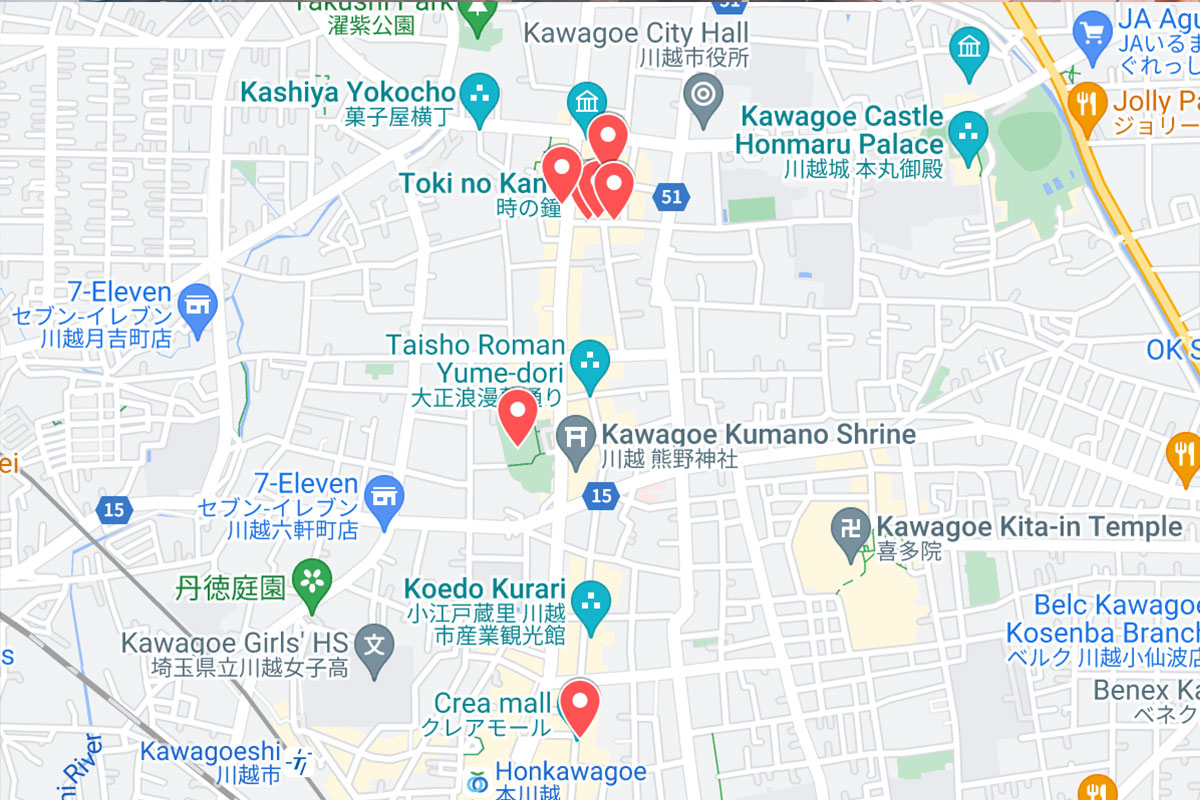
Below, you can find a quick overview map of this one-day Kawagoe itinerary. Conveniently, many of the attractions are within a 5-minute walk of each other.
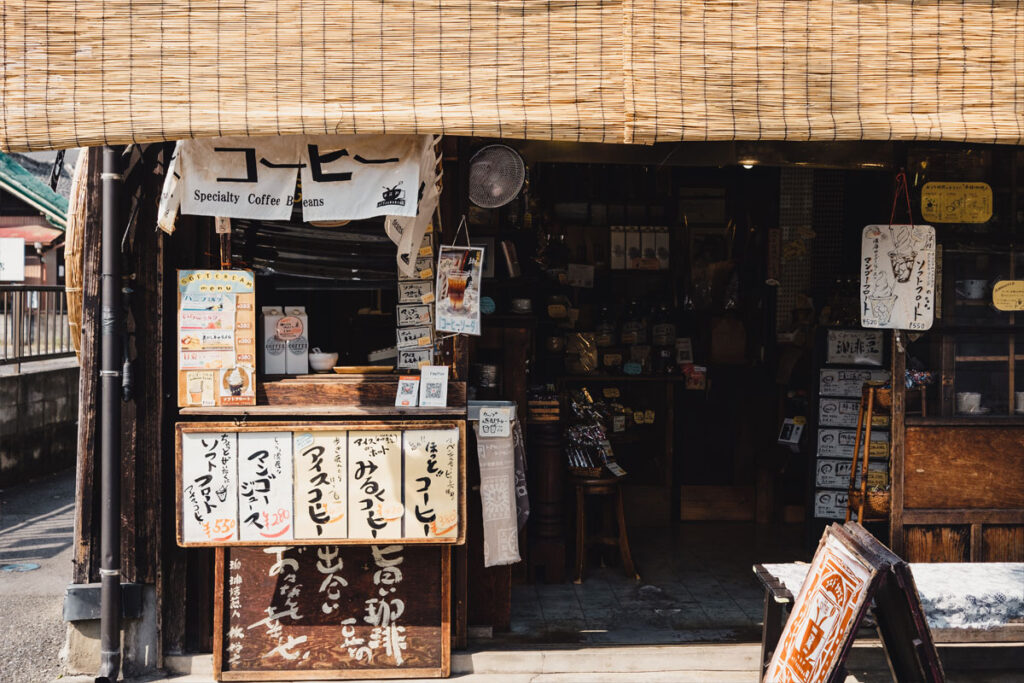
Kawagoe Day Trip Itinerary
Here is our itinerary for spending one day in Kawagoe:
1. Travel from Tokyo to Kawagoe
The best way to access Kawagoe is to ride the Tokyo Loop via the Yamanote Line to Ikebukuro Station. You can then take the Tobu-Tojo Line (TJ) and reach Kawagoe in about one hour. Alternatively, you can use the Seibu Line.
If you’ve bought any of the passes mentioned above, make sure you use the lines on which they are valid.

2. Rest at Renkeiji Temple
Of the many things to do in Kawagoe, Renkeiji Temple is our favourite place to visit. Dedicated to Amida Buddha and Fukurokuju, one of the Seven Lucky Gods, Renkeiji Temple is the best place to start (and finish) our day trip to Kawagoe.
As the colourful banner adorning the main shrine comes into view, you may notice the temple’s quiet atmosphere starkly opposes the more lively, touristy areas nearby.
That is because Renkeiji Temple was designed to be a place for healing and praying when it was commissioned to be built in 1549 by Renkei, the mother of a commander of Kawagoe Castle. Later, it became a place where Buddhists could study how to become priests during the Tokugawa Period (1603–1867).
There are several cherry blossom trees on the grounds that spring to life between the last week of March and the first week of April. Every day at 3 PM, you can hear the bellow of a bonsho bell that was built in 1695.
There’s also a small statue of one of the disciples of Buddha, Obinzuru-sama. Legend has it that if you touch the statue where you feel pain in your body, you’ll be healed of all ailments.
3. Behold the Historic Bell Tower
Just around the corner from Renkeiji Temple lies Toki-no-kane, or the Bell Tower. The Bell Tower stands on Kanetsuki Street and is undoubtedly one of the area’s most famous landmarks.
Designed to blend in with its surroundings (similar to that of the world’s first tatami-floored Starbucks in Kyoto) the local Starbucks and many of the local shops look like traditional kura structures. Although you may be surprised to find that the Starbucks’ interior is quite modern.
Like most of its surrounding structures, the Bell Tower was reconstructed in 1894 after a devastating fire destroyed most of the town. Today, the Bell Tower is a beloved local landmark that chimes four times a day (at 6 AM, 12 PM, 3 PM, and 6 PM). Entering the Bell Tower is not allowed. However, it’s still impressive to look at.
Next door, there’s a confectionery shop called Kashou Umon Bell Tower Branch. You can try imo-koi (potato love) ice cream and daifukumochi, which is a type of traditional Japanese sweet.

4. Walk Around the Warehouse District
Many of Kawagoe’s most popular shops, restaurants, and cafes can be found along Kurazukuri Street. Like the traditional buildings found near the Bell Tower, the Warehouse District is marked by a long two-lane street with rows of traditional kura buildings on either side.
Here, tourists dressed in kimono or yukata blend in perfectly with the old houses as they duck into the Kame-no-monaka, which is a speciality food shop where you can try the adorable cat-shaped dorayaki called “Tamadora.”
There’s also the Miffy Storehouse Kitchen & Bakery as well as a Ghibli Store (on Google Maps, it’s called Donguri Kyowakoku).
For getting around the Warehouse District, the only alternative to walking is by rickshaw. A round-trip to Kawagoe’s most popular attractions takes around 30 minutes or less. For more information and prices, you can check their official website.
Every year, on October 14th–15th, the Warehouse District is almost unrecognizable during the Kawagoe Hikawa Float Event when hundreds of locals crowd on Kurazukuri Street to celebrate a festival that has been held annually since the Edo period. Starting at the Hikawa Shrine, locals carry two large multi-story floats with Edo-style dolls at the top.
The floats are permanently on display at the Kawagoe Festival Museum, which is also found in the Warehouse District.

5. Admire at the “Happy Shrine”
After having visited many of Kawagoe’s most iconic attractions, you can visit “Happy Shrine.” Tucked away on an off-shoot of Kurazukuri Street, this hidden gem is a lovely place to take a much-needed rest.
The Happy Shrine is actually called Honso Inari Shrine. It’s part place of worship, part public art installation with works by sculpture artist Tsuyoshi Tanaka on display next to the large tree.
Honso Inari Shrine is a popular place for people to sit and pose for a photo while wearing traditional Japanese clothes. If you’re visiting during the summer months, it’s also a good place to relax in the shade and listen to the sweet sound of the wind-chime or furin.
6. Find a Souvenir at the Crea Mall
Crea Mall is actually a pedestrian-only street that stretches from the historic area around Renkeiji Temple all the way to Kawagoe Station. There are so many different types of restaurants and shops inside Crea Mall – it’s a great idea to use Google Maps to find some of the best ones (one of our essential Japan travel apps).
There’s one shop near Crea Mall that’s worth stopping by if you’re searching for a truly unique kind of omiyage or souvenir.
Build in 1936 by the Ushikubo family, Mizukami Bookbindery is a stationary shop that offers unique book covers, journals, passport holders, as well as an assortment of bookmarks and other novelty items like fox masks allegedly designed by manga artist Taro Iga.
The shop itself is like a time capsule and customers are welcome to take pictures of the products. The staff were extremely helpful and were able to customize a book cover for my very peculiarly shaped edition of Patrick Rothfuss’ Name of the Wind.

Is Kawagoe Worth Visiting?
Yes, Kawagoe is worth visiting if you have enough time in Tokyo. Especially if you’re staying near Tokyo for the full duration of your Japan trip, Kawagoe makes for a good alternative to visiting Kyoto. The traditional atmosphere shows why Kawagoe goes under the nickname of “Little Edo” and it makes for a great day out.
However, it’s also worth considering other day trips from Tokyo, depending on how much time you have. Kamakura, Nikko and Hakone are great alternatives if you’re on a tight schedule.
If you’re searching for a destination that has enough options to fill up an entire itinerary but is still close enough to be in Tokyo in time for dinner, then Kawagoe is the perfect day trip for you.
How Much Time Do You Need in Kawagoe?
To get a good impression of Kawagoe, you’ll need at least half a day to one full day. Especially since it’s easy to reach from Tokyo, it makes for a great day trip.
Following this itinerary will give you a great starting point for exploring Kawagoe for the day. You could even get back in time to explore Tokyo at night.
Conclusion – Kawagoe Day Trip
That concluded our Kawagoe itinerary!
Just one hour away from central Tokyo, Kawagoe is a great place to try on kimono or yukata, wander around the historic district of “Little Edo” and see more of what Japan has got to offer outside of its main cities.







Quaint town. Beautiful pictures of traditional Japanese Lifestyle.