Located in Japan’s very first National Park, Unzen Onsen is one of Nagasaki’s best onsen towns. The town itself isn’t very big, but it has an almost mystical feel when you see the large steam clouds fill the air and spread a strong sulfur smell all across the town.
The hot spring town is located on Mount Unzen, an active volcano in the Shimabara Peninsula. Visiting Unzen is great in any season, especially with so much rich nature surrounding the town. If you have a car, it’s also easy to make your way to some hiking trails or other nearby towns like Obama Onsen and Shimabara. Numerous friendly onsen cats have made this their home, enjoying the hot stones.
After a relaxing stay here as part of one of my extended Kyushu roadtrips, I’ve put together this itinerary to make the most of your visit to Unzen Onsen. Let’s take a look!
- Unzen Onsen Itinerary Overview & Map
- Visiting Unzen Onsen: Recommended Itinerary
- Stop by the Unzen Onsen Information Centres
- Breakfast at Kaseya Cafe
- Soak Your Feet in the Ashi-yu (Footbaths)
- Steam Vegetables in the Public Steamer
- Walk Around Oshidorino Pond
- Try the Hot Spring Snacks
- Visit Unzen Onsen Shrine
- Enjoy the Best Views at Gokuraku Park
- Walk Through the Hells of Unzen
- Visit the Little Mud Volcano
- (Optional) Day Use Onsen in Unzen Onsen
- Stay Overnight in a Ryokan
- Are There Tattoo-Friendly Onsen in Unzen Onsen?
- How To Get To Unzen Onsen?
- Is Unzen Onsen Worth Visiting & How Long For?

Unzen Onsen Itinerary Overview & Map
Even though Unzen Onsen is only small, visiting it makes for a wonderful experience. Following the guided walkways through the onsen hells, feeling the steam and seeing the hot spring water bubble up out of the ground is quite magical (despite the smells!).
There isn’t a ton to do in this town, but the relaxing atmosphere gives you the perfect onsen resort feel. Hot spring towns aren’t usually big sightseeing areas. They are for unwinding and relaxing. And the sleepy town of Unzen is perfect for this. I highly recommend staying at least one night to fully take advantage of everything the town has to offer, including some stunning ryokans with kaiseki dinner and a long soak in Unzen’s hot spring water.
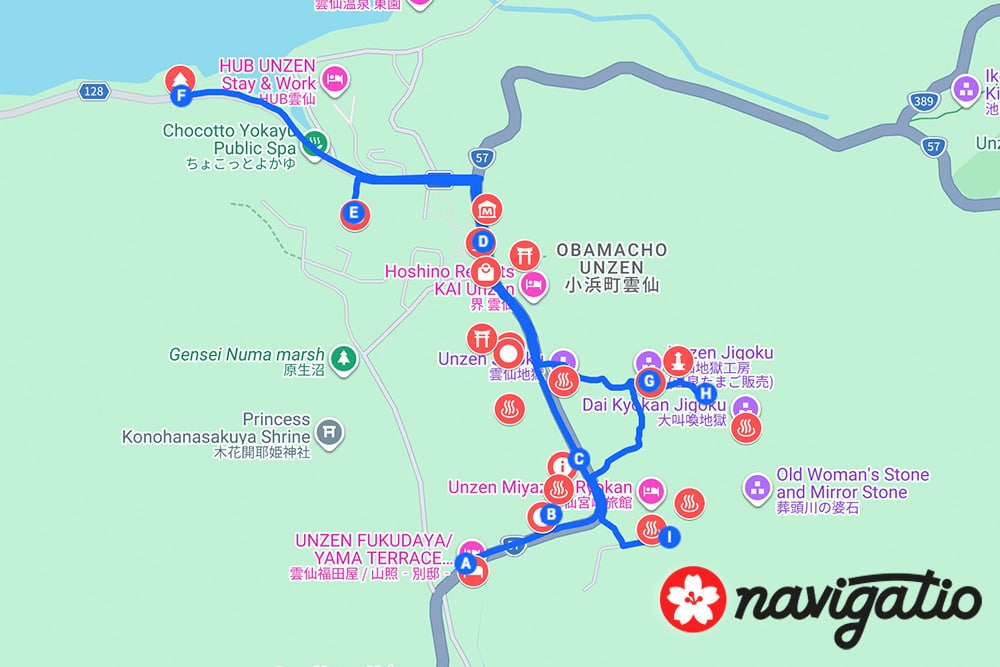
I’ve put together a walking route to see the main sights of Unzen Onsen (and a few special spots we found while exploring the town). Here is the map with the route. I’ve added more in-depth information on all the sights below in the full itinerary:
Unzen Onsen’s History
The town of Unzen Onsen dates back centuries. Originally, the town was founded in 701 by a Buddhist monk called Gyoki. Mount Unzen is a spiritual mountain, and at the time of the town’s founding, no women were allowed here. It was sometimes referred to as the Koyasan of the West.
Skipping ahead a few centuries, Unzen Onsen entered a dark period. When Christianity was banned in the 17th century, many Christians who refused to give up their faith were sent to this “hell”. The boiling onsen water was used to torture and even murder many of them between 1627 and 1631.
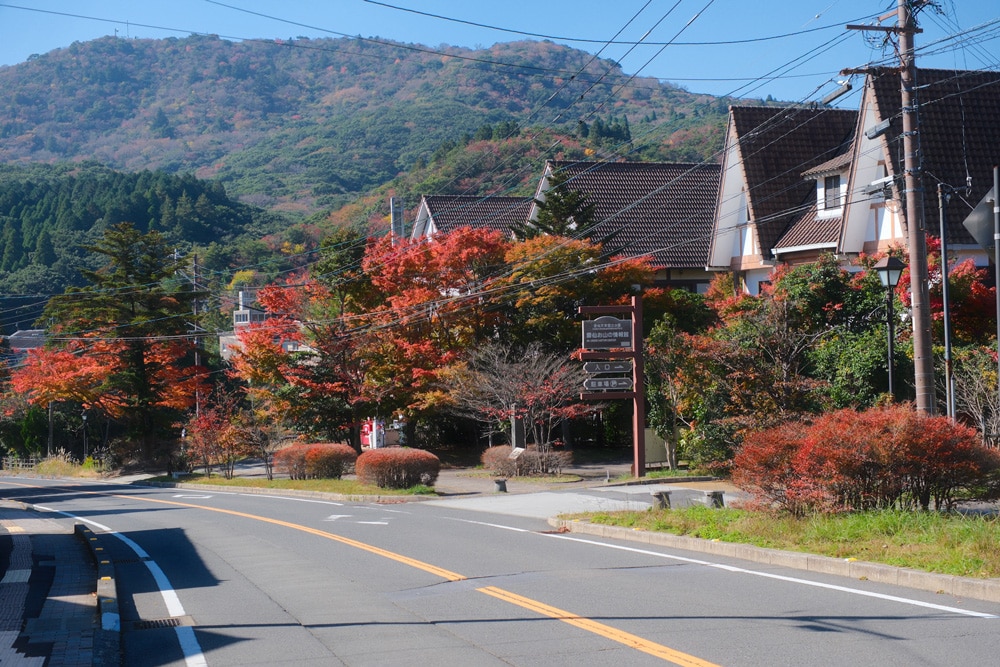
During the Meiji era (1868–1912), Unzen Onsen became one of Japan’s first tourist destinations. Nagasaki was an important port town in Japan, and many foreigners settled here. After a news article was published in the North China Daily News in 1889 about Unzen Onsen, even more foreign visitors flocked to the town (particularly Westerners stationed in Shanghai). You can still see a lot of Western influence in the buildings in Unzen.
In 1934, Unzen Amakusa National Park was named the very first National Park in Japan. The surrounding areas are fantastic for hiking, and if you have some extra time in Unzen, you can follow one of the many hiking trails.
Mount Unzen is still an active volcano. The last major eruption happened between 1990 and 1995, and was named the Heisei eruption. At the time, 40+ people were killed, and all the volcanic activity created a new mountain peak, called Heisei-Shinzan. In the Unzen Mountain Information Centre, you can learn more about what happened.
Unzen Onsen’s Water
The water in Unzen Onsen is quite acidic, often compared to that in Kusatsu Onsen. Because of its high acidity, the water has a sterilising effect, said to help skin diseases and other illnesses. As I read on a poster in the lift of our hotel on my way to the onsen, Unzen Onsen’s water has a moisturising and beautifying effect on the skin. Therefore, it’s best not to rinse your body after soaking in the hot spring, to fully soak up all the minerals (unless you have sensitive skin!).
Unzen Onsen has two different types of hot spring water. One is clear, whereas the other one has a more white-ish colour due to the high concentration of minerals. What water is used for what onsen depends on the source they use. Most ryokans and hotels will clearly state on their websites what onsen water is used in their baths.
The nearby onsen town of Obama Onsen has yet another type of water, which contains more chloride. Together, they make up the three types of hot spring water available in the Shimabara Peninsula.

Visiting Unzen Onsen: Recommended Itinerary
Here is my recommended itinerary for visiting Unzen Onsen. You can adjust it based on when you plan to arrive and whether you want to stay overnight (I recommend staying at least one night!).
Stop by the Unzen Onsen Information Centres
No matter where I visit in Japan, I always try to stop at the information centres of the cities and towns. They are the experts in the area and will have a lot of info on the best sights, onsen, and places to eat.
Despite being only a small town, Unzen Onsen has two information centres. The Unzen Onsen Tourist Information Centre is the smaller one and is housed in a beautiful Western-style building. They have some brochures with info on the town and the surrounding areas (perfect if you have a rental car or want to go on any of the nearby hikes). This is also the best place for luggage storage and getting rental bikes.
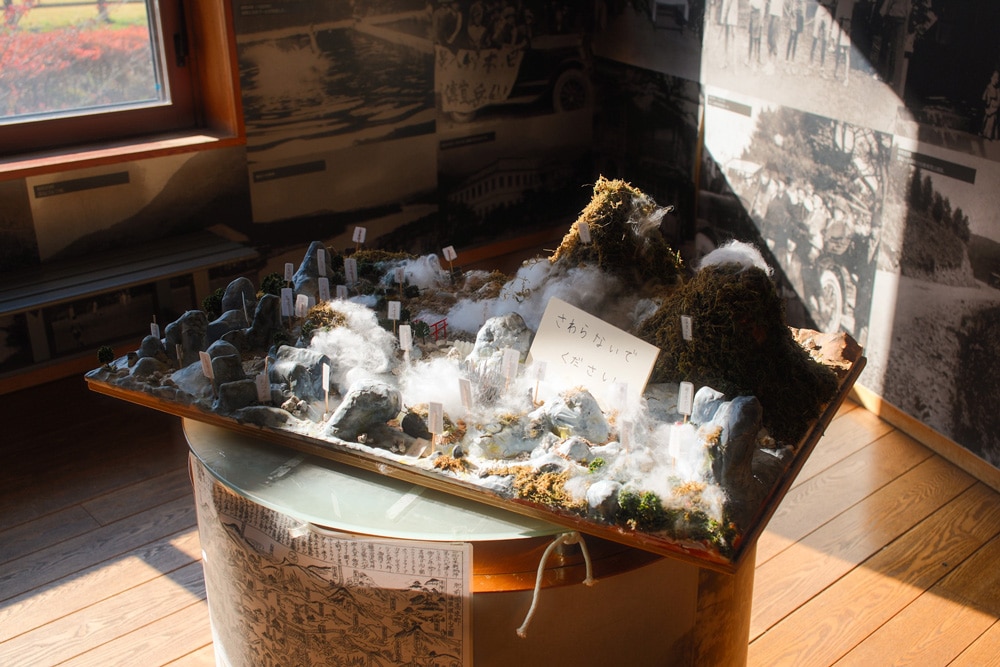
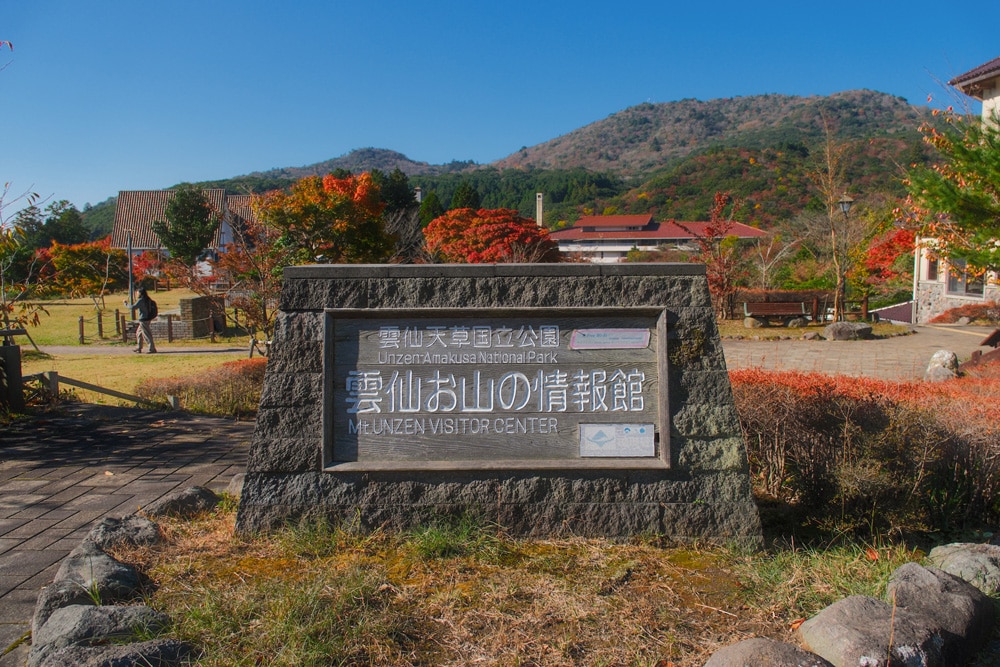
Not far from the first centre is the Unzen Mountain Information Centre. This one doubles as a free museum about the volcano, the town, the wildlife and the Heisei eruption. Most of it is in Japanese, so if you’re interested in learning more about it, make sure you bring your Google Translate app.
Breakfast at Kaseya Cafe
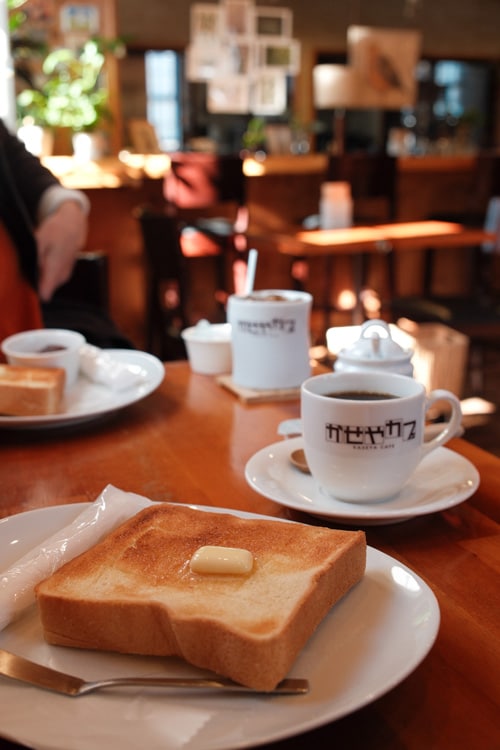
Unzen Onsen town isn’t very big. There aren’t a lot of restaurants or cafes, so if you’re staying overnight, I recommend booking breakfast with your ryokan/hotel. However, if you didn’t book breakfast or are visiting on a day trip, stop at this lovely locally-owned cafe on the main street.
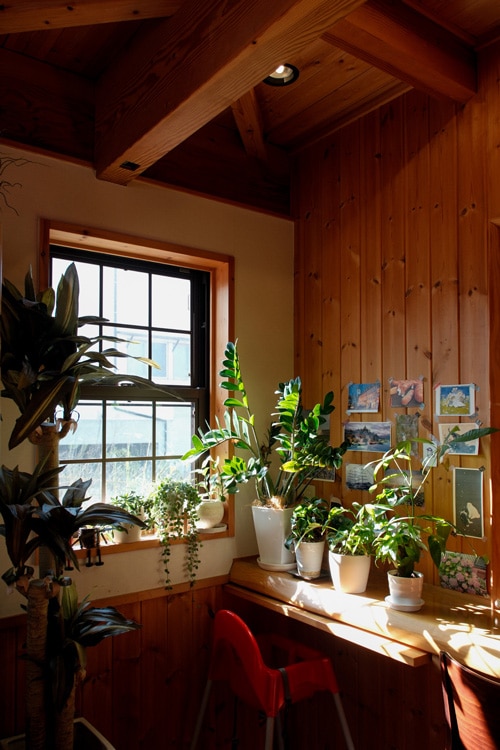
With warm wooden walls, sunlight pouring in through the windows and tons of potted plants, this cafe immediately felt like home. The cosy atmosphere was added to by the lovely owners, with whom we had a friendly chat (knowing a few basic Japanese phrases can come in very handy when travelling in rural Japan).
The cafe offers a variety of pastries, coffees and cold drinks, including the famous Unzen Onsen lemonade. As we stopped here for breakfast, we went for the butter toast and red bean toast. Both were delicious, I may or may not have ordered a second portion.
Soak Your Feet in the Ashi-yu (Footbaths)
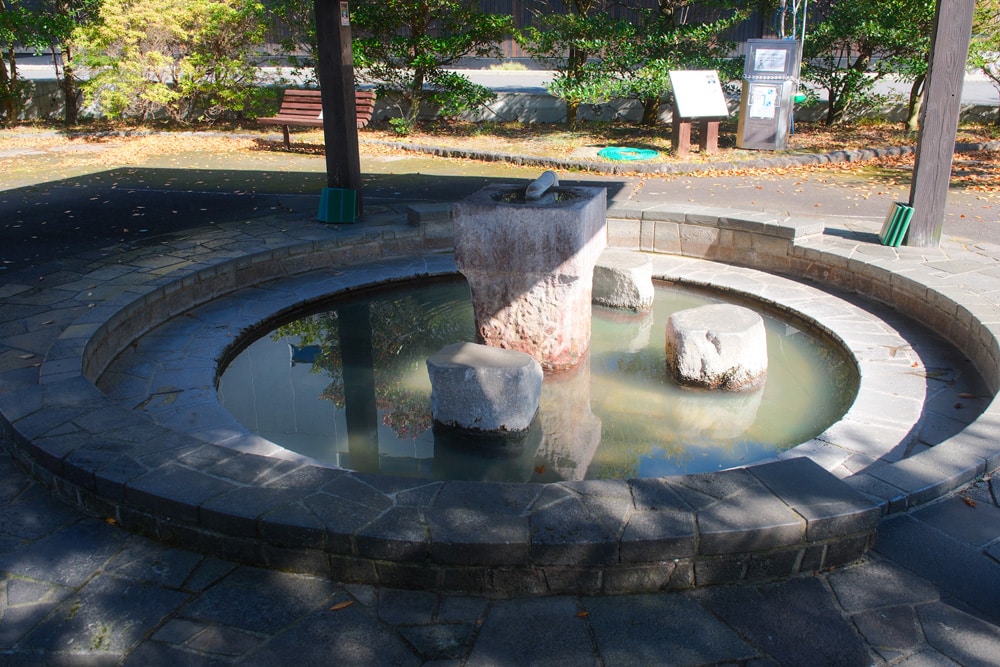
Like many other onsen towns, Unzen Onsen has multiple free footbaths you can use. It’s a good idea to bring a small towel with you, so you can dry your feet afterwards, as they won’t be readily available.
The fresh hot spring water is constantly replenished, and you can enjoy some of the health benefits of the water by soaking your feet in it for a bit. One of the ashi-yu in Unzen Onsen can be found near Unzen Jigoku, and has a roof for when it rains and space for around 10 people.
Steam Vegetables in the Public Steamer
While exploring the town, we stumbled upon a public steamer. You will have already seen the large steam clouds surrounding the hells of Unzen Onsen, but the hot water and steam can also be used for cooking.
Onsen tamago (温泉卵), or onsen eggs, are a popular snack in hot spring towns (for example, in Hakone, you can try a black egg boiled in onsen water!). These are eggs that are slowly boiled in the hot spring water, often not fully hard-boiled. But you can steam/boil a lot of other things too!
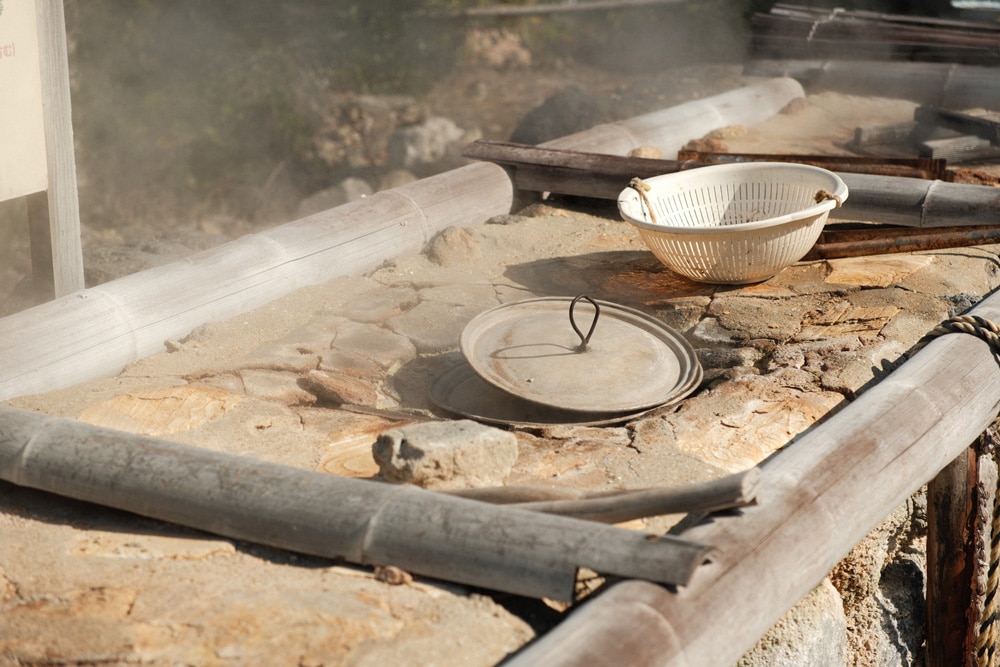
This public steamer can be used by anybody, there are even colanders and tongs you can use. You just need to bring your own eggs or vegetables. There is a small supermarket (Yamazaki Daily Store) on the main street near Kaseya Cafe, where you can pick up some food to steam.
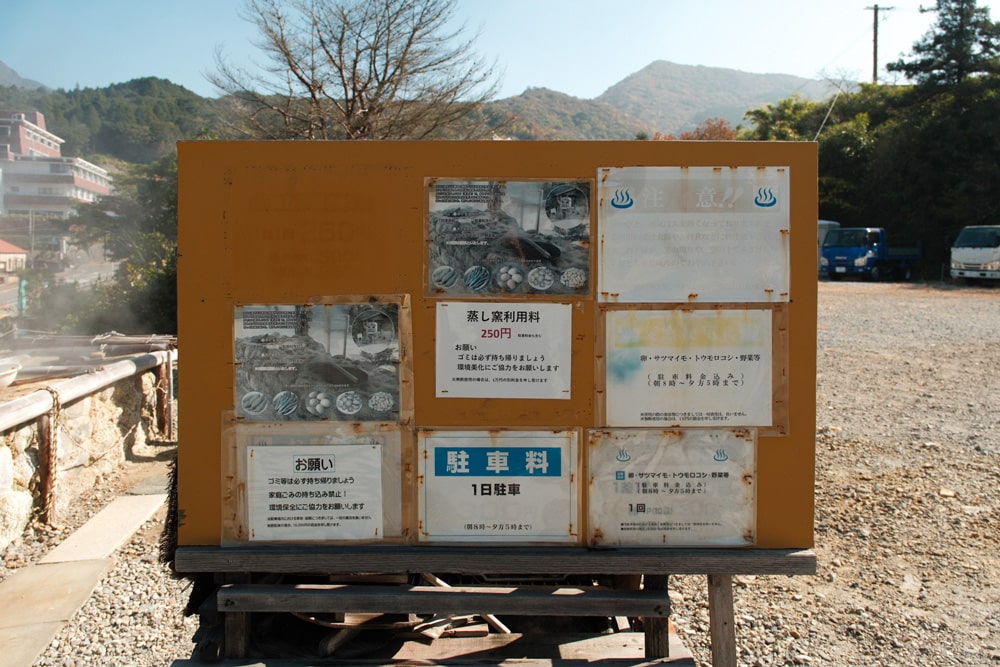
You pay ¥250 for the usage of the steamer. Sometimes, there is a manager on site, but if nobody is there, you can simply put the money in the payment box. Not sure how long to steam your food? There is a handy sign near the steamer with info on how many minutes to steam different types of vegetables/eggs.
Walk Around Oshidorino Pond
Depending on how much time you have (and how active you want to be when relaxing in this hot spring resort), you can choose to go for a walk around Oshidorino Pond. The full loop is around 2.7 km and takes around one hour. It’s a beautiful walk in any season, with beautiful emerald coloured water.
Try the Hot Spring Snacks
There are some local snacks to try in Unzen Onsen, including:
- Onsen egg: A local legend states that eating one egg adds a year to your lifespan, two eggs will add two years, and eating three eggs will give you longevity until “the end of your days”. You can buy them at the Unzen Jigoku Rest Area.
- Unzen Onsen lemonade: This local drink has over 100 years of history, using local spring water and lemons to create a refreshing lemonade.
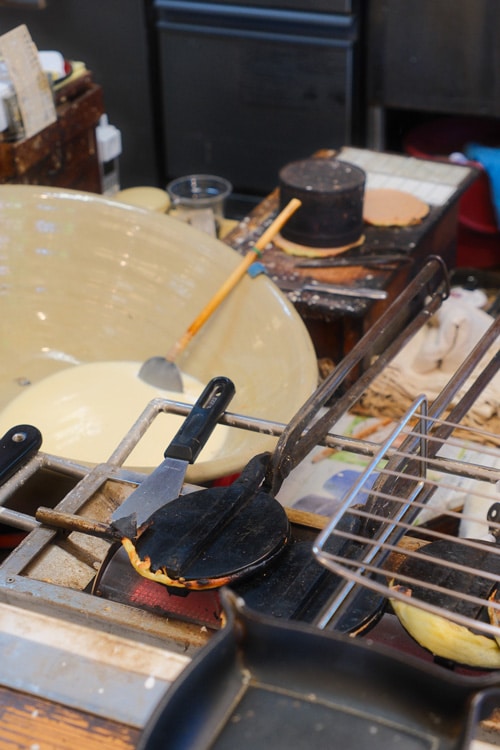
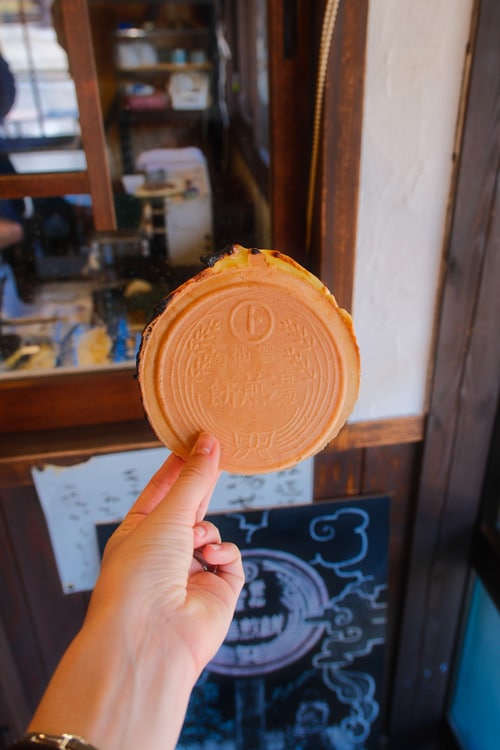
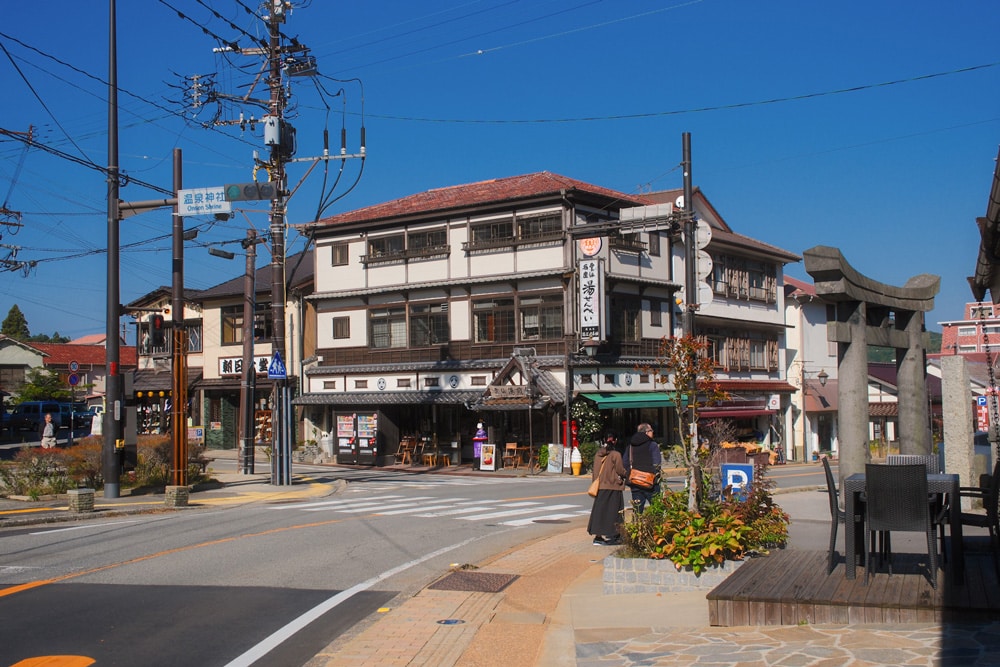
- Yu-senpei: These crackers are made from local ingredients and cold hot spring water. At Totomiya Honpo on the main street, you can get ones that are freshly made by hand. You can even watch them make them. They tasted very similar to the senbei sold in Arima Onsen, which also uses local hot spring water as one of its ingredients.
Visit Unzen Onsen Shrine
Sitting in the heart of Unzen Onsen, right next to the hells, you can find one of the main temples of the town. Unzen Onsen Shrine welcomes you with a few stone torii gates and stone stairs.
The shrine and grounds aren’t very big, but it’s nevertheless worth a stop before heading to the hells. You can see the steam of the hells enter the temple grounds, which is quite special.
Most people come here to pray for romance and fertility. The two persimmon trees (Meoto Gaki) have grown here for over 200 years, and are tied together by a rope as a symbol for the bond between lovers.
Enjoy the Best Views at Gokuraku Park
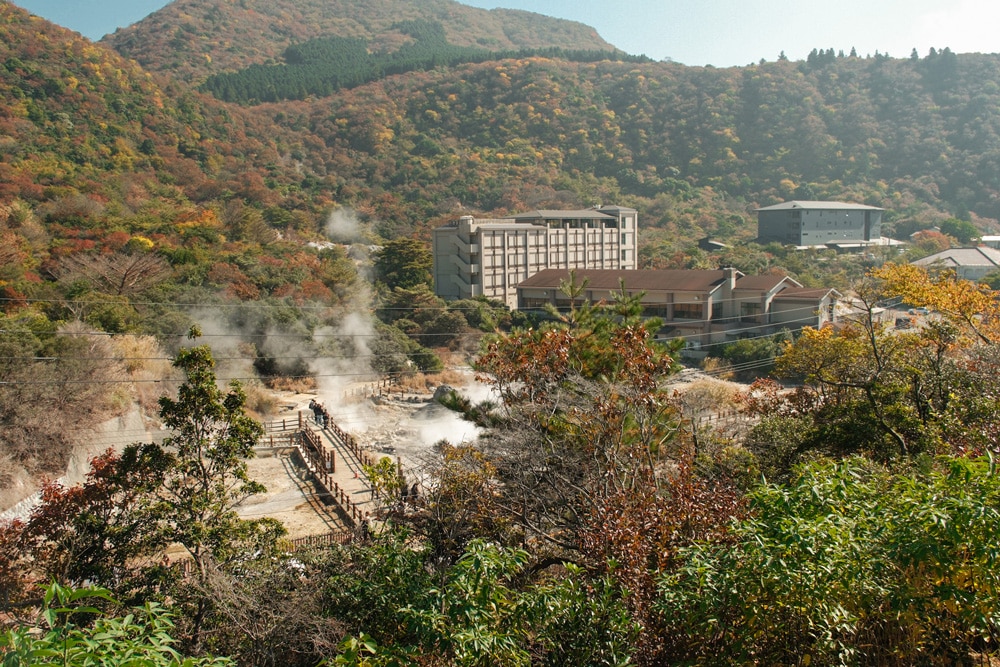
To enjoy some lovely views of Unzen Onsen, head to Gokuraku Park. From the top, you’ll get a full view of the mountains and the steaming hells below.
You’ll also be able to find the Pokémon manhole cover here, characterised by Ampharos (Nagasaki Prefecture’s tourism ambassador), Torkoal and Camerupt (two volcano Pokémon).
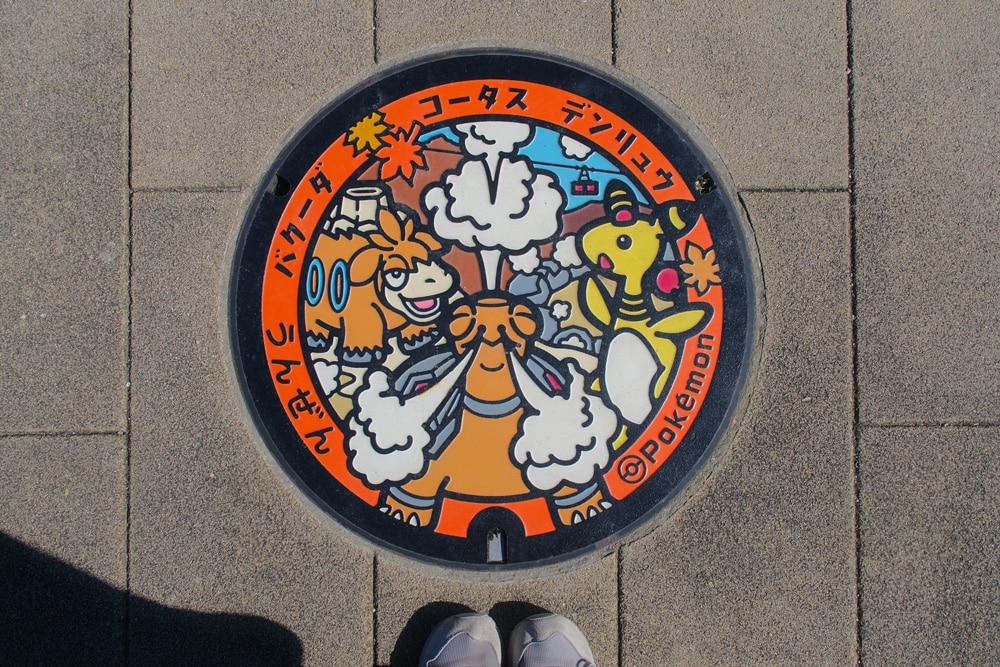
While in the park, also stop by Manmyouji Temple. Despite being quite small, this temple has great significance for Unzen Onsen. It was originally founded together with the town by Monk Gyoki in 701. The temple has had many different versions over the centuries, including the addition of the Buddha statue in 1914.
Behind the temple bell, you can find a small forest walk which takes you past 88 stone statues. It represents the temples of the 88 Temple Pilgrimage in Shikoku.
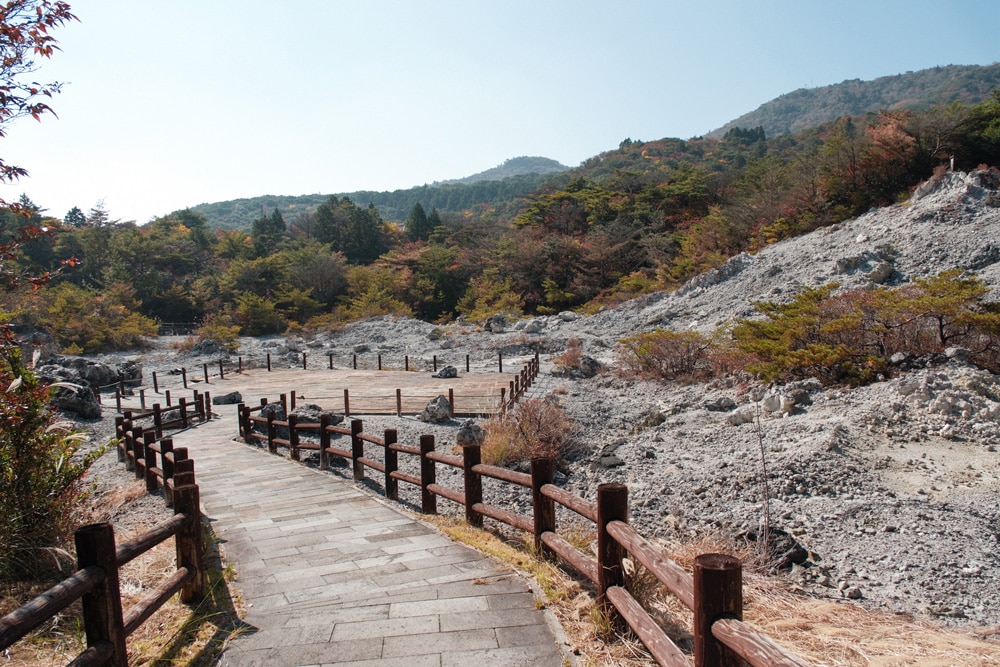
On the way down towards Unzen Jigoku, make a quick stop at Kyu Hachiman Jigoku. This is one of the many hells in the town, but hardly any plants grow on it, making it look like the surface of the moon. The landscape here feels ominous, but you can feel the geothermal power of the volcano cooking below.

Walk Through the Hells of Unzen
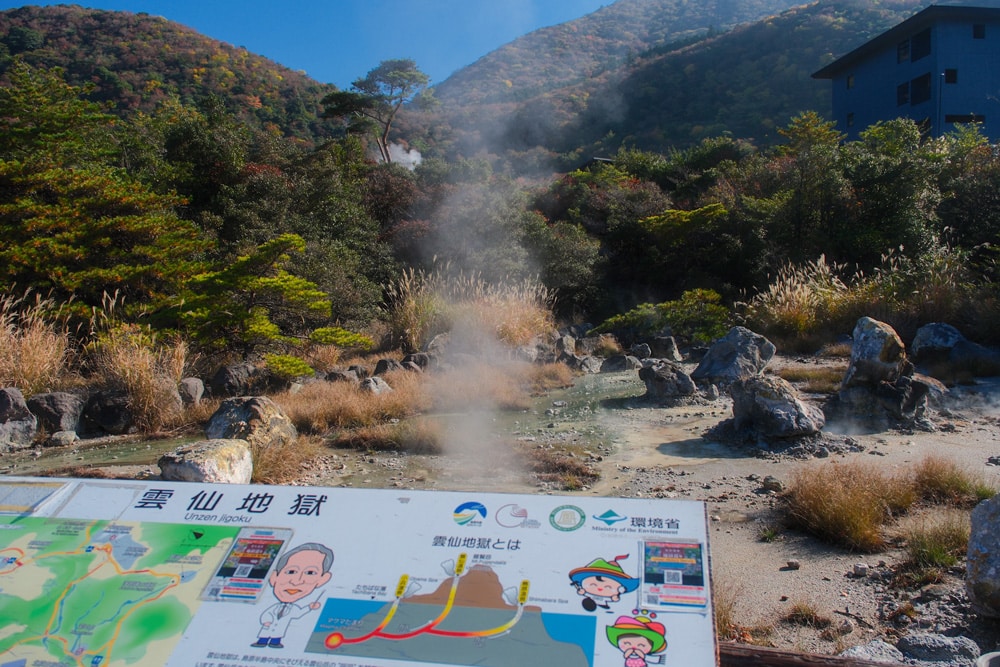
Unzen Jigoku, or Unzen Hell, is probably the most famous highlight of the hot spring town. By following the walkways throughout the valley, you can really see the mountain “breathe”. The stones used as part of the walkway feel hot to the touch. I could only touch them with my hands for a few seconds before they got too hot.
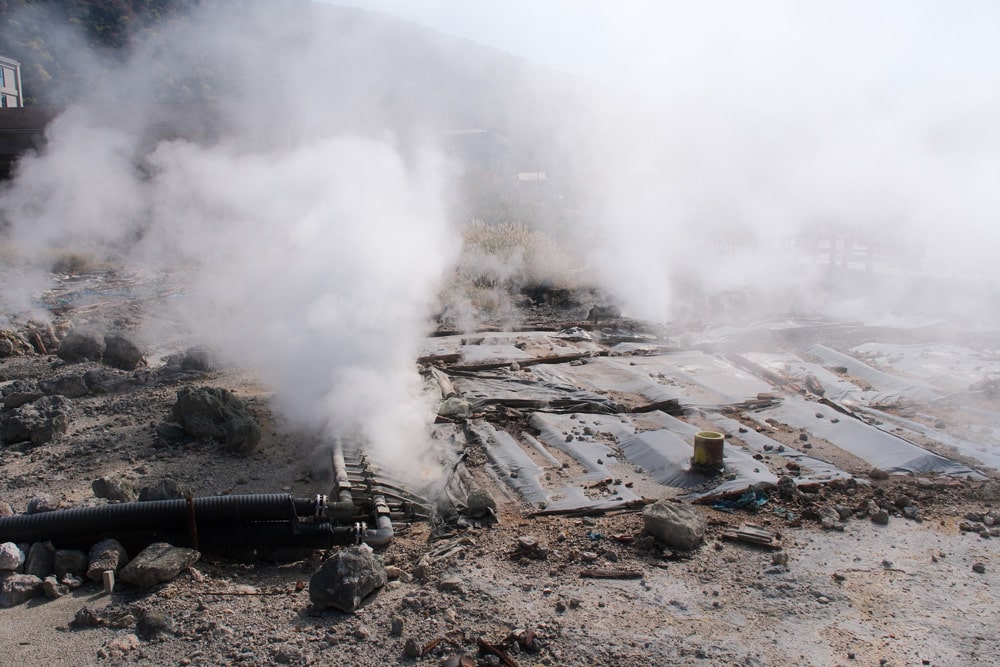
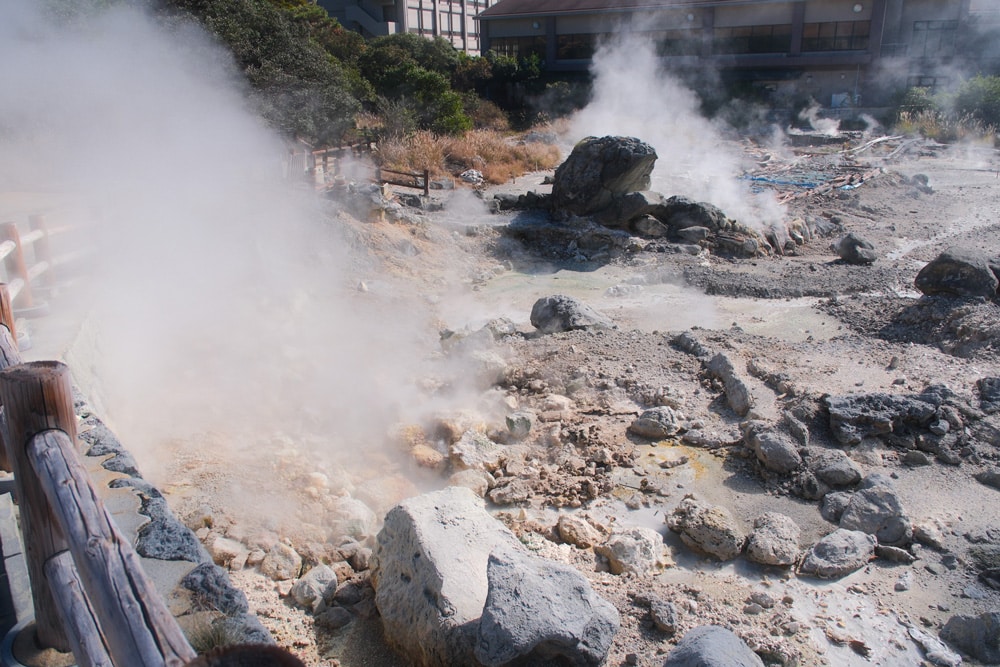
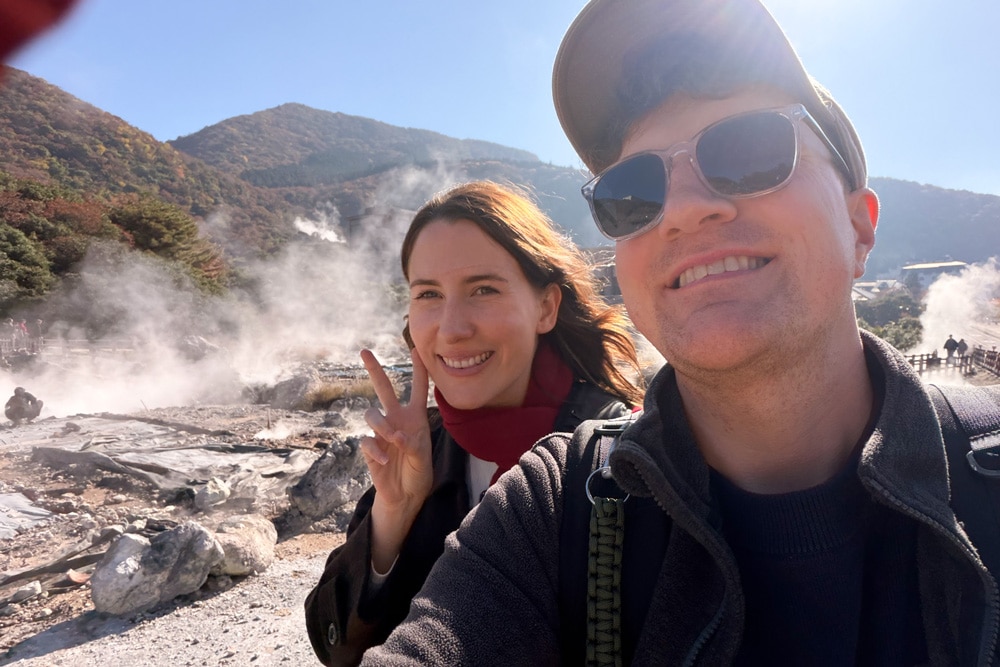
Jigoku is the Japanese word for hell, and is often used to describe the volcanic wastelands in hot spring towns where the hot spring water comes up out of the Earth. The clouds of steam coming up from the mud pools, the strong sulfur smell and the boiling water bubbling up from the mountain do seem like a good depiction of the underworld…
It’s an uncanny sight. It’s beautiful, and yet, it’s not hard to see why it also carries the name “hell”. There aren’t many plants that are able to grow here, but the ones that do are resistant to the hydrogen sulfide, creating a unique ecosystem and landscape.
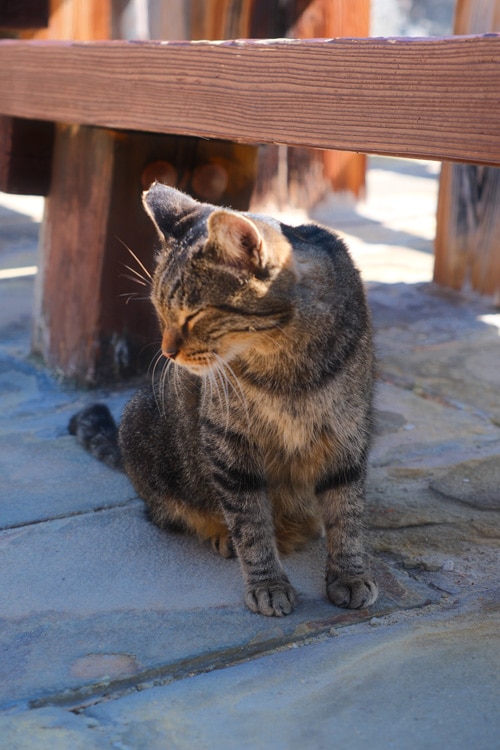
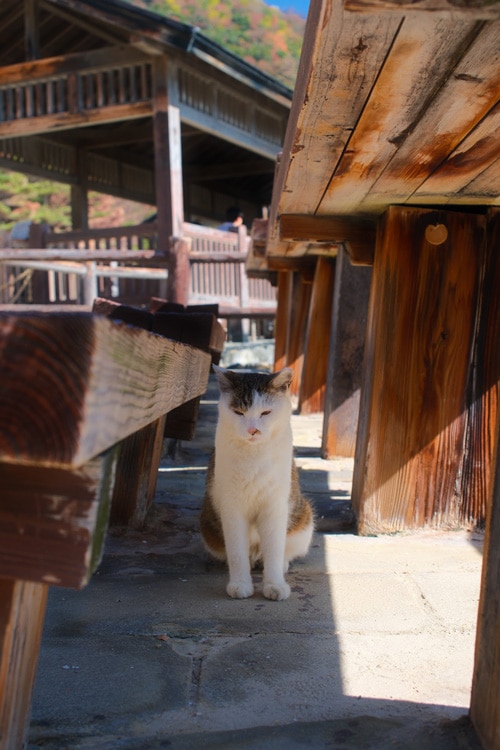
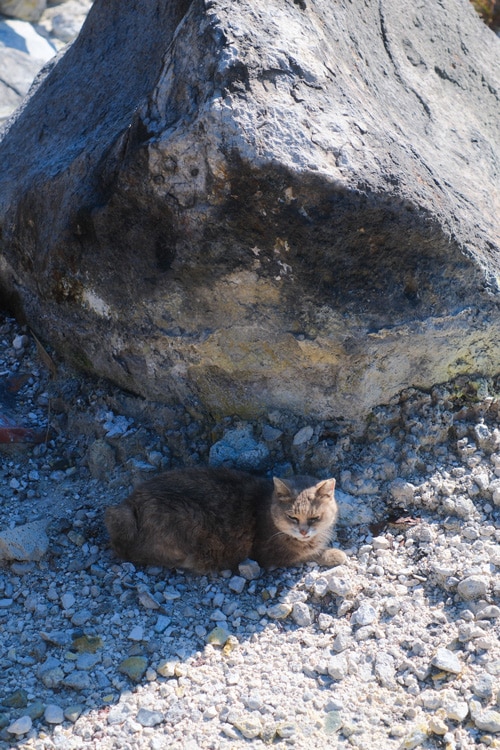
After a short walk, you’ll reach the Unzen Jigoku Rest Area. Here, you can sit down and look out over the landscape covered in steam. Onsen eggs and Unzen Onsen lemonade are sold here too. Plus, you’ll also be able to find some feline friends at the rest stop.
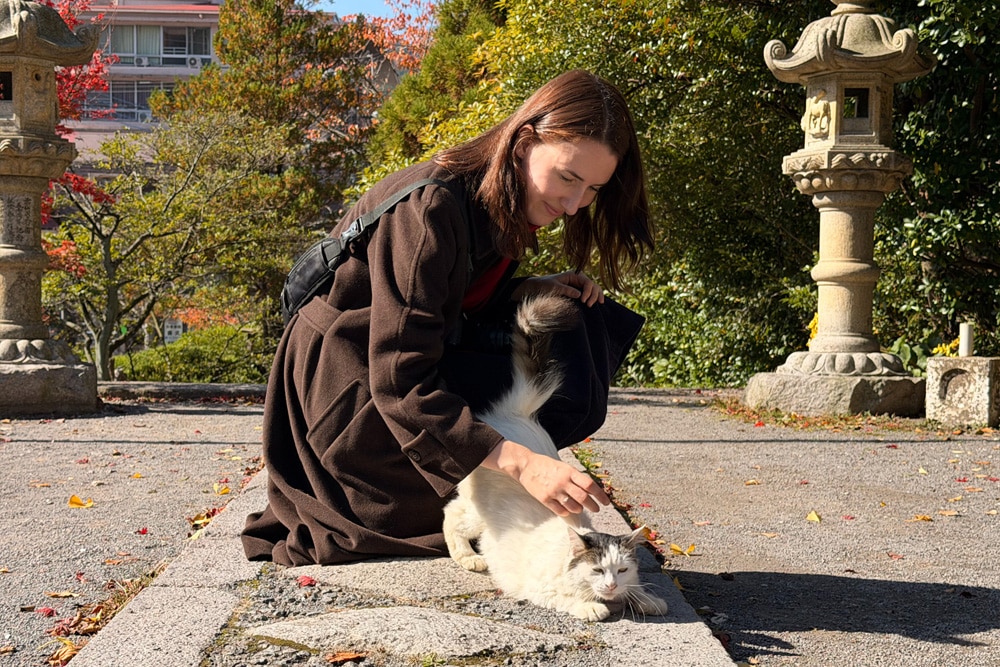
Many stray cats in Unzen love relaxing on the hot stones around Unzen Jigoku. They have grown accustomed to visitors and are very friendly, and they love a stroke. Some of them did look a little rough, though, so I was happy to have some wet wipes with me to wash my hands afterwards.
There are a few stops in this area that are worth checking out, including the Christian Martyrdom Monument. Despite Unzen Onsen now being a relaxing and therapeutic hot spring resort, it does have a much darker history.
33 Christians who refused to give up their religion when it was banned in the 17th century were tortured and murdered here. If you happen to also visit the nearby town of Shimabara, you can see some colourful stained glass depictions of the Shimabara Rebellion.
Nagasaki also has a few interesting spots where you can learn more about the Christian history, including the Urakami Cathedral & Museum and the Twenty-Six Martyrs Museum and Monument.
There is also a spot to try Foot Steaming in Unzen Jigoku. Unlike the ashi-yu (footbaths), where you dip your feet in the hot spring water, you can sit on a stone and touch the ground with your feet to feel the heat of the Earth go through your body. When we visited, it was closed, and from what I can find online, it’s still closed. It has not been announced whether or not it will reopen, but I will update this guide if I hear any news on it.
Visit the Little Mud Volcano
Just off the main road sits another volcanic sight, called the Little Mud Volcano. The volcanic gasses inside Unzen Jigoku slowly turn rock into white mud, and it is being pushed out of the ground here.
Having the word “little” in its name is very accurate, because it’s not the most exciting sight in Unzen Onsen. When we visited, there wasn’t a lot of activity, so it was a little disappointed. However, the town is only small, so it’s not a very far walk from any of the other sights. I still recommend stopping by, just in case there is more volcanic activity on the day you visit.

(Optional) Day Use Onsen in Unzen Onsen
You cannot visit an onsen town without soaking in the healing hot spring waters yourself. Most accommodation in Unzen Onsen will have on-site baths you’ll be able to use if you’re a guest, but if you’re visiting on a day trip, there are some day-use onsen instead for a small fee. Luckily, there are quite a few day-use baths in Unzen Onsen:
- Unzen Yokayu: ¥450 for adults, ¥230 for children
- Kojigoku Onsen Kan: ¥460 for adults, ¥230 for children (free for young children)
- Unzen Shinyu Onsen Kan: ¥100 for adults, ¥50 for children
- Yunosato Onsen Kyodou Yokujyou: ¥200 for adults, ¥100 for children
- Bessyo Kyodou Yokujyou: ¥100 for adults, ¥50 for children.
My top pick is Kojigoku Onsen Kan, as it has a beautiful outdoor onsen in the shape of a Unzen Yokayu is another great option, as it has a private bath which allows visitors with tattoos to enjoy the onsen.
Outside of the day-use baths, there are multiple ryokans and hotels in Unzen Onsen that also allow visitors who aren’t staying overnight to use the onsen for a fee. The full list can be found here.
Stay Overnight in a Ryokan
One of the best things about visiting an onsen town is staying in one of the ryokans, enjoying a kaiseki dinner and taking your time to soak in the hot springs properly. Obviously, it’s not always possible due to time constraints, but if this is the only onsen visit of your trip, staying overnight is a must!
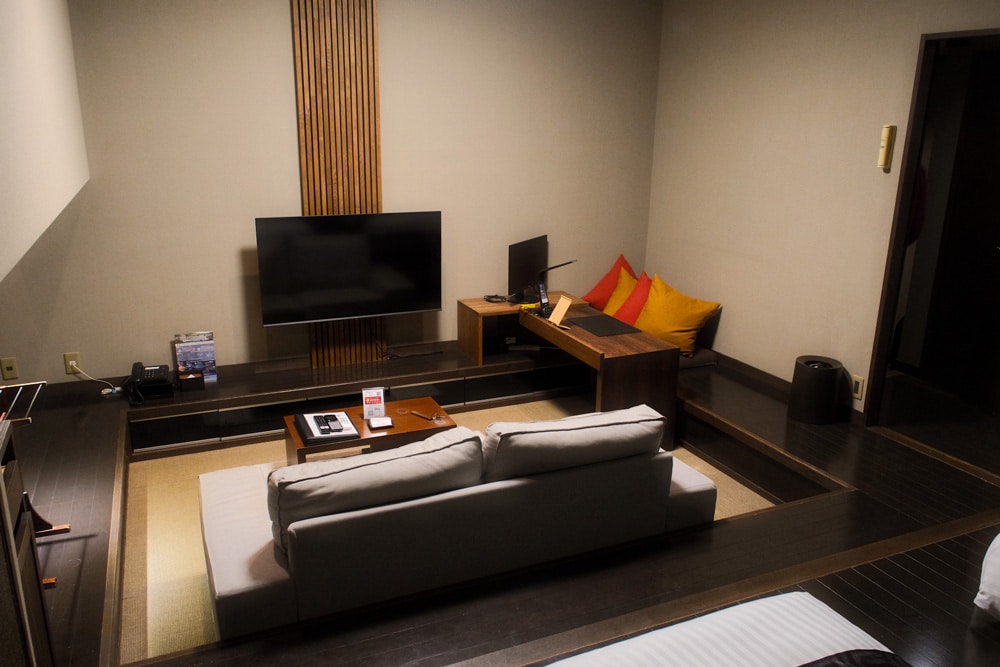
We stayed in Unzen Fukudaya, located at the far end of the town. The hotel was exceptional! Very atmospheric with large rooms, including two thick mattresses and a “living” space with a sofa and TV. It’s not always common to find accommodation where you can comfortably open your suitcases in Japan, but this hotel had more than enough space.
I had a very comfortable sleep here, and while the cosy room helped, it was the on-site onsen that did the trick. There are some private onsen available, but I went with one of the public onsen. As with many ryokans, the onsen swap from male to female overnight, so you can try both. My favourite one was the one on the 3rd floor, looking out over the trees while soaking in the milky water.

Are There Tattoo-Friendly Onsen in Unzen Onsen?
Visiting a hot spring with tattoos can sometimes cause some issues, as they are not allowed everywhere. There are a few hot spring towns in Japan that are known to be tattoo-friendly, like Beppu and Kinosaki Onsen, but Unzen Onsen isn’t quite the same.
I wasn’t able to find any onsen or ryokan that is fully tattoo-friendly in Unzen Onsen. However, there are a handful of places that offer private baths, which are a great option for travellers with tattoos:
- Yuyado Shinyu Hotel (rooms with private baths available)
- Unzen Yokayu (private baths available for an additional fee, day use available too)
- Kanko Hotel (private bath available for 50 minutes at additional fee)
- Miyazaki Ryokan (rooms with private baths & three private baths available for 50 minutes for additional fee)
- Iwaki Ryokan (rooms with private baths available)
- Unzen Sky Hotel (private bath available for additional fee)
- Unzen Fukudaya (private bath available for 50 minutes at additional fee, also available for day use)
- Azumaen (rooms with private baths available).
Unzen Onsen Ooedo Onsen Monogatari Unzen Toyokan is another exception, which allows tattoos if they can be completely covered with two 6.5cm x 10.5cm cover stickers. They sell the covers at the desk. This way, you can still enjoy the public onsen instead of having to opt for a private bath.
How To Get To Unzen Onsen?
The easiest way to get to Unzen Onsen is by car. Especially as this side of Nagasaki Prefecture is a bit more rural, public transport doesn’t run very often and having the freedom to drive wherever, whenever is a big bonus. From Nagasaki, it takes around 1 hour and 20 minutes to drive to Unzen Onsen.
There are multiple car parks available around the town (locations can be found here). Or, if you’re staying overnight (which I recommend!), make sure your hotel has overnight parking available.
If public transport is your only option, you can still visit Unzen Onsen. You just have to account for a little more travel time and plan accordingly. From Nagasaki, buses to Unzen Onsen that leave three times per day. The journey takes around 1 hour and 40 minutes.
If you’re travelling from a different area in Kyushu, you can also take the train to JR Isahaya Station. From there, you can take a bus to Unzen Onsen, which takes around 1 hour and 20 minutes.
Is Unzen Onsen Worth Visiting & How Long For?
If you’re already in Nagasaki, adding a visit to Unzen Onsen is definitely worth it. Kyushu is known for its active volcanic scenery, so visiting a hot spring town is a non-negotiable in my book.
Unzen Onsen is also a much quieter alternative to the popular hot spring town of Beppu in Oita Prefecture. When we visited, we were some of the only foreign tourists in the town.
As with almost all hot spring towns, I recommend staying at least one night (two if you have enough time in your itinerary!). Even though you can visit Unzen Onsen on a day trip and use one of the day-use onsen, hot spring towns are there to fully unwind. And that’s best done with an overnight stay!
Staying in one of the hotels or ryokans in Unzen Onsen, enjoying a sit-down dinner and soaking in the hot springs is the perfect way to unwind. During our visit, we stayed in Unzen Fukudaya and loved it. The rooms were large and beautifully decorated, with comfortable beds and lots of space to relax. But best of all were the public onsen you can use for free as part of your stay.
If you have a car, you can also visit Shimabara and drive up North past the fruit bus stops, the Floating Torii Gate of Ōuo Shrine and Yūtoku Inari Shrine en route towards Saga or Arita. There is so much to see in this part of Kyushu!