Even though Tokyo is one of my favourite places in the world, there are a lot of great towns and areas to visit just outside of Japan’s capital city. I’ve spent quite a few months in Tokyo over the years, and while doing so, I’ve taken many day trips.
If you want to find some easy day trips from Tokyo, I’ve listed my favourite ones below. I’ve also added how far they are from Tokyo (between 30 minutes and 2.5 hours), whether you can get any discount passes to make your trip easier, plus what to do on your day trip.
As I travel to Tokyo often, I’ll be adding any day trips I think are worth it to this guide, so make sure to bookmark it!
1. Hakone: Hot Springs, Mount Fuji Views & Art Museums
How far from Tokyo: 1.5–2 hours
One of my favourite day trips from Tokyo has to be Hakone. I may be a little biased because it’s where my husband proposed to me, so the hot spring town has a special place in my heart, but I loved Hakone even before I got engaged!
As it’s pretty easy to get to Hakone from Tokyo, and there is a handy “loop” to follow to see the main sights in a day, it is a popular day trip for many travellers. Add some lovely views of Mount Fuji (on a clear day) and hot springs into the mix, and it’s very clear why many people head to Hakone for a day or two.
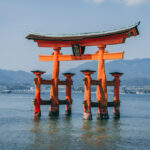
I personally love the art museums in Hakone, the torii gate of Hakone Shrine that stands in Lake Ashi, and the many onsen available. It’s also where I had my very first hot spring experience!
How to Get to Hakone from Tokyo
If you’re taking a day trip from Tokyo and plan to follow the Hakone Loop when in the onsen town, it’s best to buy the Hakone Free Pass. This pass includes a return trip from Tokyo to Hakone, free travel within the Hakone area (including everything on the Hakone Loop) and discounts on 70+ museums, restaurants and shops.
Just for the return journey from Tokyo and the travel inside Hakone, it’s worth getting the pass. They only offer 2- and 3-day passes, so for a day trip, you should get the 2-day pass. It’s still cheaper than paying for all the journeys yourself, and it’s much easier to show the pass inside Hakone than buying individual tickets for the buses, Lake Ashi ship and the ropeway.
There are a few ways to get to Hakone from Tokyo, depending on which pass you want to use:
- Odakyu Rapid Express Train (with Hakone Free Pass): From Shinjuku, get the Odakyu Rapid Express Train to Odawara Station, and change to the local line to Hakone Station. This takes around 2 hours, but you’ll also get some great Mount Fuji views on the way.
- Romancecar (with Hakone Free Pass & upgrade): This is the fastest way to get to Hakone from Tokyo, in around 80 minutes. You can use the Hakone Free Pass, but you do have to pay an additional fee (¥1,200 for one way) to upgrade to the faster train. You can do so at the Odakyu Sightseeing Service Centres.
- Shinkansen & Local Train (JR passes): Not as convenient, but if you happen to use a JR Pass or want to use the bullet train, you can get the Shinkansen to Odawara from Tokyo and then change to the local line. If you do this, it’s best to still get the Hakone Free Pass at Odawara Station to cover the Hakone area (this version doesn’t include the Tokyo return trip).
I have a full guide with everything you need to know about the Hakone Free Pass, or you can purchase one here.
What to Do In Hakone
On a day trip, the best way to see Hakone is by following the Hakone Loop. This circular route takes you past the major sights in the town. The route includes:
- Hakone Shrine
- Lake Ashi
- Pirate Ship crossing Lake Ashi
- Ropeway towards Owakudani
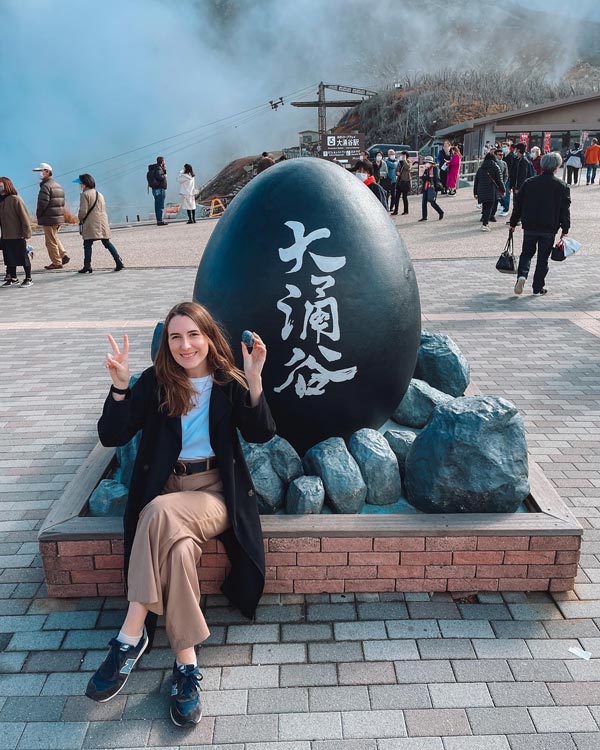
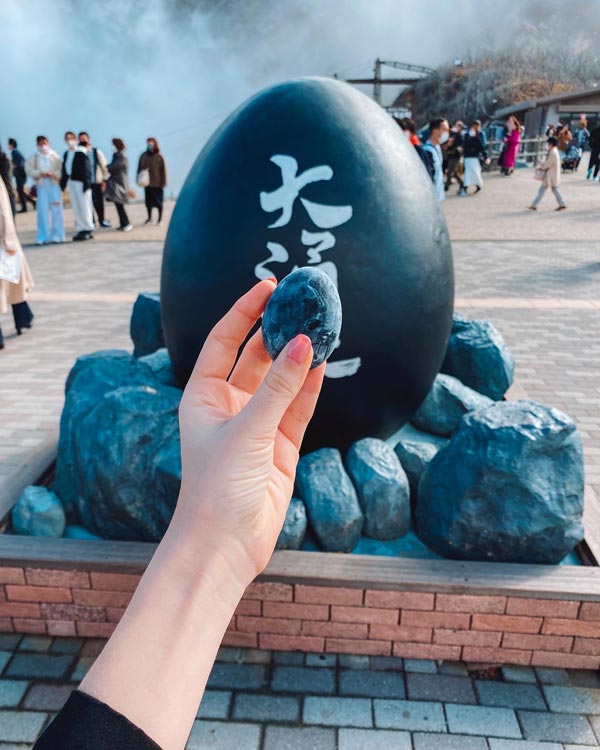
- Seeing Owakudani, the boiling valley, and eating a black egg
- Visiting Hakone Open Air Museum.
Most itineraries for Hakone start in Gora and the Open Air Museum, but I recommend starting at Hakone Shrine and doing the loop the other way around. It’s a bit quieter that way. I have a full one day Hakone itinerary with the route and more information on all the stops.


If you have an extra day in your itinerary, I recommend staying overnight in Hakone because it has amazing ryokans with hot springs.
2. Kawagoe: Traditional Architecture
How far from Tokyo: 30–60 minutes
If you only have time to see Tokyo and surrounding areas during your time in Japan, adding Kawagoe as a day trip could be a great alternative to visiting Kyoto. Obviously, it’s not quite the same, but Kawagoe has a beautifully traditional atmosphere, with well-preserved merchant houses and temples. It even goes by the nickname “Little Edo”.
It’s best to visit Kawagoe on a weekday as it can get a little crowded on weekends. So if you have any flexibility during your time in Tokyo, it’s best to plan.
How to Get to Kawagoe From Tokyo
From Ikebukuro Station, you can get to Kawagoe within 30 minutes with the Tobu Tojo Rapid Express. This journey is also covered if you get the Kawagoe Discount Pass.
If you’re travelling from Shinjuku, the JR Saikyo or Kawagoe Line Commuter Rapid train takes just under an hour.
What to Do in Kawagoe
Because Kawagoe isn’t super big, you don’t need as much time here as the other day trips in this list. I spent around 4-5 hours here, so it’s perfect for a quieter day exploring.
Walking through Kurazukuri Street, part of the historical district, is a must when in Kawagoe. There are tons of well-preserved houses that give you that traditional feeling. This area is also where you can find the famous bell tower!
Kashiya Yokocho, or candy lane, is another street not to be missed. It has 20+ candy vendors selling traditional and local sweets.
One of Kawagoe’s shrines, Hikawa Shrine, is over 1,500 years old and has tons of beautiful wind chimes swaying in the wind. Don’t miss it before heading back to Tokyo.

3. Nikko: UNESCO Shrines & Nature
How far from Tokyo: 2–3 hours
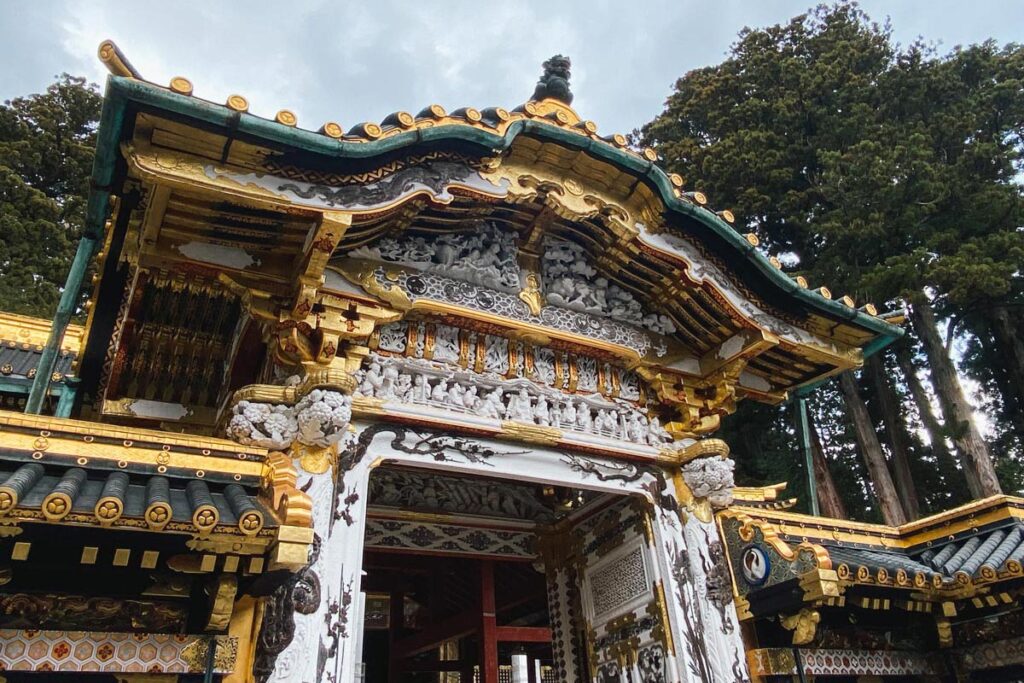
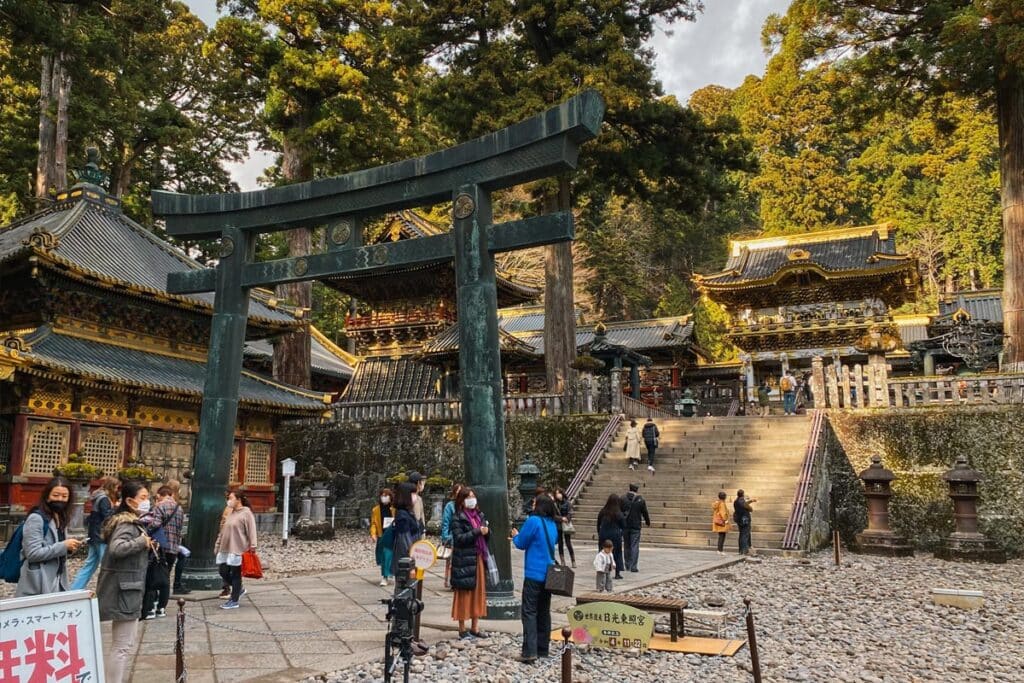
A little further from Tokyo but still very much worth it in my opinion is Nikko. It’s a perfect mix of culture and nature. I remember visiting Nikko for the first time and being quite surprised at how much dense forests there were in the town, especially seeing the large and lavish temples scattered throughout the forest.
There are three UNESCO World Heritage Sites in Nikko and if you visit in autumn, you’ll be treated to some of the best autumn colours near Tokyo. Do keep in mind that Nikko sits at a higher altitude than Tokyo, so the autumn colours arrive here significantly earlier.
How to Get to Nikko From Tokyo
If you’re using the Nikko Pass (which is the best for a day trip), you can use the Tobu Nikko Line from Tobu Asakusa Station. It’s best to upgrade to the limited express ticket to save an hour each way.
You can also use the Shinkansen from Tokyo Station or Ueno Station, and change to the JR Nikko Line at Utsunomiya Station. This takes around 2 hours and is free with the JR Pass.
I have a full guide explaining how the Nikko Pass works and the difference between the two options. If you’re only going for one day from Tokyo, you should get the Nikko Pass World Heritage Area. This will still save you money on the train journey.
What to Do in Nikko
If you only have one day in Nikko, I recommend starting at Shinkyo Bridge. From the station, you can get on a bus that takes you there in a few minutes. It’s one of the most beautiful bridges in Japan, especially if you happen to visit in autumn.
Afterwards, walk through the dense forests to Rinnoji Temple before heading to the main event in Nikko: Nikko Tōshōgū. From all the temples I’ve seen travelling across Japan, this may be my absolute favourite. The detailed carvings are some of the most beautiful I’ve ever seen, being amplified by the deep green of the forest.
Nearby, you can also head up to the tomb of Tokugawa Ieyasu. It’s only a short walk up some stairs from the main temple, and it’s very much worth visiting.
Before heading back to the train, also visit Kanmangafuchi Abyss. This narrow valley is home to 70+ jizo statues with red crocheted hats and bibs.
I have a dedicated Nikko day trip itinerary that you can use for your own day trip.
4. Mount Fuji & Kawaguchiko
How far from Tokyo: 1.5–2.5 hours
Dare I say the most iconic day trip from Tokyo? Mount Fuji and its surroundings are a little trickier to get to compared to other day trips in this article, but very much worth it if you’re visiting on a clear day.
It took me until my 3rd Japan trip to finally make the journey out to Mount Fuji, but I wish I’d done it sooner. I’ve since been back a couple of times, and hope to rent a car on my next Tokyo visit to see more of the other lakes. But for a first visit, Lake Kawaguchiko is the best spot.
Flash SaleLast-Minute Flight Deals
Grab incredible discounts on flights to New York, Paris, and London.
One of the big issues with a day trip to Mount Fuji is that this famous volcano likes to hide in the clouds. It’s a shame to spend a whole day travelling there and not being able to see it because of bad weather. I normally check the weather when I’m in Tokyo to decide whether or not to go. This website predicts the visibility.
How to Get to Mount Fuji From Tokyo
The best place to visit around Mount Fuji for the great views and easy access on public transport is Lake Kawaguchiko. There are other lakes in the area which may be a better option if you have a rental car, as they’re not as busy.
There are a few routes you can take from Tokyo:
- Highway Bus: You can take the highway bus from Shinjuku or Shibuya, which takes you to Kawaguchiko Station. From there, you can use local buses to get around the area. This takes around 2–2.5 hours.
- Fuji Excursion Train: One of the quickest (but more expensive) ways to get to Kawaguchiko is this train. It gets you there in under 2 hours, but there are only a few trains every day, so booking in advance is necessary.
- Local Trains: You can also use local trains to Ōtsuki, where you change to another train towards Kawaguchiko. This is cheaper than the Fuji Excursion Train, but it does take longer.
- Private Driver: If you are with a larger group or have the extra budget to opt for a private driver, it’s definitely the best choice. Having a private driver (instead of a DIY tour or pre-planned tour) gives you all the flexibility without the added stress. A local guide is also able to take you to the best spots, especially those that are hard to reach on public transport. You can book one here.
What to Do Around Mount Fuji & Kawaguchiko
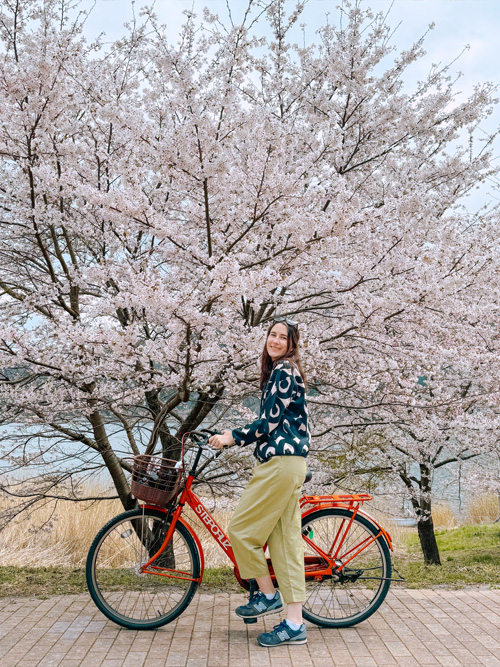
There are a few sights to visit around Mount Fuji and Lake Kawaguchiko, but just wandering around the town and cycling around the lake make for a wonderful day trip also. Especially with the stunning views of Mount Fuji pretty much anywhere you go.
I do recommend skipping all the popular “Instagram spots”. You really do not need to visit the Lawson with the Mount Fuji view or Honcho Street in Fujiyoshida. The crazy crowds in these specific places are causing a lot of issues for local traffic, and really, you can see Mount Fuji from anywhere around Fujiyoshida. Just walk a few streets up, and you’ll have the whole street to yourself with views just as nice.
If you only have one day and are relying on public transport, I suggest starting at Arakurayama Sengen Park and Chureito Pagoda as soon as you arrive in the area. Afterwards, head towards Lake Kawaguchiko and rent an (e-)bike to cycle around the lake. The full round took me around 3-4 hours with multiple stops for a snack, a rest and some photos.
I have a separate guide on how to spend a day around Mount Fuji with more information on all the stops and a route you can follow on public transport.


5. Sawara: Quieter Traditional Town
How far from Tokyo: 1.5–2 hours
If you want a traditional town that’s quieter than Kawagoe, Sawara is probably your best pick. This historic town is beautifully preserved, with canals lined with old traditional wooden houses. It’s stunning and a great alternative to Kyoto if you can’t make it there on your trip. I personally love it; it’s so quiet and so beautiful!
How to Get to Sawara From Tokyo
From Tokyo Station, there are direct buses to Sawara, which take around 1.5 hours. You can also use the train, but you’ll have to change at Narita Station (which will take around 2 hours in total).
What to Do in Sawara
Wandering around Sawara is really the best thing to do there. It’s perfect for a more chilled day trip without a hectic itinerary.
There are boat rides along the canal, similar to Kurashiki and Yanagawa, and it’s a great spot for trying local sake and ungai.
You can also stop by the Inoh Tadataka Museum and the Sligo Sawara Float Museum.
Sawara also has tons of traditional coffeehouses, called kissaten, so it’s worth visiting at least one of them when in the area.
6. Kamakura & Enoshima: Oceanside Towns
How far from Tokyo: 1 hour
Kamakura and Enoshima can easily be combined in a day trip from Tokyo as they’re close together. The seaside town of Kamakura is especially famous for the ocean views and beautiful temples, whereas Enoshima is a small but famous island just off the coast.
It’s a great day trip idea for getting away from the city, especially when visiting in June as the town is famous for its many hydrangeas.
How to Get to Kamakura & Enoshima From Tokyo
The easiest way to Kamakura from Tokyo is by using the JR Yokosuka Line from Tokyo Station. If you want to start at Enoshima, you can use the Odakyu Line from Shinjuku Station to Fujisawa Station and switch to the Enoshima Line.
There is also a discount pass available for this day trip, called the Enoshima-Kamakura Free Pass. It costs ¥1,640 from Shinjuku (or ¥840 from Fujisawa). You can use the pass for unlimited journeys on the Odakyu and Enoden Lines for one day.
As a return journey from Shinjuku already sets you back around ¥1,300 and a single journey on the Enoden Line costs ¥200, you’ll easily save some money with the pass.
What to Do in Kamakura & Enoshima
I recommend starting in Enoshima and slowly making your way back to Kamakura, and then heading back to Tokyo. Enoshima Island isn’t very large, but has been the inspiration for many famous pieces of Japanese art.
You can walk along the shopping street and stop by Enoshima Jinja. I also recommend walking up to the Samual Cocking Garden and climbing up the Enoshima Sea Candle for great views.
Afterwards, head to Kamakura’s Hasedera, one of Japan’s most famous shrines. It’s especially beautiful in June when the hydrangeas are in bloom.
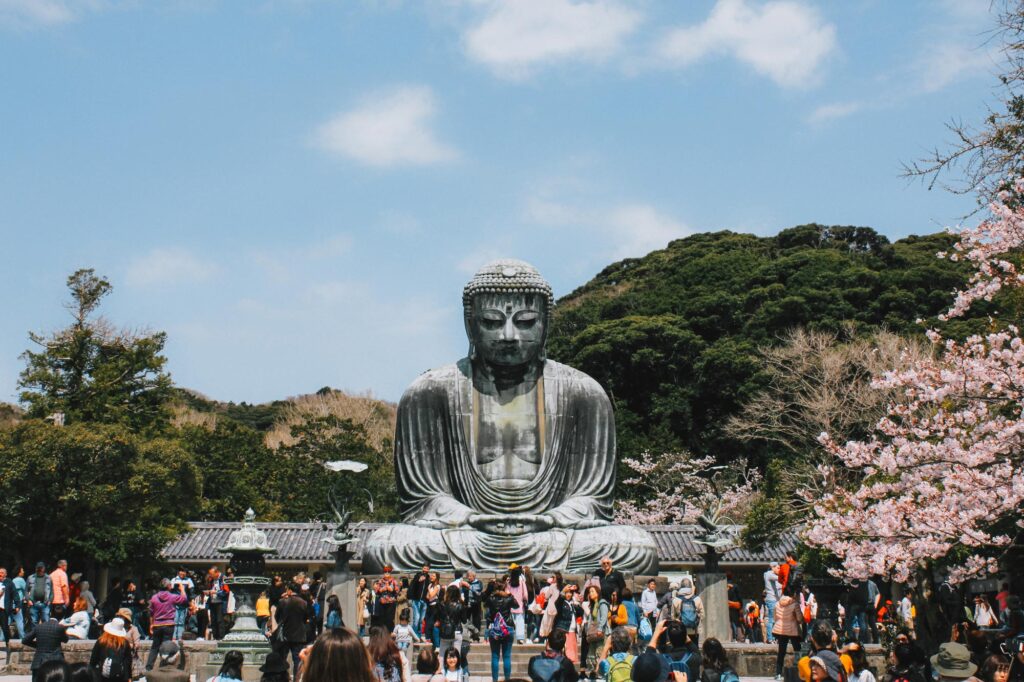
The Great Buddha of Kamakura is another sight not to be missed. It’s over 13 meters tall and one of the largest in Japan. End your day by watching the sunset at Inamuragasaki near the ocean side.
You can use my full one day Kamakura and Enoshima itinerary for a route.
7. Machida: Pokémon Pilgrimage
How far from Tokyo: 30–45 minutes
I don’t think I’ve seen Machida listed on any other Tokyo day trip lists, but I think it’s worth considering. Especially if you, like me, love Pokémon. Satoshi Tajiri, the creator of Pokémon, grew up in this part of Tokyo, so it’s almost like taking a short pilgrimage to the place where it all started. It’s the real-life Pallet Town!
How to Get to Machida From Tokyo
From Shinjuku Station, get the Odakyu Odawara Line Rapid Express or Limited Express, which takes you directly to Machida in about 30–35 minutes.
What to Do in Machida
Machida is a small town on the outskirts of Tokyo, and there aren’t a lot of “sights” to see. But knowing that Satoshi Tajiri grew up here is pretty special.
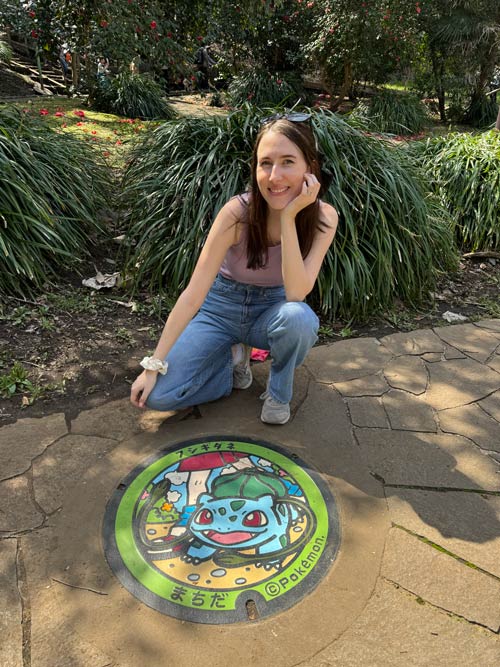
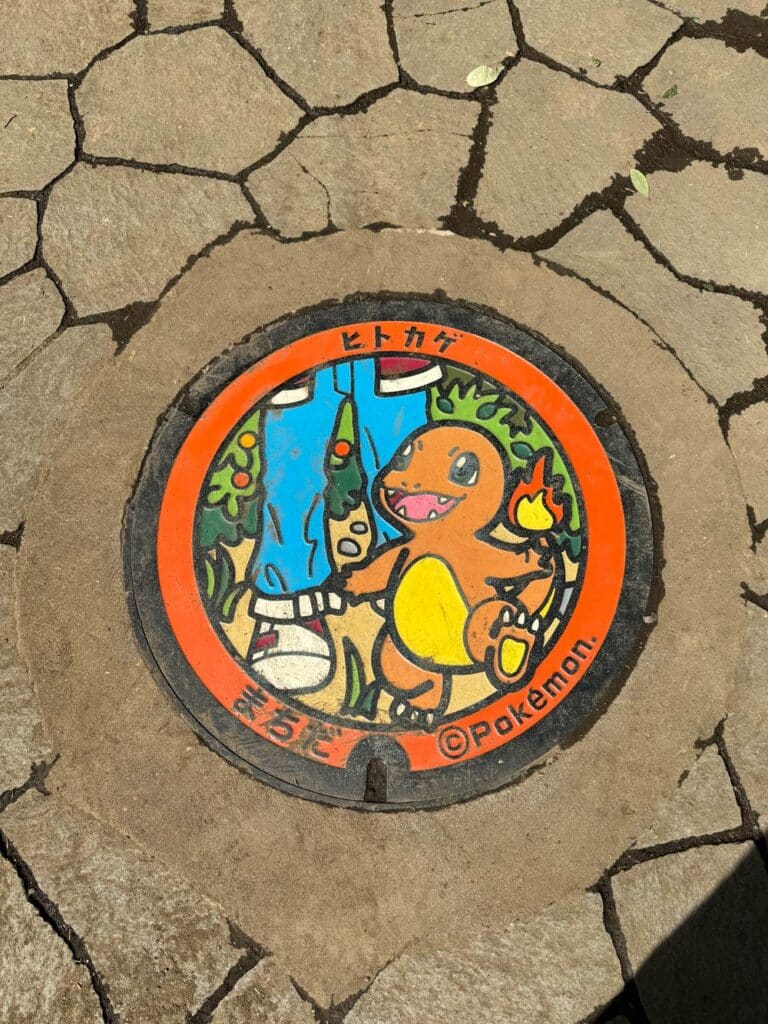
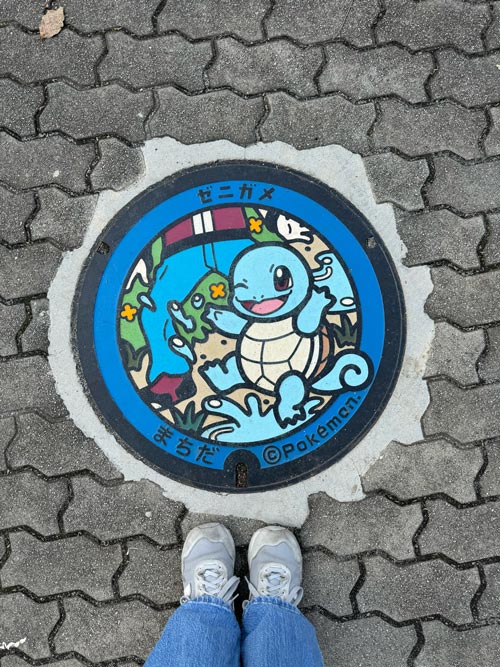
In Serigaya Park, you can find 6 Pokémon manhole covers. This park is where Satoshi spent a lot of time collecting bugs and tadpoles as a child, something that inspired him to create Pokémon later on in life. Machida really is the real-life Pallet Town, and I absolutely loved spending some time here.
The Pokémon displayed on the manhole covers are the three starters from the Kanto Region (Bulbasaur, Charmander and Squirtle), the first few Pokémon you encounter on Route 1 in the game (Pidgey and Rattata), plus the Pokémon inspired by the bugs and tadpoles Satoshi used to catch here (Oddish, Caterpie, Weedle and Poliwag).
I have a full guide on where to find all the Pokémon manhole covers in Tokyo (there are a few in other areas too), but Machida is definitely the most special place for it in my opinion.

When I visited Machida in late March, there was a small sakura festival in the park. As Machida itself doesn’t have a lot to see and do outside of the park and the manhole covers, I also stopped at Gōtoku-ji on the journey back to make it a full day trip.
Final Thoughts on Tokyo Day Trips
That concludes my favourite day trips from Tokyo! Of course, there are many other places you can visit around Tokyo, but these are the ones I personally really enjoyed. Yokohama didn’t make the list, as even after three visits, it’s not a city I liked very much. I’ll also keep updating this guide when I take other day trips from Tokyo that I think should make the list 😉
If you want more information on things to do inside Tokyo, you can read my 6-day Tokyo itinerary. I’ve also got a separate article with the best hotels I’ve used in Tokyo.

Car Rental Discounts Abroad
Rent a car for your road trip with zero hidden fees.