In my 8 years of travelling to Japan, I’ve watched it get more and more popular. And with every trip, travelling there gets easier as I learn more and more about the country.
As part of running this website and my Japan Facebook group with over 900,000 people who love Japan as much as I do, I see the same travel mistakes and questions pop up every single day.
To help, I wrote this guide with tons of actually useful travel tips for Japan. These are all from years of first-hand experience, mistakes I’ve made early on, and tips I’ve sent to friends and family who have visited Japan in recent years.

Need help with your Japan itinerary? Book one of my Japan travel consultations where I can help you with your trip and answer any questions you may have about travelling to Japan!
General Japan Planning Tips
1. Pick the Best Time to Visit Japan (For You!)
Planning your Japan trip starts with choosing when you want to go. Obviously, this depends on when you’re able to go, but there are some things to keep in mind when planning.
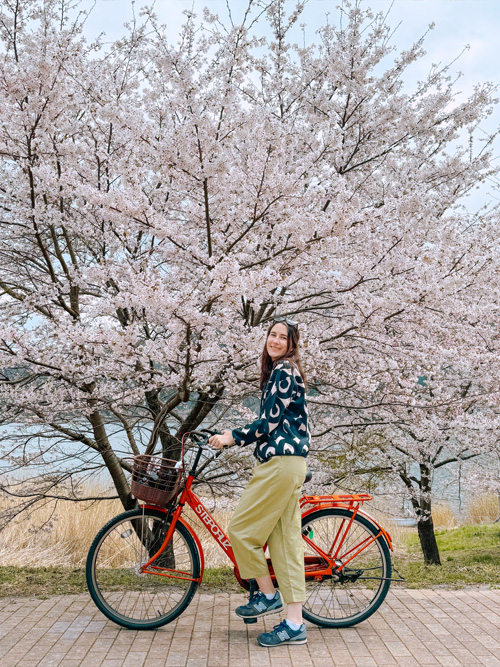
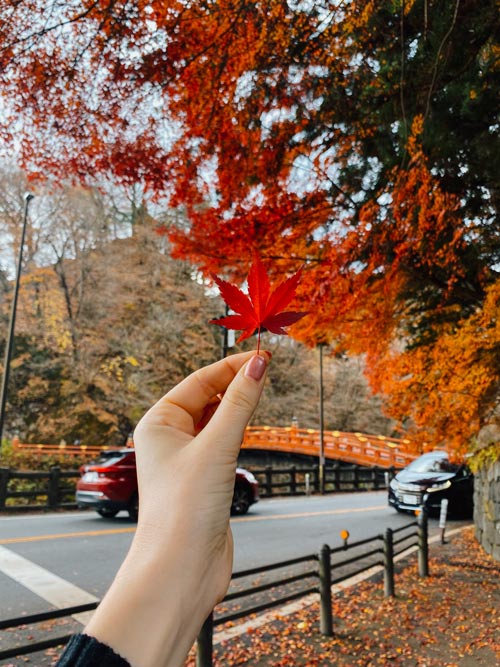
Cherry blossom season (late March to early April) and Autumn (late October to early December) are the busiest times of the year. The weather is mild and comfortable, plus the bonus of seeing the blossoms or the autumn leaves attracts many visitors. My personal favourite time to go is November, as the autumn leaves are much easier to time than the cherry blossoms (and, in my opinion, just as beautiful).
That doesn’t mean that other times of the year are bad times to go, though. Especially if you’re travelling away from the Golden Route, other months/seasons can work very well. Or if you’re planning to come to Japan for skiing, for example, you obviously want to come in winter.
Every season has something to offer in Japan; just be aware of what to expect from your trip when you book those flights. I have some monthly guides on visiting Japan (January, April, June, November, and December) to help you out.

2. Avoid Golden Week
There are a few times I would recommend avoiding when planning your trip to Japan. The major one is Golden Week. You may have already read about it online, but Golden Week falls between April 29th and May 5th. Japan celebrates four national holidays this week, making it a very popular time for locals to take time off work and travel the country or visit family. Public transport will be very crowded, making it much harder to enjoy exploring Japan.
July and August are also generally best avoided as Japan gets very hot and humid during the summer. It obviously depends on where you’re visiting in Japan, as Hokkaido can be pretty pleasant during the summer. But if you’re on track for the Golden Route, going outside of the peak summer months is much more comfortable.
One last period to keep in mind is New Year’s. Many businesses are closed between December 29th and January 3rd, which can be a bit difficult if you’re travelling around Japan and aren’t prepared for it. On the bright side, you can join Hatsumōde, the first temple visit of the year.
3. Planning Around Cherry Blossoms Is Difficult
Most websites/guides will tell you that cherry blossoms bloom between the end of March and the start of April, which is generally true for the Golden Route. However, they are incredibly hard to time. Especially if you’re planning to visit Japan for two or three weeks, there is still a big chance you’ll miss the full bloom.
One cold streak and full bloom is delayed by a few weeks, or a few hotter nights cause them to bloom early. In recent years, the blossoms have come up way sooner than originally planned. When Richard and I eloped in Kyoto in 2024, we originally hoped for cherry blossoms, and the predictions made it seem like we’d be very lucky! However, an unexpected frost about a week before the big day delayed the blossoms by nearly two weeks!
Because you’ll have to book your flights and hotels months in advance, an unexpected change in the weather can mess up your plans very quickly. On top of that, the blossoms only last for one to two weeks (also weather-dependent!).
On the bright side, Japan is a large country, and the blossoms bloom at different times depending on how far South or North you go. The blossoms may typically bloom between the end of March and the start of April in Tokyo, Kyoto and Osaka, but they bloom later the further north you go. To maximise your chances of seeing them, you can add some more places to your itinerary in different areas of Japan.
Plus, there are many other flowers to see in Japan in spring! Plum blossoms bloom a bit earlier, usually between February and March. Azaleas bloom just after the cherry blossoms in April and May, just like Wisteria. And the Hydrangeas are best seen in June.
I love the cherry blossoms, but as it’s so hard to time them perfectly, I prefer visiting Japan in November–December to see the autumn leaves. I think they’re almost just as beautiful, and because they last much longer than the blossoms, they’re much easier to see.
4. Plan Like You’ll Be Back Again
When planning your trip, you’ll undoubtedly come across more places you’ll want to visit than you can see in one trip. I’ve been to Japan nearly 10 times, with a few of those trips lasting 3 months, and there is still so much I’ve not seen or visited yet.
Rick Steves, a famous American travel writer, once said, “Travel like you’ll be back again”, and I think that also very much applies to Japan. Quality over quantity. It’s much more enjoyable to take your time seeing a handful of places properly than rushing through a new place every day. You’ll burn out!
Rushing around Japan is not fun, and it will take away from the experience. Japan is also incredibly large, with 47 Prefectures which all have so, so, so much to offer. Pick a few places that you’re most interested in and work well together, and save the other ones for a second (or third) trip.
5. Get Off the Golden Route
The Golden Route (Tokyo, Kyoto, Osaka and sometimes Hiroshima) is popular for a reason. It’s very easy to travel across it with the Shinkansen, the main international airports are located on it, and you’ll get a very good first impression of what Japan is all about.
But with overtourism causing trouble in some of these places, especially Kyoto and Nara, there has never been a better time to look elsewhere. Or, at least, add some other spots to your itinerary in addition to the Golden Route. Many lovely spots near the Golden Route can make for a perfect pitstop. Staying overnight in Nara instead of a day trip, visiting Kinosaki Onsen near Kyoto, or stopping in Onomichi on the way to Hiroshima are small adjustments, but they can change your overall trip for the better.
Even better yet, if you’ve already visited the big three, don’t be afraid to go to different, more rural areas. The Japan Alps, Shikoku, Kyushu, Tohoku, and Hokkaido are incredibly beautiful and so often overlooked! They’re some of my favourite places, and I usually enjoy visiting them way more than going back to the tourist hotspots.
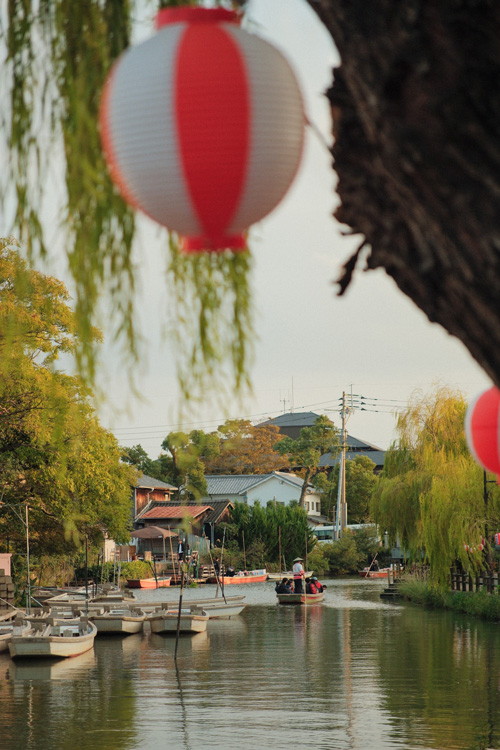
If you’re not sure where to start looking for more rural spots, you can use the button below, which will take you to a random article on my website of a place off the Golden Route. As it’s random, it should be different every time, so you can give it a few tries until you find a place that suits you best.


6. Book/Plan In Advance Where Possible
Japan isn’t a holiday you can wing like many other countries in Asia. It requires some planning. Depending on what you want to see and do, you’ll have to book tickets in advance (sometimes months in advance). Tickets for Universal Studios, the Nintendo Museum, Ghibli Park, Shibuya Sky, Sumo tournaments and many, many more sell out very quickly.
Make sure you start your travel planning with enough time in advance, so you don’t miss out on the things you really want to do. It’s worth setting some alerts in your calendar for when certain tickets become available. I have a full list of everything you want to consider booking in advance (and how far in advance).
7. Avoid the “Viral” Spots (Especially Restaurants)
Japan has gotten very, very popular on social media, which is resulting in a few issues. Everybody is going to the same “photo spot”, the same cafe for the TikTok fluffy pancakes, and the same restaurant for the viral ramen (even though you can literally get ramen pretty much anywhere in Japan without a 90-minute wait).
In my 8 years of travelling across Japan, I’ve only queued for a restaurant two or three times. There are so many restaurants and cafes in Japan, just walk over to the next street and find a restaurant there. It’s not worth wasting your limited time in Japan standing in line.
Similar for photo spots. I already think that you shouldn’t travel to places just to get the same photo everybody else is getting, but if you like photography (like me), go and wander! You don’t need to be on the same street near Mount Fuji to get the perfect shot; just head one or two streets down, and you’ll still be able to take incredible photos of Mount Fuji.
If you do want to visit the more popular places, like Fushimi Inari, Lake Kawaguchiko or the Arashiyama bamboo grove, it’s best to plan ahead. Either go very early or late, visit in the off-season or simply accept that it is going to be busy.
8. Consider Other Airports Than Tokyo/Osaka
Most people will fly to either Tokyo or Osaka, as the main international airports are located here. But depending on your itinerary, it’s worth considering other airports too. There are many other airports you can choose, including New Chitose (CTS) for Hokkaido, Fukuoka (FUK) for Kyushu, and Chubu Centrair (NGO) for Nagoya. There are even more local airports, which can be a good option if you have a layover elsewhere.
Which airport works best for you obviously depends on the rest of your itinerary, but it’s worth keeping in mind to save yourself additional travel time and costs. For example, when I visited Kyushu for a 2-month road trip, I flew to Fukuoka Airport instead of going to Tokyo or Osaka first. Using Google Flights is a good way to see what options you have, but it’s best to create an itinerary first so you know what areas of Japan you’re planning to visit.
When flying to Tokyo, you can also compare Haneda and Narita airports. Even though Haneda is closer to the city compared to Narita, I still think it’s better to compare the available flights (price, layovers, arrival time, etc.). It’s easy to make your way to Tokyo from both Narita and Haneda, so making sure that the price and time of your flight work is much more important.
I have detailed guides on how to get to Tokyo from Haneda Airport and Narita Airport with all options, times and prices, so you don’t have to worry about getting to your hotel after arriving.

9. Use Google Maps to Start Planning
The best way to start planning your trip to Japan is by creating a Google My Maps and adding everything you’re interested in. I have a full tutorial on how to use Google Maps as a travel planning tool. Anything you’ve come across in my itineraries, on social media or in old-school travel books, pop it on the map.
Once you’ve got a lot of the spots down, you’ll be able to see quite quickly what areas in Japan have clusters of things you want to see/do. This makes it much easier to create an itinerary that works for you and your interests, rather than just following what everybody else is doing. Once you have a rough route, you can start planning it in more detail.
I use Google My Maps for every one of my Japan trips over the last 8 years, and it has made travel planning much easier. I’ve got a separate map with all the amazing things I come across during research for any future trips, so I’m as prepared as possible!
Accommodation Tips in Japan
10. Stay Near Metro/Train Stations in Cities
When looking at hotels in the main cities, it’s a good idea to see how far they are from the nearest station. Cities in Japan, especially Tokyo, are often a lot bigger than you expect. Having easy access to the metro or train to explore the rest of the city can save you a lot of time and energy.
Especially if you’re travelling with luggage, you wouldn’t want to drag your suitcase for 20 minutes while walking through the city. Plus, having to walk to and from the metro station every day before being able to start your day eats up a lot of time.
Travel Tip
For Tokyo hotels, you may have read online that you need to stay near the Yamanote Line. This is pretty old advice, and I disagree. As long as you stay near ANY station, you should be absolutely fine. The metro system in Tokyo is fantastic, and it’s very easy to change lines to get to where you want to go.
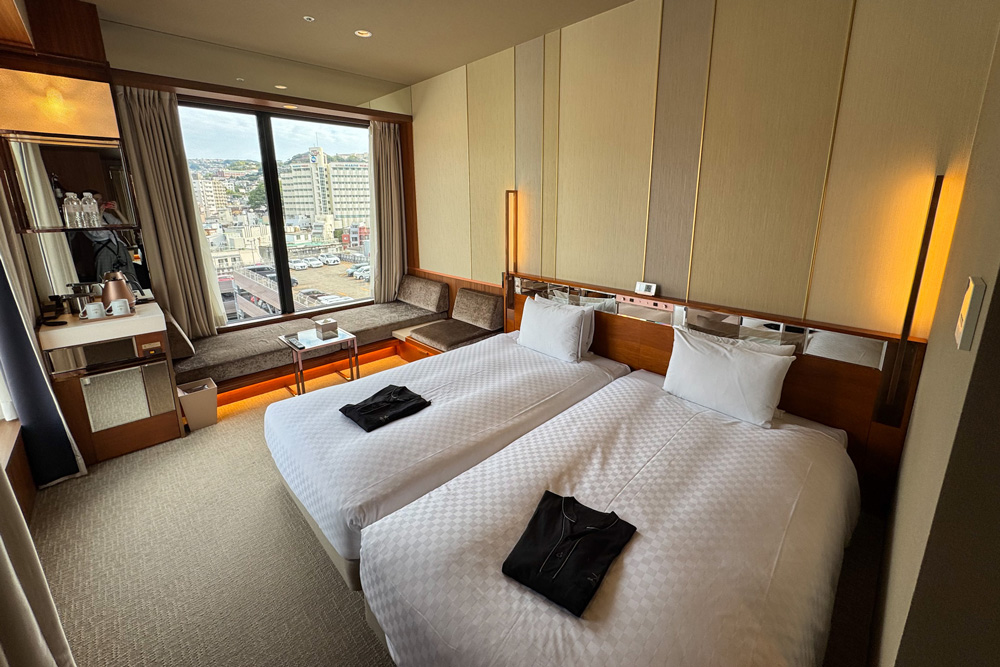
11. Hotels Often Don’t Open Bookings Until 6 Months in Advance
Many hotels in Japan (especially ryokans) don’t open up availability until around six months before the date, sometimes even as short as three months in advance. If you like to plan ahead, it may seem as if most hotels are already booked up because they won’t have any availability. That’s not the case! You may just be looking too early.
You can still start researching hotels and areas you may like to stay in for your trip. Bookmark them and check again in a few months to see if you can actually book them.
12. Hotel Prices Are Often Per Person, Not Per Room
Many hotels, especially ryokans, count prices per person per night, not just per room (and can include dinner and breakfast). Always double-check before you book to make sure you won’t be surprised at checkout. It’s also very important to be truthful about how many people are staying in your room on your booking!
13. Add at Least One Night in a Ryokan
One of the things I always tell friends and family when they ask me for Japan travel advice is to book at least one night in a traditional ryokan. These traditional Japanese inns usually come with tatami floor rooms, futon beds and often also offer kaiseki dinner (traditional multi-course Japanese dinner, both delicious and beautiful).
I’ve stayed in over 40 ryokans over the years, but the most amazing one was Arimasansoh Goshobessho in Arima Onsen. This was also one of the most expensive ones, but it’s very possible to find cheaper ryokans if you do a bit of research or go to rural areas.
Budget Ryokan Tip
Even though Kyoto is famous for its ryokans, they’re also a lot more expensive because of the demand. I’ve stayed in many traditional ryokans in other places in Japan for a fraction of the price. For example, many ryokans in Nara (not far from Kyoto) are much cheaper and just as nice.


14. Stay in an Onsen Town
Another stop to add to your itinerary, ideally for at least one night, is staying in an onsen town. Onsen, or hot springs, are a huge part of Japanese culture, and the towns built around the springs have some of the cosiest, most wonderful atmospheres. As many accommodations in onsen towns are ryokans, you can combine this tip with the previous tip.
Yes, you will have to be naked when going to the onsen, and yes, I was also very scared to do this for the first time. But once you’ve got the first time out of the way, it’s really not that bad. Going to the onsen, or a public bath, is now one of my favourite things to do in Japan.
I’ve written about many onsen towns on The Navigatio, but some of my favourites are Kinosaki Onsen, Kusatsu Onsen and Unzen Onsen.
Extra Tip
If you have tattoos, you need to double-check if the onsen allows tattoos. Tattoos aren’t super common in Japan and carry negative cultural associations. This results in many hot springs not allowing visitors with tattoos to enter. Luckily, more and more onsen are allowing tattoos (I always highlight tattoo-friendly spots in my onsen town guides if available), or you can book a private bath.

15. Remember Accommodation Tax
Accommodation tax is a fee that’s not included in the room rate of hotels and ryokans, but is payable upon arrival and usually costs a couple of hundred yen per person per night. The number depends on what city you’re staying in and the cost of your room (the more expensive your room, the more accommodation tax you pay).
Not all cities require you to pay accommodation tax, but the majority of bigger tourist spots do (including Tokyo, Kyoto, Osaka, Kanazawa, Fukuoka, Nagasaki and Hiroshima). More and more places are implementing an accommodation tax, and I don’t think it’s a bad thing! Accommodation tax is used to fund infrastructure that tourists use, just like regular taxes paid by locals are used. As we tourists are using the facilities, it’s only fair that we pay our share in keeping it up.
A lot of unnecessary drama was created around the accommodation tax in Kyoto online in 2025 and 2026, as the city raised its tax due to the huge number of tourists flocking to the city. Clickbait articles and videos were sharing news that people are going to have to pay ¥10,000 per night per person, but failed to mention that this is only for accommodation that costs ¥100,000 per night or more. Most people who are visiting Kyoto will fall in the first three brackets, paying ¥1,000 per night in accommodation tax. Here are the updated numbers:
| Accommodation cost per person, per night (Kyoto, 2026) | Accommodation tax per person, per night (Kyoto, 2026) |
|---|---|
| Under ¥6,000 | ¥200 |
| ¥6,000 – ¥19,999 | ¥400 |
| ¥20,000 – ¥49,999 | ¥1,000 |
| ¥50,000 – ¥99,999 | ¥4,000 |
| ¥100,000 or more | ¥10,000 |
Other cities will have a different breakdown of how much accommodation tax you’ll have to pay, but it’s worth keeping in mind that you’ll probably be spending a few hundred yen per night extra.
Cost/Budget
16. Account Around ¥10,000 Spending Money Per Day Per Person
The question of how much money to save for spending money comes up almost daily in our Japan Facebook Community, and while you can really make it as expensive or cheap as you want, the rule of thumb is around ¥10,000 per person per day.
That is spending money after flights and accommodation, and covers food, activities and souvenirs. Obviously, this is just an average recommendation. If you know you’re planning on doing a lot of expensive activities, going to fancier restaurants or buying a lot of souvenirs, you’ll have to adjust the budget.
17. You Won’t Need AS Much Cash
The advice that I still see everywhere online that Japan is a very cash-based country is slightly out of date. Card payments are increasingly more accepted, especially in major cities and in tourist hotspots. This doesn’t mean that you don’t need any cash anymore, but you won’t need to take your entire spending budget out in Yen before your trip.
You do want to carry at least some cash with you at all times. Smaller restaurants, mom-and-pop shops, shrines and temples usually only accept cash. Plus, if you’re going off the Golden Route into more rural areas, cash is usually still king. But even if you’re planning on going places that will primarily accept cash, you don’t need to take it all out before your trip. Which brings me to my next tip…
18. Use Conbini ATMs to Get Cash
Instead of having to get hundreds of thousands of Yen converted before your trip (or walk around with that much cash), you can use the ATMs in pretty much any convenience store. They’re usually located in the back of the store and have English language options, so it’s very easy to use.
Whenever I’m in Japan, I make sure I have between ¥10,000 and ¥30,000 in cash on me. When I run low, I hop over to the nearest convenience store and get some more out.
19. Always Choose JPY Over Your Local Currency
When taking our cash from an ATM, it will ask you if you want to do so in your local currency or in JPY. You’ll always want to select JPY as it’s much cheaper. Doing so will avoid you having to pay additional currency conversion fees. This also counts for card payments if the option comes up.
20. Use the Tray When Paying
When paying, do not directly hand the money to the cashier. Instead, you can use the little tray on the counter to put down your cash (and sometimes, your card). The cashier will also use the tray to return the change and your receipt. This is also the standard at hotels when paying for your stay.
21. Get a Coin Purse
As you will be using at least some cash, you will also accumulate many coins. Instead of trying to put them all in your wallet, bags or coat pockets, get yourself a small coin purse. They’re available pretty much anywhere in Japan, but the ¥100 stores like Daiso, CanDo and Seria are a good place to look for one.
22. What to Do With Leftover Coins
You will undoubtedly be left with a ton of small change (like ¥1 and ¥5, which are practically worthless). If you’re not sure what to do with them, you can use them as a donation at shrines/temples, or you can dump them in the self-checkout machines at some convenience stores (it will automatically count the amount and use it as part of your purchase).
Transport Tips in Japan
23. Get an IC Card
One of the most useful things you can get for your trip to Japan is an IC card. You may already have read about them under the names Suica, PASMO or ICOCA, but they’re all essentially the same thing. This card can be recharged and used for contactless payments on metros, trains, buses, and some shops like convenience stores and vending machines.
It’s especially handy for using public transport in Japan. You simply tap the card when entering a station, and tap out again when you leave. It’ll automatically take the correct change.
Each traveller needs their own card, and you cannot load two cards onto one phone.
You can use IC cards pretty much across the whole country, but there are a few exceptions. Some areas, like Matsumoto, Nagano and Kagoshima, don’t accept them.
Extra Tip
When adding the Suica Card (or other IC card) to your iPhone, you do not need to download any apps! Instead, head to the Apple Wallet app, click on the plus symbol, add a travel card and find the Suica card. I get a lot of messages from people not understanding the app cause it’s in Japanese, but you don’t need to download it at all.
24. You Probably Don’t Need to Book Shinkansen in Advance
I get a lot of questions about reserving tickets for the bullet train, but most of the time, I don’t think it’s necessary. In all my years of travelling across Japan, I’ve only reserved Shinkansen tickets in advance twice, when I travelled during Golden Week.
Train prices in Japan are fixed, so you don’t get a discount for booking early like you would in some other countries. Booking your tickets on the day of your travels at the train station gives you the most flexibility in case any plans change last-minute. The ticket machines also have an English option and are very easy to follow.
The only reason you may want to reserve Shinkansen tickets is if:
- You’re travelling during a very busy period, like Golden Week, peak cherry blossom season or New Year.
- You’re travelling with a group and want to sit together.
- You want a specific seat for views. For example, seats E (or Seat D in Green Cars) when travelling on the Tokaido Shinkansen from Tokyo to Kyoto/Osaka for Mount Fuji views.
- You’re travelling with large luggage and want to secure a seat with luggage storage.

25. Use Takuhaibin (Luggage Transfer Services)
Instead of having to drag your luggage through train stations and trains, you can also use the super-fast and efficient luggage transfer services in Japan. Most hotels offer this service through transport companies, like Yamato.
If you want to use the service, simply ask the hotel front desk. They’ll then ask you for the address of the hotel you want to ship your luggage to, and take the payment (price depends on the size and weight of your bag, but is usually between ¥1,500 and ¥4,000 per bag).
It usually takes one or two days for your luggage to arrive, but it can also hold it for up to seven days in case you want to ship it in advance. Whenever I used this service, the luggage arrived the next day, and I brought a backpack with a change of clothes and my toiletries for the one night without my suitcase.
You can even get your bags shipped to the airport to avoid having to drag your luggage on public transport, which is especially handy if you’re flying from Narita.
And if your hotel doesn’t offer Takkyubin, you can find a convenience store that offers it instead (many do!).
If you have large and heavy bags, and aren’t hopping from hotel to hotel every day, I couldn’t recommend using this service more. It takes away so much stress!
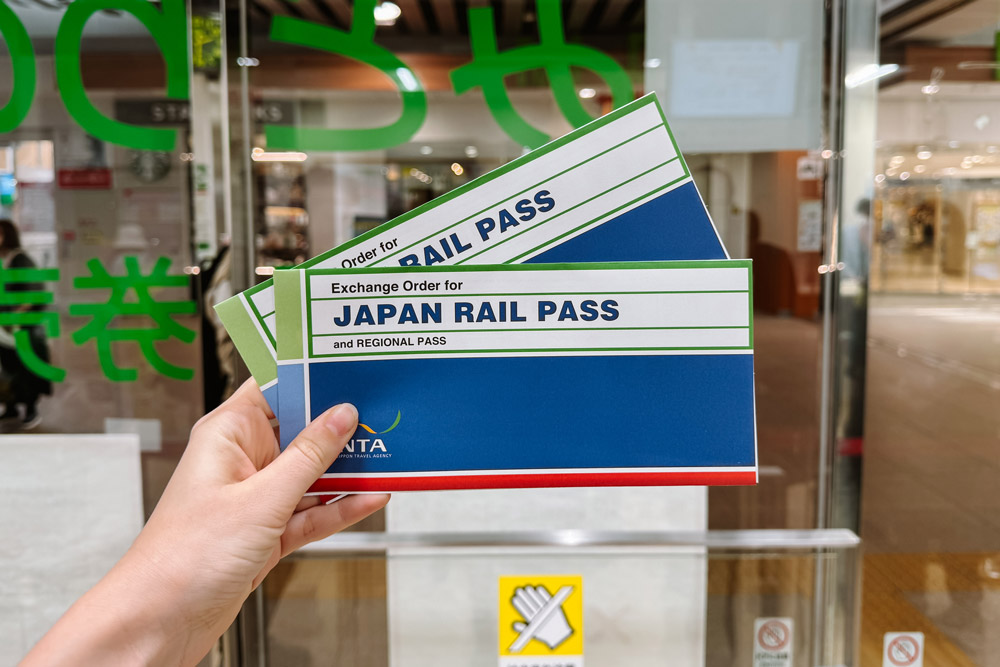
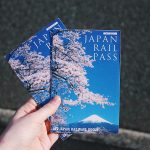
26. JR Pass is Not Worth it Anymore (For Most Itineraries)
The Japan Rail Pass is a travel pass that lets you take unlimited journeys on the JR lines, including the bullet train, for a set period of time (1, 2 or 3 weeks). Before the price hike in 2023, this was a pretty sweet deal and would almost always save you money. Nowadays, not so much.
In 2023, the price of the pass went up by nearly 70%, making it much cheaper to buy individual tickets for most itineraries. You can pop your itinerary in the JR Pass Calculator to see whether or not it will pay off.
The Regional Passes can still be a good alternative, as they’re cheaper and cover a smaller area. Again, this completely depends on your itinerary. Individual tickets for train rides area always available and in 2026 are usually the cheapest way to travel.
27. Taxis Can be Very Useful
Taxis can be pretty pricey, but they can be super helpful in certain situations. I use taxis in Japan when getting from stations to my hotel if I’m carrying luggage, or if it’s raining/too hot. Also, after a long day of exploring and walking 30,000 steps, sometimes getting a taxi is worth it instead of adding an additional 30 minutes of public transport.
Uber is used in Japan, but GoTaxi is more common. The app also gives you discount codes pretty often. I keep getting them when I’m in Japan, giving me a few hundred Yen off my next ride. Using the app also makes it easier to put in the right address without worrying about the language barrier.
I’m not saying you should use taxis for everything, as metros, trains and buses are amazing in Japan, but for certain occasions, a taxi can come in very handy. If you’re travelling in a group, it can sometimes work out pretty much the same price as using public transport.
Extra Taxi Tip
Taxi doors in Japan are controlled by the driver and will open automatically, so it’s best not to try opening them yourself.
28. Some Train Stations Are Big & Confusing: Plan Accordingly!
Major train stations, like Shinjuku Station, are notorious for being overly confusing. I’ve gotten lost more times than I’d like to admit. Especially if you’re unfamiliar with the train station or system, add an extra 10-15 minutes to navigate through the station and find the right platform. Add an extra 10 minutes if you need to buy a ticket at the station, as there could be a queue at the ticket machine.

Food & Drink Tips in Japan
29. Don’t Skip Chain Restaurants
We all love supporting local, independent restaurants while travelling, and Japan has no shortage of them. But don’t sleep on the chain restaurants! If I’ve had a very long day or am feeling very tired, going to a known chain restaurant in a new city for some comfort food is exactly what I need.
Some of my favourite chain restaurants are:
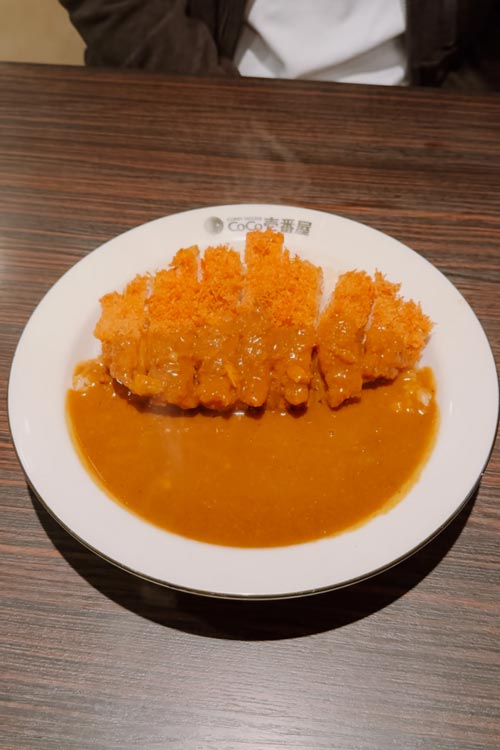
- CoCo Ichibanya for Japanese curry
- Kurasushi or Sushiro for cheap conveyor belt sushi
- Sukiya or Yoshinoya for gyūdon
- Marugame for udon
- Torikizoku for cheap izakaya-style dishes, mainly chicken and cheap beer (try the sesame cabbage!)
- Yakiniku Like for Japanese BBQ
- Komeda’s Coffee for breakfast (morning service, you get a free breakfast set when you buy a coffee before 11 am).


30. You Don’t Need to Reserve Restaurants
There are tens of thousands of restaurants in Tokyo, so there is absolutely no need to reserve a restaurant unless you want to visit a very specific one. It’s best not to overplan specific restaurants (especially those which have gone viral on social media). Instead, think of the kind of food you want to eat and look for nearby restaurants specialising in it. My favourite meals in Japan are usually from places I randomly stumble upon.
31. Use the Conbinis
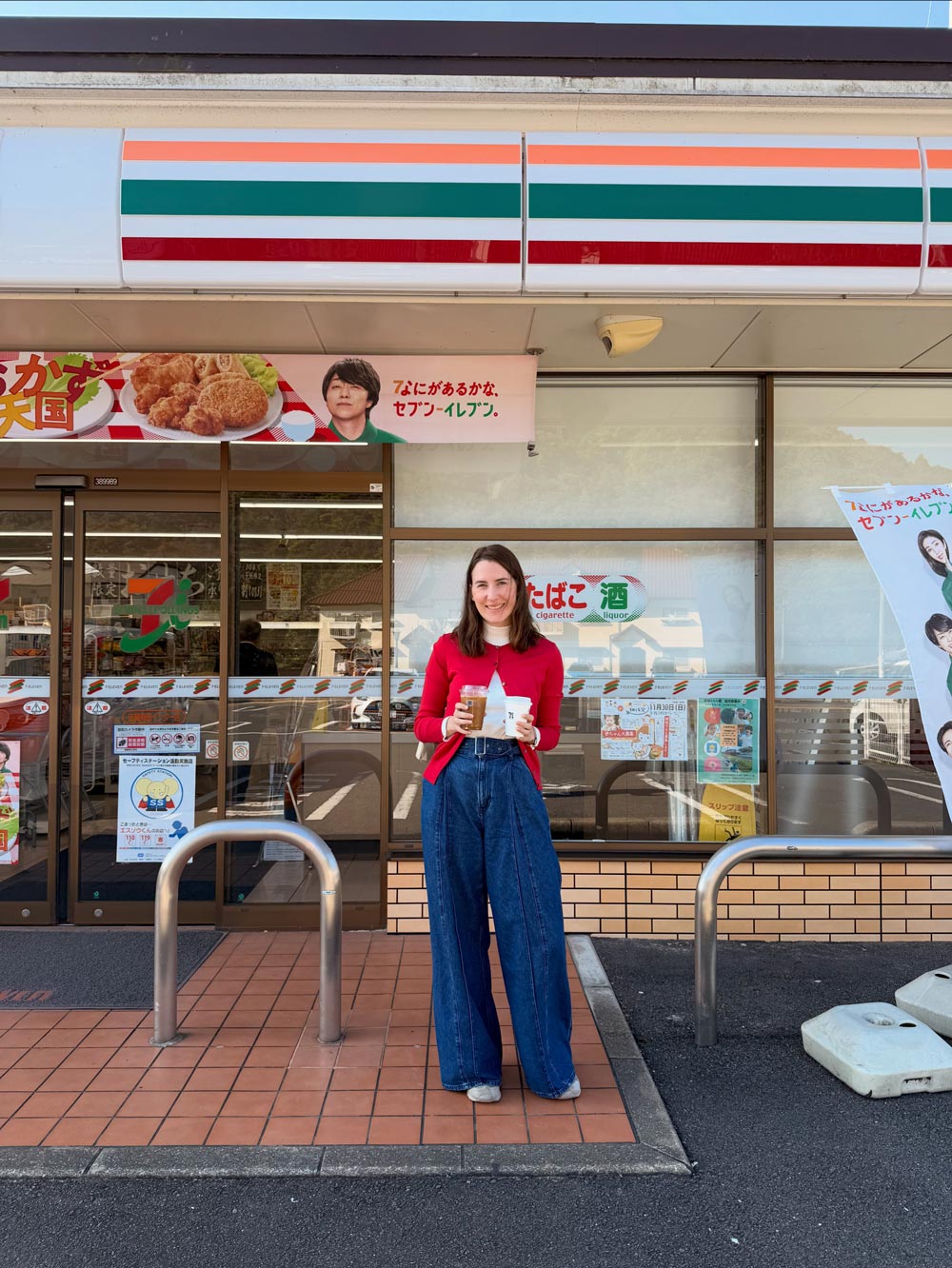
The convenience stores, of conbinis, are going to be your best friend in Japan. The big three, 7-Eleven, Lawson and FamilyMart, can be found on pretty much any street corner. They’re usually open 24/7 and have pretty decent food. I use it for breakfast most days while travelling in Japan, a quick snack or coffee, and even for some dinners when the day’s gotten away with us.
32. Try an Izakaya
Izakayas are essentially Japanese pubs, where you can get drinks and lots of small dishes to snack on. Think yakitori, karaage, and edamame. Add a cold beer, and you’re good to go!
They are usually quite noisy and crowded, so entering one as a tourist can seem a little intimidating. It’s 100% worth giving it a go, though, the atmosphere is amazing!
33. Watch Out for Otōshi, or Table Charge (it’s Not a Scam!)
When you’re at an izakaya, or a regular bar, you may receive a small food appetiser that you haven’t ordered. This is called an otōshi and is usually charged at a few hundred yen. It acts as a sort of cover charge for the table, so don’t get alarmed if it shows up on your bill. It’s not a scam!
I’ve gotten a lot of questions from angry visitors who thought they were scammed because they were tourists, but that’s not the case! It’s just part of the bar culture in Japan. Sometimes, you’re even charged a table cover without receiving the otōshi.
34. Consider Trying an Omakase
If you’re a foodie, like me, and you’re looking to splurge on one dining experience in Japan, let it be an omakase. This term roughly translates to “I’ll leave it up to you”. When going to a restaurant for omakase, you literally leave it up to the chef. They’ll make you whatever they want.
It’s popular at sushi restaurants, but other places offer this too. It can be a little pricey, but it’s one of the best ways to try out-of-this-world sushi, and maybe even try some that you wouldn’t order yourself normally.
This is the only dining experience you want to pre-book, as the restaurants are often quite small and book up.
35. Try Pocari Sweat (For Hydration)
As you’ll be walking a lot in Japan, it’s very easy to get dehydrated without realising. One of my favourite drinks to help with this is Picard Sweat. You can get this electrolyte drink at pretty much any vending machine and convenience store.
Extra Tip
Instead of constantly buying bottled water, you can bring your own reusable water bottle and refill it with the MyMizu app. This app shows you 200,000+ points where you can fill up your bottle for free.
36. Avoid Animal Cafes
Viral videos on TikTok and Instagram may make animal cafes in Japan look incredibly cute and fun, but they are highly unethical. I love Japan, but its animal laws are terrible. Many cafes like this do not treat their animals well, especially when it’s about non-domesticated animals like owls, otters, pigs, etc.
There are some animal-friendly cat cafes with rescue cats that are a better alternative if you really want to visit an animal cafe, but it’s important to properly do your research before visiting.
37. Plan Ahead if You Have Dietary Restrictions
The food in Japan is incredible, but if you have dietary restrictions, you should plan a little. Japanese cuisine contains many hidden ingredients that make it seem vegetarian when it isn’t (dashi, for example). Soy sauce containing wheat is another ingredient that’s used in many dishes, and it’s not always clear.
It’s also not usual for Japanese restaurants to accommodate any changes to dishes, so it’s easy to go to a vegan, gluten-free or halal restaurant instead. Going to places that specifically cater to these makes it a lot less complicated.
You can use the HappyCow app to find vegetarian/vegan places, and an active Facebook Group is covering gluten-free places in Japan, too. If you have severe allergies, I recommend downloading this allergy card in Japanese so you can show it at restaurants just in case.
If you already have some restaurants saved on your Google Maps, it makes finding places on the go much easier when you get to Japan.
38. What to Do When Constipated in Japan
Travel constipation can happen anywhere, but it seems to happen to many travellers in Japan, especially during the first few days of their trip. Dehydration (from the long flight, the 15-20K steps, not drinking enough water) and lack of fibre (a lot of rice and carbs in Japanese dishes) make it a common problem. The high sodium in many Japanese dishes, the stress from travelling and the change of diet won’t help either!
Luckily, there are some things you can do to help. As a first attempt, you want to up your water and fibre intake. If you’re struggling to find a lot of fruit and vegetables, you can also pop over to the convenience store for Fibe-Mini drink, Konjac (Konnyaku) Jellies or Yakult 1000. These have helped me massively in the past!
If you can’t fix the constipation with extra fibre and water, head to the nearest pharmacy (薬局) instead. There will be someone to help you find the right medication (or right types of laxatives – there are different types!). You can use Google Translate if necessary. It’s much better to get it fixed than let it ruin your holiday.
Packing Tips for Japan
39. Bring Your Own Deodorant
I always bring extra deodorant, as the ones sold in Japan are not as strong/effective as the ones I use at home. Many people in East Asia have much less body odour compared to Westerners, making the demand for strong deodorant pretty much nonexistent. I’ve tried Japanese deodorant, and it didn’t do anything for me, so I always pack a few extra just in case.
Extra Tip
If you prefer tampons over pads and are due for your period in Japan, bring your own! You can find pads in all shapes and sizes, and they’re readily available, but options for tampons are very limited. And the ones sold in Japan aren’t fantastic…
40. Check if You’re Allowed to Bring Your Medication
Before packing your medication, you need to check whether you’re allowed to bring that type of medication into Japan. Some medications are banned in Japan, including some ADHD meds, such as Adderall and Dexedrine.
For most medications, you can bring a personal supply. Usually, this is a one-month supply for prescription medicine and a two-month supply for non-prescription medicine. If you want to bring more, you have to apply for a Yunyu Kakunin-sho. You may need to show this certificate at customs.
For more information on how to apply for a Yunyu Kakunin-sho or to check what medications you’re allowed to bring (and how much), check this website or contact your embassy.
41. Bring a Plug Converter
In Japan, you have to use Type A plugs. Travellers from the US and Canada should be fine using their plugs (2-prong), but you could use an adapter if you have any grounded plugs with 3-prong.
If you’re travelling from elsewhere in the world, you will need to get a plug adapter. To avoid any issues, get one before you board your plane. That way, you don’t have to search for one after arriving in Japan, and you can easily charge all your devices.
I always bring a plug converter block, which I can use worldwide, and also has slots for USB and USB Type-C.
42. Put an AirTag in Your Bags
Using an AirTag, or an equivalent, to track your suitcase, backpack and valuables is something I highly recommend. Especially if you’re moving hotels often or are using luggage transfer, it’s good to know where your bags are at all times. I always put one on my camera too, just in case I lose it anywhere.
Additional Japan Travel Tips
43. You’ll Need an Internet Connection (eSIM/Pocket WiFi)
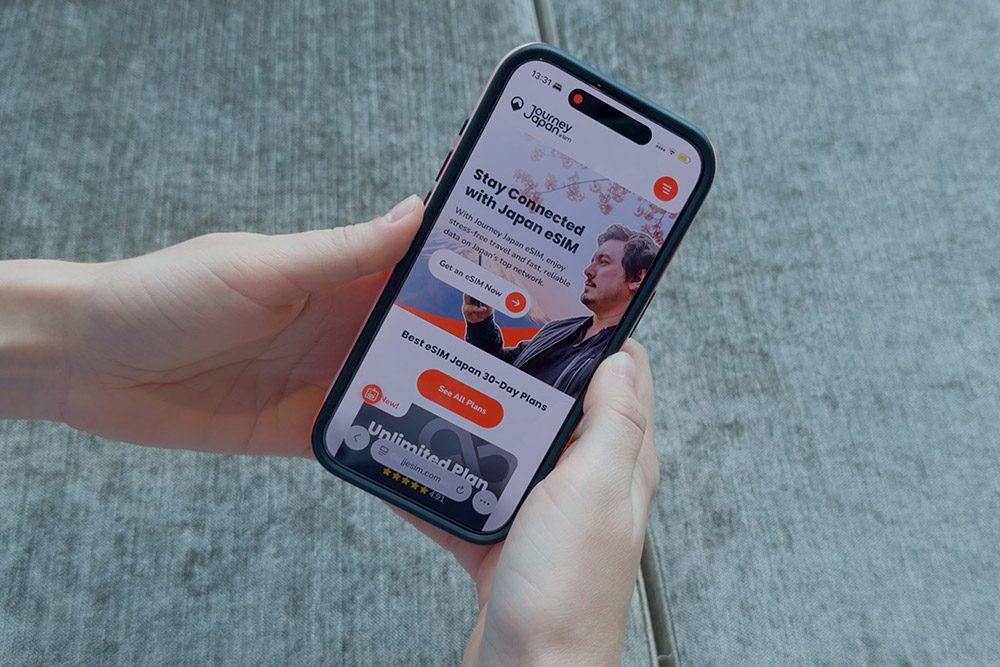
Travelling in Japan is a lot easier than you probably expect, but only if you have a stable internet connection. Even in 2026, public WiFi in Japan isn’t great, and you cannot rely on it. Using an eSIM or Pocket WiFi gives you a stable connection so you can use Google Maps and Google Translate on the go.
I have a full guide comparing eSIM and Pocket WiFi, as they’re both good options, but one may be better for you depending on your circumstances and preferences. I also have a full review of the Journey Japan eSIM.
Extra Tip
If your home provider offers international roaming, you may not need an eSIM or Pocket WiFi. However, you do want to check how much they charge. Sometimes, roaming charges are very expensive with hidden costs. It’s best to compare the prices before you decide.
44. Fill Out Customs Form Before Arriving
When arriving in Japan, you’re required to fill out a customs declaration. To save time and stress at the airport, I recommend filling it out using the Visit Japan Web service. You can do so before you fly, and it gives you a QR code that you can use to get through customs.
45. Don’t Download Too Many Apps
Don’t fall into the trap of downloading 10+ different apps, you don’t need them all! I normally only rely on Google Maps, Google Translate and having my Suica card added to my Apple Wallet.
There are a lot of other handy apps for Japan, but only download the ones that you’ll actually use. Having too many new apps on your phone can only overcomplicate things when you could instead be enjoying your surroundings.
Extra Tip
You can download Google Maps and the Japanese language on Google Translate so you can use them offline. I still recommend getting an eSIM or Pocket WiFi, but if for any reason you lose connection, having access to Maps & Translate can come in handy.
46. You’ll Walk More Than You Expect
Everybody who’s been to Japan will tell you the same thing: You’ll walk A LOT. Even if you’re just sticking to the main cities and avoiding any nature hikes, steps add up fast. Most days, I easily reach 20,000–25,000 steps without trying. Even on “quieter” days, I easily reach 15,000 steps.
Bringing comfortable shoes that are broken in is essential. You don’t want to bring brand new shoes as they’ll start to hurt very quickly.
Extra Tip
If your feet or legs do start to hurt from the amount of walking, head over to the conbini for some foot cooling pads (休足時間). These cooling pads help release some of the pain. They work like magic!
47. The Language Barrier Isn’t As Big of a Problem As You’d Think
Another question to pops up a lot in my Facebook Group is how hard it is to travel in a country where you don’t speak or read the language. The Japanese language can be quite intimidating, with three different alphabets and completely different sentence structure from English, but it’s not as big of a problem as you may expect.
In major tourist spots and big cities, there is a lot of English signage. That also counts for train stations, airports and hotels. Google Translate, and especially the camera option that lets you translate menus and signs, comes in very handy. Plus using your Google Maps to navigate will also help massively.
On top of that, people are generally very friendly and helpful in Japan. Nobody expects you to speak fluent Japanese, but learning a few basic sentences can come a long way (and is always appreciated!). I’ve been learning Japanese for a few years now and I still struggle with keeping a full conversation, but people seem to be very appreciative of having put at least some effort in.
48. Carry Your Passport At All Times
It’s the law in Japan to have your passport with you at all times as a tourist. You need the actual document, not a copy. Don’t leave it in your hotel room!
49. Collect Free Eki Stamps
One of my favourite things to do in Japan is collecting the free stamps to create a unique souvenir reflecting your trip. As long as you have a notebook (any A5 notebook without lines will do), you can start hunting them down. You can find them in most places, but the most common ones are:
- Museums
- Popular landmarks
- Tourist information centres
- Airports
- Parks and gardens
- Castles
- Ropeways
- Observation decks.
I have a full guide on how to start collecting the stamps, where to find them and some tips on stamp etiquette. If you want to see some of the beautiful designs, head over to my Facebook Group for Stamps in Japan. Over 100,000 members are sharing the best stamps they found on their Japan holidays.


Extra Tip
Similar to collecting stamps, you can find thousands of beautifully designed manhole covers all across Japan. I have another Facebook group for manhole covers in Japan, where you can see some of the best ones.
50. Know the Difference Between Eki Stamps & Goshuin
There is another type of stamp, or seal, that you can get in Japan called the goshuin. Goshuin are sacred seals given at shrines and temples as proof that you’ve visited. Often, they are handwritten by shrine priests.
You cannot mix and match the eki stamps and goshuin in the same book, you’ll need a special notebook called a goshuincho for your goshuin. You can usually buy them at shrines and temples for a couple of thousand yen. The goshuin itself typically costs a few hundred yen.
51. Don’t Skip the Thrift Stores in Japan
If you like shopping or fashion, you shouldn’t skip the thrift! Japan is incredible for secondhand shopping. Not just for regular clothing, but also for branded items. The condition of most of the items is still fantastic, and the prices are very affordable.
Some of my favourite secondhand chains are Second Street and Book Off/Mode Off (especially the Super Bazaar), but there are a lot of others, including many independent thrift/vintage stores. If this is something you’re interested in, you can also search for nearby flea markets. The Tokyo Ohi Racecourse Flea Market is one of the best ones and is open every weekend.
If you’re after retro video games in Japan, shopping secondhand can pay off big time, too. Book Off/Hard Off and Surugaya Speciality Store are some of my favourite chains that you can find across Japan.
The lowest prices you can find outside the major cities. When driving through rural Kyushu, I’ve found some amazing pieces for a few hundred yen each, which made shopping even more enjoyable. We stopped at so many Second Streets, and I managed to pick up one of my dream Coach bags for only a few thousand yen.


Final Thoughts on Japan Travel Tips
Travelling to Japan doesn’t have to be scary or stressful, even the planning part should be fun! Hopefully, these tips will help taken away some travel anxiety and prepared you for your trip even better. I’ll be adding more tips to this in the future, so make sure to bookmark this page.
I have an additional Japan FAQ, covering some of the main questions I see in our Facebook Group. Or you can start planning your trip with my free Japan itineraries.






Australian
Optus is $5/day roaming, you keep your own phone number and calls are free. 5gb per day data free. It works everywhere.